Algiers, Algeria: Self-Guided Walking Tour
Things to do in Algiers
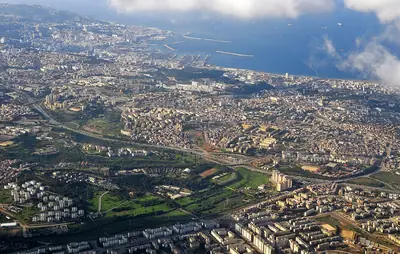
Algiers, the seaside capital of Algeria, rises above the Mediterranean with white façades, steep streets and a layered past that blends Roman, Ottoman, Andalusian and French influences. Known locally as El Beida (the White) and El Bahdja (the Joyous), the city offers a vivid mix of historic sites, bustling markets and coastal scenery that makes it a rewarding destination for any traveller. Neywo provides a free audio guide for Algiers with 18 narrated places, letting you explore at your own pace.
Explore Algiers’ highlights
Museum of Antiquities
Located in the Parc de la Liberté, the National Museum of Antiquities and Islamic Art opened in 1897 and is Algeria’s oldest museum. Its collections span two and a half millennia, showcasing ceramics, sculptures, textiles and objects from archaeological sites across the country.
Museum of Modern Art of Algiers (MaMa)
Opened in 2007 in the heart of the capital, MaMa is Algeria’s national museum for modern and contemporary art. It holds a permanent collection of Algerian works and hosts rotating temporary exhibitions that bring international artists to local audiences.
Cathedral of the Sacred Heart of Jesus
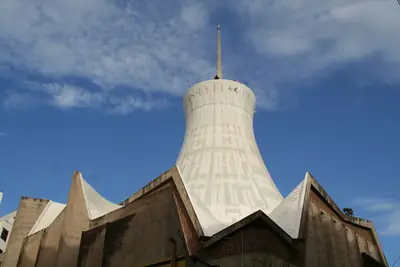
This modern cathedral, completed in 1956, became the spiritual centre of the Archdiocese after Algeria’s independence. Designed by Paul Herbé and Jean Le Couteur, its nave measures 52 m by 35 m and is crowned by a central tower that gives the building a light yet monumental silhouette.
Algiers Central Post Office (La Grande Poste)
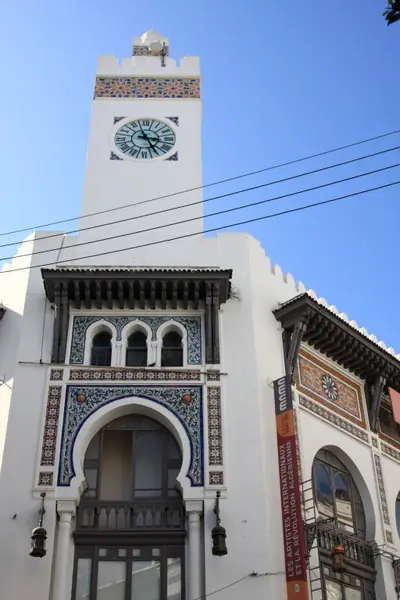
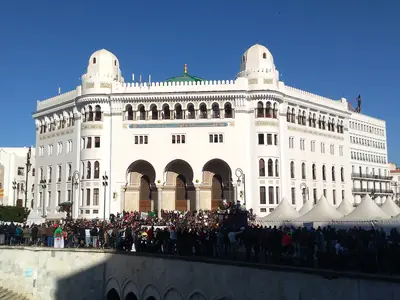
Built in 1910 by Jules Voinot and Marius Toudoire, this neo‑Moorish palace served as the capital’s main post office for over a century. After postal services moved out in 2015, the interior was turned into a museum that tells the story of communication in Algeria, while the façade’s horseshoe arches and geometric patterns remain a landmark in the city centre.
Bardo National Museum
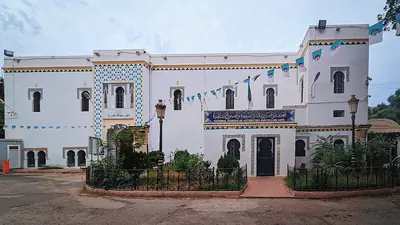
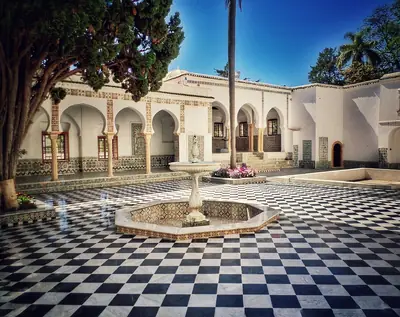
Set atop the historic boulevard Didouche‑Mourad, the Bardo began as an eighteenth‑century Moorish villa inspired by Andalusian gardens. After a French addition in 1879 and several institutional changes, it opened as the Museum of Prehistory and Ethnography in 1930, displaying artefacts that trace Algeria’s ancient past.
Martyrs Memorial (جنان لخضر)
Erected to mark the twentieth anniversary of independence, this concrete monument features three massive palm leaves that shelter an eternal flame. Statues of soldiers at the tip of each leaf represent different stages of Algeria’s struggle for freedom, and the site is also known as the Gardens of Victory.
El Mouradia Palace
Perched on the heights of Algiers, El Mouradia Palace has been the official residence and workplace of every Algerian president since independence in 1962. While not open to the public, its silhouette on the hillside is a familiar landmark overlooking the capital.
People’s Palace
Situated in the Mustapha Supérieur district at 110 metres above the city, this grand building started as an Ottoman dignitary’s summer residence in the late eighteenth century. After serving as a French army barracks and later a governor’s retreat, it now stands as a testament to Algiers’ transition from Ottoman regency to French colony to independent nation.
El Rahma Mosque
Known as the Mosque of Mercy, El Rahma occupies a former Catholic church in the heart of Algiers. Its prayer hall covers 1 000 m² and can accommodate up to five thousand worshippers, reflecting the building’s unique transition from one faith to another.
Holy Trinity Anglican Church
This Anglican place of worship serves the small Anglican community in Algeria’s capital, offering a quiet space for reflection amid the city’s bustling streets.
National Moujahid Museum
Located at the foot of the Martyrs Memorial, this museum chronicles Algeria’s resistance to French colonial rule. Its exhibits move chronologically from early popular uprisings through political organisation to the armed liberation war, using photographs, models and artefacts to tell the story of the nation’s path to independence.
Explore with Neywo
Neywo’s free audio guide for Algiers includes one walking tour and one bus route, each designed to play the story of a place as you reach it, with no group and no schedule.
- Walking tour: “Algiers Centre: Mosques, Museums and La Grande Poste” – 4.56 km, about 115 minutes, 10 narrated stops (People’s Palace, Bardo National Museum, Museum of Antiquities, Cathedral of the Sacred Heart of Jesus, Concorde Square, El Rahma Mosque, Maurice Audin Square, Algiers Central Post Office, equestrian statue of Emir Abdelkader, Museum of Modern Art of Algiers).
- Bus route: “Line 32: From Place Audin to the Moujahid Museum” – 5.2 km, about 22 minutes, 4 narrated stops (Maurice Audin Square, Museum of Antiquities, Holy Trinity Anglican Church, National Moujahid Museum).
Together the guide covers 18 narrated places across the city, available in 11 languages. Simply download the Neywo app, select Algiers, and let the audio accompany you as you wander the whitewashed streets, historic monuments and vibrant neighbourhoods at your own pace.
Places with an audio guide in Algiers
8 places in Algiers with a Neywo audio guide. Each one starts telling its story as you reach it.
Self-guided tours in Algiers
2 tours in Algiers, free in the Neywo app. Each stop tells its story as you reach it.
- Bus ride
Line 32: From Place Audin to the Moujahid Museum
ETUSA's public line 32 runs from Place Maurice Audin up past the Museum of Antiquities in the Parc de la Liberté and the Holy Trinity church to the National Moujahid Museum at the foot of the Martyrs' Memorial. A cheap way up the hill to Algeria's independence story.
Maurice Audin Square · Museum of Antiquities · Holy Trinity Anglican Church (Algiers) · National Moujahid Museum of Algiers
Open this tour: Line 32: From Place Audin to the Moujahid Museum - Walk
Algiers Centre: Mosques, Museums and La Grande Poste
Climb from the hilltop museums and the old Ottoman People's Palace down to the heart of the French-built capital. You pass a church turned mosque, a neo-Moorish post office that was once Kilometre Zero, an emir on horseback and Algeria's museum of modern art.
People's Palace (Algiers) · Bardo National Museum · Museum of Antiquities · Cathedral of the Sacred Heart of Jesus, Algiers · Concorde Square · El Rahma Mosque …
Open this tour: Algiers Centre: Mosques, Museums and La Grande Poste
Walk Algiers with Neywo
Neywo turns Algiers into a self-guided audio tour. Stories arrive as you reach the place they belong to, and the route reshapes when you wander off it.