Things to Do in Rome, Italy: Walking Guide
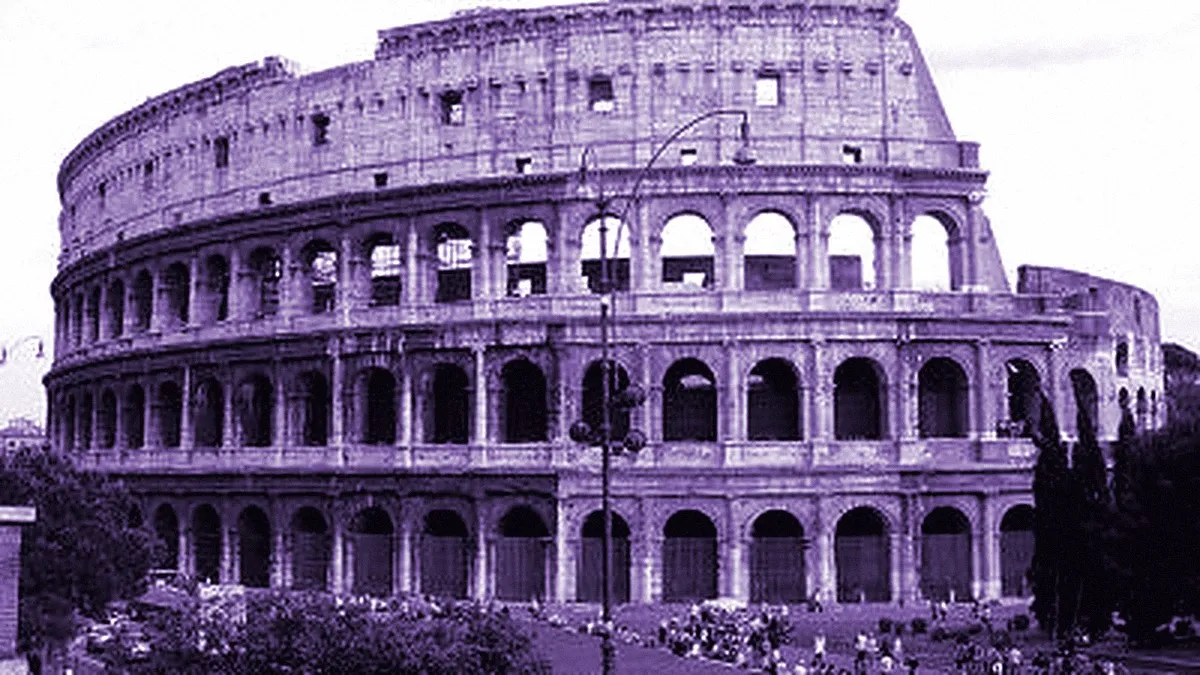
Things to Do in Rome: Ancient Monuments, Baroque Squares and Living History
Looking for things to do in Rome? The Italian capital brings together ancient forums, imperial monuments, pilgrimage churches, Renaissance palaces and lively public squares in a city where history remains part of everyday life. From the Pantheon and Trajan’s Column to Ostia Antica and the great basilicas, Rome rewards both first-time visitors and anyone returning to explore more deeply. Neywo offers a free audio guide for Rome with 1,311 narrated places.
Rome is the capital of Italy and the centre of the Lazio region. Its landmarks span centuries, but they are often close enough to connect on foot, making the city especially suited to independent exploration.
What to see in Rome
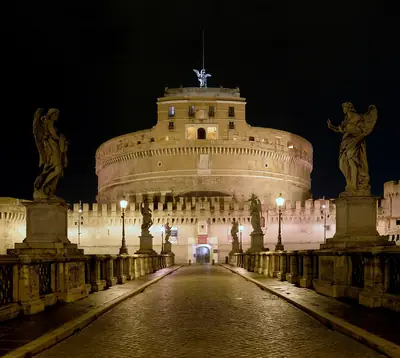
Castel Sant’Angelo
Beside the Tiber, Castel Sant’Angelo rises as a powerful cylindrical fortress opposite Ponte Sant’Angelo. It began as the Mausoleum of Hadrian, commissioned by the emperor for himself and his family, and was later transformed into a papal fortress, castle and museum. The building has been home to the Museo nazionale di Castel Sant’Angelo since 1906.
Its position near the Vatican reflects the monument’s long connection with the papal world. The contrast between the original imperial mausoleum and the later medieval and Renaissance additions makes Castel Sant’Angelo one of Rome’s most layered historic sites.
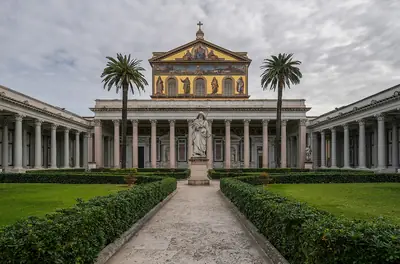
Basilica of Saint Paul outside the Walls
Beyond the ancient Aurelian Walls stands the Basilica of Saint Paul Outside the Walls, one of Rome’s four papal basilicas and seven pilgrimage churches. It is the city’s largest basilica after Saint Peter’s and occupies the traditional burial place of the apostle Paul, whose tomb lies beneath the papal altar.
The church has belonged to the Jubilee pilgrimage route since the first Holy Year in 1300. Although the site is ancient, the present structure also reflects a devastating nineteenth-century fire; the rebuilt basilica was completed in 1840.
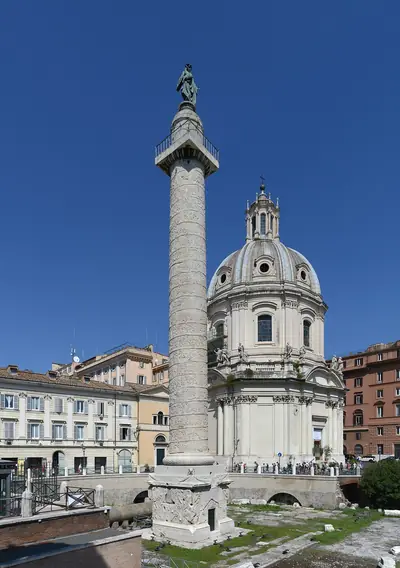
Trajan’s Column and Trajan’s Forum
Trajan’s Column turns an imperial military victory into a continuous story in stone. Dedicated in May 113 AD, it commemorates Emperor Trajan’s conquest of Dacia, in present-day Romania. Its spiral relief winds around the shaft twenty-three times for about 190 metres, depicting scenes from the two Dacian Wars.
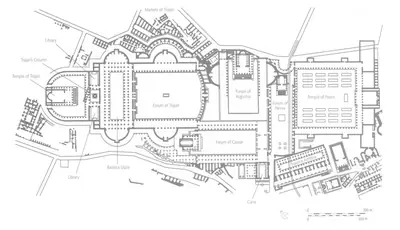
The column stands in Trajan’s Forum, the last of the Imperial fora built in ancient Rome. Inaugurated in 112, the monumental complex included a large square, the Basilica Ulpia, libraries and a colonnaded courtyard surrounding the column. Trajan’s Markets formed part of the wider setting.
The Pantheon
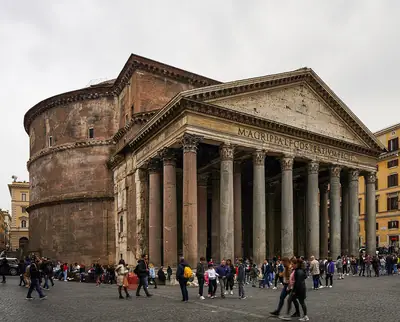
The Pantheon is one of the most remarkable surviving buildings of ancient Rome. It began as a temple dedicated to all the gods and has been a Christian church, Santa Maria ad Martyres, since the seventh century.
Its deep portico of granite Corinthian columns leads into a circular rotunda beneath a Roman-concrete dome. The dome opens to the sky through a central oculus, and the height from the floor to the oculus matches the interior diameter at about 43 metres. Nearly two thousand years after its construction, it remains the world’s largest unreinforced concrete dome.
Piazza di Spagna
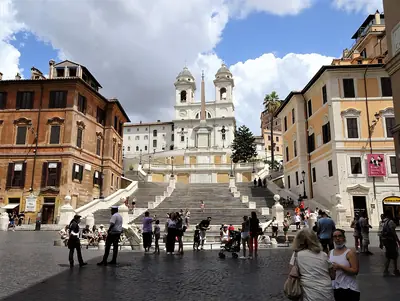
Piazza di Spagna is framed by the Spanish Steps, which climb towards Trinità dei Monti. At the centre is the Fontana della Barcaccia, an early Baroque boat-shaped fountain created by Pietro Bernini and his son Gian Lorenzo Bernini.
The square takes its name from the Palazzo di Spagna, seat of Spain’s embassy to the Holy See since 1622. It also stands among Rome’s luxury-shopping streets and is presided over by the Column of the Immaculate Conception, inaugurated by Pope Pius IX in 1857.
Piazza Navona
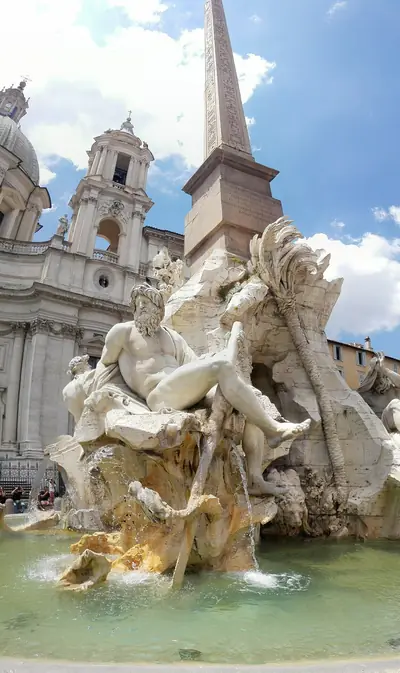
Piazza Navona follows the long, open outline of the ancient Stadium of Domitian. Roman spectators once gathered here for the agones, or games; in the seventeenth century, the space was transformed into one of Rome’s great Baroque ensembles.
At its centre, Bernini’s Fountain of the Four Rivers stands in front of Sant’Agnese in Agone. The square also brings together the work of Francesco Borromini, Girolamo Rainaldi, Pietro da Cortona and Giacomo della Porta. The result is a place where ancient urban form and Baroque architecture remain visible together.
Ostia Antica
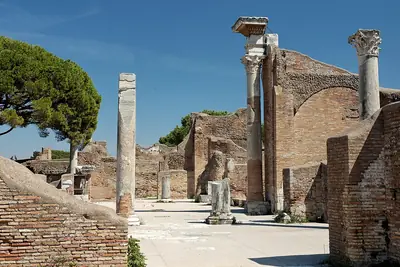
Ostia Antica preserves the remains of Rome’s ancient port city. Traditionally founded in the seventh century BC by Ancus Marcius, Rome’s first colony grew at the mouth of the Tiber into a commercial centre closely connected with the supply of grain to the capital.
The site offers an unusually clear view of everyday Roman life. Streets, homes, apartment buildings, shops, warehouses, sanctuaries, production facilities, mosaics and frescoes remain among the ruins. Ostia declined as the harbour deteriorated and was abandoned in the early Middle Ages, while sand dunes helped preserve the city.
Archbasilica of St. John Lateran
San Giovanni in Laterano is Rome’s cathedral and one of the city’s most important churches. Founded in 324, it was the first church in Rome to be publicly consecrated. Its full name is the Archbasilica of the Most Holy Savior and Saints John the Baptist and John the Evangelist.
The building reflects repeated rebuilding after medieval deterioration and two fires in the fourteenth century. Its interior was renovated in the late seventeenth century, and the monumental façade was completed in 1735 under Pope Clement XII.
Basilica di Santa Maria Maggiore
Santa Maria Maggiore is the largest Marian church in Rome, one of the city’s four major basilicas and one of its seven pilgrimage churches. It is particularly notable for preserving its original early Christian structure despite later additions.
The basilica is also home to the revered image Salus Populi Romani, showing the Madonna and Child as patroness and protectress of the Roman people. Following the Lateran Treaty of 1929, it remained on Italian territory while ownership belongs to the Holy See.
Palazzo Farnese
In Piazza Farnese, Palazzo Farnese is one of Rome’s major High Renaissance palaces. Begun for the Farnese family in 1517, the project expanded after Alessandro Farnese became Pope Paul III in 1534. Antonio da Sangallo the Younger directed its architectural development, with contributions from Michelangelo, Jacopo Barozzi da Vignola and Giacomo della Porta.
The palace now belongs to the Italian Republic and houses the French Embassy in Italy and the École française de Rome. Inside, the Farnese Gallery is known for Annibale Carracci’s fresco cycle The Loves of the Gods.
Ara Pacis
The Ara Pacis is one of the most important surviving monuments of Augustan art. Commissioned by the Roman Senate in 13 BC and consecrated on January 30, 9 BC, the altar expressed the peace and prosperity associated with the Pax Romana.
Flooding from the Tiber eventually buried it beneath about four metres of silt. After rediscovery and later excavations, the monument was reassembled near its original location, close to the Mausoleum of Augustus. The Museum of the Ara Pacis now protects and presents the ancient altar.
Altare della Patria
Between Piazza Venezia and the Capitoline Hill, the Vittoriano—also called the Monument to Victor Emmanuel II or the Altar of the Fatherland—commemorates Victor Emmanuel II, the first king of unified Italy.
Built from white Botticino marble, the monument combines a monumental staircase, Corinthian columns, fountains, an equestrian statue and two winged Victories driving chariots. It was officially inaugurated in 1911 during celebrations marking the fiftieth anniversary of Italian unification.
Arch of Constantine and Column of Phocas
Near the Colosseum and Palatine Hill, the Arch of Constantine spans the route of ancient triumphal processions. The Roman Senate commissioned it after Constantine’s victory over Maxentius at the Battle of the Milvian Bridge in AD 312; it was dedicated in 315. Its decoration combines sculpture from the reigns of Trajan, Hadrian and Marcus Aurelius with imagery created for Constantine.
In the Roman Forum, the Column of Phocas was the last honorific monument added to the Forum. Erected or rededicated on August 1, 608, it honours the emperor Phocas and rises 13.6 metres including its marble plinth.
Explore Rome with a self-guided audio tour
A Rome self-guided walking tour lets you follow the city’s history without joining a group. Neywo has seven walking tours, one bus route and one bike route in Rome, with narration available in 11 languages.
The walks include:
- Gladiators and Senators: the Colosseum and the Roman Forum — 1.72 km, 117 minutes and 10 narrated stops.
- Baroque Rome: Pantheon, Caravaggio and Bernini — 1.54 km, 119 minutes and 9 stops.
- Fountains and Steps: from Trevi to the Piazza del Popolo — 2.27 km, 120 minutes and 8 stops.
- Emperors’ Rome: Trajan’s Column to the Tiber — 1.76 km, 117 minutes and 8 stops.
- Caesar’s Temples, the Ghetto and Trastevere — 2.35 km, 98 minutes and 8 stops.
- Augustus to Hadrian: Tombs, Bridge and Castle on the Tiber — 3.38 km, 120 minutes and 7 stops.
- Baroque Rivals on the Quirinal and Diocletian’s Baths — 2.58 km, 117 minutes and 9 stops.
The bus route, Bus 81: From St John Lateran to the Baroque Centre, covers 6.4 km in 27 minutes and has 12 narrated stops. The Appian Way Ride: Catacombs and the Circus of Maxentius bike route covers 3.2 km in 16 minutes and has 8 stops.
Download Neywo and explore Rome at your own pace: the app tells the story of each place as you reach it, with no group and no schedule. You can also continue discovering Tivoli, Civitavecchia or Viterbo in Lazio.
Places with an audio guide in Rome
8 places in Rome with a Neywo audio guide. Each one starts telling its story as you reach it.
Self-guided tours in Rome
9 tours in Rome, free in the Neywo app. Each stop tells its story as you reach it.
- Bike ride
Appian Way Ride: Catacombs and the Circus of Maxentius
Pedal the Queen of Roads, where cobbles laid in 312 BC run past early Christian catacombs and Roman tombs. Ride from the Quo Vadis chapel to the Catacombs of Domitilla and Callixtus, San Sebastiano, the Mausoleum and Circus of Maxentius, and into the green Caffarella valley for the Nymphaeum of Egeria.
Church of Domine Quo Vadis · Catacombs of Domitilla · Catacomb of Callixtus · San Sebastiano fuori le mura · Mausoleum of Maxentius · Circus of Maxentius …
Open this tour: Appian Way Ride: Catacombs and the Circus of Maxentius - Bus ride
Bus 81: From St John Lateran to the Baroque Centre
ATAC bus 81 is a cheap way to see Rome's layers. It starts at the Lateran's Holy Stairs and Baptistery, passes Santo Stefano Rotondo, the Temple of Portunus, the Theatre of Marcellus and the Roman apartment block under the Capitoline, crosses Piazza Venezia and runs through the Baroque centre past the Gesù, Sant'Andrea della Valle, San Luigi dei Francesi, the Stadium of Domitian and the Napoleonic Museum.
Scala Sancta · Lateran Baptistery · Santo Stefano Rotondo · Temple of Portunus · Theatre of Marcellus · Insula Romana …
Open this tour: Bus 81: From St John Lateran to the Baroque Centre - Walk
Gladiators and Senators: the Colosseum and the Roman Forum
Start under the Arch of Constantine and walk into the arena of the Colosseum, then follow the Sacra Via through the heart of the Roman Empire. Pass the Arch of Titus, the Palatine Hill and the vast Basilica of Maxentius, wander the Forum's temples, basilica and columns, and end at the arch built for Septimius Severus beneath the Capitoline Hill.
Arch of Constantine · Colosseo · Arch of Titus · Palatine Hill · Basilica of Maxentius · Roman Forum …
Open this tour: Gladiators and Senators: the Colosseum and the Roman Forum - Walk
Baroque Rome: Pantheon, Caravaggio and Bernini
Wander from the Pantheon's two-thousand-year-old dome to the great rivals of Roman Baroque. See Bernini's elephant and obelisk, Caravaggio's paintings, Borromini's twisting spire, Piazza Navona with its Fountain of the Four Rivers and Sant'Agnese, then finish in the market square where Giordano Bruno was burned.
Santa Maria sopra Minerva · Piazza della Rotonda · Pantheon · Sant'Ivo alla Sapienza · San Luigi dei Francesi · Piazza Navona …
Open this tour: Baroque Rome: Pantheon, Caravaggio and Bernini - Walk
Fountains and Steps: from Trevi to the Piazza del Popolo
Toss a coin into the Trevi Fountain, then climb to the top of the Spanish Steps for one of Rome's best views. Pass the Palazzetto Zuccari and Villa Medici on the Pincian Hill and descend to Piazza del Popolo, the grand gateway into the city, and its church of Caravaggio paintings.
Trevi Fountain · Piazza di Spagna · Spanish Steps · Trinità dei Monti · Palazzetto Zuccari · Villa Medici …
Open this tour: Fountains and Steps: from Trevi to the Piazza del Popolo - Walk
Emperors' Rome: Trajan's Column to the Tiber
From the carved spiral of Trajan's Column and his vast forum, pass the white Vittoriano and climb Michelangelo's Capitoline Hill. Then descend past the Theatre of Marcellus, the model for the Colosseum, to the river, the round Temple of Hercules and the Mouth of Truth.
Trajan's Column · Trajan's Forum · Altare della Patria · Piazza del Campidoglio · Santa Maria in Aracoeli · Theatre of Marcellus …
Open this tour: Emperors' Rome: Trajan's Column to the Tiber - Walk
Caesar's Temples, the Ghetto and Trastevere
Begin where Julius Caesar was assassinated, among the Republican temples of Largo di Torre Argentina. Cross through the Jewish Ghetto and its ancient Portico of Octavia, step over the Tiber Island by Rome's oldest bridge, and end in Trastevere at the mosaics of Santa Maria and the church of Saint Cecilia, with Bramante's Tempietto on the hill above.
Largo di Torre Argentina · Crypta Balbi · Porticus Octaviae · Jewish Museum of Rome · Pons Cestius · Santa Cecilia in Trastevere …
Open this tour: Caesar's Temples, the Ghetto and Trastevere - Walk
Augustus to Hadrian: Tombs, Bridge and Castle on the Tiber
Walk from the tomb of Rome's first emperor and the Ara Pacis, his altar of peace, to the angel-lined Ponte Sant'Angelo and the round fortress that began as Hadrian's mausoleum. Then cross to the Janiculum side for Sant'Onofrio, where the poet Tasso spent his last years, Palazzo Corsini and Raphael's Villa Farnesina.
Mausoleum of Augustus · Ara Pacis · Ponte Sant'Angelo · Castel Sant'Angelo · Sant'Onofrio · Palazzo Corsini …
Open this tour: Augustus to Hadrian: Tombs, Bridge and Castle on the Tiber - Walk
Baroque Rivals on the Quirinal and Diocletian's Baths
Climb the Quirinal past the presidential palace to Borromini's tiny church at the Four Fountains and Bernini's Sant'Andrea, then see Palazzo Barberini and Bernini's Ecstasy of Saint Teresa. Finish at the baths of Diocletian, Michelangelo's church inside them, and the great basilica of Santa Maria Maggiore.
Quirinal Palace · Sant'Andrea al Quirinale · Saint Charles at the Four Fountains · Palazzo Barberini · Santa Maria della Vittoria · Santa Maria degli Angeli e dei Martiri …
Open this tour: Baroque Rivals on the Quirinal and Diocletian's Baths
Walk Rome with Neywo
Neywo turns Rome into a self-guided audio tour. Stories arrive as you reach the place they belong to, and the route reshapes when you wander off it.

