Visiting Barcelona, Spain: Top Sights on Foot
Things to do in Barcelona: what to see in the Catalan capital
The best things to do in Barcelona range from Gothic churches and medieval streets to Gaudí’s extraordinary architecture, Montjuïc’s museums and Olympic landmarks. Barcelona rewards exploration on foot, with major sights spread across historic neighbourhoods and hills shaped by art, religion, sport and the city’s international exhibitions. Neywo has a free audio guide for Barcelona with 163 narrated places.
Barcelona is the capital of Catalonia and one of the most varied cities to explore in Spain. Its landmarks tell a story that moves from medieval religious architecture to Catalan Modernisme, modern art and the large-scale venues created for the 1929 International Exposition and the 1992 Olympic Games.
What to see in Barcelona
Sagrada Família
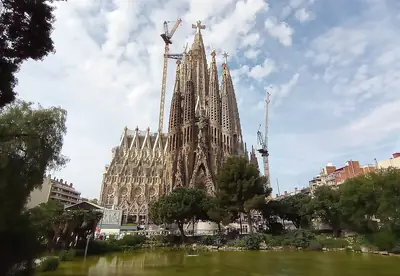
The Sagrada Família is a Catholic basilica designed by Antoni Gaudí and one of Barcelona’s defining landmarks. Construction began in 1882, with Gaudí taking over as chief architect in 1883. The project remained unfinished when he died in 1926 and was later interrupted by the Spanish Civil War, when anarchists set fire to the crypt and partially destroyed Gaudí’s original plans.
The basilica has a Latin-cross plan with five central naves and a transept of three naves. Its long construction history, private-donation funding and evolving design make it as interesting historically as it is architecturally.
Cathedral of Santa Eulalia of Barcelona
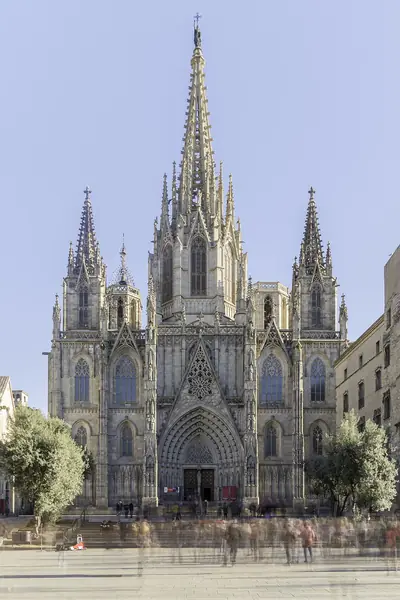
The Cathedral of Santa Eulalia of Barcelona is the Gothic seat of the archbishop and one of the city’s principal historic buildings. It was constructed between the 13th and 15th centuries on a site previously occupied by a Romanesque cathedral and, before that, a paleochristian basilica.
The cathedral is dedicated to the Holy Cross, a dedication probably dating to the mid-7th century. From 877, it was also dedicated to Santa Eulàlia, Barcelona’s co-patron saint. The main façade and the spire above the cimbori are neo-Gothic additions from the 19th and 20th centuries, rather than part of the original medieval building.
Santa Maria del Mar
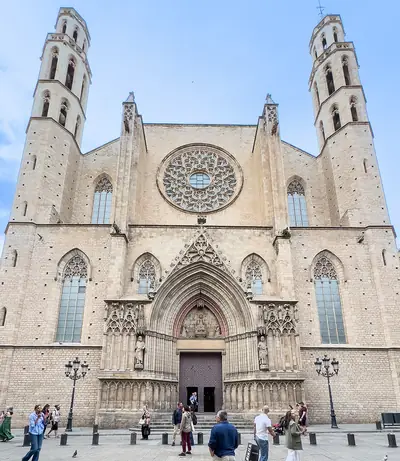
In the Ribera district, Santa Maria del Mar is one of Barcelona’s great Gothic churches. Built between 1329 and 1383, it is known for its unusually pure and unified early Catalan Gothic style.
The basilica was built beside the former water’s edge, with stone taken from the Montjuïc quarry. Its 16 octagonal pillars rise into rib vaulting at a height of 16 metres, creating a strong sense of height and continuity inside the church.
Palau Güell
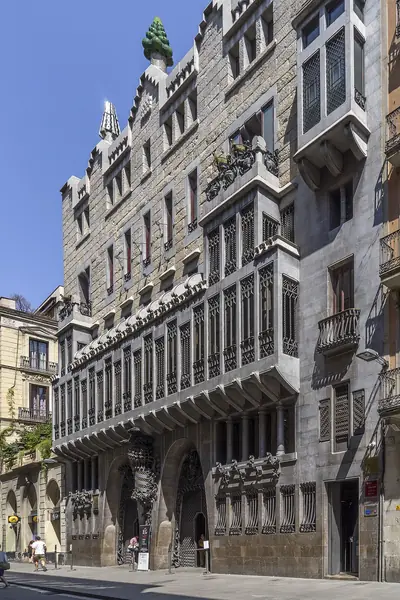
Close to La Rambla, Palau Güell is a mansion designed by Antoni Gaudí for the industrialist and patron Eusebi Güell. Built between 1886 and 1888, it forms part of the UNESCO World Heritage Site devoted to the Works of Antoni Gaudí.
The building was designed around entertaining. Its main room rises three storeys beneath a cupola, while small openings near the top once allowed lanterns to create the impression of a starry sky. The entrance gates, with their parabolic arches and forged-iron forms inspired by seaweed, were large enough for horse-drawn carriages. Horses could then be taken down a ramp to the basement stables.
Palau de la Música Catalana
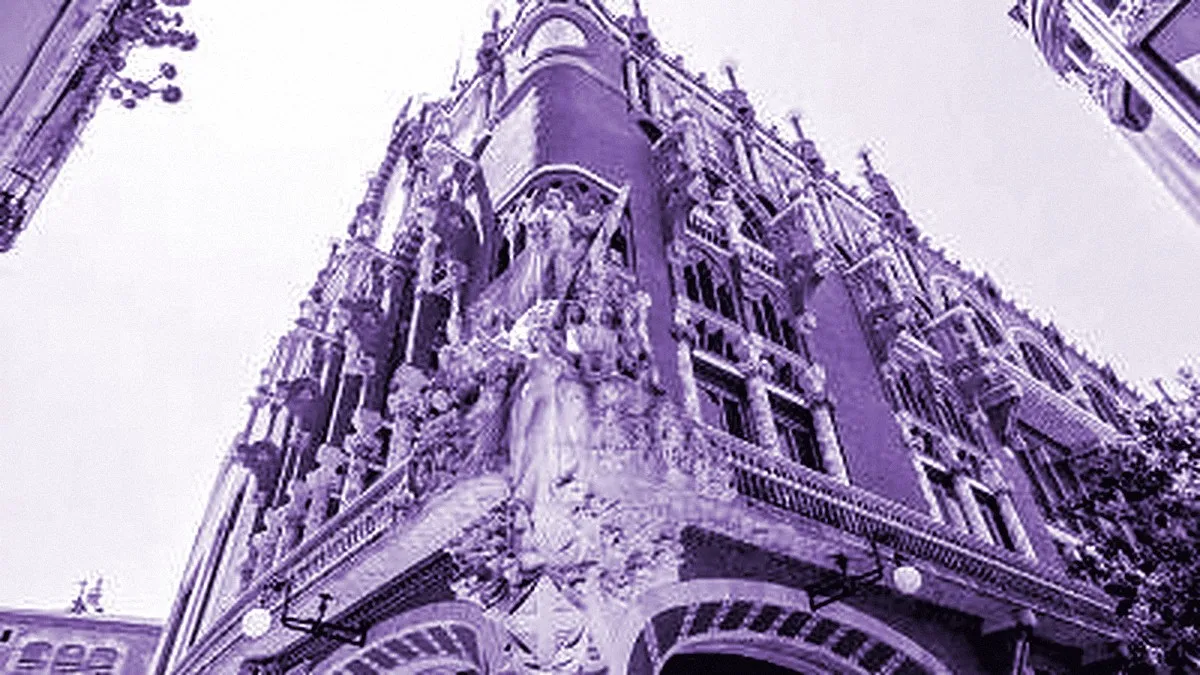
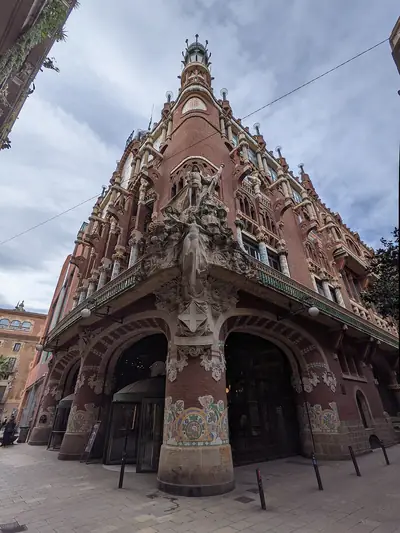
The Palau de la Música Catalana is a celebrated concert hall and one of Barcelona’s finest examples of Catalan Modernisme. Lluís Domènech i Montaner designed it for the Orfeó Català, a choral society founded in 1891. The building was constructed between 1905 and 1908 and inaugurated on 9 February 1908.
Its exterior combines exposed red brick, iron, mosaics and stained glass. Colourful tiled colonnades and busts of composers including Bach, Beethoven and Wagner add to the façade. Inside, the concert hall is designed to receive natural light, with a large stained-glass skylight as one of its most striking features.
Park Güell
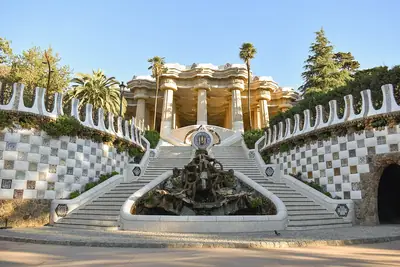
Park Güell brings Gaudí’s architecture into a hillside landscape of gardens and organic forms. Eusebi Güell commissioned the project during Barcelona’s late 19th- and early 20th-century urban expansion, and construction took place between 1900 and 1914. The park opened to the public in 1926 and became part of UNESCO’s Works of Antoni Gaudí collection in 1984.
The park reflects Gaudí’s naturalist phase. Its structures draw on forms found in nature, while its design also incorporates structural solutions based on “reglada” geometry and richly inventive ornament.
Casa Vicens
Casa Vicens is one of Gaudí’s earliest major projects. Designed between 1883 and 1888, it belongs to his orientalist period and draws on influences from India, Persia, Japan and Hispanic Islamic art, including Mudéjar and Nasrid traditions.
Ceramic tiles, Moorish-style arches, exposed brick and turret- or dome-like details give the house its distinctive appearance. Gaudí designed three façades for the property, which originally included a much larger garden. Later subdivision of the land reduced the ensemble to the house and its smaller surrounding area.
Montjuïc Castle
Montjuïc Castle is a military fortress at the summit of Montjuïc, more than 170 metres above a rocky terrace. Its star-shaped fortifications dominate the surrounding landscape and include a deep moat, bastions and external defensive structures.
The present appearance is associated with the military engineer Juan Martín Cermeño, who modified the earlier fortifications and added new defences influenced by the systems of Vauban. After the Spanish Civil War, the castle was transformed into a military museum; today it is managed as a municipal facility.
The Magic Fountain and MNAC
The Magic Fountain of Montjuïc stands in the Plaça de Carles Buïgas, below the Palau Nacional and near Plaça d’Espanya and Poble Espanyol. Built for the 1929 Barcelona International Exposition, it was created by engineer Carles Buïgas. Its design combines water jets, light and music on a large engineering scale.
Above it, the Museu Nacional d’Art de Catalunya occupies the Palau Nacional. The museum preserves and exhibits Catalan art from the Romanesque period to the present. Its medieval collection includes Romanesque frescoes removed from churches in the Catalan Pyrenees and displayed in reconstructed settings, as well as Gothic art and Catalan painting and sculpture from the 19th and 20th centuries.
Poble Espanyol and Museo Fran Daurel
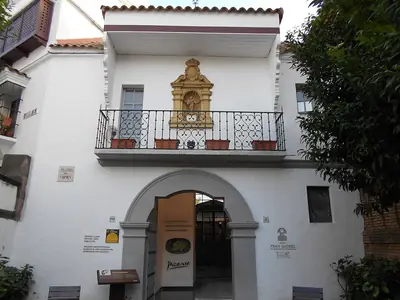
Poble Espanyol on Montjuïc is an open-air architectural complex made up of 117 full-scale buildings arranged as a small town, with streets, squares, a theatre, a school, restaurants and artisan workshops. The workshops allow visitors to see artisans working on site.
Within the complex, Museo Fran Daurel focuses on contemporary art, with a preference for Catalan artists. Its collection contains more than 300 works by artists including Pablo Picasso, Joan Miró, Salvador Dalí, Antoni Tàpies and Miquel Barceló. A sculpture garden extends outside the museum building.
German Pavilion and Palau Sant Jordi
The German Pavilion, also known as the Pavelló Mies van der Rohe, was designed by Ludwig Mies van der Rohe and Lilly Reich for the 1929 International Exposition. Its restrained form contrasts with the richness of its materials, including marble, red onyx and travertine. Dismantled in 1930, it was reconstructed on the same site in 1986.
Palau Sant Jordi, designed by Arata Isozaki, was completed in 1990 for the 1992 Olympic Games. The arena hosted artistic gymnastics, handball and volleyball during the Games and has since been used for many other sporting events and concerts. Its mechanized structure and materials give it considerable flexibility.
Camp Nou
Camp Nou has been the home of FC Barcelona since it opened in 1957. The stadium hosted matches during the 1982 FIFA World Cup, including the opening game, and was also used for football connected with the 1992 Summer Olympics. It has hosted European Cup and Champions League finals, European Cup Winners’ Cup finals and UEFA Super Cup games.
Its capacity has changed over time, reaching 120,000 for the 1982 World Cup before later seating changes brought it below 100,000.
Explore Barcelona with a self-guided audio tour
Neywo offers eight walking tours, one bus route and one bike route in Barcelona. Together, they cover the city’s historic centre, waterfront, Montjuïc, Modernisme landmarks and football heritage:
- Eight walking tours, ranging from 0.69 km and 100 minutes to 4.96 km and 131 minutes. The walks contain between 7 and 15 narrated stops.
- One bus route of 2.9 km and 12 minutes, with 8 narrated stops, travelling from the port to La Rambla.
- One bike route of 6.5 km and 32 minutes, with 6 narrated stops, linking Arc de Triomf and Camp Nou by way of Sant Joan and Diagonal.
The app tells the story of each place as you reach it, at your own pace, with no group and no schedule. Narration is available in 11 languages, so you can turn a visit to Barcelona into a flexible self-guided walking tour—or explore by bus or bike instead.
Barcelona is also a useful base for discovering other destinations in the region, including Girona, Besalú and Cadaqués. Download Neywo and explore the city with its stories unfolding as you walk.
Places with an audio guide in Barcelona
8 places in Barcelona with a Neywo audio guide. Each one starts telling its story as you reach it.
Self-guided tours in Barcelona
13 tours in Barcelona, free in the Neywo app. Each stop tells its story as you reach it.
- Bike ride
Arc de Triomf to Camp Nou: Sant Joan and Diagonal by bike
Start under the brick Arc de Triomf and ride the segregated lane up Passeig de Sant Joan, past Gaudi's Casa Calvet and the Modernista grocer Queviures Murria. Turn onto Avinguda Diagonal for Puig i Cadafalch's Casa de les Punxes and Palau del Baro de Quadras, then keep going west to the FC Barcelona museum at Camp Nou. Flat, wide and easy even for beginners.
Arc de Triomf · Casa Calvet · Queviures Múrria · Casa de les Punxes · Palau del Baró de Quadras · Museo del Fútbol Club Barcelona
Open this tour: Arc de Triomf to Camp Nou: Sant Joan and Diagonal by bike - Bike ride
Ronda Verda · Montjuïc down to the old port by bike
8 narrated places along the way: Campana de la Pau, Museo Olímpico y del Deporte Juan Antonio Samaranch, Fundación Joan Miró, Jardines de Miramar, Monumento a Colón, basílica de la Merced, Museo de Historia de Cataluña, iglesia de San Miguel del Puerto.
Campana de la Pau · Museo Olímpico y del Deporte Juan Antonio Samaranch · Fundación Joan Miró · Jardines de Miramar · Monumento a Colón · Basílica de la Merced …
Open this tour: Ronda Verda · Montjuïc down to the old port by bike - Bus ride
Bus 59: from the Port to the Rambla
Line 59 is an ordinary city bus that runs from the old trading waterfront up the Rambla to Plaça de Catalunya. Board by the Columbus monument and you pass the Llotja, Palau Marc and the Virreina palace in ten minutes, for the price of a single ticket.
Duana de Barcelona · Llotja de Mar · Monumento a Colón · Palau Marc · La Rambla · Palacio de la Virreina …
Open this tour: Bus 59: from the Port to the Rambla - Bus ride
Line 120 · the Ciutat Vella minibus
Board at Pl Pons Clerch, alight at Ronda Sant Antoni - Comte d'Urgell. 6 narrated places along the way: Museo del Chocolate, Academia de las Buenas Letras (Palacio de Requesens), Monumento a Colón, Centro de Cultura Contemporánea de Barcelona, església de Sant Pere Nolasc, Casa de la Generalitat.
Museo del Chocolate · Academia de las Buenas Letras (Palacio de Requesens) · Monumento a Colón · Centro de Cultura Contemporánea de Barcelona · Església de Sant Pere Nolasc · Casa de la Generalitat
Open this tour: Line 120 · the Ciutat Vella minibus - Bus ride
Bus 59 · the Rambla and the old port
Board at Pla de Palau - Pl Pau Vila, alight at La Rambla - Liceu. 6 narrated places along the way: Duana de Barcelona, Monumento a Colón, Palau Marc, La Rambla, Palacio de la Virreina, Poliorama.
Duana de Barcelona · Monumento a Colón · Palau Marc · La Rambla · Palacio de la Virreina · Poliorama
Open this tour: Bus 59 · the Rambla and the old port - Walk
Montjuic: the 1929 fair and the Miro Foundation
The hill Barcelona rebuilt for its International Exposition. Mies van der Rohe's pavilion and the fake Spanish village still stand where the fair left them, the magic fountain plays below the national art museum, and the terraced gardens lead round to the Miro Foundation.
Pueblo español de Barcelona · Pabellón alemán, Barcelona · Font màgica de Montjuïc · Las cuatro columnas · Museo Nacional de Arte de Cataluña · Ermita de Santa Madrona …
Open this tour: Montjuic: the 1929 fair and the Miro Foundation - Walk
El Raval: MACBA and the old charity houses
The neighbourhood Barcelona has been reinventing for thirty years. Richard Meier's white museum sits against the baroque charity buildings it displaced, and the walk comes out on the Rambla at the Boqueria market.
La Rambla · Palacio Güell · Gran Teatro del Liceo · Basílica de Santa María del Pino · La Boquería · Palacio de la Virreina …
Open this tour: El Raval: MACBA and the old charity houses - Walk
El Born: Santa Maria del Mar and the Picasso Museum
The medieval merchants' quarter. A concert hall covered in mosaic and stained glass at one end, at the other the church the port workers built themselves in fifty-four years, with the Picasso collection in five Gothic palaces in between.
Baluard de Migdia · Duana de Barcelona · Pla de Palau · Llotja de Mar · Basílica de Santa María del Mar · Museo Picasso de Barcelona …
Open this tour: El Born: Santa Maria del Mar and the Picasso Museum - Walk
The Gothic Quarter in under a kilometre
Barcelona at its most compressed — Roman wall, Gothic cathedral, the royal palace's banqueting hall, the city history museum built over the excavated Roman streets. Seven hundred metres of walking and easily half a day of looking.
Plaça de Ramon Berenguer el Gran · Museo de Historia de Barcelona · Plaza del Rey · Palau del Lloctinent · Salón del Tinell · Museo Frederic Marès …
Open this tour: The Gothic Quarter in under a kilometre - Walk
El Raval up to Montjuic castle
The long climb the tourist route skips: a Romanesque cloister marooned in the Raval, a civil-war air-raid shelter you can go inside, then the Miramar gardens and the fortress on the summit that Barcelona spent two centuries resenting.
Casa de la Generalitat · Església de Sant Llàtzer · Monasterio de San Pablo del Camp · Refugio 307 · Jardines de Miramar · Castillo de Montjuic …
Open this tour: El Raval up to Montjuic castle - Walk
The waterfront: shipyards, Columbus and La Merce
Where Barcelona met the sea. The medieval royal shipyards are the finest surviving in Europe and now hold the maritime museum; from the Columbus column the walk turns inland through the old gun foundry to the basilica of the city's patron.
Portal de Santa Madrona · Museo Marítimo de Barcelona · Atarazanas Reales de Barcelona · Monumento a Colón · Antigua Fundición de Cañones · Estación de Drassanes …
Open this tour: The waterfront: shipyards, Columbus and La Merce - Walk
Olympic Montjuïc: the stadium and the Teatre Grec
The 1992 Games and the 1929 fair sharing a hillside — the Venetian towers at the foot of the avenue, the Greek-style theatre quarried into the rock, the Olympic stadium and the sports museum beside it.
Torres venecianas · Palau de Congressos de Barcelona · Espai Bombers - Parc de la Prevenció de Barcelona · Teatre Mercat de les Flors · Teatre Grec · Edifici de la Fundació Joan Miró …
Open this tour: Olympic Montjuïc: the stadium and the Teatre Grec - Walk
The Ultimate Barcelona: Rambla, cathedral, Palau de la Musica
The three Barcelonas that can be walked in one line — the Rambla, the Gothic Quarter and the modernista concert hall — with Gaudi's Palau Guell at the start and Domenech i Montaner's mosaics at the end. The Sagrada Familia and Park Guell are deliberately not here: they are a metro ride, not a walk.
La Rambla · Palacio Güell · Gran Teatro del Liceo · Basílica de Santa María del Pino · La Boquería · Palacio de la Virreina …
Open this tour: The Ultimate Barcelona: Rambla, cathedral, Palau de la Musica
Walk Barcelona with Neywo
Neywo turns Barcelona into a self-guided audio tour. Stories arrive as you reach the place they belong to, and the route reshapes when you wander off it.

