What to See in London, United Kingdom: Free Audio Guide
Things to Do in London
London is a sprawling capital where centuries of history sit alongside modern icons, offering everything from royal palaces and world‑class museums to vibrant neighbourhoods and green spaces. Neywo provides a free audio guide for London with 2,439 narrated places, letting you explore at your own pace. Its layered past and lively culture make the city rewarding for first‑time visitors and repeat travelers alike.
What to See in London
St Paul’s Cathedral
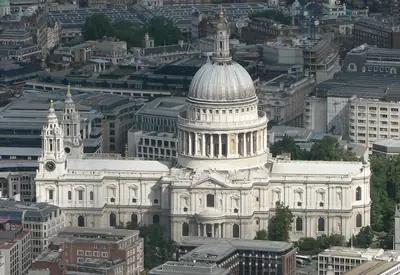
St Paul’s Cathedral dominates the London skyline with its great dome, which has defined the view for more than three centuries. Situated on Ludgate Hill, the highest point in the City of London, the present building was completed in 1710 in the English Baroque style under Sir Christopher Wren. At 111 metres tall, it was the city’s highest structure from 1710 until 1963 and its dome remains one of the highest in the world. A cathedral dedicated to Paul the Apostle has stood on the site since AD 604; the earlier Gothic building was largely destroyed in the Great Fire of 1666, and the current cathedral forms part of the rebuilding programme that followed. Although it is a famous landmark, St Paul’s continues to serve as an active place of worship with daily services and hourly prayers.
Westminster Cathedral
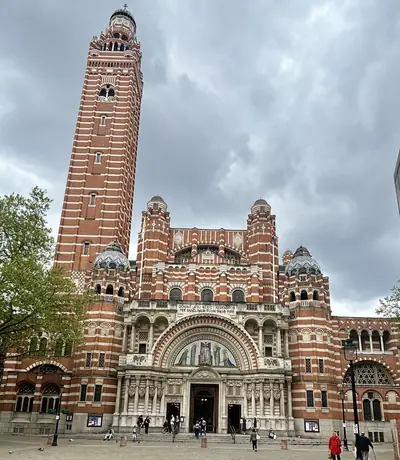
Westminster Cathedral is the largest Catholic church in England and Wales. Formally known as the Metropolitan Cathedral of the Most Precious Blood, it is dedicated to the Blood of Jesus Christ and serves as the seat of the Archbishop of Westminster. Designed by John Francis Bentley in a ninth‑century Christian Neo‑Byzantine style, the building is made almost entirely of brick with contrasting stone and contains no steel reinforcement. The writer Sir John Betjeman praised it as “a masterpiece in striped brick and stone.” The site was purchased by the Archdiocese of Westminster in 1885 and construction took place between 1895 and 1903, after which it became the principal Catholic church for the archdiocese and the metropolitan church for Catholics in England and Wales. The cathedral has welcomed two papal visitors: Pope John Paul II on 28 May 1982 and Pope Benedict XVI on 18 September 2010.
Hampton Court Palace
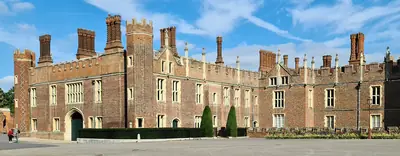
Hampton Court Palace lies on the River Thames in Richmond upon Thames, southwest of London. For almost two centuries it was at the centre of royal court life, politics and national history, and its architecture reveals a striking mix of Tudor and Baroque elements. The palace began in 1514 for Cardinal Thomas Wolsey; after Wolsey fell from favour in 1529 he gave the property to Henry VIII, who made it one of his favourite residences and enlarged it to accommodate his court. The Tudor sections reflect the parts Henry inherited and expanded, while much of the later building stems from William III’s ambitious rebuilding programme of the early 1690s, intended to rival the Palace of Versailles. Work halted in 1694, leaving a distinctive contrast between domestic Tudor architecture and English Baroque, united by pink brick and the broad balance of the low wings.
Royal Opera House
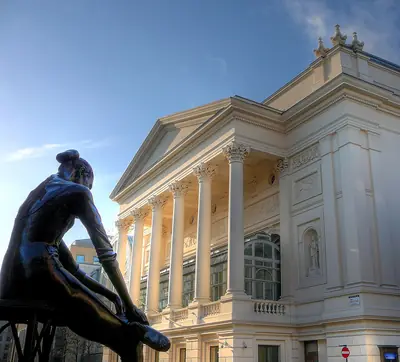
The Royal Opera House in Covent Garden is one of London’s major performing‑arts venues, home to the Royal Opera, the Royal Ballet and the Orchestra of the Royal Opera House. The building visible today is the third theatre on the site; earlier theatres were destroyed by fires in 1808 and 1856, and the present structure opened in 1858. Its façade, foyer and auditorium survive from that period, while much of the rest of the complex was reconstructed in the 1990s. The main auditorium is a Grade I listed space arranged across four tiers of boxes and balconies plus an amphitheatre gallery, seating more than two thousand people. Theatrical activity on the site dates back to 1732, when the first Theatre Royal opened; it began as a playhouse, ballet was introduced in 1734, and the first opera season in 1735 featured works by George Frideric Handel written specifically for Covent Garden.
Kew Palace
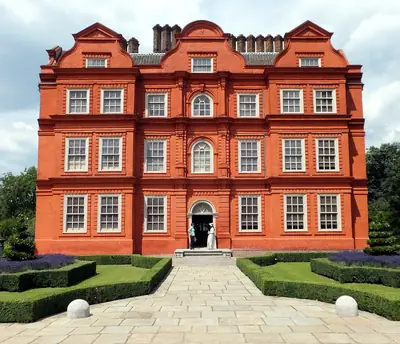
Kew Palace, located within Kew Gardens beside the River Thames, is the surviving part of a once larger royal complex. Known as the Dutch House, it dates from 1631 and was built over the undercroft of an earlier building. Royal occupation at Kew lasted from around 1728 until 1818, with a brief final return in 1844. At least three palaces stood at Kew over time, two of which were called Kew Palace. The Dutch House remains the main surviving element, alongside a fragment of an eighteenth‑century service wing, a former housekeeper’s cottage, a brewhouse and a kitchen block. The Dutch House is a Grade I listed historic house museum, and its kitchens are open to visitors.
St Bartholomew‑the‑Great
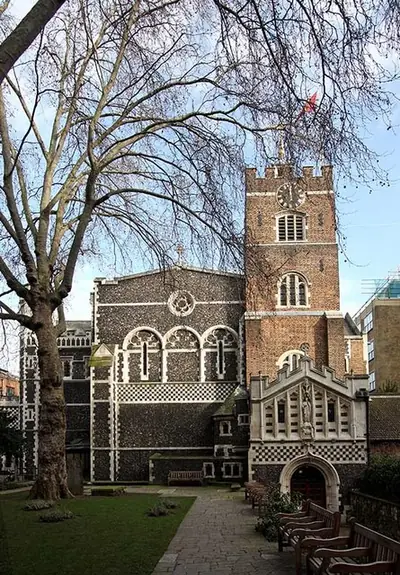
St Bartholomew‑the‑Great in Smithfield is one of the City of London’s historic churches, its long name distinguishing it from the nearby St Bartholomew‑the‑Less. Its origins reach back to 1123, when it began as an Augustinian priory. Today it forms part of the Church of England’s Diocese of London and stands beside St Bartholomew’s Hospital, sharing the same foundation and linking the church to one of the area’s longstanding institutions.
British Museum
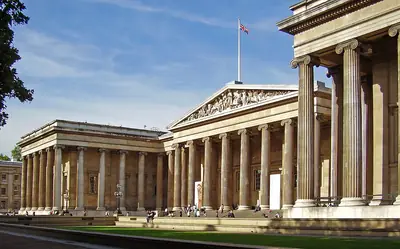
The British Museum houses a permanent collection of around eight million objects, making it one of the world’s largest assemblages of human history, art and culture. Founded in 1753, it was the world’s first public national museum and opened to visitors in 1759 at Montagu House, on the site of the building seen today. Over the centuries its collections have expanded across continents and cultures, offering an exceptionally broad picture of civilization. The museum once housed a library department; in 1973 that department became separate under the British Library Act, although the British Library continued to use the museum’s Reading Room and building until 1997. General admission to the museum is free, although some temporary exhibitions charge an entry fee, allowing visitors to return and discover different parts of the collection at their own pace.
St Paul’s Church, Covent Garden
St Paul’s Church on Bedford Street in Covent Garden is known as the Actor’s Church because of its long association with London’s theatre community, especially the West End. It remains a Church of England parish church. The building was commissioned in 1631 by Francis Russell, the 4th Earl of Bedford, as part of his plans for houses suitable for gentlemen and men of ability. Designed by Inigo Jones and completed in 1633, it was the first entirely new church erected in London since the Reformation. It began as an auxiliary chapel for St Martin‑in‑the‑Fields and became a parish church dedicated to Saint Paul in 1646 as Covent Garden expanded. Jones’s design follows the description of an Etruscan‑style temple by the ancient Roman architect Vitruvius, creating what has been called a strictly Vitruvian Tuscan design: a temple‑like front with a portico facing the square, the other sides mainly brick with stone details, and triangular wooden pediments at both ends.
Prince Henry’s Room
Prince Henry’s Room at No. 17 Fleet Street is also known as the Inner Temple Gatehouse. It forms part of one of the few surviving buildings in the City of London that date from before the Great Fire of 1666. The room is open to the public, and its ceiling displays richly decorated plasterwork that is a rare surviving example from the reign of James I. At the centre are the feathers of the Prince of Wales together with the initials “PH,” linking the space to Prince Henry, the son of James I. The site’s history includes a period as belonging to the Knights Templar; after the Order of St John was dissolved the house was rebuilt in 1610 and became a small tavern called the Prince’s Arms. During the seventeenth century it was known as the Fountain, and in the early nineteenth century the front of the house hosted the celebrated exhibition Mrs Salmon’s Waxworks while the tavern continued at the back. In 1900 the building passed into the ownership of the London County Council.
Museum of Comedy
The Museum of Comedy is housed in the church of St George’s, Bloomsbury. Designed by Nicholas Hawksmoor and consecrated in 1730, the church combines an imposing exterior with a varied history beneath the surface. It was built between 1716 and 1730 as part of an ambitious programme launched by the British Parliament in 1711 to create fifty new churches in London; only twelve were actually completed. St George’s is regarded as Hawksmoor’s most complex church design, shaped by the challenge of building on a restricted site. The south portico projects boldly from the building and is supported by six Corinthian columns. At the west end the tower rises in stepped stages, its upper form inspired by the Mausoleum of Halicarnassus, and is crowned by a statue of the church’s patron, King George I of Hanover. Inside, the church is organised around a central square with additional spaces to the north and south separated by rows of columns. The interior was significantly rearranged in 1781: the northern gallery was removed and the altar area moved there, altering the church’s orientation.
St Martin-in-the-Fields
St Martin-in-the-Fields stands at the north‑east corner of Trafalgar Square. This Church of England parish church has occupied the site in one form or another since at least the medieval period, and its neoclassical façade remains one of the visual anchors of the open space around the square. Dedicated to Saint Martin of Tours, the earliest church here lay beyond London’s wall among farmland and fields—a setting reflected in the name. As Westminster grew, the church became a principal parish church west of the old City. The present building was designed by James Gibbs and constructed between 1722 and 1726, replacing an earlier medieval and Jacobean structure that was close to collapse. Its influential neoclassical design includes a tower integrated into the portico, an arrangement considered novel at the time and strongly criticised before later being widely imitated, especially in the United States.
St Marylebone Parish Church
St Marylebone Parish Church on Marylebone Road is an Anglican church whose story is closely tied to the surrounding area. The building visible today dates from the early nineteenth century and stands at the parish’s third church site. It was designed by Thomas Hardwick and built between 1813 and 1817, giving the parish a distinctly nineteenth‑century setting on Marylebone Road. The parish’s first church had stood farther south near Oxford Street; that building was demolished in 1400 and a replacement erected farther north. The second church was completely rebuilt between 1740 and 1742 before becoming a chapel of ease when Hardwick’s church was constructed.
All Souls Church
All Souls Church at Langham Place is a distinctive Anglican landmark at the north end of Regent Street in Marylebone. Its position directly opposite Broadcasting House has given it a close connection with the BBC, leading to the informal name “the BBC Church.” The church was designed by John Nash in the Regency style and consecrated in 1824. Its design reflects the architectural character of the period.
Victoria and Albert Museum
The Victoria and Albert Museum, usually called the V&A, is devoted to applied arts, decorative arts and design. Its collections span 5,000 years and include millions of objects from Europe, the Americas, Africa and Asia, making it one of the world’s largest museums. The original site is in South Kensington, covering 12.5 acres and containing more than 145 galleries. Visitors can encounter ceramics, glass, textiles, costumes, jewellery, furniture, metalwork, sculpture, prints, drawings and photographs. The museum’s story reaches back to the Government School of Design established in 1832. The museum itself was founded in 1852 and was formally renamed the Victoria and Albert Museum in 1899 to commemorate Queen Victoria’s husband, Prince Albert. Although the V&A is part of a wider family of museums with sites elsewhere in the United Kingdom, South Kensington remains its original London site, and entrance to this national museum is free, allowing you to explore the galleries at your own pace.
Buckingham Palace
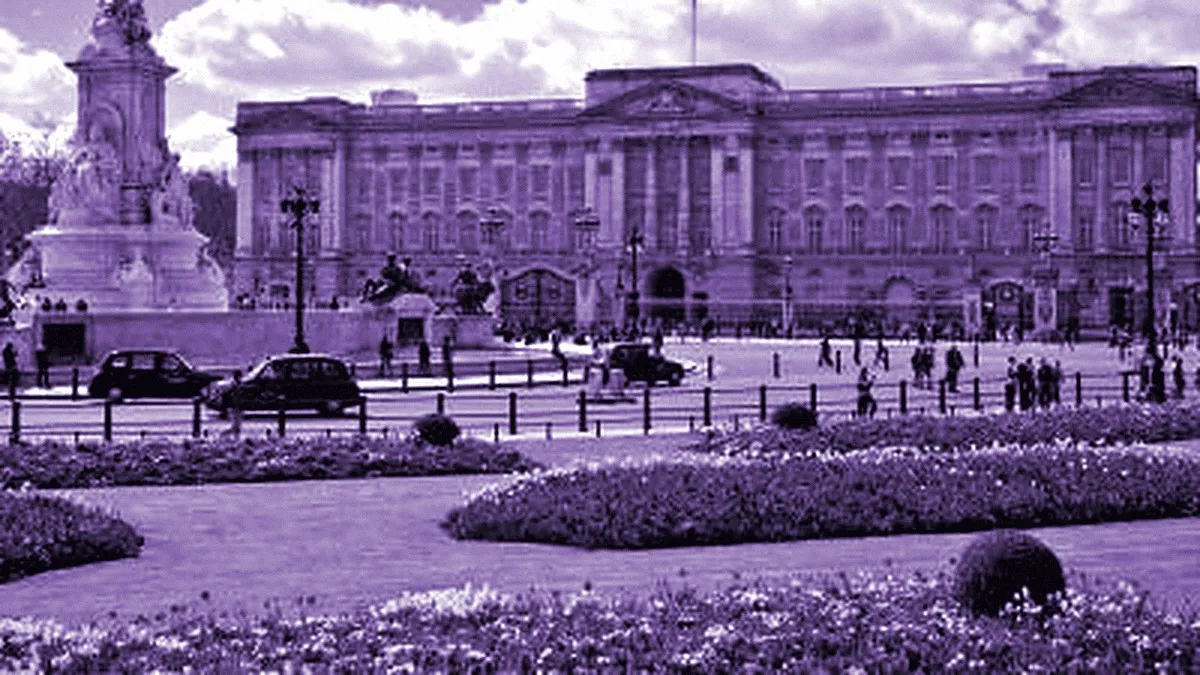
Buckingham Palace is the official London residence and principal workplace of the British monarch. It is where state occasions and royal hospitality take place, and where the British people have gathered during moments of national celebration, crisis and mourning. The palace began as Buckingham House, a large townhouse built in 1703 for John Sheffield, Duke of Buckingham and Normanby. George III acquired it in 1761 as a private residence for Queen Charlotte, and over the following decades it was transformed and enlarged. Architects John Nash and Edward Blore added three wings around a central courtyard, creating the palace recognisable today. It became the official London residence of the monarchy when Queen Victoria came to the throne in 1837. Later additions shaped its familiar public appearance, including the East Front and its central balcony, where the royal family traditionally appears before crowds. The façade was refaced with Portland limestone in 1913, forming the backdrop to the Victoria Memorial. Beyond the famous exterior the palace reveals a rich mixture of styles, with many early nineteenth‑century interiors using a variety of materials and finishes.
Explore London with Neywo
Neywo offers a free audio guide for London that includes 7 walking tours, 1 bus route and 1 bike route. Each tour plays the story of a place as you reach it, letting you explore at your own pace with no group and no schedule.
- Whitehall to Westminster: Where Britain Is Governed – 2.15 km, 114 min, 10 stops (Westminster Abbey, Palace of Westminster, Big Ben, Churchill War Rooms, 10 Downing Street, the Cenotaph, Banqueting House, Horse Guards, Charles I, Nelson’s Column)
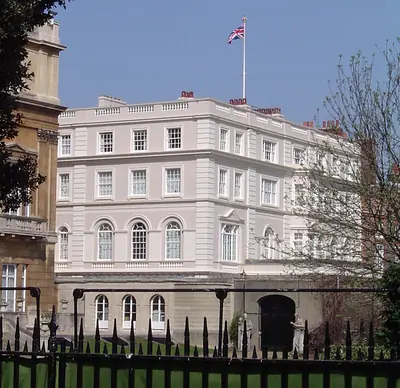
- Royal London: Palaces, Processions and the Mall – 2.13 km, 115 min, 8 stops (Victoria Memorial, Buckingham Palace, Spencer House, Clarence House, Saint James’s Palace, Queen’s Chapel, Marlborough House, Admiralty Arch)
- Tower to Monument: Traitors, Plague and the Great Fire – 2.28 km, 112 min, 10 stops (Tower Bridge, Tower of London, Tower Hill Memorial, All Hallows‑by‑the‑Tower, St Dunstan in the East, Sky Garden, Leadenhall Market, The Monument to the Great Fire of London, St Magnus the Martyr, London Bridge)
- Curtain Up: Covent Garden to Fleet Street – 1.73 km, 114 min, 8 stops (St Paul’s Church, Covent Garden, Royal Opera House, The Theatre Royal, The Courtauld Gallery, Somerset House, St Clement Danes, Temple Church, Prince Henry’s Room)
- Albertopolis: Palaces, Museums and the Albert Memorial – 2.66 km, 109 min, 9 stops (Kensington Palace, The Albert Memorial, Royal Albert Hall, Beit Quadrangle, Queen’s Tower, Natural History Museum, Science Museum, Victoria and Albert Museum, Brompton Oratory)
- Bankside and Southwark: Shakespeare, Ships and a Shard – 2.83 km, 101 min, 11 stops (Kirkaldy Testing Museum, Bankside Gallery, Tate Modern, Millennium Bridge, Shakespeare’s Globe, Clink Prison Museum, Golden Hinde, Southwark Cathedral, Old Operating Theatre Museum, The Shard, HMS Belfast)
- Bloomsbury: The British Museum and the Streets of Hawksmoor and Soane – 2.98 km, 102 min, 7 stops (St George’s Bloomsbury, British Museum, St Giles in the Fields, Holborn, Museum of Freemasonry, Sir John Soane’s Museum, Hunterian Museum, Dr Johnson’s House)
- Bus line – Route 15: Charing Cross to the Tower via Fleet Street and St Paul’s – 5.1 km, 22 min, 12 stops (Queen Eleanor Memorial Cross, The King’s Chapel of the Savoy, St Clement Danes, Prince Henry’s Room, St Brides, The Church Of St Martin Within Ludgate, St Paul’s Cathedral, St Mary Aldermary, London Stone, St Mary-at-Hill, All Hallows‑by‑the‑Tower, Whitechapel Gallery)
- Bike route – Royal Parks to Westminster by Bike: Kensington Palace to St Margaret’s – 5.5 km, 28 min, 9 stops (Kensington Palace, Serpentine South, Serpentine North, Wellington Arch, Victoria Memorial, The Guards Museum, Statue of Queen Anne, Churchill War Rooms, St Margaret’s Church)
As you walk, cycle or ride, the app narrates each site when you arrive, so you can linger where you like and move on when you’re ready.
If you have time for a short trip beyond the capital, consider visiting the historic city of Lincoln or heading north to the vibrant music scene of Liverpool. Both are easy to reach by train and offer their own rich stories.
Ready to see London your way? Download Neywo, plug in your headphones, and let the city reveal itself, one story at a time.
Places with an audio guide in London
8 places in London with a Neywo audio guide. Each one starts telling its story as you reach it.
Self-guided tours in London
9 tours in London, free in the Neywo app. Each stop tells its story as you reach it.
- Bike ride
Royal Parks to Westminster by Bike: Kensington Palace to St Margaret's
Ride from Kensington Palace along both banks of the Serpentine in Hyde Park, past Wellington Arch to the Victoria Memorial, then along the royal parks to the Guards Museum, Queen Anne's statue, the Churchill War Rooms and Westminster Abbey's neighbour, St Margaret's Church.
Kensington Palace · Serpentine South · Serpentine North · Wellington Arch · Victoria Memorial · The Guards Museum …
Open this tour: Royal Parks to Westminster by Bike: Kensington Palace to St Margaret's - Bus ride
Route 15: Charing Cross to the Tower via Fleet Street and St Paul's
Ride the 15 east from Trafalgar Square along the Strand and Fleet Street to St Paul's, then down through the City to the Tower. It threads the Savoy, the Inns of Court, Wren's churches and London Stone, and is one of the simplest ways to cross historic London on a single ticket.
Queen Eleanor Memorial Cross · The King’s Chapel of the Savoy · St Clement Danes · Prince Henry's Room · St Brides · The Church Of St Martin Within Ludgate …
Open this tour: Route 15: Charing Cross to the Tower via Fleet Street and St Paul's - Walk
Whitehall to Westminster: Where Britain Is Governed
From the abbey where monarchs are crowned to the column that watches over Trafalgar Square, this is the walk through the corridors of power: Parliament and Big Ben, the Cenotaph on Whitehall, the door of number 10, the bunker where Churchill ran the war and the banqueting hall where a king stepped out to his execution.
Westminster Abbey · Palace of Westminster · Big Ben · Churchill War Rooms · 10 Downing Street · The Cenotaph …
Open this tour: Whitehall to Westminster: Where Britain Is Governed - Walk
Royal London: Palaces, Processions and the Mall
Follow the route of royal ceremony from the Victoria Memorial and Buckingham Palace to the Tudor red brick of St James's Palace. Along the way you pass the homes of the present king, a private Georgian palace, and a chapel by Inigo Jones, before ending at the triumphal arch at the end of the Mall.
Victoria Memorial · Buckingham Palace · Spencer House · Clarence House · Saint James's Palace · Queen's Chapel …
Open this tour: Royal London: Palaces, Processions and the Mall - Walk
Tower to Monument: Traitors, Plague and the Great Fire
Begin at the Tower of London and its bridge, then step into the churches where Pepys watched the Great Fire burn and where he is buried. Walk on through Leadenhall Market to the Monument that marks the fire's start, and finish at the Roman crossing point of London Bridge.
Tower Bridge · Tower of London · Tower Hill Memorial · All Hallows-by-the-Tower · St Dunstan in the East · Sky Garden …
Open this tour: Tower to Monument: Traitors, Plague and the Great Fire - Walk
Curtain Up: Covent Garden to Fleet Street
Walk from the actors' church and the Royal Opera House through Theatreland to Somerset House on the Strand. Then pass St Clement Danes and the round church of the Knights Templar, and end at a rare Jacobean room on Fleet Street, where Samuel Pepys was born nearby.
St Paul's Church, Covent Garden · Royal Opera House · The Theatre Royal · The Courtauld Gallery · Somerset House · St Clement Danes …
Open this tour: Curtain Up: Covent Garden to Fleet Street - Walk
Albertopolis: Palaces, Museums and the Albert Memorial
Prince Albert's dream of a district of culture still stands around the Royal Albert Hall. Start at Kensington Palace, walk past the gilded Albert Memorial and the concert hall that bears his name, then through Imperial College's quadrangle to the Natural History Museum, the Science Museum and the V&A, ending at the Italian baroque of Brompton Oratory.
Kensington Palace · The Albert Memorial · Royal Albert Hall · Beit Quadrangle · Queen's Tower · Natural History Museum …
Open this tour: Albertopolis: Palaces, Museums and the Albert Memorial - Walk
Bankside and Southwark: Shakespeare, Ships and a Shard
Walk the Thames Path from Tate Modern and the Millennium Bridge past Shakespeare's Globe, the Clink prison and Drake's Golden Hinde to Southwark Cathedral and the garret where surgeons once operated without anaesthetic. End beneath the Shard and aboard the Second World War cruiser HMS Belfast.
Kirkaldy Testing Museum · Bankside Gallery · Tate Modern · Millennium Bridge · Shakespeare's Globe · Clink Prison Museum …
Open this tour: Bankside and Southwark: Shakespeare, Ships and a Shard - Walk
Bloomsbury: The British Museum and the Streets of Hawksmoor and Soane
Start at Hawksmoor's strange stepped spire, then spend time with the treasures of the British Museum. Walk on to the church of St Giles, the Masonic temple, Sir John Soane's house of curiosities and the surgeons' Hunterian Museum, finishing at Dr Johnson's home where the first English dictionary was written.
St George's Bloomsbury · British Museum · St Giles in the Fields, Holborn · Museum of Freemasonry · Sir John Soane's Museum · Hunterian Museum …
Open this tour: Bloomsbury: The British Museum and the Streets of Hawksmoor and Soane
Walk London with Neywo
Neywo turns London into a self-guided audio tour. Stories arrive as you reach the place they belong to, and the route reshapes when you wander off it.

