Visiting Kingston, Jamaica: Top Sights on Foot
Things to Do in Kingston, Jamaica
Looking for things to do in Kingston? Jamaica’s capital brings together music, history, art, religious heritage, and everyday city life, with the Blue Mountains rising to the northeast and Kingston Harbour opening towards the Caribbean. It is worth visiting for the way these different parts of Jamaica meet in one city. Neywo offers a free audio guide for Kingston with 18 narrated places, available in 11 languages.
What to See in Kingston
Bob Marley Museum
The Bob Marley Museum occupies 56 Hope Road, the 19th-century colonial-style house where Bob Marley lived from 1970 until his death in 1981. His wife, Rita Marley, converted the house into a museum in 1986, and it also serves as the headquarters of the Bob Marley Foundation.
The museum preserves the singer’s home, music, personal possessions, and recording studio. The address also carries a darker chapter in Marley’s story: it was the site of a failed assassination attempt in 1976. Its cultural influence even reached pop music through Sugar Ray and Shaggy’s song “56 Hope Road”, released on the 2003 album In the Pursuit of Leisure.
National Gallery of Jamaica
The National Gallery of Jamaica is the island’s public art museum. Established in 1974, it is located in the Kingston Mall, a commercial and cultural centre beside Kingston Harbour.
Its collection focuses mainly on important works by Jamaican artists, while international works and travelling exhibitions add new perspectives. For travellers interested in Jamaican creativity beyond music, it is one of the most useful cultural stops in the city.
Holy Trinity Cathedral
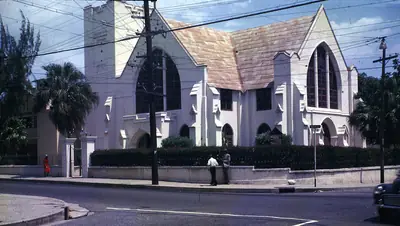
Holy Trinity Cathedral is one of downtown Kingston’s most distinctive buildings. Its Byzantine Revival design sets it apart from the surrounding architecture, and it serves as the seat of the metropolitan Archbishop of Kingston.
The cathedral was consecrated in 1911 after construction began in 1908. It replaced the original Church of the Holy Trinity at Duke and Sutton streets, which was destroyed in the earthquake of 1907. The building stands between North Street and George Headley Drive, and Pope John Paul II visited it on 10 August 1993.
Downtown Kingston
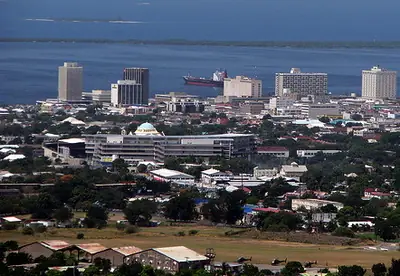
Kingston is Jamaica’s largest city and its capital, founded by the British in 1693 around a natural harbour. The city is now part of the Kingston and St. Andrew Corporation, which brings together Kingston Parish and neighbouring Saint Andrew Parish.
Downtown is a useful area for encountering the capital’s public spaces, cultural institutions, and religious buildings. The National Gallery of Jamaica and Holy Trinity Cathedral are among the places that reveal different sides of Kingston’s history.
Trenchtown
Trenchtown is one of Kingston’s best-known neighbourhoods. It is associated internationally with Bob Marley and many of Jamaica’s leading reggae artists. The area’s connection to reggae makes it an important part of understanding the city’s musical identity, alongside the Bob Marley Museum.
Port Royal
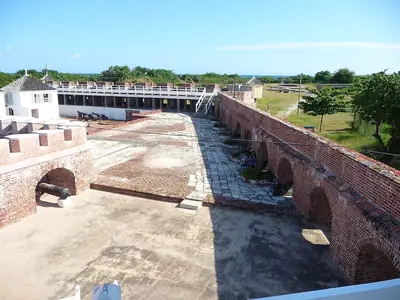
Port Royal lies at the end of the Palisadoes, at the mouth of Kingston Harbour. Today it is a quiet fishing village, but from the latter half of the 16th century it was one of the Caribbean’s largest and most prosperous cities, serving as a centre of shipping and commerce.
English and Dutch governments sponsored privateers based in Port Royal, encouraging attacks on Spanish vessels. When that system was abandoned, some crews turned to piracy. The town became notorious for its wealth, taverns, gambling houses, and brothels, leaving it with one of the Caribbean’s most dramatic histories.
The Blue Mountains and Blue Mountain Peak
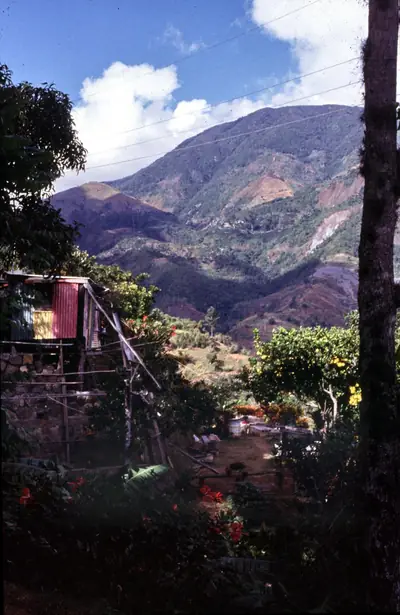
The Blue Mountains stretch across the eastern third of Jamaica and form a striking backdrop to Kingston. They are the island’s longest mountain range, crossing Portland, St Thomas, St Mary, and St Andrew parishes.
Blue Mountain Peak rises to 2,256 metres, making it the highest point in Jamaica and the highest peak in the Caribbean outside Hispaniola. A walking track leads to the summit. In clear conditions, the view can extend to both Jamaica’s north and south coasts, with Cuba visible on the horizon when conditions allow.
The slopes are also home to Blue Mountain coffee, one of the region’s most famous products. The range lies about 20 kilometres northeast of Kingston, while Blue Mountain Peak is roughly 23 kilometres east of the city.
University of the West Indies and UWI Museum
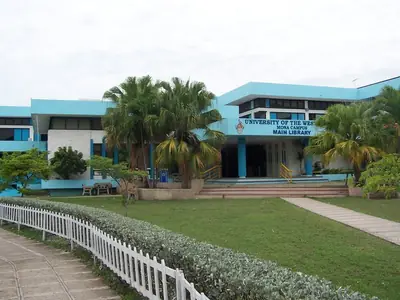
The Mona campus of the University of the West Indies is in Saint Andrew Parish, just outside Kingston. Founded in 1948 as the University College of the West Indies, it became the flagship campus and headquarters of the wider university system.
The UWI Museum, established in 2012, explores the history and development of the university and its relationship with the Caribbean. Its first semi-permanent exhibition focuses on the institution’s origins and its first students, who arrived in October 1948 with the initial aim of increasing the number of doctors serving the region.
Kingston’s Historic Churches and Synagogue
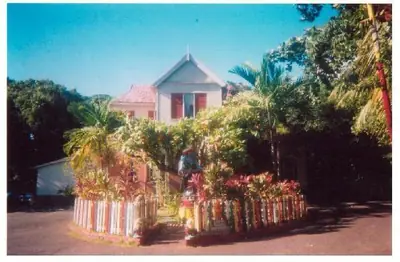
Kingston’s religious heritage extends beyond Holy Trinity Cathedral. The Church of the Redeemer is the oldest Moravian Church building in Kingston, opened in 1918. Its unusual name was chosen by its builder, Jonathan Reinke.
Trinity Moravian Church was established in 1954 during the bicentenary celebrations of the Moravian Church in Jamaica. Shaare Shalom Synagogue, also known as the Kahal Kadosh Shaare Shalom or the United Congregation of Israelites, adds another part of the city’s religious history. Christ the King in August Town is another place of quiet significance within the Kingston area.
Norman Manley International Airport
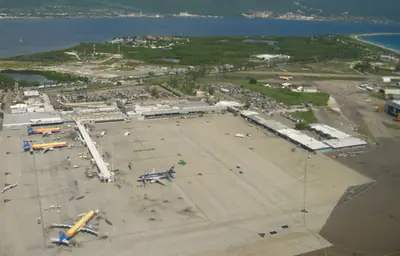
Norman Manley International Airport occupies a distinctive position on the Palisadoes tombolo, a narrow strip of land between Kingston and the Caribbean Sea. The airport is named after Jamaican statesman Norman Manley and was formerly known as Palisadoes Airport.
It is the main gateway to Kingston and sits about 19 kilometres south of New Kingston. Its low, flat setting and surrounding water make the approach one of the more distinctive arrivals in Jamaica.
Explore Kingston with Neywo
A Kingston self-guided walking tour is a simple way to connect the city’s places without joining a group or following a fixed schedule. Neywo’s free Kingston audio guide tells the story of each place as you reach it, at your own pace.
The current Kingston tour is:
- Downtown Kingston: Harbour Art and Moravian Roots — a 1.98-kilometre walk lasting 48 minutes, with four narrated stops: Church of the Redeemer, Jamaica; Kingston; National Gallery of Jamaica; and Negro Aroused.
Download Neywo and explore Kingston independently: each story starts when you reach the place, with no group and no schedule. If you are planning a wider trip around Jamaica, you can also continue to Montego Bay or Negril.
Places with an audio guide in Kingston
8 places in Kingston with a Neywo audio guide. Each one starts telling its story as you reach it.
Self-guided tours in Kingston
1 tour in Kingston, free in the Neywo app. Each stop tells its story as you reach it.
- Walk
Downtown Kingston: Harbour Art and Moravian Roots
A short stroll through the old heart of Kingston, from the Moravian church built by a modest founder to the waterfront. Start with the story of the city itself, then step into the National Gallery to meet Jamaica's finest painters and sculptors, and end beside Edna Manley's bronze Negro Aroused, a symbol of awakening and national pride.
Church of the Redeemer, Jamaica · Kingston · National Gallery of Jamaica · Negro Aroused
Open this tour: Downtown Kingston: Harbour Art and Moravian Roots
Walk Kingston with Neywo
Neywo turns Kingston into a self-guided audio tour. Stories arrive as you reach the place they belong to, and the route reshapes when you wander off it.

