Visiting Bishkek, Kyrgyzstan: Top Sights on Foot
Things to Do in Bishkek: A Self-Guided Tour of Kyrgyzstan’s Capital
Looking for things to do in Bishkek? Kyrgyzstan’s capital brings together monumental squares, museums, theatres, religious buildings, leafy parks and reminders of its Soviet past. It is a city best explored at street level, where a short walk can connect national history, Kyrgyz culture and everyday urban life. Neywo has a free audio guide for Bishkek with 19 narrated places.
What to See in Bishkek
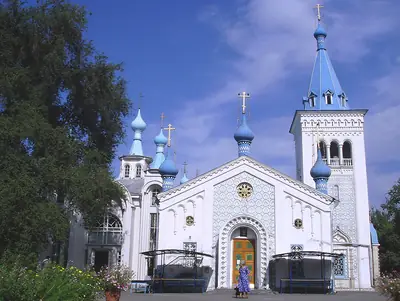
Church of the Resurrection of Christ
The Church of the Resurrection of Christ is the principal Orthodox cathedral in Bishkek and the cathedral of the Bishkek and Kyrgyz diocese of the Russian Orthodox Church. Its dedication to the Resurrection of Jesus Christ makes it an important religious landmark in the capital.
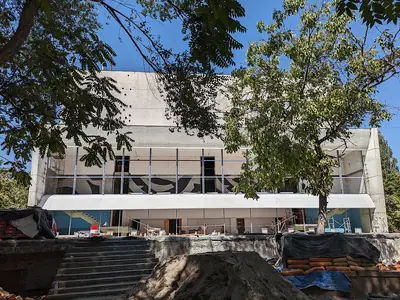
Spartak Stadium
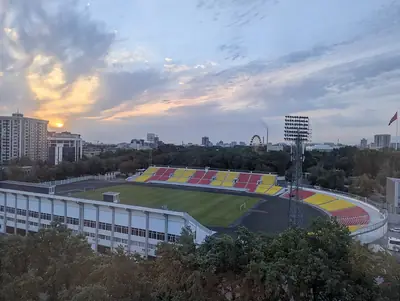
Spartak Stadium, officially known as the Dolen Omurzakov Stadium, is the largest sports venue in Kyrgyzstan. It opened in 1941 under the name Spartak Stadium and can accommodate 23,000 spectators. Today, it serves as a home ground for the Kyrgyzstan national team and several Bishkek clubs, including Dordoi, Alga, Asiagoal and FC Bishkek City.
The stadium has undergone several reconstructions, including a complete overhaul finished in 2024. Even when there is no match taking place, it helps illustrate the scale of Bishkek’s sporting life.
Panfilov Park
Panfilov Park is a green space between Old Square and Manas Square, offering a quiet break in the city center. It was named after Ivan Panfilov, a Hero of the Soviet Union who chaired the Military Committee of the Kirghiz SSR.
The park has an unusual design: its paths form a star when viewed from above, radiating outward through the urban grid.
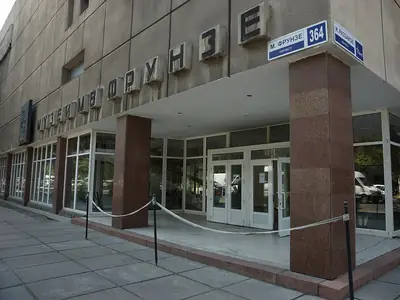
M. V. Frunze Museum
The M. V. Frunze Museum preserves the story of Mikhail Frunze, a prominent Red Army commander who was born in Bishkek in 1885, when the city was known as Pishpek. The museum opened in 1927, two years after his death, making it one of the oldest museums in Kyrgyzstan.
The current building, completed in 1967, surrounds the original family home. At the center of the complex, the modest clay house with its reed roof has been restored with furniture, household objects and personal belongings connected to Frunze’s family. It offers a glimpse into life in Pishpek at the beginning of the twentieth century.
The Kyrgyz Soviet Socialist Republic
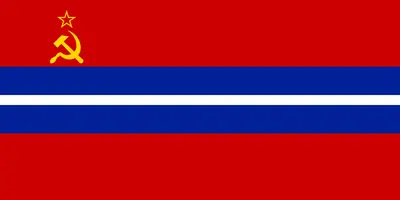
Bishkek was once known as Frunze and served as the capital of the Kirghiz Soviet Socialist Republic. The republic existed from December 5, 1936, when it became a Soviet union republic, until August 31, 1991, when it became the independent Kyrgyz Republic.
This history is still visible in the city’s monuments, institutions and architecture. Older residents may still use “Kirghizia” or “Soviet Kyrgyzstan”, names associated with the Soviet period.
National Library of the Kyrgyz Republic
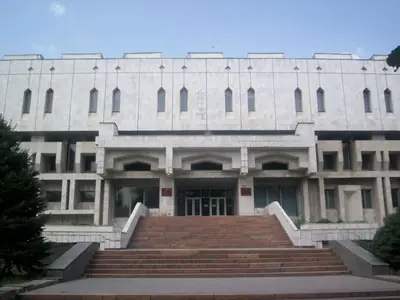
The National Library of the Kyrgyz Republic is named after the poet Alykul Osmonov. Founded in 1934, it became the National Library in 1993 and took its current name in 2015.
Its collection contains around six million items in nearly 90 languages. The library also plays an important role in preserving and sharing Kyrgyz literary culture. In 2009, the complete Kyrgyz text of the Manas epic, as recited by the manaschi Sayakbai Karalaev, was added to the World Digital Library with Russian, English and other translations.
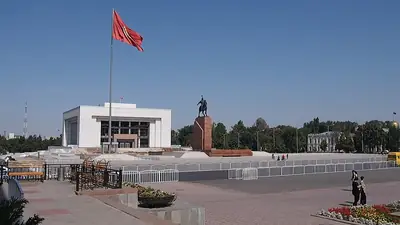
Ala-Too Square
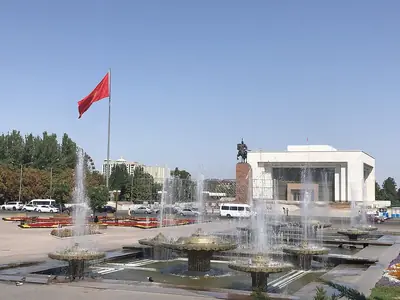
Ala-Too Square is the symbolic center of Bishkek and one of the most important public spaces in Kyrgyzstan. It opened in 1984 to mark the 60th anniversary of the Kyrgyz SSR and has since hosted national celebrations, military parades and large public gatherings.
The square was also the scene of major political events, including the Tulip Revolution in 2005, the April uprising in 2010 and further political upheaval in 2020. Its monuments reflect the country’s changing identity, while the national flag and ceremonial guard give the square an unmistakably civic character.
National Museum of Fine Arts Gapar Aitiev
The National Museum of Fine Arts Gapar Aitiev is Kyrgyzstan’s premier state art museum. Its collections bring together Russian art from the nineteenth and twentieth centuries with traditional Kyrgyz decorative and applied arts.
The museum is particularly notable for its extensive Kyrgyz craftsmanship, including textiles, felt work, jewellery and woodcarving. It is a useful place to see how artistic traditions associated with nomadic culture sit alongside Russian artistic influences.
State Academic Russian Drama Theatre “Chinghiz Aitmatov”
Located in Oak Park, the State Academic Russian Drama Theatre “Chinghiz Aitmatov” is Kyrgyzstan’s only Russian-language theatre. It was established in 1935, with the aim of presenting dramatic literature and supporting the development of Kyrgyz national theatre.
The theatre later built a reputation across the Soviet Union and was recognised as one of the country’s leading theatrical collectives. Its presence in the city centre adds a performing-arts dimension to Bishkek’s cultural landscape.
Bishkek Central Mosque
The Bishkek Central Mosque, also called the Central Mosque of Imam Sarakhsi, is the largest mosque in Kyrgyzstan and one of the largest in Central Asia. Built in an Ottoman revival style with Turkish Diyanet funding, it has a central dome and slender minarets.
Construction began in 2012 and the mosque opened in 2018. Its prayer halls can hold up to 30,000 worshippers, making it both a major religious institution and one of Bishkek’s most striking modern landmarks.
Abdumomunov Kyrgyz National Academic Drama Theatre
Founded on November 2, 1926, the Abdumomunov Kyrgyz National Academic Drama Theatre is described as Kyrgyzstan’s leading dramatic stage. It is named after T. Abdumomunov, an important figure in Kyrgyz theatre.
St. Michael the Archangel Church
St. Michael the Archangel Church is the only Catholic church in Kyrgyzstan. Located near Bayat Bazaar, it serves the country’s Roman Catholic community, which has three parishes but only this one church building.
The church was built in 1969 by ethnic Germans who had been deported to Central Asia during Stalin’s purges. Its original single-storey design allowed it to blend into the surrounding residential neighbourhood. A second floor was added in 1981 as the congregation grew.
Kyrgyz-Russian Slavic University
The Kyrgyz-Russian Slavic University is jointly operated by the Kyrgyz Republic and the Russian Federation. Students graduate with diplomas recognised by both countries, following curricula that combine both educational systems.
Founded in 1993, the university was renamed after Boris Yeltsin in 2004. Its large campus includes eight faculties, research institutes, scientific centres, laboratories, a medical centre, an art gallery, a museum and studios for aesthetic education.
Ala-Archa River
South of the city, the Ala-Archa River begins on the northern slopes of the Kyrgyz Ala-Too range. Fed by glaciers and permanent snowfields, it runs for 78 kilometres towards the Chuy Valley before joining the Chu River.
The river’s name refers to speckled or variegated juniper, which grows on the surrounding slopes. Its flow rises with snowmelt from May to September and falls considerably during winter. The river basin includes 33 glaciers and has long supported agriculture through reservoirs and irrigation.
Explore Bishkek with Neywo
For a Bishkek self-guided walking tour, download Neywo and explore without joining a group or following a fixed timetable. Bishkek has two walking tours and one bus route:
- From Cathedral to Ala-Too: Bishkek’s Soviet-Era Heart — 3.21 km, 108 minutes and 10 narrated stops.
- Bishkek East: Books, Victory and the Great Mosque — 2.58 km, 57 minutes and 4 narrated stops.
- Bus 2: Library, Oak Park and Ala-Too Square — 3.7 km, 16 minutes and 4 narrated stops.
The app tells the story of each place as you reach it, at your own pace, with no group and no schedule. Narration is available in 11 languages. Once you have explored Bishkek, continue discovering Kyrgyzstan or travel on to Karakol.
Places with an audio guide in Bishkek
8 places in Bishkek with a Neywo audio guide. Each one starts telling its story as you reach it.
Self-guided tours in Bishkek
3 tours in Bishkek, free in the Neywo app. Each stop tells its story as you reach it.
- Bus ride
Bus 2: Library, Oak Park and Ala-Too Square
Public electric bus 2 runs along Bishkek's central axis. Ride it from the National Library past the Russian Drama Theatre and Ala-Too Square to the old zoological museum Atom, four of the capital's best-known buildings in one cheap ride.
National Library of the Kyrgyz Republic · State Academic Russian Drama Theatre "Chinghiz Aitmatov" · Ala-Too Square
Open this tour: Bus 2: Library, Oak Park and Ala-Too Square - Walk
From Cathedral to Ala-Too: Bishkek's Soviet-Era Heart
Walk the grid Frunze planned and the Soviets built. Start at the Orthodox cathedral, cross the star-shaped Panfilov Park and the old square, visit the house where Mikhail Frunze was born, then reach vast Ala-Too Square, where statues of Lenin and Manas have come and gone. Continue through the museums and the theatre of Oak Park and end at the National Library with its six million items.
Church of the Resurrection of Christ · Spartak Stadium · Panfilov Park, Bishkek · Old Square · M. V. Frunze Museum · Kyrgyz State Historical Museum …
Open this tour: From Cathedral to Ala-Too: Bishkek's Soviet-Era Heart - Walk
Bishkek East: Books, Victory and the Great Mosque
Head east along the old Silk Road. Pass the Slavic University that two governments run together, the national library with six million items, Victory Square for the Second World War, and finish at the Ottoman-style Central Mosque that holds thirty thousand worshippers.
Kyrgyz-Russian Slavic University · National Library of the Kyrgyz Republic · Victory Square, Bishkek · Bishkek Central Mosque
Open this tour: Bishkek East: Books, Victory and the Great Mosque
Walk Bishkek with Neywo
Neywo turns Bishkek into a self-guided audio tour. Stories arrive as you reach the place they belong to, and the route reshapes when you wander off it.

