What to See in Vaduz, Liechtenstein: Free Audio Guide
Things to Do in Vaduz: What to See in Liechtenstein’s Capital
Looking for things to do in Vaduz? Liechtenstein’s compact capital brings together a princely castle, historic churches, museums, modern art, memorials and mountain scenery in an easy-to-explore setting. A visit offers a concise introduction to the country’s history and culture, with the Alps forming a striking backdrop. Neywo has a free audio guide for Vaduz with 13 narrated places, available in 11 languages.
What to See in Vaduz
Vaduz Cathedral
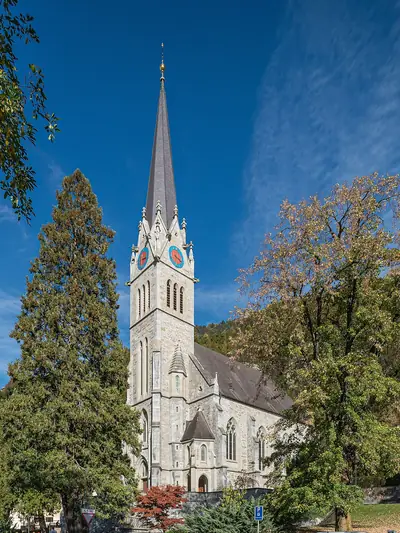
Vaduz Cathedral is one of the capital’s most recognizable landmarks. This neo-Gothic, three-nave church was built between 1869 and 1873 to designs by Friedrich von Schmidt, with Ignaz von Banko overseeing construction. It stands on the site of a medieval foundation and began as a parish church.
The church became a cathedral in 1997, when it was elevated to the seat of the Archbishop of Vaduz and became the centre of the Archdiocese of Vaduz. Its front tower and imposing neo-Gothic design give it a distinctive presence in the city.
Vaduz Castle
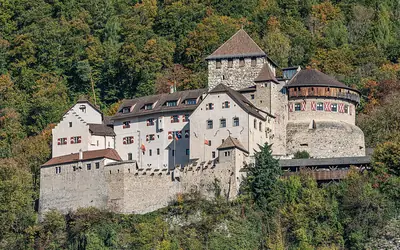
The silhouette of Vaduz Castle dominates the hillside above the town. Known in German as Schloss Vaduz, it is the palace and official residence of the Prince of Liechtenstein, as well as the seat of the Princely House of Liechtenstein.
The castle stands on a rocky terrace overlooking Vaduz. It was once also known as Hohenliechtenstein, and its name gave the town its own name. Its position above the capital makes it an essential sight, even though the key significance of the building is its role as the princely residence.
Liechtenstein National Museum
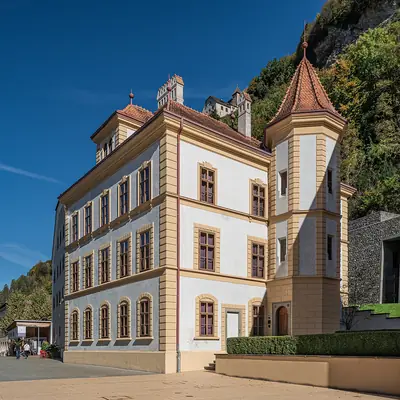
The Liechtenstein National Museum is the place to explore the principality’s history, regional culture and natural sciences. The public institution is located in Vaduz and presents the story of the country through its cultural and natural heritage.
The museum complex combines two historic buildings with a modern new building, creating an architectural contrast as well as a varied setting for its exhibits. It is a useful stop for understanding Liechtenstein beyond its royal family and Alpine landscape.
Red House
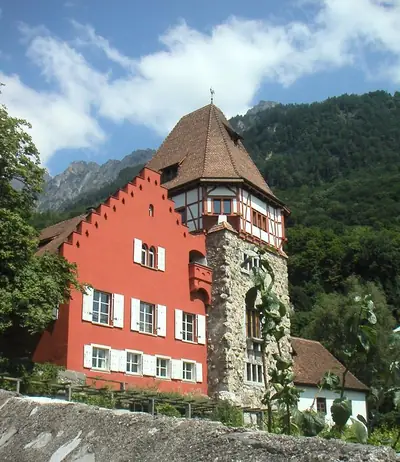
The Red House, or Rotes Haus, is one of Vaduz’s most distinctive historic buildings. Its stepped gable, residential tower and gatehouse give it a memorable appearance.
The building dates from the Late Middle Ages and is among the oldest structures in the capital. Several sections were added to the original core over the centuries, explaining the layered form visible today.
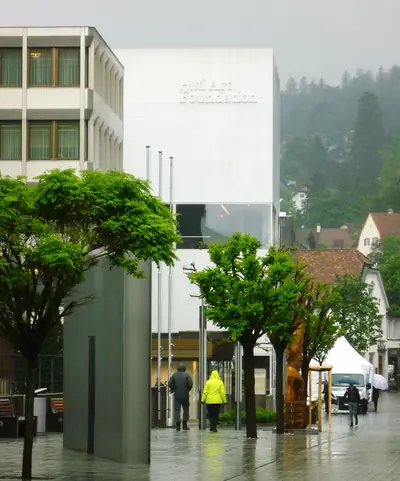
Kunstmuseum Liechtenstein and the Hilti Art Foundation
Kunstmuseum Liechtenstein is the state museum for modern and contemporary art, and its collection also serves as the national art collection of the Principality of Liechtenstein. The museum building was designed by Swiss architects Meinrad Morger, Heinrich Degelo and Christian Kerez, and opened in November 2000.
Connected directly to the museum is the Hilti Art Foundation exhibition building, often called the White Cube. It opened in 2015 and adds another important contemporary structure to Vaduz’s cultural centre.
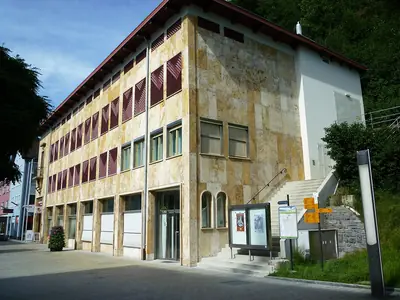
Postal Museum and Liechtenstein Treasure Chamber
The Postal Museum of the Principality of Liechtenstein is housed in the Engländerbau in central Vaduz. The small museum, a branch of the Liechtenstein National Museum, focuses on the history of the postal service and postage stamps in the principality.
The Engländerbau is notable in its own right as the first building in Liechtenstein constructed with a steel skeleton framework. In the same building, the Liechtenstein Treasure Chamber displays objects connected to the principality that have material and ideal value.
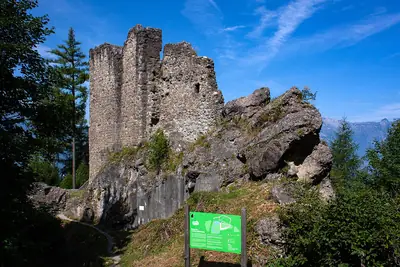
Schalun Castle
For a different kind of historic site, head towards Schalun Castle, also known as Wildschloss, or “Castle in the wild”. This mountain ruin lies roughly one kilometre northeast of Vaduz town centre.
The ruin is freely open to visitors and can be reached on foot or by mountain bike along a local footpath. Its setting above the town gives the remains a quieter, more remote character than Vaduz Castle.
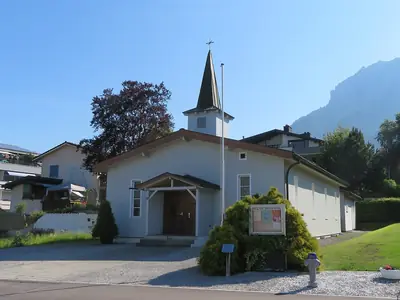
Johanneskirche and the Protestant Church of Ebenholz
Johanneskirche is the Evangelical Lutheran church in Vaduz and the only sacred building of the Evangelical Lutheran Church in the entire Principality of Liechtenstein.
The Protestant Church of Ebenholz offers another, more modest place of worship in the Ebenholz district. Its quiet neighbourhood setting reflects the understated character of this part of the capital and the diversity of faith in Liechtenstein.
Rheinpark Stadion
Rheinpark Stadion is Liechtenstein’s national stadium and the only football stadium in the country approved for international matches. It is the home ground of the Liechtenstein national football team and FC Vaduz.
The stadium opened on 31 July 1998 with a friendly match between FC Vaduz and 1. FC Kaiserslautern. It has also hosted concerts, including performances by Clueso and Herbert Grönemeyer in June 2007.
Figure in a Shelter
Vaduz’s public art includes Figure in a Shelter, a sculpture by the British artist Henry Moore. The work shows a human figure within a protective, shelter-like form and is catalogued as LH 652a.
Its composition explores the relationship between the human body and the spaces surrounding it, balancing the ideas of protection, vulnerability and strength.
Liechtenstein State Library
The Liechtenstein State Library, or Liechtensteinische Landesbibliothek, is the national library of the principality. It also serves as the country’s legal deposit and copyright library.
The institution was established by law in 1961 through the National Library Foundation. Its role makes it an important part of the country’s cultural infrastructure, even though it is relatively young compared with many European national libraries.
Alfred Rotter ‘Schaie’ memorial
Small brass-covered stones set into Vaduz’s pavements commemorate people persecuted, deported, murdered or driven into exile or suicide by the Nazi regime. Known as Stolpersteine, or “stumbling stones”, each one is generally placed in front of the person’s last self-chosen residence.
The first stones were laid in Vaduz on 31 August 2022. One commemorates Alfred Rotter, known as “Schaie”. It is a small but meaningful memorial embedded in the everyday streetscape of the capital.
Explore Vaduz with a Self-Guided Walking Tour
Neywo’s free Vaduz audio guide includes one walking tour: A Prince, a Palace and a Pocket-Sized Capital: Vaduz on Foot. The route covers 1.89 kilometres, takes about 102 minutes and includes nine narrated stops: the Red House, Vaduz Castle, Alfred Rotter ‘Schaie’, Kunstmuseum Liechtenstein, the Postal Museum, Liechtenstein National Museum, Figure in a Shelter, Vaduz Cathedral and the Liechtenstein State Library.
Download Neywo and explore Vaduz at your own pace. The app tells the story of each place as you reach it, with no group and no schedule. For more ideas beyond the capital, continue exploring Liechtenstein.
Places with an audio guide in Vaduz
8 places in Vaduz with a Neywo audio guide. Each one starts telling its story as you reach it.
Self-guided tours in Vaduz
1 tour in Vaduz, free in the Neywo app. Each stop tells its story as you reach it.
- Walk
A Prince, a Palace and a Pocket-Sized Capital: Vaduz on Foot
Vaduz is the smallest capital you can walk end to end before lunch. Start at the medieval Red House, look up to the castle that gave the town its name, then follow the Städtle past modern art, the postal and national museums and a Henry Moore bronze to the neo-Gothic cathedral.
Red House · Vaduz Castle · Alfred Rotter 'Schaie' · Kunstmuseum Liechtenstein · Postal Museum · Liechtenstein National Museum …
Open this tour: A Prince, a Palace and a Pocket-Sized Capital: Vaduz on Foot
Walk Vaduz with Neywo
Neywo turns Vaduz into a self-guided audio tour. Stories arrive as you reach the place they belong to, and the route reshapes when you wander off it.

