Things to Do in Monte-Carlo, Monaco: Walking Guide
Things to Do in Monte-Carlo: A Self-Guided Tour of Monaco’s Famous District
The best things to do in Monte-Carlo include admiring the Casino de Monte-Carlo, exploring Place du Casino, discovering Belle Époque theatres and churches, and following the district’s connections with art, sport, and modern architecture. Built on Monaco’s steep Mediterranean terrain, Monte-Carlo combines grand buildings, cultural landmarks, and memorable public spaces in a compact area. Neywo offers a free audio guide for Monte-Carlo with 20 narrated places, available in 11 languages.
What to See in Monte-Carlo
The following places offer a useful route through Monte-Carlo, from its most famous square and casino to its churches, theatres, museums, and distinctive modern landmarks.
Place du Casino and the Monte Carlo Casino
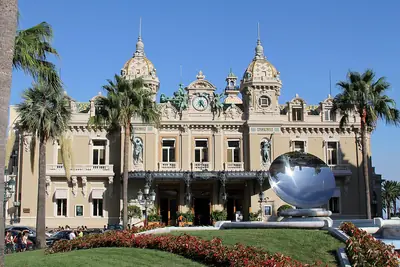
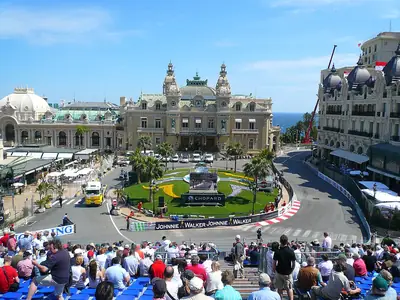
Place du Casino, also known as Casino Square, is the focal point of Monte-Carlo. Elegant Belle Époque buildings, luxury boutiques, carefully maintained gardens, and the casino itself create the district’s characteristic atmosphere of prestige.
The Monte Carlo Casino was inaugurated in 1863 by Prince Charles III and François Blanc, founder of the Société des Bains de Mer de Monaco. It was created to help improve Monaco’s finances and remains one of the principality’s most recognizable landmarks. The present complex reflects the grand Belle Époque and Beaux-Arts style of architect Charles Garnier, who also designed the adjoining opera house and the Paris Opéra.
The casino is also connected to an unusual local rule: citizens of Monaco, including members of the princely family, are forbidden to enter the gaming rooms. Visitors must present identification so that local citizens cannot enter the gaming areas.
Opéra de Monte-Carlo
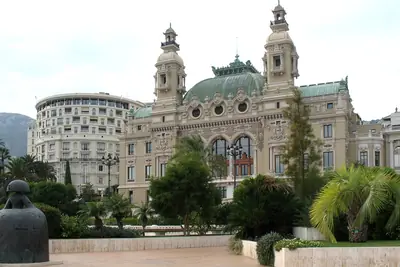
The Opéra de Monte-Carlo, also known as the Salle Garnier, forms part of the casino complex. Designed by Charles Garnier and completed in 1879, it was initially intended as a private theatre for the prince before being adapted specifically for opera.
Its interior is richly decorated with red velvet, gold leaf, bronze details, friezes, and crystals. The Belle Époque design recalls Garnier’s Palais Garnier in Paris, although the Monte-Carlo theatre is smaller, with 524 seats. Its creation was part of Prince Charles III and the Société des Bains de Mer’s effort to broaden Monaco’s cultural life.
Café de Paris
Beside the Casino de Monte-Carlo, Café de Paris combines a coffeehouse, restaurant, and casino in one of the district’s best-known settings. It faces the Hôtel de Paris and has two modular terraces with views towards the hotel, where antique cars are displayed.
The establishment dates back to 1868, when it was known as Café Divan. A renovation in 1988 recreated the style of early twentieth-century Parisian bistros, giving the café its distinctive Belle Époque atmosphere.
Saint-Charles Church
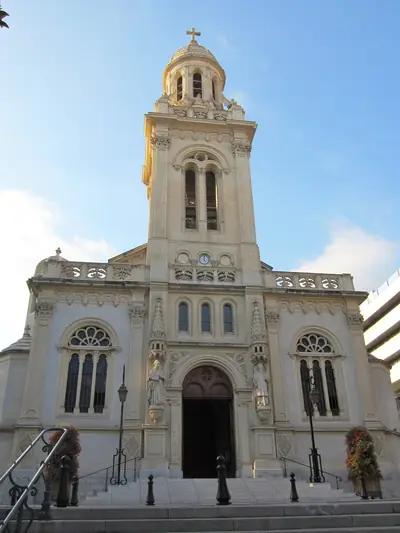
Saint-Charles Church, or Église Saint-Charles, is a Roman Catholic parish church dedicated to Saint Charles Borromeo. Commissioned by Prince Charles III, it was built between 1879 and 1883 in a French neo-Renaissance style by architect Charles Lenormand.
The church’s exterior is relatively simple, but its bell tower rises to 108 feet above sea level and is topped with a cupola. Inside, 19 stained-glass windows illuminate the space. Notable details include seventeenth-century carvings brought from Saint-Nicolas Church in Monaco Town and a gilded wooden altar decorated with cabled columns, saints, and sculpted images of Christ.
Saint Paul’s Anglican Church
Saint Paul’s Anglican Church, also known as St Paul’s Church of Monte-Carlo, is an Anglican religious building in the district. It provides another example of Monte-Carlo’s varied religious and cultural heritage alongside its better-known secular landmarks.
Théâtre Princesse Grace
The Théâtre Princesse Grace is Monaco’s principal theatre. The building began as a project supported by the Société des Bains de Mer to create both a theatre and a cinema. The cinema opened in 1931, while the theatre opened in 1932.
Originally called the Théâtre des Beaux-Arts, it was renamed in 1983 in honour of Princess Gracia Patricia, known as Princess Grace.
Nouveau Musée National de Monaco
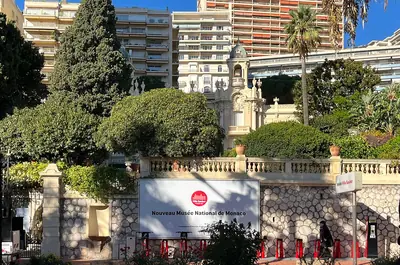
The Nouveau Musée National de Monaco, or New National Museum of Monaco, connects Monaco’s artistic heritage with contemporary visual art. The museum occupies two venues, Villa Sauber and Villa Paloma, both of which host temporary exhibitions. Two exhibitions are presented each year, while Villa Paloma began organising its exhibitions in 2010.
Synagogue Edmond Safra
Located at 15 Avenue de la Costa, the Synagogue Edmond Safra is an Orthodox Jewish congregation and synagogue in Monte-Carlo. It was inaugurated in March 2017, replacing an earlier synagogue located in Villa Esmeralda. The synagogue is run by the Association Cultuelle Israelite de Monaco, known as ACIM.
The Golden Foot and Champions Promenade
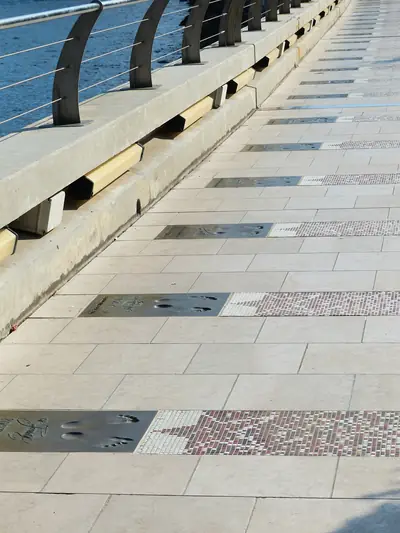
Along Monaco’s seafront, the Golden Foot and its Champions Promenade celebrate football players for their athletic achievements, teamwork, and personality. The award has been presented since 2003 and is reserved for active players aged at least 27. No player can win it more than once.
Each winner receives a 24-karat gold trophy and leaves a permanent mould of their footprint along the Champions Promenade. The nearby Hôtel de Paris Monte-Carlo provides the setting for the annual gala. Opened in 1864 under the patronage of Charles the Third of Monaco, the hotel is a Belle Époque palace at Place du Casino.
Hexa Grace
Hexa Grace is an artwork that forms part of Monte-Carlo’s cultural landscape. Its location makes it one of the smaller points of interest to notice while exploring the district’s streets and public spaces.
Formula One landmarks
Monte-Carlo’s connection with international motor racing appears in several places. At Portier Roundabout, a bronze sculpture depicts a McLaren open-wheel racing car in motion. The sculpture commemorates the McLaren team’s victory in the 1998 Monaco Grand Prix and represents the MP4/13 used by the team’s drivers.
The district also hosted the sixth European Aquatics Championships from 10 to 14 September 1947. Organised by the European Swimming League, or LEN, it was the first edition of the championships held in the postwar period.
Le Mirabeau and Le Schuylkill
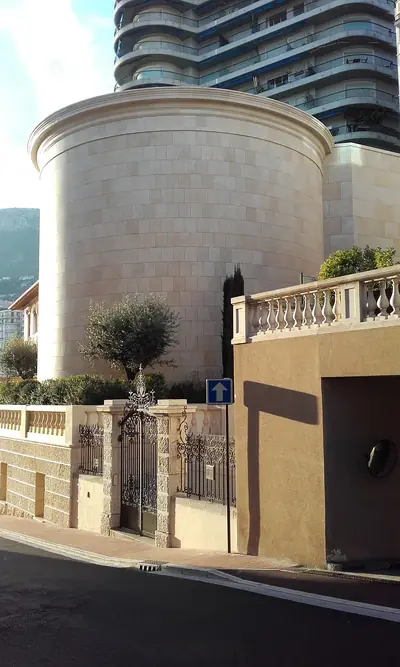
Monte-Carlo’s skyline also tells the story of Monaco’s modern development. Le Mirabeau rises 81 metres and has 26 floors. Built in 1973 as the Hôtel Mirabeau, it was later renovated and transformed into a service-oriented residential building after the hotel closed in December 2007. The residences were ready for occupancy in 2010.
At 19 Boulevard de Suisse, Le Schuylkill is recognised as Monaco’s first modern skyscraper. Completed in 1970, the residential high-rise reaches 78 metres and contains 25 floors. Its site is particularly distinctive because the ground differs in elevation by 22 metres between its northern and southern boundaries.
Explore Monte-Carlo with a Free Audio Guide
Neywo’s Monte-Carlo audio guide lets you explore the district independently while the app tells the story of each place as you reach it. The free guide includes 20 narrated places, with narration in 11 languages.
Monte-Carlo currently has two Neywo routes:
- One walking tour: Casino Square and the Belle Époque Riviera, a 1.7 km walk lasting 86 minutes, with 12 narrated stops.
- One bus route: Bus 1 Through Monte-Carlo, covering 2.1 km in 9 minutes, with 4 narrated stops.
Download Neywo and explore at your own pace: each story plays as you reach the place, with no group and no schedule. For more ideas beyond the district, continue exploring Monaco and Monaco.
Places with an audio guide in Monte-Carlo
8 places in Monte-Carlo with a Neywo audio guide. Each one starts telling its story as you reach it.

Self-guided tours in Monte-Carlo
2 tours in Monte-Carlo, free in the Neywo app. Each stop tells its story as you reach it.
- Bus ride
Bus 1 Through Monte-Carlo
Monaco's public line 1 climbs from the seafront near the Princess Grace theatre to Casino Square and on to Saint-Charles church. It is a short, cheap ride through the heart of Monte-Carlo, past the Sky Mirror sculpture on the square.
Théâtre Princesse Grace · Hexa Grace · Sky Mirror · Saint-Charles Church
Open this tour: Bus 1 Through Monte-Carlo - Walk
Casino Square and the Belle Époque Riviera
Monte-Carlo was built to make money from the rich, and the stagecraft is still intact. Start among the boulevards and churches above the square, then take in the casino, Garnier's opera house and the grand hotels, and finish along the seafront at the villas of the contemporary art museum.
Stavros Niarchos Foundation · Saint-Charles Church · Café de Paris · Sky Mirror · Golden Foot · Monte Carlo Casino …
Open this tour: Casino Square and the Belle Époque Riviera
Walk Monte-Carlo with Neywo
Neywo turns Monte-Carlo into a self-guided audio tour. Stories arrive as you reach the place they belong to, and the route reshapes when you wander off it.

