Ulaanbaatar, Mongolia: Self-Guided Walking Tour
Things to Do in Ulaanbaatar: What to See in Mongolia’s Capital
Ulaanbaatar is Mongolia’s capital and its largest meeting point of history, religion, art, science and everyday urban life. The city’s museums, monasteries, theatres and memorials offer an introduction to Mongolia’s past, from the Mongol Empire and nomadic cultures to the country’s modern history. Neywo has a free audio guide for Ulaanbaatar with 36 narrated places.
What to See in Ulaanbaatar
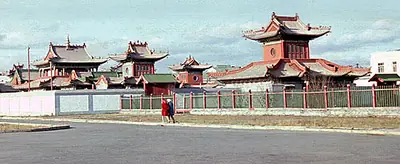
Choijin Lama Temple Museum
Choijin Lama Temple is a Buddhist monastery complex in the Sükhbaatar District and one of the few religious sites to survive Mongolia’s communist era. Built between 1904 and 1908 for Choijin Lama Luvsankhaidav, the brother of the Eighth Bogd Khan, it later became a museum in 1938.
Today, it presents Tibetan-Mongolian religious art. The main temple contains an 18th-century gilt statue of Buddha Sakyamuni, a statue of Choijin Lama Luvsankhaidav and the embalmed corpse of Baldan Choephel, alongside religious instruments and other objects.
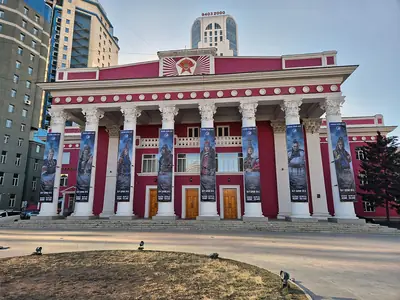
National Academic Drama Theatre
The National Academic Drama Theatre is one of Mongolia’s most important performing-arts institutions. Established on November 12, 1931, it was the country’s first professional drama theatre.
The institution changed names several times during its history, reflecting its changing role in Mongolia’s cultural life. It is located in the Sükhbaatar District, in the heart of the capital.
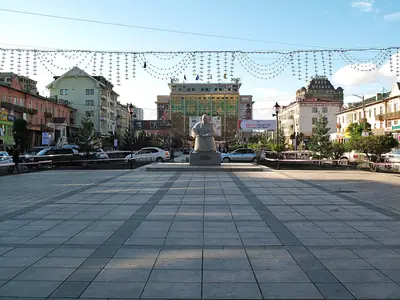
Fountain Square, or Beatles Square
Fountain Square is a central gathering place in the Sükhbaatar District. Its Mongolian name refers to the fountains, while many people know it as Beatles Square because of the statue of the British band located there.
It makes a useful stop between the city’s museums and cultural landmarks, and offers a glimpse of how Ulaanbaatar’s public spaces combine local life with international cultural references.
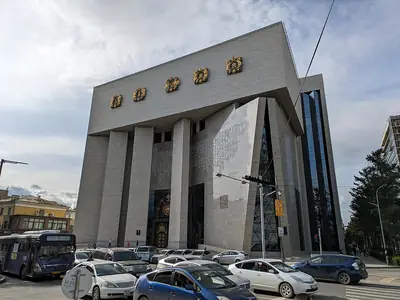
Chinggis Khaan National Museum
The Chinggis Khaan National Museum opened on October 11, 2022, in Ulaanbaatar’s Chingeltei District. Dedicated to the life and legacy of Genghis Khan, founder of the Mongol Empire, it follows the history of the Mongol state across many centuries.
Its exhibitions begin with the Xiongnu Empire and continue through the era of Bogd Khan’s Mongolia. For visitors interested in the origins and development of the Mongol state, it is one of the city’s most direct introductions to this part of the country’s history.
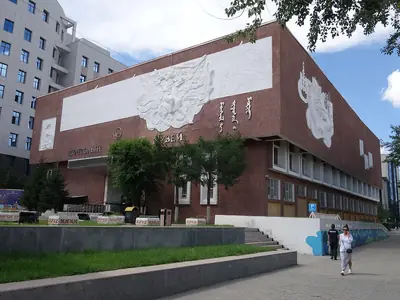
National Museum of Mongolia
The National Museum of Mongolia is the country’s largest and most prominent museum. Its roughly ten exhibition halls trace Mongolian history from the Stone Age to the present, with displays on nomadic culture, traditional customs and the heritage of Mongolia’s ethnic groups.
The collection holds approximately 50,000 objects, making the museum an important starting point for understanding Mongolia’s past. Before its 1991 reconstruction, the building was known as the Museum of the Revolution.
Fine Arts Zanabazar Museum
Founded in 1966, the Fine Arts Zanabazar Museum is named after Zanabazar, one of Mongolia’s best-known historical and artistic figures. Its collection brings together works by Mongolian fine-arts masters from the 18th through the 20th centuries.
The museum offers a focused look at the country’s artistic heritage and complements the broader historical collections found elsewhere in central Ulaanbaatar.
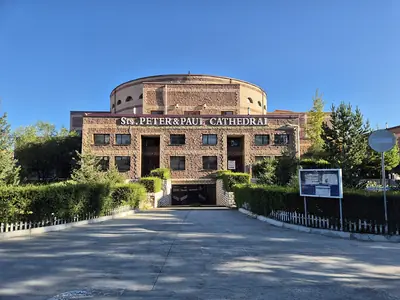
Saints Peter and Paul Cathedral
In the Bayanzürkh District, Saints Peter and Paul Cathedral stands out for its unusual architecture. It is the main Roman Catholic cathedral in Mongolia and is designed in the shape of a traditional Mongolian yurt.
The building connects a Christian institution with a distinctly Mongolian architectural form, making it one of the city’s most distinctive religious landmarks.
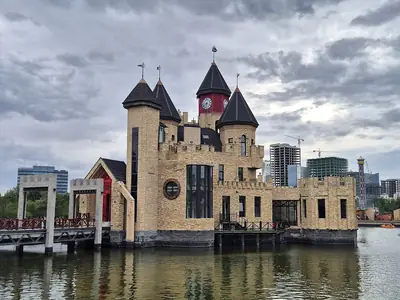
Red Rock Castle
Red Rock Castle was originally built in 1969, when the National Cultural Recreation Center was established in Ulaanbaatar. It functioned as an ethnographic museum until around the mid-2000s and was renovated and rebuilt in a Western style in 2010.
The building has three towers with battlements and three floors. A stone wall in an East Asian style surrounds it, and the castle stands within an artificial lake. It now serves as a restaurant and is also known as the National Amusement Park.
Central Museum of Dinosaurs of Mongolia
The Natural History Museum of Mongolia brings together geology, geography, flora, fauna, palaeontology and anthropology. Its holdings include more than 15,000 specimens, around 45 percent of which are on permanent public display.
The museum is particularly known for its dinosaur collection, including a nearly complete skeleton of a late Cretaceous Tarbosaurus and broadly contemporaneous nests of Protoceratops eggs. Its history dates back to 1924, when it was established as the National Museum.
International Intellectual Museum
The International Intellectual Museum, known locally as the Oyuun Ukhaany Museum, opened on August 13, 1990. It was Mongolia’s first private museum.
Instead of focusing on national history or fine art, the museum is dedicated to intellectual games and puzzles from around the world. It provides a different kind of cultural experience, centred on the ways people in different societies have challenged the mind through play.
Mongolian Military Museum
The Mongolian Military Museum, also called the Museum of the Mongolian Armed Forces, is in the Bayanzürkh District, across from an army barracks. It is part of the Ministry of Defense and traces Mongolian military history back to the Mongol Empire.
The museum was established in 1966 as the Museum of the Mongolian People’s Army, following a decision by the State Great Khural. Its collections offer a long view of warfare, strategy and national defence in Mongolia.
Mongolian Railway History Museum
Near Ulaanbaatar’s main railway station, the Mongolian Railway History Museum presents the country’s railway heritage. It contains old trains and railway equipment, showing how the railway contributed to Mongolia’s development.
Its location in the Sükhbaatar District makes it an easy addition to a walk through the city centre.
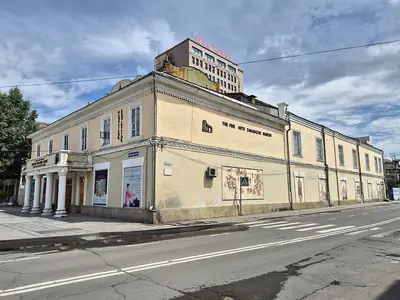
Ulaanbaatar City Museum
The Ulaanbaatar City Museum is devoted to preserving and promoting the history and cultural heritage of the capital. It also functions as a research and urban-studies centre.
The building itself is a highlight: it is considered a landmark of early 20th-century Mongolian architecture and has never undergone any major renovations since it was established.
National University of Mongolia
Founded in 1942, the National University of Mongolia is the country’s oldest and most influential institution of higher education. It was originally named Choibalsan State University and became Mongolia’s first university.
The institution has played an important role in the country’s intellectual and political life. Several major universities, including those focused on science and technology, life sciences, medicine and the humanities, trace their origins to its faculties and sub-institutes.
Zaisan Memorial
The Zaisan Memorial stands on a hill in the Khan-Uul District. It honours allied Mongolian and Soviet soldiers who died during the Second World War, and commemorates the Red Army’s support for Mongolia’s People’s Revolution and the Soviet-Mongolian victory at Khalkhin Gol.
The climb leads to a panorama over Ulaanbaatar, making the memorial both a historical site and a place to see the capital from above.
Explore Ulaanbaatar with Neywo
Neywo’s free Ulaanbaatar audio guide includes 36 narrated places. The app offers three walking tours and one bike route:
- Chinggis Khaan’s Capital: The Square, the Palace and the Museums — 0.91 km, 41 minutes and 5 narrated stops.
- Temples, Mansions and Dinosaurs: Central Ulaanbaatar on Foot — 3.57 km, 110 minutes and 10 narrated stops.
- East Ulaanbaatar: A Marshal, a Mystic and a Yurt-Shaped Cathedral — 3.05 km, 72 minutes and 5 narrated stops.
- East Side Museum Ride — a 0.8 km bike route taking 4 minutes, with 3 narrated stops.
Download Neywo and explore Ulaanbaatar at your own pace: the app tells the story of each place as you reach it, with no group and no schedule. Narration is available in 11 languages. You can also continue planning your trip with the Mongolia destination guide.
Places with an audio guide in Ulaanbaatar
8 places in Ulaanbaatar with a Neywo audio guide. Each one starts telling its story as you reach it.
Self-guided tours in Ulaanbaatar
4 tours in Ulaanbaatar, free in the Neywo app. Each stop tells its story as you reach it.
- Bike ride
East Side Museum Ride
A short ride on Ulaanbaatar's eastern cycle lane, linking the Zhukov House Museum, Roerich's Shambala Museum and the Russian Orthodox Holy Trinity Church.
Marshall Zhukov House Museum · Roerich's Shambala Museum · Holy Trinity Church
Open this tour: East Side Museum Ride - Walk
Chinggis Khaan's Capital: The Square, the Palace and the Museums
Stand in Sükhbaatar Square beneath the equestrian statue of the revolutionary hero, then face the Government Palace where Genghis Khan sits enthroned between his generals. Two big museums, a new one devoted to the Great Khan and the national history museum, are a few steps away.
Sükhbaatar Square · State Great Khural · Mongolian Theatre Museum · National Museum of Mongolia · Chinggis Khaan National Museum
Open this tour: Chinggis Khaan's Capital: The Square, the Palace and the Museums - Walk
Temples, Mansions and Dinosaurs: Central Ulaanbaatar on Foot
Cross the heart of the capital from the square to the Choijin Lama Temple, one of the few monasteries to survive the purges. Continue past an early 20th-century mansion, the circus arena, Beatles Square and the art museum, ending with a nearly complete Tarbosaurus skeleton.
Mongolian Theatre Museum · Sükhbaatar Square · Choijin Lama Temple · National Academic Drama Theatre · Mansion Complex of H.E. Chin Van Mr. Handdorj · ASA Arena …
Open this tour: Temples, Mansions and Dinosaurs: Central Ulaanbaatar on Foot - Walk
East Ulaanbaatar: A Marshal, a Mystic and a Yurt-Shaped Cathedral
Visit the east side, where the Soviet Marshal Zhukov and the Russian painter Nicholas Roerich left their mark. Walk on to the Russian Orthodox Holy Trinity Church and finish at the Catholic cathedral built to look like a Mongolian yurt.
Mongolian Military Museum · Marshall Zhukov House Museum · Roerich's Shambala Museum · Holy Trinity Church · Saints Peter and Paul Cathedral (Ulaanbaatar)
Open this tour: East Ulaanbaatar: A Marshal, a Mystic and a Yurt-Shaped Cathedral
Walk Ulaanbaatar with Neywo
Neywo turns Ulaanbaatar into a self-guided audio tour. Stories arrive as you reach the place they belong to, and the route reshapes when you wander off it.