Things to Do in Dushanbe, Tajikistan: Walking Guide
Things to Do in Dushanbe: What to See in Tajikistan’s Capital
The best things to do in Dushanbe include exploring grand civic squares, historic religious buildings, theatres, museums and spacious green areas. Tajikistan’s capital offers a fascinating view of the country’s Samanid heritage, Soviet past and modern national identity, with mountain scenery forming the backdrop. Neywo has a free audio guide for Dushanbe covering 26 narrated places.
What to See in Dushanbe
Palace of the Nation
The Palace of the Nation, known in Tajik as Qasri Millat, has been the official residence of the President of Tajikistan since 2008. It is not open to ordinary visitors or tourists, but it can be viewed from nearby parks and squares, including Rudaki Park, Poytakht-90 Park, National Flag Square and Dousti Square.
The building was constructed by the Italian company Rizzani de Eccher. It is also known as the Palace of Nations and, among Dushanbe residents, as the Presidential Palace. Photography of the palace is not prohibited.
Dousti Square and the Ismoil Somoni Monument
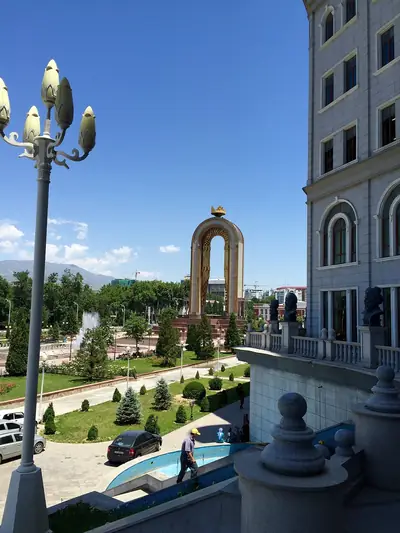
Dousti Square is the largest square in Dushanbe and occupies a central position along Rudaki Avenue and Hofizi Sherozi Avenue. Its name means Friendship Square, although it has had several names throughout its history, including Lenin Square and Ozodi Square, or Freedom Square.
The square’s principal landmark is the Ismoil Somoni Monument, dedicated to Ismail I, the Samanid ruler. The statue is thirteen metres high, while the arch behind it reaches forty-three metres. Established in 1999 to commemorate eleven hundred years of the Samanid state, the memorial includes two lions symbolising state strength, national harmony and the protection of peace.
Its official name is the Memorial Complex for National Reconciliation and the Revival of Tajikistan.
Dushanbe Flagpole and National Flag Park
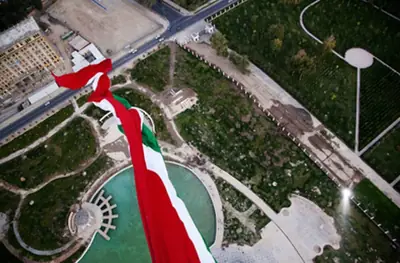
The Dushanbe Flagpole rises in National Flag Park, close to the Palace of the Nation, the amphitheatre and the Tajikistan National Museum. Standing 165 metres tall, it carries a Tajik flag measuring 30 by 60 metres and weighing 700 kilograms.
The flagpole was completed in 2011 and was then the tallest in the world. It held that title until 2014, when the 171-metre Jeddah Flagpole was erected. Today, it is the world’s fifth tallest flagpole. The open park provides the clearest sense of its enormous scale.
Tajikistan National Museum
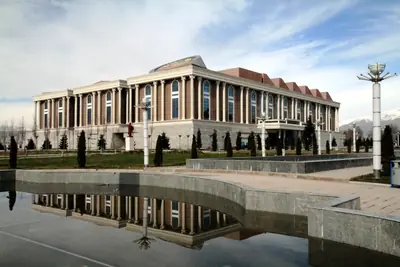
The Tajikistan National Museum brings together collections on the country’s archaeology, ancient and medieval history, modern developments, art and nature. It first opened on 12 August 1934 with 530 objects.
The museum moved into its current building in March 2013 and began operating there on 20 March of that year. Its collection is now described as containing around 50,000 objects, making it an important place to understand Tajikistan’s changing history and culture.
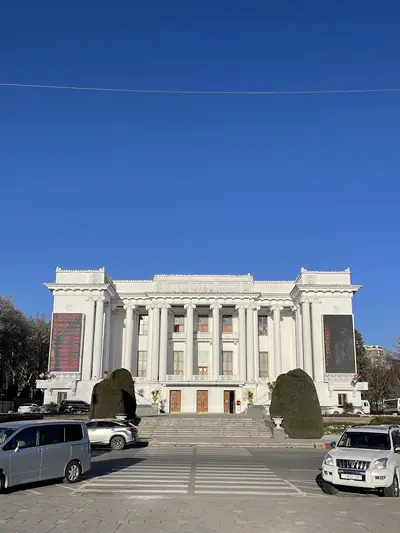
State Academic Opera and Ballet Theatre of Tajikistan Sadriddin Ayni
Founded in Dushanbe in 1936, the State Academic Opera and Ballet Theatre of Tajikistan Sadriddin Ayni is one of the city’s major cultural landmarks. It was formerly known as the Tajik Musical Theatre and is regarded as Tajikistan’s leading musical theatre.
The building and its role in the city reflect Dushanbe’s long-standing position as a cultural centre, with opera and ballet at the heart of its programme.
Academic Theatre Abolqasem Lahouti
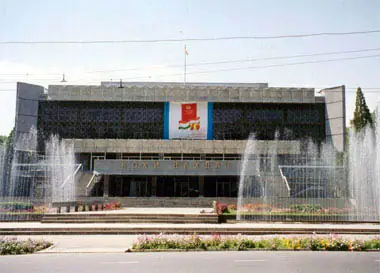
The Academic Theatre Abolqasem Lahouti, also called Lohuti Theatre, is the country’s main theatrical stage. It is a national academic drama theatre operating under Tajikistan’s Ministry of Culture.
The theatre stands on Rudaki Avenue in a building constructed during the first years of the Soviet period. Its architecture combines the building’s historical era with national Tajik motifs. It is named after the Tajik Soviet poet Abolqasem Lahouti.
Haji Yaqub Mosque
Haji Yaqub Mosque, also known as the Madrasa, is a congregational mosque and Islamic centre in Dushanbe’s historic district. Dating from the beginning of the twentieth century, it is recognised as an architectural monument.
Its location near Rudaki Avenue recalls the historic part of the city and the former village of Dushanbe. The mosque offers a connection with the capital’s religious and architectural history.
St. Nicholas Cathedral
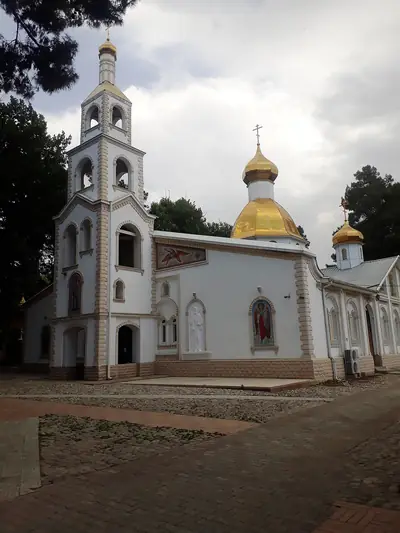
St. Nicholas Cathedral is one of Dushanbe’s Russian Orthodox landmarks. It serves as the cathedral church of the Russian Orthodox Eparchy of Dushanbe and Tajikistan and stands at 58 Prospekt Druzhby Narodov.
Its main altar is dedicated to Saint Nicholas. The right altar honours John of Russia the Confessor, while the left is dedicated to the icon of the Mother of God known as the Life-Giving Spring.
Ismaili Centre, Dushanbe
Known locally as Markazi Ismoiliya, the Ismaili Centre is an important religious and cultural gathering place for Tajikistan’s Ismaili community. It is one of six Ismaili Centres worldwide, the fifth purpose-built centre of its kind and the first in Central Asia.
Botanical Garden and Iram Garden
Dushanbe’s Botanical Garden, also known as Iram Garden, occupies a green setting on the left bank of the Varzob River. It is associated with the Botanical Garden of the Academy of Sciences of Tajikistan.
Until 2007, it was known as the Botanical Garden of Dushanbe. Its Tajik name is Bogi Iram, or Iram Garden, and it provides a change of atmosphere from the capital’s monumental avenues and government buildings.
Kokhi Somon
Kokhi Somon is one of Dushanbe’s grand palace buildings. Located within the government residence compound, it is an important symbol of Tajikistan’s state life. The palace is also known as the Palace of the Samanids, recalling the Samanid Empire, which existed from 819 to 999.
Palace of Unity
The Palace of Unity, or Vahdat Palace, is a state complex and public venue in the northern part of Rudaki Avenue, Dushanbe’s main thoroughfare. It is one of the important buildings encountered while exploring the central avenue.
Dushanbe’s Soviet and Jewish History
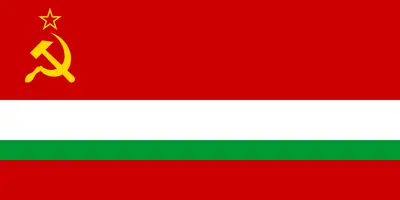
Dushanbe’s landmarks also reveal the political changes that shaped modern Tajikistan. The Tajik Autonomous Soviet Socialist Republic was created on 14 October 1924 as an autonomous part of the Uzbek Soviet Socialist Republic. Its capital was Dyushambe.
In October 1929, it became the Tajik Soviet Socialist Republic and absorbed the Khujand region from the Uzbek Soviet Socialist Republic. Dyushambe was then renamed Stalinabad. The Tajik Soviet Socialist Republic existed from 1929 to 1991, declared sovereignty within its borders on 24 August 1990, and was renamed the Republic of Tajikistan on 31 August 1991. Tajikistan declared independence from the Soviet Union on 9 September.
The city’s Jewish history is represented by the story of the Dushanbe Synagogue, also known as the Bukharian Synagogue. Built in the nineteenth century in one of Dushanbe’s Jewish quarters, it stood within a larger community compound containing ritual buildings and a religious school.
The compound was demolished during redevelopment connected with the Palace of the Nation. The old synagogue was finally razed at the end of June 2008, while the New Dushanbe Synagogue opened at a different location in 2009.
Explore Dushanbe with a Self-Guided Audio Tour
Neywo offers two walking tours in Dushanbe, with stories available in 11 languages. The app tells the story of each place as you reach it, at your own pace, with no group and no schedule.
The two routes are:
- Rudaki Avenue: From Samanid Kings to the World’s Tallest Flagpole — 5.46 km, 118 minutes and 8 narrated stops, including the Tajikistan National Museum, the State Academic Opera and Ballet Theatre of Tajikistan Sadriddin Ayni, the Ismoil Somoni monument, Dushanbe Flagpole, Academic Theatre Abolqasem Lahouti, Haji Yaqub Mosque and Palace of Unity.
- Northern Dushanbe: Stadium, Mosques and Iram Garden — 4.41 km, 83 minutes and 4 narrated stops, including Pamir Stadium, the Ismaili Centre, Imam Abu Hanifa Grand Mosque and the Botanical Garden.
Download Neywo to explore Dushanbe with a free audio guide and discover the city’s landmarks while walking independently. If you are planning a wider trip, continue exploring Tajikistan with the app.
Places with an audio guide in Dushanbe
8 places in Dushanbe with a Neywo audio guide. Each one starts telling its story as you reach it.

Self-guided tours in Dushanbe
1 tour in Dushanbe, free in the Neywo app. Each stop tells its story as you reach it.
- Walk
Rudaki Avenue: From Samanid Kings to the World's Tallest Flagpole
Walk Dushanbe's main boulevard from the museum of Penjikent murals to the Palace of Unity. Pass the opera house, the Samanid monument on Dousti Square, a 165-metre flagpole, the national museum, the Lahouti theatre and the Haji Yaqub mosque. Soviet theatres and modern monuments make a short course in Tajik history.
National Museum of Antiquities of Tajikistan · State Academic Opera and Ballet Theatre of Tajikistan Sadriddin Ayni · Ismoil Somoni monument in Dushanbe · Dushanbe Flagpole · Tajikistan National Museum · Academic Theatre Abolqasem Lahouti …
Open this tour: Rudaki Avenue: From Samanid Kings to the World's Tallest Flagpole
Walk Dushanbe with Neywo
Neywo turns Dushanbe into a self-guided audio tour. Stories arrive as you reach the place they belong to, and the route reshapes when you wander off it.

