What to See in Little Rock, United States: Free Audio Guide
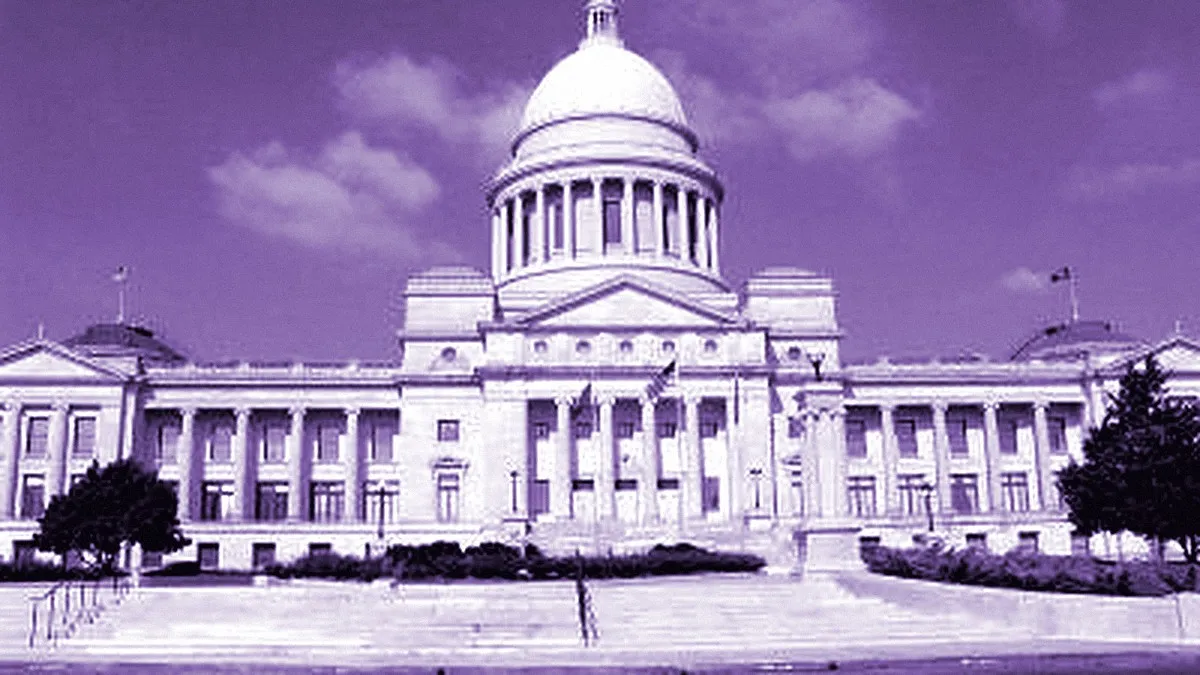
Things to Do in Little Rock: History, Civil Rights and the Arkansas River
The best things to do in Little Rock include exploring civil rights landmarks, historic museums, political buildings, churches, cemeteries and the Arkansas River waterfront. The city’s most important sites connect Arkansas history with the national stories of desegregation, military service, politics and African American culture. Neywo also offers a free audio guide for Little Rock with 51 narrated places.
What to See in Little Rock
Little Rock Central High School and its historic neighborhood
Little Rock Central High School is one of the defining sites of the American civil rights movement. The school became the focus of the Little Rock Crisis in 1957, after the United States Supreme Court had ruled that racial segregation in public schools was unconstitutional. Until that year, only white students could enroll there.
The present building was completed in 1927 and was described at the time as the largest and most expensive high school facility in the nation. It remains in use and is recognized as a National Historic Landmark, National Historic Site and National Register of Historic Places property.
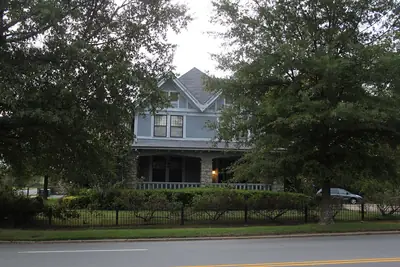
The surrounding Central High School Neighborhood Historic District adds important context. Its residences include bungalows, Tudor Revival houses and Colonial Revival homes. The restored Magnolia Gas Station was used as a staging area for the media during the 1957 school integration crisis.
Daisy Bates House
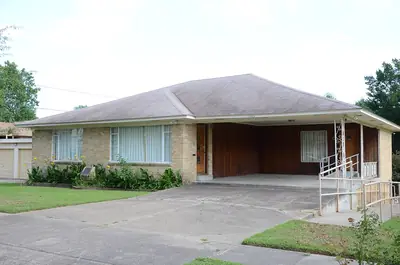
The Daisy Bates House is closely connected with the effort to integrate Little Rock Central High School. Daisy Bates, president of the Arkansas NAACP, lived here, and during the desegregation crisis of 1957 and 1958 the house served as a command post for people working to integrate the school.
Mosaic Templars Cultural Center
The Mosaic Templars Cultural Center explores African American history, culture and community in Arkansas. Its story extends from 1870 to the present, offering a broad view of Black life and achievement in the state. The nationally accredited institution is part of the Department of Arkansas Heritage.
First Baptist Church
The former First Baptist Church of Little Rock now houses the Museum of Black Arkansans and Performing Arts Center. The church building dates from 1941 and is listed on the National Register of Historic Places. Its Collegiate Gothic design was created by local architect A. N. McAninch.
Old State House
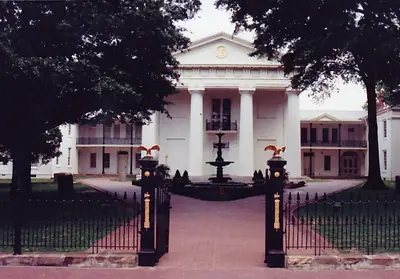
The Old State House was Arkansas’s first capitol and is the oldest surviving state capitol building west of the Mississippi River. Built between 1833 and 1836, it served as the state capitol from 1842 until 1912, when the new Arkansas State Capitol was completed. The building became a museum in 1947.
Architect Gideon Shryock designed it in the Greek Revival style. Inside, the preserved 1836 and 1885 House of Representatives chambers reveal the setting of Arkansas’s political history. The building witnessed the secession convention and the 1868 Constitutional Convention, as well as a violent legislative knife fight during another chapter of its history.
Historic Arkansas Museum
The Historic Arkansas Museum occupies an entire pre-Civil War city block. Its site includes four original dwellings, an 1850s farmstead and log structures moved from elsewhere in Arkansas. Costumed interpreters help bring the past to life, while galleries display Arkansas-made art and historical artifacts.
The museum grew out of an effort led by Louise Loughborough to save the Hinderliter House, described as the oldest surviving building in Little Rock. It opened on July 19, 1941, under the name Arkansas Territorial Restoration. The name changed to Historic Arkansas Museum in 2001.
Clinton Presidential Center
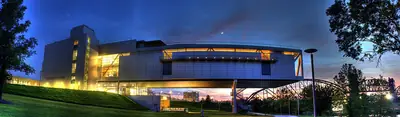
The Clinton Presidential Center is a library and museum devoted to the presidency of Bill Clinton, the forty-second president of the United States, who served from 1993 to 2001. Its glass design above the Arkansas River reflects Clinton’s campaign promise of building a bridge to the twenty-first century.
The center opened on November 18, 2004. Exhibitions use artifacts, films, videos, timelines, personal items and interactive rooms to examine domestic and foreign policy and life in the White House during the 1990s. Full-scale replicas of the Oval Office and Cabinet Room make the period especially tangible. The library also preserves millions of photographs, documents, emails, video and audio recordings, along with tens of thousands of artifacts.
The Little Rock and Junction Bridge
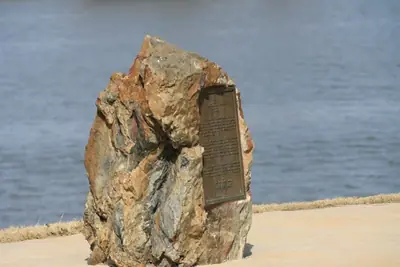
The modest rock outcrop known as The Little Rock gave the city its name. Projecting into the Arkansas River from the south bank, it was identified as a significant river landmark in 1722 by French explorer Jean-Baptiste Bénard de la Harpe. The outcrop originally rose about eighteen feet, or five and a half meters, above the river, although it has since been reduced.
Beside it, the Junction Bridge carries pedestrians and cyclists between downtown Little Rock and North Little Rock. The bridge was built in 1884 as a railroad crossing, with a second level added in 1885 for pedestrians and wagons. After rail traffic declined, it was converted into a pedestrian and bicycle crossing and reopened in 2008 after renovation.
Tower Building of the Little Rock Arsenal
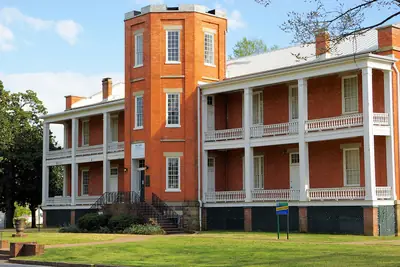
The octagonal Tower Building houses the MacArthur Museum of Arkansas Military History. Built between 1840 and 1841, it formed part of Little Rock’s first United States military installation and is the last remaining structure from that installation. It is also one of the oldest buildings in central Arkansas and part of the MacArthur Park Historic District.
General Douglas MacArthur was born here. The building also served as the starting point for the Camden Expedition during the American Civil War. Inside, artifacts, weapons, photographs, uniforms, documents and medals tell the military history of Arkansas and the stories of people from the state who served in the armed forces.
Joseph Taylor Robinson House
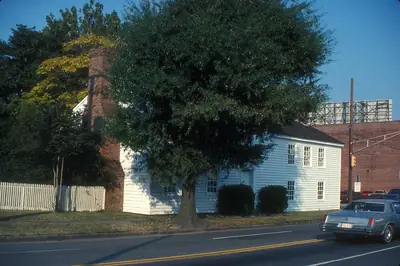
At 2122 Broadway, the Joseph Taylor Robinson House was built in 1904 for a wealthy lumber merchant. Joseph Taylor Robinson lived here from 1930 to 1937, during decisive years of his political career. He had served as governor of Arkansas and later became a United States senator and Senate Majority Leader from 1933 to 1937.
Mount Holly Cemetery
Mount Holly Cemetery lies in Little Rock’s Quapaw Quarter and is known as “The Westminster Abbey of Arkansas.” It is the resting place of many notable Arkansans and was listed on the National Register of Historic Places in 1970. Its importance comes from both its long history and the people buried there.
Cathedral of St. Andrew
The Cathedral of St. Andrew stands at the corner of South Louisiana Street and West 7th Street. It is the seat of the Roman Catholic Diocese of Little Rock and the oldest continuously used house of worship in the city. The church was founded in 1845 and dedicated on November 27, 1881.
Block 35 Cobblestone Alley
Block 35 Cobblestone Alley is a narrow historic passage running through a downtown block. Originally surfaced around 1889, it is one of Little Rock’s few surviving brick-paved alleys. The passage is about 300 feet, or 91 meters, long and 30 feet, or 9.1 meters, wide. Its historic importance was recognized when it was listed on the National Register of Historic Places in January 2009.
Over-the-Jumps Carousel
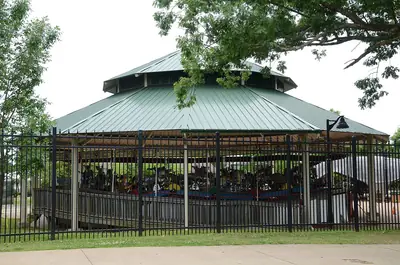
At the Little Rock Zoo, the Over-the-Jumps Carousel creates the sensation of riding over small jumps as its wooden platform rises and falls. Built in the 1920s, it was first exhibited at the 1924 Arkansas State Fair and is believed to be the last operating over-the-jumps carousel in the world.
Its original undulating wooden platform is mounted on a caterpillar drive dating from the 1960s. The horses were carved by the Spillman Engineering Company. A local nonprofit group acquired the carousel and donated it to the zoo in 2007. It was listed on the National Register of Historic Places in 1989.
Explore Little Rock with a Self-Guided Audio Tour
A Little Rock self-guided walking tour is a practical way to connect these sites without joining a group. Neywo’s free Little Rock audio guide includes 4 walking tours and 1 bike route, with narration available in 11 languages:
- Rock, River and the Old Capitol: 3.47 km, 117 minutes and 12 narrated stops.
- Quapaw Quarter: Spires, Towers and Mount Holly: 3.44 km, 106 minutes and 11 narrated stops.
- Capitol Hill to Central High: The Fight for Equal Schools: 4.04 km, 95 minutes and 8 narrated stops.
- Governor’s Mansion and the Southern Quapaw Quarter: 2.96 km, 82 minutes and 7 narrated stops.
- Arkansas River Trail: Clinton Center to the Little Rock: a 1.5 km bike route lasting 8 minutes, with 3 narrated stops.
Neywo tells the story of each place as you reach it, at your own pace, with no group and no schedule. Download the app and explore Little Rock through its riverfront, historic neighborhoods, museums and civil rights landmarks.
Places with an audio guide in Little Rock
8 places in Little Rock with a Neywo audio guide. Each one starts telling its story as you reach it.
Self-guided tours in Little Rock
5 tours in Little Rock, free in the Neywo app. Each stop tells its story as you reach it.
- Bike ride
Arkansas River Trail: Clinton Center to the Little Rock
A flat, easy ride on the Arkansas River Trail from the glass-bridged Clinton Presidential Center along the riverfront to the rock outcrop that named the city, and on to the Old State House, Arkansas's first capitol.
Clinton Presidential Center · The Little Rock · Old State House
Open this tour: Arkansas River Trail: Clinton Center to the Little Rock - Walk
Rock, River and the Old Capitol
Start at the small rock outcrop on the Arkansas River that gave the city its name, then climb through territorial and frontier Little Rock: the River Market, a brick-paved alley, Markham Street's riverfront shops, a log tavern from the 1820s and an entire pre-Civil War block of houses. Continue past the Gazette Building, Arkansas's first capitol with its Greek Revival columns and the Robinson Center to City Hall, and end at a building made by prison labour in 1881.
Clinton Presidential Center · The Little Rock · River Market District · Block 35 Cobblestone Alley · East Markham Street Historic District · The Tavern …
Open this tour: Rock, River and the Old Capitol - Walk
Quapaw Quarter: Spires, Towers and Mount Holly
Little Rock's historic neighbourhood in a loop: the octagonal tower where Douglas MacArthur was born, the museum of fine arts in MacArthur Park, Gothic Revival churches by the architect Charles Thompson and his rivals, the oldest Catholic and Methodist houses of worship in town, two landmarks of Black history, and Mount Holly, the cemetery called the Westminster Abbey of Arkansas.
Tower Building of the Little Rock Arsenal · St. Edwards Church · Arkansas Museum of Fine Arts · First Presbyterian Church · Cathedral of St. Andrew · First United Methodist Church …
Open this tour: Quapaw Quarter: Spires, Towers and Mount Holly - Walk
Capitol Hill to Central High: The Fight for Equal Schools
Walk from the Arkansas Supreme Court to the Capitol and its grounds, then past a Black congregation's 1926 church and Old Main to the Central High School neighbourhood, with the restored gas station that served as a media staging area in 1957, and Little Rock Central High School, where nine Black students faced a hostile crowd. Ends at the national historic site's visitor center and the school itself.
Arkansas Supreme Court · Arkansas State Capitol · Monument to Confederate Women · Mount Zion Baptist Church · Old Main · Central High School Neighborhood Historic District …
Open this tour: Capitol Hill to Central High: The Fight for Equal Schools - Walk
Governor's Mansion and the Southern Quapaw Quarter
Walk through the quiet southern end of the Quapaw Quarter: a Gothic Revival church of 1921, Trinity Episcopal Cathedral, the Georgian Revival Governor's Mansion with its Clinton bust, a Mission-style church, the Broadway house of Senate Majority Leader Joseph T. Robinson and finally Daisy Bates's home, the command post of the 1957 school integration.
Winfield Methodist Church · Trinity Episcopal Cathedral · Arkansas Governor's Mansion · First Church of Christ, Scientist · Central Presbyterian Church · Joseph Taylor Robinson House …
Open this tour: Governor's Mansion and the Southern Quapaw Quarter
Walk Little Rock with Neywo
Neywo turns Little Rock into a self-guided audio tour. Stories arrive as you reach the place they belong to, and the route reshapes when you wander off it.

