What to See in Montevideo, Uruguay: Free Audio Guide
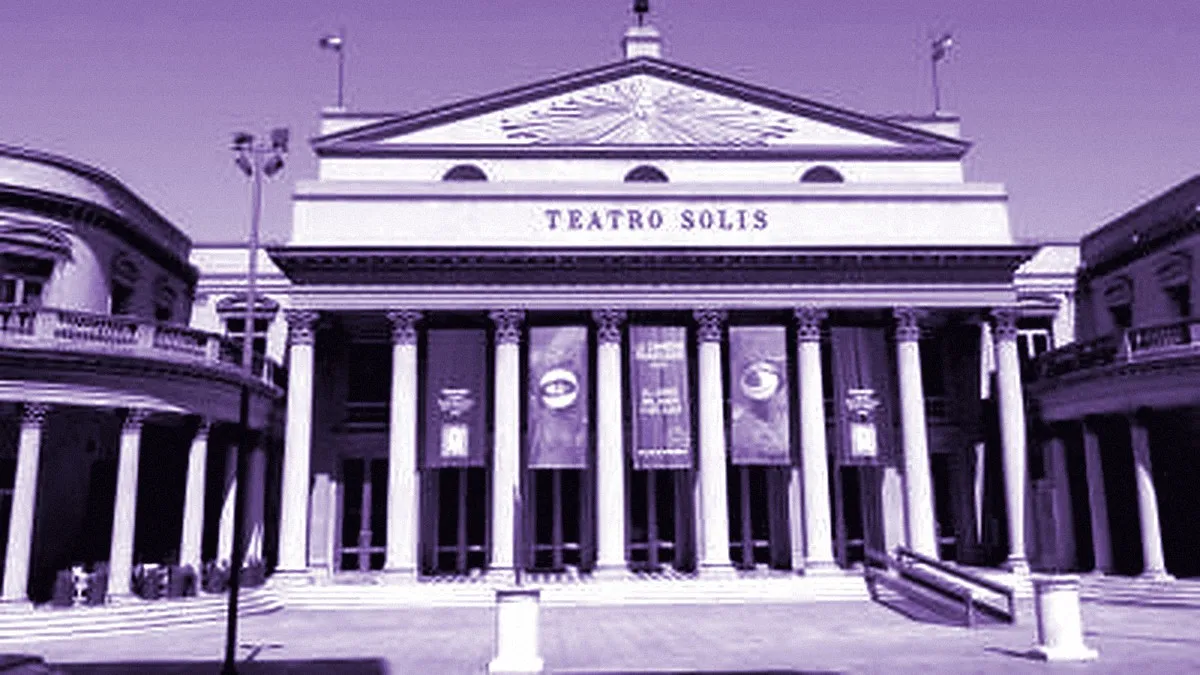
Things to Do in Montevideo: Historic Streets, Museums and Football Heritage
The best things to do in Montevideo range from exploring the colonial buildings of Ciudad Vieja to following the city’s football history and walking beside the Río de la Plata. Uruguay’s capital combines historic squares, museums, theatres, cultural institutions and distinctive neighbourhoods in a city that is easy to discover at your own pace. Neywo has a free audio guide for Montevideo with 207 narrated places.
What to See in Montevideo
Begin in Ciudad Vieja
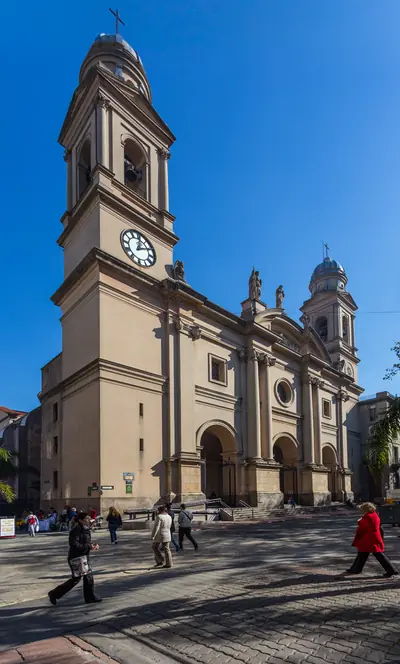
Montevideo’s historic centre brings together some of the city’s most important buildings and museums. Plaza Constitución, also known as Plaza Matriz, is home to the Metropolitan Basilica Cathedral of the Immaculate Conception and San Felipe and Santiago, the city’s principal Roman Catholic church. The present neoclassical structure began to take shape in 1790 and was consecrated in 1804. It became a National Historic Monument in 1975.
Opposite the cathedral stands the Cabildo Historical Council. Construction began in 1804, and the building served as Montevideo’s colonial government and royal prison. On 18 July 1830, Uruguay’s first Constitution was sworn in here. Today, the building houses a historical museum and archive.
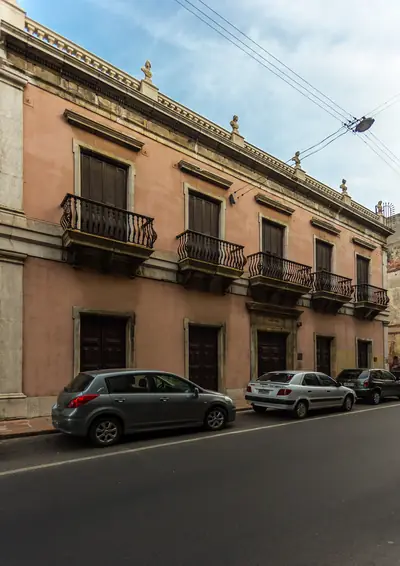
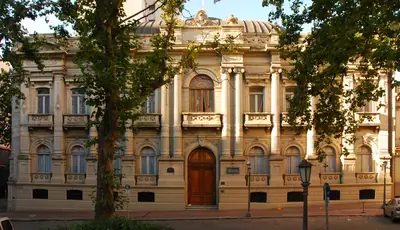
The Museo Romántico of Montevideo, also called the Casa de Antonio Montero, occupies a house built in 1831 for the merchant Antonio Montero. Designed by José Toribio, it is one of the few surviving buildings in Montevideo’s colonial style from that period. Its marble decoration gave it the former name Palacio del Mármol, or Marble Palace. Part of the building opened as the Salón Rouge, Uruguay’s first cinema, on 18 July 1896.
Several other museums connect Ciudad Vieja with Uruguay’s political and cultural history. Casa de Rivera, the principal home of Uruguay’s Museo Histórico Nacional, was where General Fructuoso Rivera lived from 1834 to 1849. Casa de Giuseppe Garibaldi occupies the former residence of Garibaldi and his family. The Carnival Museum, established in 2006, focuses on Candombe, Carnival, Uruguayan Carnival and Murga.
For a closer look at the city’s earliest architecture, the walk through the old town also includes Casa Tomás Toribio, Casa de don Agustín de Castro, Casa de Juan Antonio Lavalleja, the Museo de Artes Decorativas Palacio Taranco, Parroquia San Francisco de Asís, the Museum of Pre-Columbian and Indigenous Art and the Capilla de la Caridad del Hospital Maciel.
Follow Montevideo’s central avenues
Montevideo’s central cultural life extends beyond Ciudad Vieja. At Plaza de Cagancha, the Ateneo de Montevideo reflects the city’s intellectual history. It was founded on 3 July 1886 through the merger of the Sociedad Universitaria and the Ateneo del Uruguay. Its eclectic-historicist building opened on 18 July 1900.
The route along 18 de Julio brings together theatres, public monuments and institutions. The Auditorio Nacional de Sodre Dra. Adela Reta, Auditorio Nelly Goitiño, Plaza Fabini, Columna de la Paz, Museo del Azulejo, Museo de Historia del Arte and Monumento al Gaucho all form part of this urban sequence. The Templo de la Iglesia Metodista, Sagrado Corazón, El Galpón and Plaza de los Treinta y Tres add further stops for travellers interested in Montevideo’s architecture and performing arts.
Explore Parque Rodó and its art museums
Parque Rodó offers a greener setting and a strong concentration of art and architecture. The National Museum of Visual Arts, or Museo Nacional de Artes Visuales, holds Uruguay’s largest public collection of painting and sculpture, as well as international works. Inaugurated on 10 December 1911, it is dedicated to preserving, researching, documenting and promoting the country’s artistic culture and history.
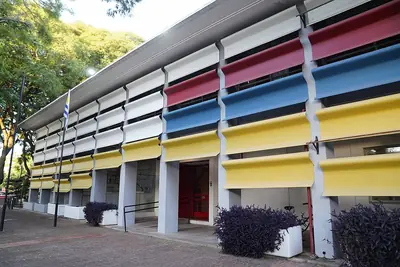
The park itself includes the Monumento a José Enrique Rodó, Castillo del Parque Rodó, Fuente de los Atletas and Anita Garibaldi Square. The Vilamajó House Museum, Monumento a José Pedro Varela, Nuestra Señora del Rosario y Santo Domingo and Palacio Pietracaprina complete a varied walk through gardens, monuments and buildings.
Discover Montevideo’s football landmarks
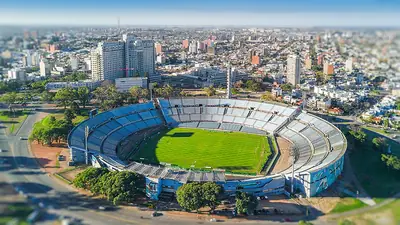
Football is central to Montevideo’s identity, and the city preserves several important places connected with the sport. Estadio Centenario, in Parque Batlle, was built between 1929 and 1930 for the inaugural FIFA World Cup. It is Uruguay’s national stadium and the primary home of the national team. FIFA declared it a Historical Monument of World Football on 18 July 1983—the first building to receive that recognition.
The stadium also hosted every match of the 1956 South American Championship, held in Uruguay from 21 January to 15 February. Its name refers to the centenary of Uruguay’s Constitution.
The Pocitos Stadium memorial marks the site of a stadium that no longer exists. The former ground hosted one of the matches that opened the first FIFA World Cup on 13 July 1930, when France defeated Mexico four goals to one. The match produced the first goal in World Cup history. Designed by Juan Scasso, the stadium opened in 1921 as Peñarol’s home ground and had room for 15,000 spectators.
A cycling route through Parque Batlle also stops at the Museo del Fútbol Uruguayo, alongside the Monument to the Cart, the Obelisk of Montevideo, the National Library of Uruguay and Iglesia Nuestra Señora del Carmen la Mayor.
See the Cerro Fortress and Montevideo Bay
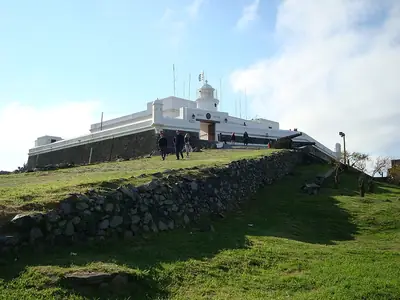
Across Montevideo Bay, Cerro Fortress, also known as Fortaleza del Cerro or Fortaleza General Artigas, rises above the Cerro de Montevideo. Ordered by Governor Francisco Javier de Elío and completed in 1839, it is considered the last Spanish fort built in Uruguay.
The fortress is a cultural heritage monument and has housed the Military Museum since 1916. Its summit is crowned by the Faro Cerro de Montevideo lighthouse. The fortress also appears on Uruguay’s national coat of arms and on Montevideo’s departmental coat of arms, making it one of the country’s principal national symbols.
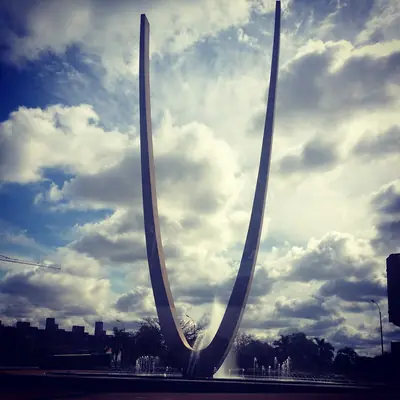
The Monumento Luis Batlle Berres, known as Los Cuernos de Batlle, is another distinctive landmark recognised as part of Uruguay’s cultural heritage.
Visit further museums and historic residences
Montevideo’s museums extend into several neighbourhoods. The Museo de la Casa de Luis Alberto de Herrera, also called Casa Quinta de Luis Alberto de Herrera, is in Brazo Oriental. Its residence and park, designed by landscape architect Charles Racine, form part of the historic museum setting.
The National Museum of Anthropology, housed at Casa Quinta Mendilaharsu, is devoted to researching, conserving and sharing Uruguay’s anthropological heritage. It was formally created as a state museum in 1981.
The Montevideo Center of Photography, or Centro de Fotografía de Montevideo, preserves and shares photographic images connected with Uruguay and Latin America.
Explore Montevideo with a self-guided audio tour
Neywo gives you a free way to discover Montevideo without joining a group or following a fixed schedule. The app tells the story of each place as you reach it, at your own pace, with no group and no schedule.
Montevideo has:
- 4 walking tours, covering 11.85 km in total and offering 45 narrated stops
- 1 bus route of 8.5 km, lasting 36 minutes, with 7 stops
- 1 bike route of 4.1 km, lasting 20 minutes, with 6 stops
The walks include a 2.55-kilometre route from Plaza Independencia to the Old Port, a 1.92-kilometre tour of colonial houses, churches and carnival in the old town, a 3.21-kilometre route along 18 de Julio, and a 4.17-kilometre exploration of Parque Rodó. The bus route links the Old Town with the Bella Vista churches, while the bike route crosses Parque Batlle towards the city centre.
Download Neywo to explore Montevideo’s squares, museums, churches, stadiums and neighbourhoods with the story arriving when you do. The narration is available in 11 languages, so you can discover the city independently and build your visit around the places that interest you most. Montevideo is part of Uruguay, and nearby destinations include Punta del Este and Colonia del Sacramento.
Places with an audio guide in Montevideo
8 places in Montevideo with a Neywo audio guide. Each one starts telling its story as you reach it.
Self-guided tours in Montevideo
6 tours in Montevideo, free in the Neywo app. Each stop tells its story as you reach it.
- Bike ride
Parque Batlle to the City Centre by Cycle Lane
Pedal from the Monument to the Cart beside Estadio Centenario along Montevideo's cycle lanes to the Obelisk, the National Library and the Carmen church. A flat ride past football history and the city's grand boulevards.
Monument to the Cart · Museo del Fútbol Uruguayo · Obelisk of Montevideo · National Library of Uruguay · Plaza de los Treinta y Tres · Iglesia Nuestra Señora del Carmen la Mayor
Open this tour: Parque Batlle to the City Centre by Cycle Lane - Bus ride
Line 409: From the Old Town to the Bella Vista Churches
A local COETC bus from Plaza España through the city centre, northwest to the Armenian cathedral and the Agraciada avenue chapels. Ride it to see everyday Montevideo beyond the tourist core.
Solis Theatre · San Antonio y Santa Clara, Montevideo · El Galpón · Teatro Stella d'Italia · Surp Nerses Shnorhali Cathedral · Nuestra Señora del Rosario, Montevideo …
Open this tour: Line 409: From the Old Town to the Bella Vista Churches - Walk
Plaza Independencia to the Old Port: Montevideo's Birthplace
Start under the 1928 tower of Palacio Salvo, where La Cumparsita was written, and follow Sarandi into the walled Ciudad Vieja. You pass the numismatic museum, South America's oldest theatre, the last gateway of the Spanish citadel, Plaza Matriz with its cathedral and colonial Cabildo, and finish at the diagonal Plaza Zabala by the water.
Palacio Salvo · Numismatic Museum · Plaza Independencia · Solis Theatre · Gateway of the Citadel · Museo Torres García …
Open this tour: Plaza Independencia to the Old Port: Montevideo's Birthplace - Walk
Colonial Houses, Churches and Carnival in the Old Town
Wander the quieter western streets of the Old Town, where merchants, generals and a revolutionary hero once lived. Cross the vaulted Bóvedas square, visit palaces and churches, and end at the Carnival Museum, home of Uruguay's longest party.
Plazoleta de Las Bóvedas · Casa Tomás Toribio · Casa de don Agustín de Castro, Montevideo · Casa de Rivera · Casa de Juan Antonio Lavalleja · Museo de Artes Decorativas "Palacio Taranco" …
Open this tour: Colonial Houses, Churches and Carnival in the Old Town - Walk
18 de Julio: Theatres, Tango and Art Deco
Walk the heart of downtown Montevideo along Avenida 18 de Julio. Pass the Sodre auditoriums, the Ateneo and the Columna de la Paz on Plaza Cagancha, the tile museum, the art museum and the churches of the Cordon neighbourhood, and end at El Galpon theatre and the fire-station square of Plaza de los Treinta y Tres.
Auditorio Nacional de Sodre Dra. Adela Reta · Auditorio Nelly Goitiño · Plaza Fabini · Columna de la Paz · Ateneo de Montevideo · Museo del Azulejo …
Open this tour: 18 de Julio: Theatres, Tango and Art Deco - Walk
Parque Rodó: Gardens, Art and Architects
Stroll through Montevideo's best-loved park, from the open-air Carnival stage of the Summer Theatre past the fountains and the monument to Rodo to the National Museum of Visual Arts and the house of architect Julio Vilamajo, then walk north past the monument to the school reformer Jose Pedro Varela, the only Neo-Mudejar church in Uruguay and a Parque Batlle villa.
Teatro de Verano Ramón Collazo · Parque José Enrique Rodó · Monumento a José Enrique Rodó · Vilamajó House Museum · National Museum of Visual Arts · Castillo del Parque Rodó …
Open this tour: Parque Rodó: Gardens, Art and Architects
Walk Montevideo with Neywo
Neywo turns Montevideo into a self-guided audio tour. Stories arrive as you reach the place they belong to, and the route reshapes when you wander off it.

