Gjirokastër, Albania: Self-Guided Walking Tour
Things to do in Gjirokastër
Gjirokastër is a historic city in southern Albania, often called the “Silver City” for its pale stone roofs and nicknamed the “city of a thousand steps” because of its steep lanes and winding stairways. Set above the Drinos Valley and framed by the Mali i Gjerë mountains, it offers a blend of Ottoman architecture, a hilltop fortress, and rich cultural layers that make it a compelling destination. Neywo provides a free audio guide for Gjirokastër with 11 narrated places and one walking tour, available in 11 languages.
Exploring Gjirokastër’s highlights
Gjirokastër Fortress
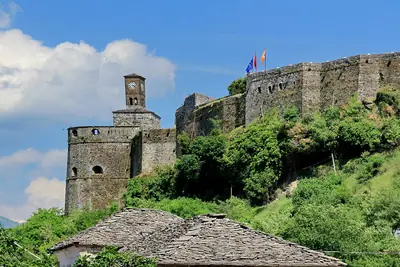
The fortress, known locally as Kalaja e Gjirokastrës, rises above the city and overlooks the Drino Valley. Its origins date to the thirteenth century, with major expansions during the Ottoman era and again under Ali Pashë Tepelena in the nineteenth century. The site served both defensive and administrative functions and includes a Bektashi tyrbe within its walls. Today it hosts cultural events and offers panoramic views of the town and surrounding landscape.
Zekate House
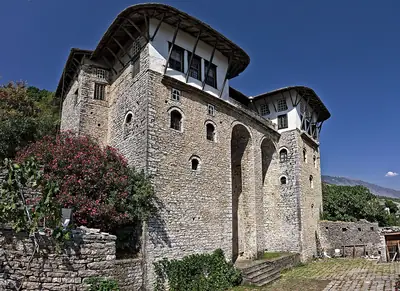
Located in the Palorto quarter, Zekate House (Zapanaja e Zekatëve) is a grand example of Ottoman‑style architecture. Built in 1811‑1812, it is an urban kullë—a fortified tower house—featuring two stone towers joined by a large double‑arched façade. The wooden superstructure above the stone base creates its distinctive silhouette. Inside, the house spans four floors, with storage and a cistern below, reception rooms and a kitchen above, living quarters on the next level, and a large reception room plus two smaller rooms on the top floor. The central staircase leads to a balcony‑equipped room.
Gjirokastër Mosque
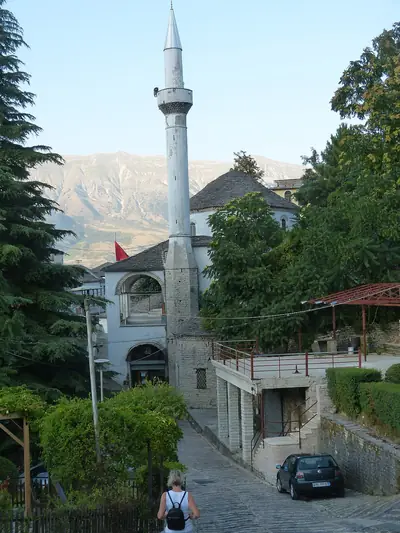
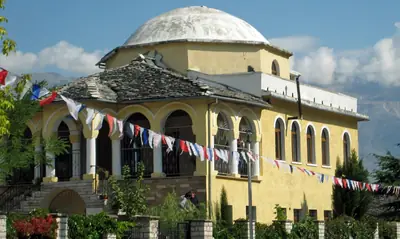
Also called the Memi Bey Mosque, this is the city’s only mosque that survived intact through the communist period. Constructed in the eighteenth century (traditionally dated to 1757), it sits on the steep hillside of the New Bazaar. The building is a single‑domed mosque with a portico and a solitary minaret. Local tradition says the minaret has ninety‑nine steps, symbolising the ninety‑nine names of Allah. The mosque forms part of the UNESCO‑listed Historic Centres of Berat and Gjirokastër.
Meçite Hamam
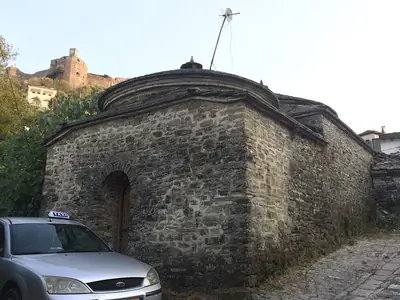
Known as the former Turkish bath, the Meçite Hamam is the sole surviving bathhouse in Gjirokastër. It developed in two phases: an older section with three washing rooms and a possible sweating area, and a later addition that served as a changing area (only its walls remain). Each washing room once held a single basin, and the spaces are covered by low spherical domes that give the building a restrained silhouette. Adjacent to the hamam stands the Meçite Mosque, reached by stone steps.
St. Michael’s Monastery Church, Nivan
This church, locally Kisha e Manastirit të Shën Mëhillit, is a recognised Cultural Monument of Albania, approved in 1973. Situated in the village of Nivan within Gjirokastër County, it functions as a monastery church and is classified as an architectural monument.
Teqe Mosque
Also known as Xhamia e Teqes, the Teqe Mosque dates to the middle of the eighteenth century, likely 1733, and is attributed to founder Ahmet Çelebi. Although it once served as a mosque and madrasa, it now operates as a medrese (religious school). The prayer hall measures roughly nine by nine metres and is covered with a slate‑stone dome. The north‑side porch once featured arcades and a wooden roof, while only the foundations of the minaret survive today. The site remained active despite the religious bans of the twentieth century and has been protected as a cultural monument since 1973.
Dunavat Bridge
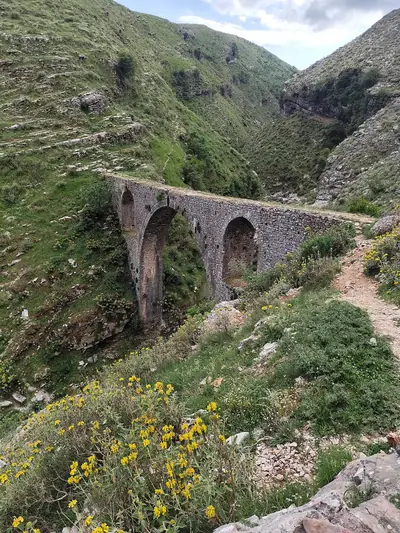
Referred to as Ali Pasha’s Bridge or Ura e Ali Pashës, the Dunavat Bridge is a remnant of an Ottoman water system built between 1811 and 1812 to supply Gjirokastër Castle. Designed by architect Petro Korçari under Ali Pashë Tepelena, the aqueduct carried spring water by gravity from karst springs on Mount Mali i Gjerë over a distance of about twelve kilometres. The surviving bridge is a three‑arch viaduct roughly forty metres long and sixteen metres high, standing in the Dunavat neighbourhood. Most of the original system was destroyed in 1932, and its limestone blocks were later reused in the castle prison.
Lockheed T-33 Shooting Star
On display in the city is a Lockheed T‑33 Shooting Star, a two‑seat subsonic jet trainer developed from the Lockheed P‑80. The T‑33A first flew on 22 March 1948 and was widely used as an advanced trainer by the United States Air Force and other air forces worldwide. A total of 6,557 aircraft were produced; while most were unarmed, some variants carried machine guns for gunnery training, and a few saw combat in conflicts such as the Bay of Pigs invasion and counter‑insurgency operations in East Timor.
Autonomous Republic of Northern Epirus
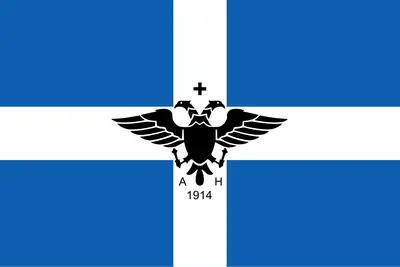
While exploring Gjirokastër, you stand in the brief centre of the Autonomous Republic of Northern Epirus. In 1914, the local Greek population proclaimed self‑rule in the city (then known in Greek as Argyrokastron) after the Balkan Wars. The republic was never fully implemented; Greek forces re‑entered the area in October 1914, and the region was finally incorporated into the Albanian state in November 1921 following the Asia Minor Campaign.
House of Abdyl Babaramo and Isuf Jaho
This residence, Banesa e Abdyl Babaramos e Isuf Jahos, is recognised as a cultural heritage monument in the Gjirokastër area. Its architectural value was affirmed under monument number 6 on 15 January 1963.
Çerçiz Topulli Square
Named after the Albanian hero Çerçiz Topulli, born in Gjirokastër, the square features his monument, created in 1934 by realist sculptor Odhise Paskali. The monument bears a bullet hole from an Italian soldier during the Second World War occupation, serving as a tangible reminder of the city’s more recent history.
Explore Gjirokastër with Neywo
Neywo’s free audio guide for Gjirokastër includes one walking tour: “The Stone City: Ottoman Towers, Bazaar and Fortress of Gjirokastër.” The route spans 2.86 kilometres, takes about 84 minutes to complete, and stops at eight narrated points: Dunavat Bridge, Zekate House, House of Abdyl Babaramo and Isuf Jaho, Gjirokastër Mosque, Teqe Mosque, Gjirokastër Fortress, Lockheed T‑33 Shooting Star, and Meçite Mosque. As you reach each location, the app tells the story of that place, allowing you to explore at your own pace without a group or a fixed schedule. Simply download Neywo, start the tour, and let the city’s history unfold step by step.
Places with an audio guide in Gjirokastër
8 places in Gjirokastër with a Neywo audio guide. Each one starts telling its story as you reach it.

Self-guided tours in Gjirokastër
1 tour in Gjirokastër, free in the Neywo app. Each stop tells its story as you reach it.
- Walk
The Stone City: Ottoman Towers, Bazaar and Fortress of Gjirokastër
Walk through a UNESCO town of slate roofs and fortified tower houses. Start at Ali Pasha's ruined aqueduct, climb past Zekate House and the bazaar mosques, and end on the great fortress above the Drino valley, with an old Turkish bath for a quiet finish.
Dunavat Bridge · Zekate House · House of Abdyl Babaramo and Isuf Jaho · Gjirokastër Mosque · Teqe Mosque · Gjirokastër Fortress …
Open this tour: The Stone City: Ottoman Towers, Bazaar and Fortress of Gjirokastër
Walk Gjirokastër with Neywo
Neywo turns Gjirokastër into a self-guided audio tour. Stories arrive as you reach the place they belong to, and the route reshapes when you wander off it.

