What to See in Gyumri, Armenia: Free Audio Guide
Things to do in Gyumri
Gyumri, Armenia’s second‑largest city, lies in the northwestern Shirak Province and is celebrated for its distinctive black‑tuff architecture, layered history, and vibrant creative scene. Wandering its streets reveals historic houses, museums, churches and squares that together tell a story of resilience and artistic renewal, making the city a rewarding stop for anyone seeking an authentic Armenian experience beyond the capital. Neywo offers a free audio guide for Gyumri with 20 narrated places, letting you explore at your own pace.
Explore Gyumri’s highlights
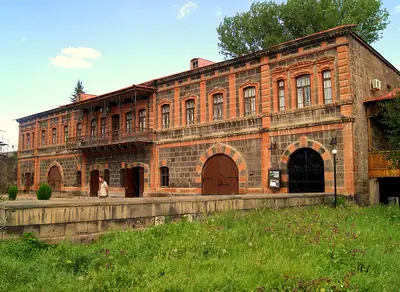
Dzitoghtsyan Museum of National Architecture
This historic house in Gyumri’s Kumayri district was built in 1872 by four brothers who had moved from the village of Dzitogh. It later became the family home of the Dzitoghtsyans and opened as a museum in 1984. The building is constructed from the red tufa stone typical of the Shirak region, giving it a distinctive local appearance that reflects the area’s building traditions.
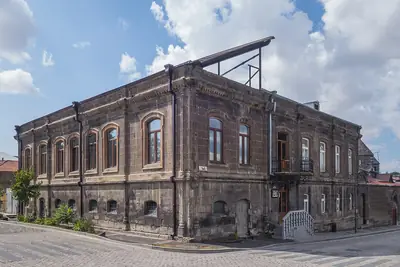
Mher Mkrtchyan Museum, Gyumri
Dedicated to Mher Mkrtchyan, a People’s Artist of the Soviet Union and celebrated comedian of cinema and theatre, the museum was established in 2004 and welcomed visitors on 20 December 2006. It occupies a building erected at the end of the nineteenth century that is itself regarded as a site of historical and architectural value.
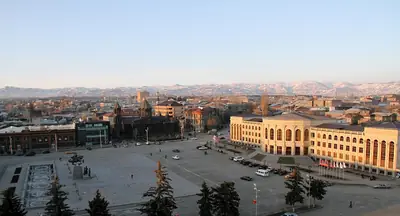
Vartanants Square
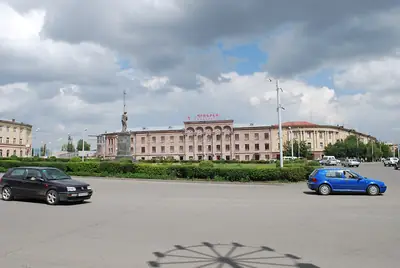
The large central square of Gyumri measures roughly 280 metres by 140 metres and is framed by Abovyan Street to the west, Gai Street to the north, Shahumyan Street to the east and Vahan Cheraz Street to the south. Opened during the 1930s under Soviet rule, its design followed an original plan by Alexander Tamanian and a later revision by D. Chislian. For a time it was called May Uprising Square, recalling the failed Bolshevik uprising of May 1920, before taking its present name to honour the battle at Avarayr where an Armenian army led by Vardan Mamikonian faced a Persian force.
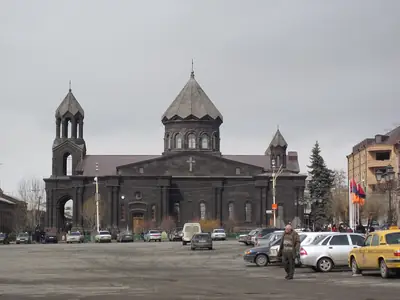
Cathedral of the Holy Mother of God
Located on the northern side of Vartanants Square, this 19th‑century church is also known as Our Lady of Seven Wounds (Surb Yot Verk). It is a cultural heritage monument of the Armenian Apostolic Church and serves as the seat of the Diocese of Shirak. Built between the 1870s and 1880s, its design follows Armenian architectural traditions and adds a religious and cultural presence to the square.
Cathedral of the Holy Cross (Holy Martyrs)
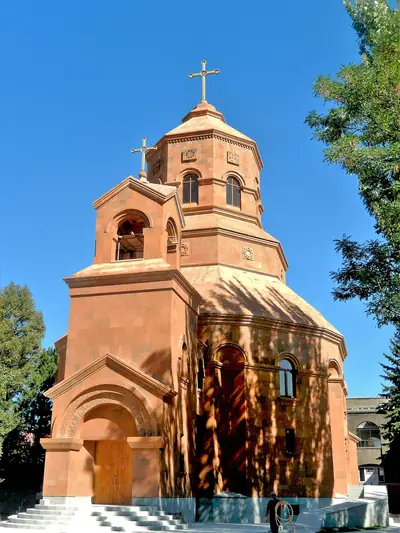
Standing on Victory Avenue beside the Dzitoghtsyan Museum, the church was originally planned as the Cathedral of the Holy Cross. Its name was changed to Holy Martyrs to commemorate the canonized victims of the Armenian genocide. Construction began in December 2010 and the building was completed in 2015. Designed in the Armenian style by architect Hakob Jivanyan, it stands as a modern example of the nation’s ecclesiastical architecture.
Independence Square
Known in Armenian as Ankakhutyan Hraparak, this large public square is Gyumri’s second‑largest after Vartanants Square. It is mainly a broad green park with a central statue of an Armenian girl raising a cross, commemorating the victims of the 1988 earthquake. The square measures 125 metres by 125 metres and was completed during the 1940s after the Second World War. During the Soviet period it was called Lenin Square; after Armenia regained independence in 1991 it received its current name.
Sev Berd (Black Fortress)
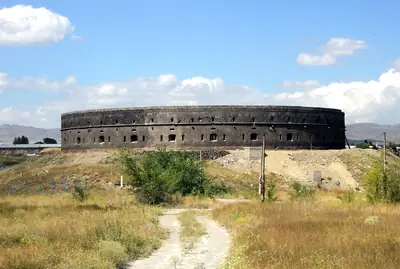
This abandoned fortress, built in 1834 after the Russo‑Turkish War of 1828‑1829, is an important historical landmark and a national cultural heritage monument. Constructed during the Russian Empire, it lies about eight kilometres from the Turkish border. Underground passages were carved here, leading toward the present‑day Mother Armenia monument and the Red Fortress.
Statue of Avetik Isahakyan
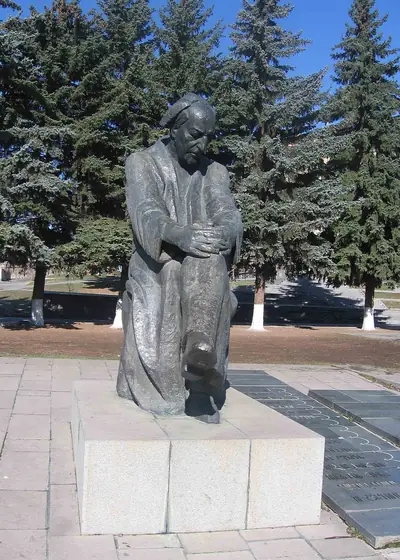
Positioned in Theater Square directly in front of the Vardan Ajemian State Drama Theatre, this bronze statue of the poet Avetik Isahakyan was installed in 1975. It is listed among Gyumri’s immovable monuments of history and culture and provides a visual link between the theatre and the literary figure it honours.
Church of the Holy Saviour (Surb Amenaprkich)
Situated on the southern side of Vartanants Square, this nineteenth‑century church was built between 1858 and 1872, with construction finishing in 1873. Its design, created under Tadevos Antikyan, draws inspiration from the Cathedral of Ani. During the Soviet years the building served as a philharmonic hall, suffered damage in the 1988 earthquake, and was restored after permission was granted in 1995. It was reconsecrated on 7 December 2024 by Catholicos Karekin II and now functions again as an active church.
Shirak International Airport
As the gateway to Gyumri and the Shirak Province, this airport is Armenia’s second‑largest after Zvartnots in Yerevan. Opened in 1961, it has served the region for more than six decades. In 2021 a US 7.5‑million investment fully resurfaced the runway and added a new arrivals terminal, tripling the annual passenger capacity to 700 000.
Saint Gregory the Illuminator Church
Known locally as Geghցonts Jam, this church was built between 1870 and 1880 through donations from residents of Gyumri’s Dzori district. Originally featuring three naves, a central dome and a small bell tower, it was converted into a storage facility during the Soviet era when the dome was demolished. The 1988 Spitak earthquake weakened the structure, but temporary supports prevented further collapse. After the building fell in 2003, restoration began in 2014 and the reconstructed church was back in use by 2015. Visitors still come to light candles and pay their respects.
Gyumri State Drama Theater named after Vardan Ajemyan
Founded in 1928, the theater opened on 1 November with a production of The Rebellion, based on a work by Dmitri Furmanov. The opening night was directed by A. Gulakyan, with M. Arutyunyan and V. Sherishev handling the artistic design. Until 1938 it was also known as the Second State Theater and previously bore the name of Askanaz Mravyan, reflecting the city’s evolving theatrical life.
Church in Kazachi post (Saint Arseny Church)
This Russian Orthodox church, recognised as the largest Russian church in Armenia, was built in the 1870s and consecrated on 6 January 1910. It originally had two principal domes: a cone‑shaped dome above the bell tower, typical of Armenian architecture, and an onion‑shaped dome. Both domes were demolished in the 1930s, after which the building served as an orphan shelter, a livestock stable and later a cinema club. It remains part of the Armenian Diocese of the Russian Orthodox Church.
National Sculpture Park Museum
Established in 2013 through an initiative of the Cultural Experimental Center of Gyumri, with support from Armenia’s Ministry of Culture and the Gyumri Municipality, this cultural space is dedicated to sculpture. It offers a distinctive setting for encountering Armenian sculptural works within the city.
Saint Michael the Archangel’s Church, Gyumri
This Russian Orthodox church, locally called Plplan‑jam or the Shining Church, stands on the Honor Hill platform near the old Kumayri cemetery and what is now Gorky Park. It is closely linked to the Honor Hill memorial burial complex, which commemorates officers and soldiers of the Russian Imperial Army who died in the Russo‑Turkish wars of 1828‑1829, 1853‑1856 and 1877‑1878.
Explore Gyumri with Neywo
Neywo provides two self‑guided walking tours in Gyumri. The first, “Rebuilt Churches and Stages: Gyumri’s Northern Centre”, covers 2.88 kilometres, takes about 102 minutes and includes 11 narrated stops such as Saint Gregory the Illuminator Church, Vartanants Square, the Mher Mkrtchyan Museum and Independence Square. The second, “From Vartanants Square to the Black Fortress”, spans 3.98 kilometres, lasts roughly 108 minutes and features 9 stops including the Church of the Holy Saviour, the Cathedral of the Holy Mother of God, the Dzitoghtsyan Museum and Sev Berd. Each tour plays its story automatically as you reach each site, allowing you to move at your own pace with no group and no schedule. Narration is available in 11 languages. Download the free Neywo app to start exploring Gyumri’s streets, squares and landmarks right away.
Places with an audio guide in Gyumri
8 places in Gyumri with a Neywo audio guide. Each one starts telling its story as you reach it.
Self-guided tours in Gyumri
2 tours in Gyumri, free in the Neywo app. Each stop tells its story as you reach it.
- Walk
Rebuilt Churches and Stages: Gyumri's Northern Centre
Start at the church that collapsed in 2003 and was rebuilt, pass twin-domed Surb Nshan and the museum of the comedian Mher Mkrtchyan, then cross a sculpture park to Independence Square, where a girl raising a cross remembers the 1988 earthquake, and finish by the historic drama theatre.
Saint Gregory the Illuminator Church, Gyumri · Surb Nshan Church, Gyumri · Vartanants Square · Cathedral of the Holy Mother of God · Mher Mkrtchyan Museum, Gyumri · National Sculpture Park Museum …
Open this tour: Rebuilt Churches and Stages: Gyumri's Northern Centre - Walk
From Vartanants Square to the Black Fortress
Gyumri's old Kumayri district in one walk: the great square and its 19th-century churches, a red tufa house museum and a sculptor's birthplace, the Russian church on Honor Hill, and finally the Black Fortress the Russian Empire built in 1834.
Church of the Holy Saviour · Vartanants Square · Cathedral of the Holy Mother of God · Cathedral of the Holy Cross · Dzitoghtsyan Museum of National Architecture · Sergey Merkurov House-Museum …
Open this tour: From Vartanants Square to the Black Fortress
Walk Gyumri with Neywo
Neywo turns Gyumri into a self-guided audio tour. Stories arrive as you reach the place they belong to, and the route reshapes when you wander off it.

