Visiting Koprivshtitsa, Bulgaria: Top Sights on Foot
Things to Do in Koprivshtitsa: Discover Bulgaria’s Historic Revival Town
Koprivshtitsa is one of Bulgaria’s most atmospheric historic towns, nestled in a peaceful valley surrounded by pine-covered hills and open countryside. It preserves the character of the country’s 19th-century National Revival period through its stone lanes, red-roofed homes, and colorful wooden buildings. As you explore this heritage town, Neywo offers a free audio guide for Koprivshtitsa featuring 12 narrated places to help you discover its history at your own pace.
What to See in Koprivshtitsa
The historic sights of Koprivshtitsa are scattered throughout the town rather than concentrated in a single square. Walking its streets reveals preserved architecture, memorial sites, and house museums that recall the struggles and daily life of the 19th century.
Karavelov House
The Karavelov House is an architectural ensemble of three buildings that preserves the world of writer and revolutionary Lyuben Karavelov and politician Petko Karavelov. The complex was built by local craftsmen over 25 years, with the oldest building—the Winter House—completed in 1810. Inside, an ethnographic display presents traditional 19th-century life, along with an exhibition devoted to Lyuben Karavelov and the printing press he used with Hristo Botev to print revolutionary newspapers.
20th of April Square
This central historic square serves as the main gathering place in the town and the site for annual theatrical recreations of the proclamation of the April Uprising.
Debelyanov House
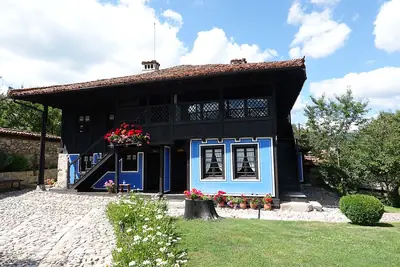
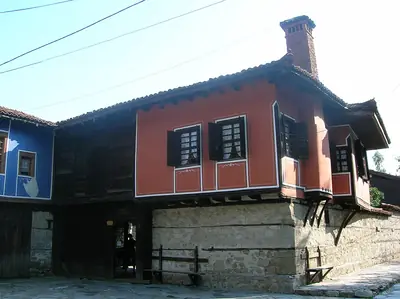
The Debelyanov House is the museum home and birthplace of the poet Dimcho Debelyanov. Built in 1830 by the poet’s grandfather, the modest building features a blue first floor, a wooden second floor, and a garden filled with flowers, pine trees, and cherry trees. Nearby stands the grave of Dimcho Debelyanov, a quiet memorial dedicated to the poet.
Oslekov House
Built between 1853 and 1856 for merchant Nencho Oslekov, this house museum displays decorated exterior and interior elements characteristic of Bulgarian Revival architecture. Today, the building accommodates an Ethnographic Museum.
Kableshkov House
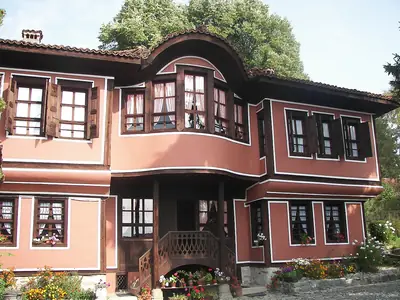
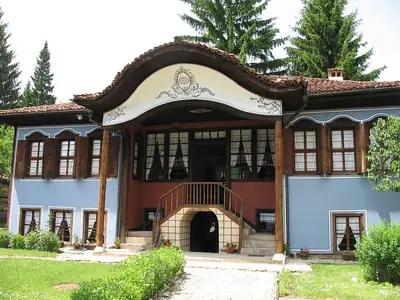
Constructed in 1845 by master builder Gencho Mladenov, the Kableshkov House is a fine example of neo-Baroque architecture from the Bulgarian Revival. It now operates as a museum dedicated to revolutionary Todor Kableshkov, featuring symmetrical oval rooms, projecting enclosed balconies, a columned entrance with a double staircase, and imported Viennese furniture.
First Shot Bridge
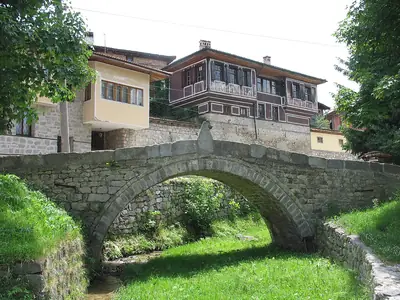
Also known as the Kalachev Bridge, this stone arch crossing was built in 1813. It is remembered as the place where Georgi Tihanek fired the opening shot of the April Uprising on April 20, 1876, marking the beginning of the struggle for Bulgaria’s liberation.
Lyutov House
Built in 1854 by Plovdiv craftsmen for a local livestock merchant and tax collector, the Lyutov House became an ethnographic museum in 1965. Its interior features a unique holkel combining wall painting and wood carving, elliptical decorative panels with painted medallions depicting exotic places, a carved wooden ceiling, and an elliptical wooden sun at its center.
Living Museum
This museum occupies the building of the first classroom school in Bulgaria, known as the School of Saints Cyril and Methodius, and continues to present the story of classroom education in Koprivshtitsa.
Georgi Benkovski House Museum
Built in 1831, this symmetrical craftsman’s home was the birthplace of Bulgarian revolutionary Georgi Benkovski. It became a museum in 1924 and preserves objects associated with Benkovski, including his childhood cradle, a kitchen sausage press, his personal Winchester rifle, and a model of the famous Cherry Cannon.
Saint Nicholas Church
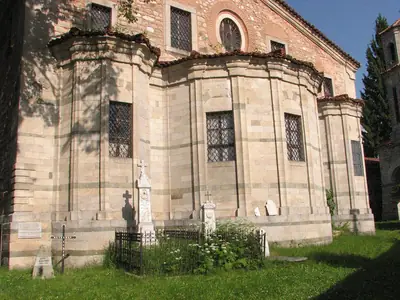
Also known as the New Church, this Orthodox cultural monument is dedicated to Saint Nicholas of Myra. Measuring 28 by 21 meters, it stands in the southern part of Sredna Mahala and incorporates brickwork with an older Bulgarian inscription on its south façade.
Museum of Bread and Traditional Foods
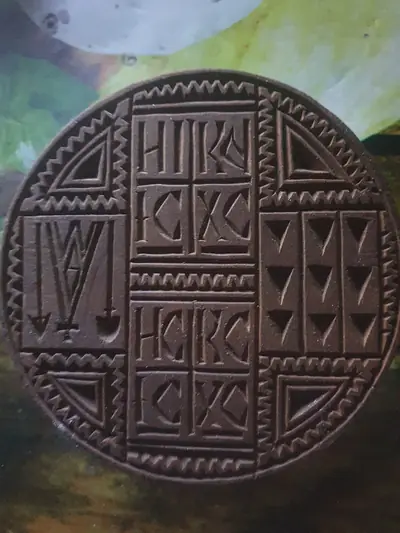
This working workshop allows visitors to follow the making of homemade bread from grinding grain to baking the loaf using traditional tools and simple devices, supported by recipes contributed by local professional and household specialists.
Explore Koprivshtitsa with Neywo
If you want to experience the town on a Koprivshtitsa self-guided walking tour, download Neywo and explore with it. The app features a walking tour covering 2.44 km across 12 narrated stops in 98 minutes. Each story plays automatically as you reach the place, at your own pace, with no group and no schedule, and narration is available in 11 languages.
While planning your travels in Bulgaria, you can also use Neywo to discover nearby destinations such as Plovdiv, Sofia, Banya, Nessebar, Veliko Tarnovo, and Varna.
Places with an audio guide in Koprivshtitsa
8 places in Koprivshtitsa with a Neywo audio guide. Each one starts telling its story as you reach it.
Self-guided tours in Koprivshtitsa
1 tour in Koprivshtitsa, free in the Neywo app. Each stop tells its story as you reach it.
- Walk
Koprivshtitsa: The Town That Fired the First Shot
Walk the cobbled lanes of Bulgaria's most perfectly preserved Revival town, where an uprising began on a stone bridge in April 1876. You pass the painted merchant houses of Oslekov, Lyutov and Kableshkov, the homes of poets and revolutionaries, and finish among churches, a bread workshop and Benkovski's birthplace.
Karavelov House · 20th of April · Debelyanov House · Oslekov House · Kableshkov House · First Shot bridge …
Open this tour: Koprivshtitsa: The Town That Fired the First Shot
Walk Koprivshtitsa with Neywo
Neywo turns Koprivshtitsa into a self-guided audio tour. Stories arrive as you reach the place they belong to, and the route reshapes when you wander off it.

