What to See in Cartagena, Colombia: Free Audio Guide
Things to do in Cartagena
Cartagena is a Caribbean port city in Colombia where colonial fortifications, colorful streets and a rich mix of African, Indigenous and Spanish heritage create a vivid atmosphere. Its walled centre, lively neighbourhoods and waterfront promenades offer plenty to see and do for anyone interested in history, culture or simply soaking up the sea breeze. Neywo offers a free audio guide for Cartagena with 37 narrated places and two self‑guided walking tours.
Explore Cartagena’s highlights
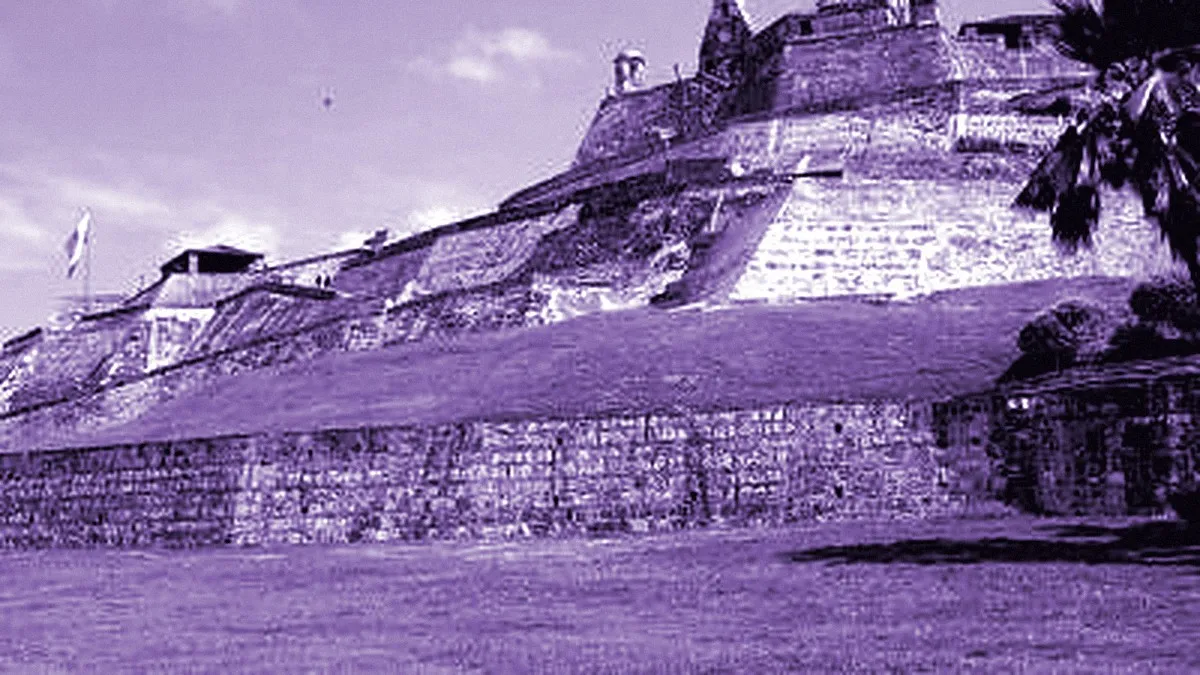
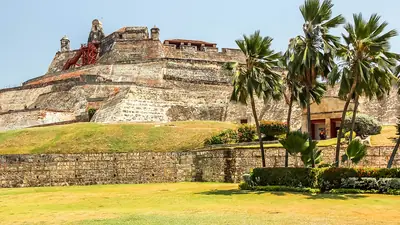
Castillo de San Felipe de Barajas
Perched on San Lázaro Hill, this fortress is the largest the Spanish ever built in the Americas. Its origins date back to 1536 as the modest Castillo de San Lázaro, but the structure seen today was reshaped in the 17th century by engineer Bautista Antonelli and constructed with African slave labour under Spanish oversight.
San Sebastián del Pastelillo Fort
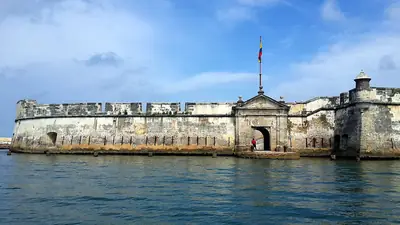
This colonial‑era military stronghold was erected to help defend Cartagena against attackers. It still stands today as a reminder of the city’s long‑standing strategic importance.
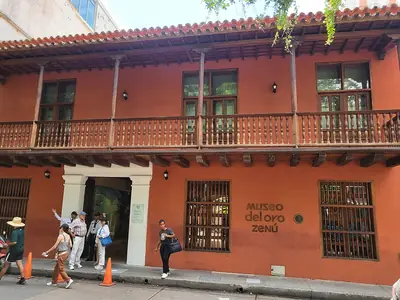
Zenú Gold Museum
Located in a colonial mansion on Bolívar Square, the museum showcases the gold‑working skill of the Zenú people. Visitors can see hundreds of gold figurines of animals and birds, as well as ceramics and other artefacts that illustrate how the lure of Zenú gold contributed to the culture’s decline during the Spanish conquest.
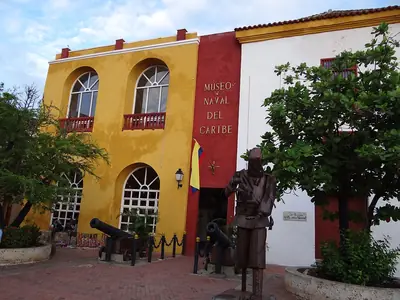
Museo Naval del Caribe
Housed in a restored colonial building that once served as the Spanish Navy’s headquarters, the museum traces Colombia’s Caribbean maritime past. Its architecture features a two‑story façade with arched windows, a central courtyard with a fountain and tropical plants, and interior details such as high ceilings, intricate woodwork and polished tile floors.
Cartagena Cathedral
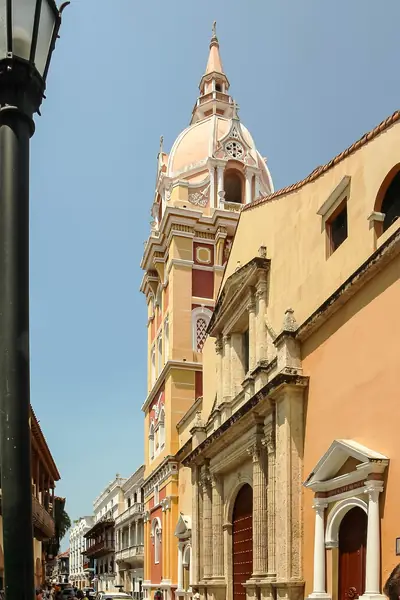
Known locally as the Cathedral of Saint Catherine of Alexandria, the bright lemon‑yellow building with white trim dominates Bolívar Square. Construction began in 1577 on the site of an earlier wooden chapel, was completed in 1612, and survived an attack by Francis Drake’s fleet while still under construction in 1586.
Castle of San Luis de Bocachica
Situated on Isla Tierra Bomba at the Bocachica channel entrance, this fort—originally built in 1646 by engineer Juan de Somovilla—was captured by French forces and pirates in 1697 after a two‑day siege, later destroyed by British artillery in 1741, and rebuilt by the Spanish in 1753 on the same ruins.
Casa Museo Rafael Núñez
This 19th‑century mansion belonged to Rafael Núñez, Cartagena‑born politician who served as Colombia’s president four times. The house displays Antillean Creole architecture with a white façade, red‑tiled roof, wrap‑around balcony and an inner courtyard planted with palm trees; Núñez’s 1850 poem celebrating Cartagena’s independence later became part of the Colombian national anthem.
Iglesia de San Pedro Claver
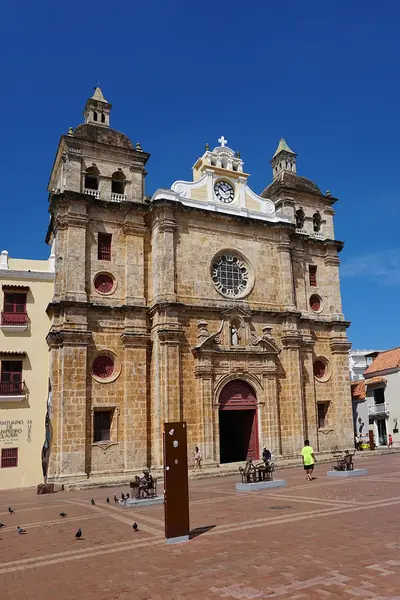
Built between 1580 and 1654, this Jesuit‑inspired church features a stone façade sourced from Tierrabomba and imposing wooden doors. Inside, the interior is austere compared with the Baroque exterior, highlighted by stained‑glass windows and a winding staircase that offers a bird’s‑eye view of the nave.
Museo De Las Fortificaciones
The museum tells the story of Cartagena’s defensive walls, which took almost two centuries to finish and were completed in 1796. Stretching 11 km (just under seven miles) around the historic centre, the walls are punctuated by watch towers, old cannons and lookout points, with the Bastion of Santo Domingo providing a popular sunset spot and home to Café del Mar.
Museo Histórico Nacional de lá Cartagena
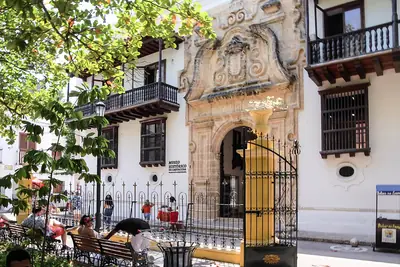
Occupying the former Palace of the Inquisition overlooking Parque de Bolívar, this museum opened in 1984 to preserve Cartagena’s multilayered past. Its façade exemplifies late colonial civil architecture with ornate balconies, arches and intricate carvings, while the exhibits cover indigenous cultures, colonialism, slavery, the African diaspora and the struggle for independence.
Parque de Bolívar
As the main square of the walled city, Bolívar Square is a leafy oasis filled with shade trees, fountains and benches. Surrounding buildings display arcaded walkways, balconies and tiled roofs, and the Cartagena Cathedral stands at one corner, offering a tranquil spot to relax amid historic surroundings.
Church of la Trinidad
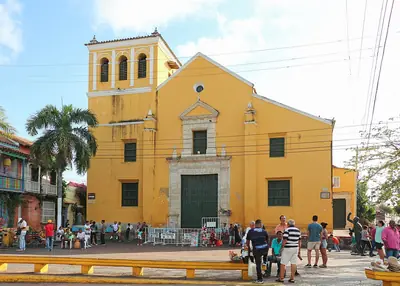
Located on Calle de San Juan in Getsemaní, this narrow colonial‑era street retains its original name and stretches 187 metres. Once home to Admiral José Prudencio Padilla and later to local figure Samir Beetar, the lane is now celebrated for its vibrant wall paintings and the cafés and restaurants that line it.
Iglesia de Santo Toribio
Situated at the corner of Plaza Fernández de Madrid, this church was the last built in Cartagena during the colonial period, with construction beginning in 1666. Its façade blends Baroque and Mudejar styles with detailed carvings, a dome‑topped bell tower, and an interior featuring a frescoed vaulted ceiling and an 18th‑century altarpiece.
Teatro Adolfo Mejía (Teatro Heredia)
Opened in 1911 on the site of the former Iglesia de La Merced, this neoclassical theatre is a cultural landmark in the walled city. Its soft‑pink façade bears tall Corinthian columns, a pediment adorned with sculpted muses, and the interior preserves original woodwork and tilework from the early 20th century.
Muelle de Los Pegasos
This lively pier puts you at the water’s edge of the old city, where sea breezes mingle with the sounds of daily life and pastel‑coloured colonial façades. Nearby, the triangular Plaza de Los Coches hosts the Sweets Portal, a candy market whose stalls offer handmade treats—especially coconut‑based confections such as the rolled Cubanitos—within arcaded walkways of historic houses.
Experience Cartagena with Neywo
Neywo’s free audio guide lets you explore Cartagena at your own pace with two walking tours. The first tour, “Cartagena: Pirates, Gold and the Plaza Bolívar,” covers 2.69 km in about 93 minutes and stops at 12 locations including the Bastion of Santo Domingo, the Naval Museum, the Zenú Gold Museum and the Cathedral. The second tour, “Cartagena: Getsemaní, the Great Fortress and the Hill of the Stern,” runs 3.63 km in roughly 77 minutes with four stops: the Clock Tower, the Church of la Trinidad, the Castillo de San Felipe de Barajas and the Convento de la Popa. As you reach each point, the app plays a narrated story, so there is no group to follow and no fixed schedule. Simply download Neywo, choose a tour, and let the city’s history unfold step by step.
Places with an audio guide in Cartagena
8 places in Cartagena with a Neywo audio guide. Each one starts telling its story as you reach it.
Self-guided tours in Cartagena
2 tours in Cartagena, free in the Neywo app. Each stop tells its story as you reach it.
- Walk
Cartagena: Pirates, Gold and the Plaza Bolívar
Start at the stone bastion where the walls began after Francis Drake sacked the city in 1586. Pass Botero's rotund bronze, the Inquisition palace, Zenú gold and the lemon-yellow cathedral, then the old university, the pink theatre and the last colonial church, ending at the Clock Gate.
Bastion of Santo Domingo, Cartagena · La Gorda Gertrudis · Museo Naval del Caribe · San Pedro Claver · Museo Histórico Nacional de lá Cartagena · Zenú Gold Museum …
Open this tour: Cartagena: Pirates, Gold and the Plaza Bolívar - Walk
Cartagena: Getsemaní, the Great Fortress and the Hill of the Stern
Leave the walled city by the Clock Gate and cross into colourful Getsemaní and its street-art alleys. Then climb to San Felipe de Barajas, the largest fortress the Spanish ever built in the Americas, and finish at the hilltop convent of La Popa, with views over the whole bay.
Puerta del Reloj · Church of la Trinidad · Castillo de San Felipe de Barajas · Convento de la Popa
Open this tour: Cartagena: Getsemaní, the Great Fortress and the Hill of the Stern
Walk Cartagena with Neywo
Neywo turns Cartagena into a self-guided audio tour. Stories arrive as you reach the place they belong to, and the route reshapes when you wander off it.

