Things to Do in Reykjavík, Iceland: Walking Guide
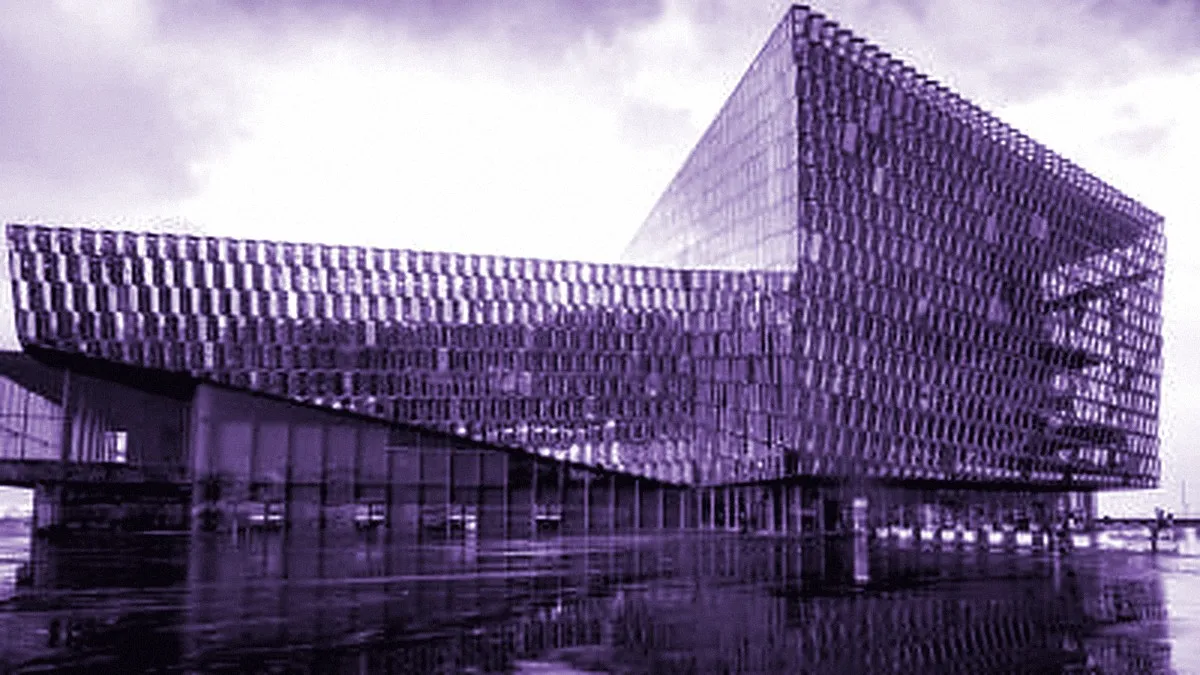
Things to do in Reykjavík: the best places to see in Iceland’s capital
Reykjavík is Iceland’s capital and a compact city filled with striking architecture, cultural institutions, historic buildings, and reminders of the country’s Viking and modern history. The city is easy to explore on foot, and its landmarks range from the towering Hallgrímskirkja to museums dedicated to Icelandic settlement, art, whales, and unusual natural history. Neywo has a free audio guide for Reykjavík with 66 narrated places.
What to see and things to do in Reykjavík
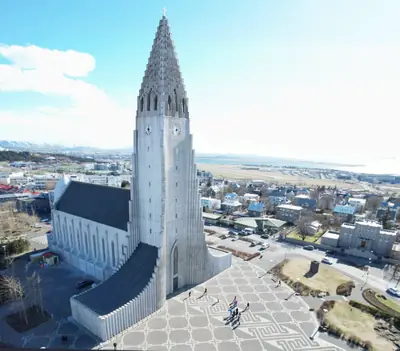
Hallgrímskirkja
Hallgrímskirkja is Reykjavík’s defining landmark. Its curved spire rises 74.5 metres above Skólavörðuholt, making it the largest church in Iceland and the second tallest building in the country. The Protestant Lutheran church was built between 1945 and 1986.
Architect Guðjón Samúelsson designed the sweeping façade and side wings to echo the basalt columns found in Iceland’s volcanic landscapes. The church’s position is unusual too: rather than facing east like traditional churches, it is aligned with the sun. At solar noon, the tower’s shadow falls along Skólavörðustígur, the street leading to the entrance.
The Einar Jónsson Museum and the Statue of Leif Erikson
Near Hallgrímskirkja, the Einar Jónsson Museum occupies Hnitbjörg, the former home and studio of Iceland’s first major sculptor. Einar Jónsson and his wife, Anna Jørgensen Jónsson, gave the building and the artist’s work to the Icelandic state. Inside, his sculptures and paintings are preserved and displayed as a record of his career.
Outside Hallgrímskirkja stands the statue of Leif Erikson, a reminder of Iceland’s Norse heritage and the country’s settlement history.
Aðalstræti 10 and the Settlement Exhibition
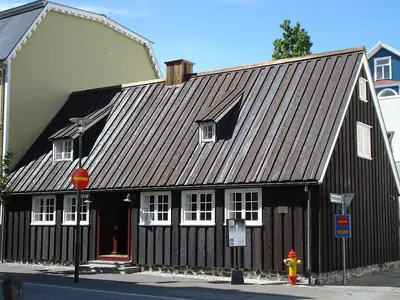
Aðalstræti 10 is the oldest surviving house in downtown Reykjavík. Dating from 1762, the modest one-and-a-half-storey timber building was originally part of the enterprises of Skúli Magnússon. Its frame is filled with rubble stone, its walls are covered with tar-painted boards, and much of the timber came from Norway and Denmark.
Nearby, the Settlement Exhibition presents Reykjavík’s earliest history and the settlement period. Together, these places offer a way to connect the city’s surviving historic architecture with the story of its beginnings.
Reykjavík Cathedral and Austurvöllur
Reykjavík Cathedral, or Dómkirkjan, stands beside Austurvöllur square in the old city centre. It is the seat of the Bishop of Iceland and the mother church of the Evangelical Lutheran Church of Iceland.
The cathedral has a close relationship with Alþingi, Iceland’s parliament, which stands next door. Since Alþingi was re-established in 1845, parliamentary sessions have begun with a service at the cathedral before members move to the legislative chamber. The present building largely dates from 1847.
Fríkirkjan and Tjörnin
The white-and-green Fríkirkjan í Reykjavík stands beside Tjörnin lake. Its congregation was founded in 1899, and the church was consecrated in 1903. Extensions and rebuilding shaped the building into the form seen today.
Tjörnin provides a quiet open space in the centre of Reykjavík, close to the cathedral and other cultural institutions. The area is a natural part of a walk through the city’s historic centre.
The National Museum of Iceland
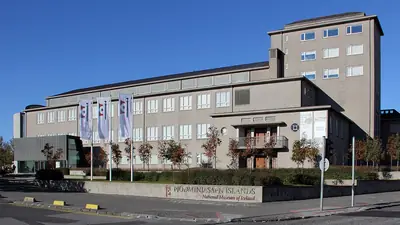
The National Museum of Iceland, or Þjóðminjasafn Íslands, follows the country’s story from the Viking Age settlement to the present day. Founded on February 24, 1863, it was created partly in response to concern that Icelandic artefacts were being dispersed abroad.
One of its important objects is the Þórslíkneski, a Thor’s hammer amulet connected with the Norse beliefs that influenced early Iceland. The permanent exhibition provides a chronological account of how Icelandic society formed and changed.
The Icelandic Phallological Museum
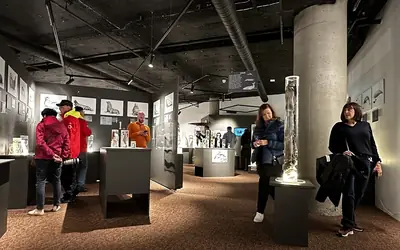
The Icelandic Phallological Museum is one of Reykjavík’s most unusual museums. Its collection contains more than 300 specimens representing over 100 mammal species, including examples from whales, seals, and land mammals.
The museum also includes an element of Icelandic folklore: empty cases represent the supposed penises of elves, trolls, and hidden people, invisible beings from traditional stories. The collection began with Sigurður Hjartarson’s childhood interest in a cattle whip made from a bull’s penis and later developed into the museum.
Culture House and the National Theatre of Iceland
Culture House, or Safnahúsið, occupies a building on Hverfisgata constructed between 1906 and 1908. It was originally designed for the National Library and National Archives, and also housed the Natural History Museum and Antiquities Collection. Today, it is part of the National Museum of Iceland and presents the “Points of View” exhibition, drawing objects from major national museums and cultural institutions.
Nearby, the National Theatre of Iceland opened on April 20, 1950. The building was designed by Guðjón Samúelsson, who also designed Hallgrímskirkja.
Hafnarhús and Reykjavík’s art scene
Hafnarhús is one of the three locations of the Reykjavík Art Museum, Iceland’s largest visual art institution. The museum was formally founded in 1973, building on gifts made to the city by Ragnar í Smára, Jóhannes Sveinsson Kjarval, Ásmundur Sveinsson, and Erró.
Across its three sites, the museum presents permanent collections and temporary exhibitions by Icelandic and international artists. Hafnarhús adds contemporary visual art to a city centre already rich in historical and cultural landmarks.
Höfði
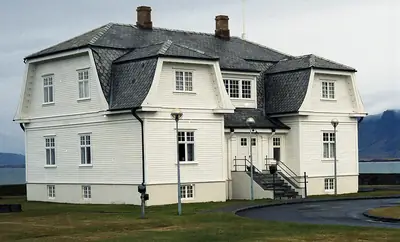
Höfði is a modest white house with a major place in twentieth-century history. In October 1986, Ronald Reagan and Mikhail Gorbachev met there for the Reykjavík Summit. Although the talks did not produce an agreement, they helped lay groundwork for later arms control treaties.
In August 1991, Höfði also hosted a meeting between the foreign ministers of Estonia, Latvia, and Lithuania and Iceland’s leaders. Iceland became the first country to formally recognize the independence of the Baltic states.
Perlan
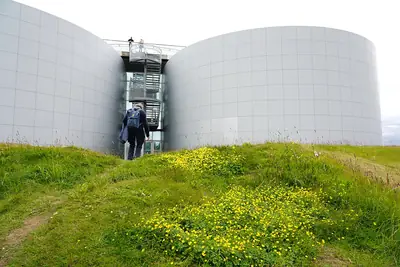
Perlan sits on Öskjuhlíð hill beneath a glass dome supported by six former district-heating tanks. Designed by Ingimundur Sveinsson, the building opened to the public on June 21, 1991, transforming the former hot-water reservoirs into a museum and visitor attraction.
Its exhibitions present Iceland’s glaciers, volcanoes, seabird cliffs, and other natural features. Highlights include a 100-metre ice cave made from around 400 tons of ice, snow, and ash, the Áróra Northern Lights show in the planetarium, and the artificial geyser Strókur. A 360-degree observation deck provides views over Reykjavík and the surrounding landscape.
Whales of Iceland and the Saga Museum
In the Grandi harbour district, Whales of Iceland focuses on cetacean species recorded in Icelandic waters, from blue whales to dolphins and porpoises. The museum opened in 2015 and is dedicated entirely to these marine mammals.
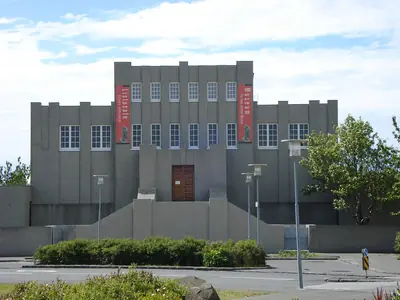
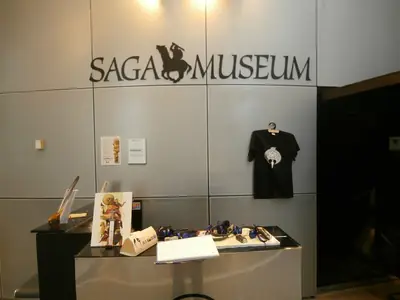
The Saga Museum, housed in a historic harbour building, brings Iceland’s medieval history to life through scenes from 16 of the country’s best-known sagas. Silicone figures in period clothing and objects made with traditional techniques recreate episodes from the stories.
Árbæjarsafn
Árbæjarsafn is Reykjavík’s open-air museum and the largest of its kind in Iceland. Built around the site of the former Árbær farm, it contains more than 20 relocated buildings showing how people lived, worked, and played from the settlement era to modern times.
The museum developed as Reykjavík expanded and historic buildings were threatened with disappearance. Its paths lead past turf-roofed cottages, workshops, and other buildings that illustrate everyday life in the city’s past.
Explore Reykjavík with Neywo
Download Neywo and explore Reykjavík with a self-guided audio tour at your own pace. The app offers five walking tours, one bus route, and one bike route, with routes ranging from 1.5 to 4.23 kilometres and from 8 to 109 minutes. Together, they include narrated stops at places such as Hallgrímskirkja, the National Museum of Iceland, Höfði, Perlan, Harpa, and the harbour museums.
Neywo tells the story of each place as you reach it, at your own pace, with no group and no schedule. The narration is available in 11 languages, and the Reykjavík guide includes 66 narrated places.
Places with an audio guide in Reykjavík
8 places in Reykjavík with a Neywo audio guide. Each one starts telling its story as you reach it.
Self-guided tours in Reykjavík
7 tours in Reykjavík, free in the Neywo app. Each stop tells its story as you reach it.
- Bike ride
Along the Shore: Harpa to Höfði
Follow the waterfront cycle path from Harpa's glass facade past the Sun Voyager sculpture to Höfði, the white house where Reagan and Gorbachev met in 1986. Flat, sea-facing and almost entirely on the shore path.
Harpa · The Sun Voyager · Höfði
Open this tour: Along the Shore: Harpa to Höfði - Bus ride
Route 3: Grandi Harbour to the University
Strætó route 3 runs from the old Grandi harbour through the centre and out towards Breiðholt. Ride it past the Maritime Museum, the Saga Museum, the Art Museum at Hafnarhús, the Phallological and Punk museums, the National Museum and the University of Iceland.
Reykjavik Maritime Museum · Saga Museum · Reykjavik Art Museum · Icelandic Phallological Museum · Icelandic Punk Museum · National Museum of Iceland …
Open this tour: Route 3: Grandi Harbour to the University - Walk
From the Settlers' Hall to the World's Oldest Parliament
Start among the ruins of a Viking longhouse, pass the oldest house in the centre and the garden where the first churchyard lay, then reach the square where Iceland's democracy meets. Parliament, cathedral and the duck pond of Tjörnin close a walk through a thousand years in a few compact blocks.
The Settlement Exhibition · Skúli Magnússon · Aðalstræti 10 · Ingólfstorg · Reykjavík Museum of Photography · Reykjavik Art Museum …
Open this tour: From the Settlers' Hall to the World's Oldest Parliament - Walk
Harpa to Hallgrímskirkja: Glass, Steel and Basalt Dreams
A walk through the city's boldest shapes, from the glittering honeycomb of Harpa and the gleaming Sun Voyager on the shore to the theatre and Culture House on the way uphill. Pause at the quirky museums on Laugavegur and Bankastræti and the little square of Óðinstorg, then climb Skólavörðuholt to Leif Erikson and the great concrete spire of Hallgrímskirkja.
Harpa · The Sun Voyager · National Theatre of Iceland · Culture House · Icelandic Phallological Museum · Icelandic Punk Museum …
Open this tour: Harpa to Hallgrímskirkja: Glass, Steel and Basalt Dreams - Walk
Whales, Sagas and Seafarers: Harbour to University
Begin in the old Grandi harbour with whales, sagas and the cod wars, then walk back through the west of the city. See Iceland's only Catholic cathedral, the national museum with its Thor's hammer amulet, and the library and university that shape modern Icelandic learning.
Whales of Iceland · Saga Museum · Reykjavik Maritime Museum · Landakotskirkja · National Museum of Iceland · National and University Library of Iceland …
Open this tour: Whales, Sagas and Seafarers: Harbour to University - Walk
Höfði to Perlan: A Summit House, a Painter's Park and a Glass Dome
Start at Höfði, the white house where Reagan and Gorbachev met in 1986, then cross the Hlíðar district to Háteigskirkja and Kjarvalsstaðir, the museum of the painter Jóhannes Kjarval on Klambratún park. Finish on Öskjuhlíð hill at Perlan's glass dome and the Ásatrú temple that is still taking shape.
Höfði · Háteigskirkja · Kjarvalsstaðir · Perlan · Hof Ásatrúarfélagsins
Open this tour: Höfði to Perlan: A Summit House, a Painter's Park and a Glass Dome - Walk
Laugardalur: Sculptors, a Stadium and Churches
Cross to the east side of the city, where the sculptors Sigurjón Ólafsson and Ásmundur Sveinsson made their studios by the sea. Walk from the museum at the tip of Laugarnestangi past Laugarneskirkja to Ásmundur's domed house, then on to Iceland's national football stadium, Áskirkja and Langholtskirkja.
Listasafn Sigurjóns Ólafssonar · Laugarneskirkja · Ásmundarsafn · Laugardalsvöllur · Áskirkja · Langholtskirkja
Open this tour: Laugardalur: Sculptors, a Stadium and Churches
Walk Reykjavík with Neywo
Neywo turns Reykjavík into a self-guided audio tour. Stories arrive as you reach the place they belong to, and the route reshapes when you wander off it.

