Things to Do in Astana, Kazakhstan: Walking Guide
Things to Do in Astana: What to See in Kazakhstan’s Modern Capital
Astana is Kazakhstan’s purpose-built capital, known for monumental architecture, vast public spaces and buildings that express the country’s modern national identity. The best things to do in Astana range from visiting major museums and religious landmarks to seeing futuristic structures shaped by the open steppe around the city. Neywo offers a free audio guide for Astana with 23 narrated places.
What to See in Astana
Astana’s main sights are spread across a planned urban landscape rather than concentrated in a historic old town. Together, they tell the story of a capital shaped by independence, cultural ambition and striking contemporary design.
Astana Opera
Astana Opera is one of Central Asia’s major cultural landmarks. Opened in 2013, the grand opera house was created as a world-class venue for opera and ballet and is recognized as a national architectural monument.
Its main auditorium seats 1,250 people, while the Chamber Music Hall accommodates 250. The programme combines internationally known opera and ballet classics with works by Kazakh composers, bringing local stories and musical traditions to the stage.
National Museum of the Republic of Kazakhstan
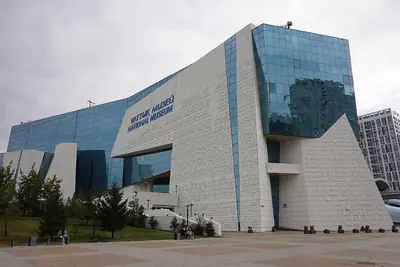
Located on Independence Square, the National Museum of the Republic of Kazakhstan is the largest museum in the country. Its blue-glass and white-marble exterior is a landmark in its own right, while its collections cover the full span of Kazakh history, from prehistoric times to the present.
The museum opened on July 2, 2014, after six years of construction. Many objects were uncovered and displayed through the national Cultural Heritage programme, making this one of the most useful places to visit for an introduction to Kazakhstan’s past and present.
Khazret Sultan Mosque
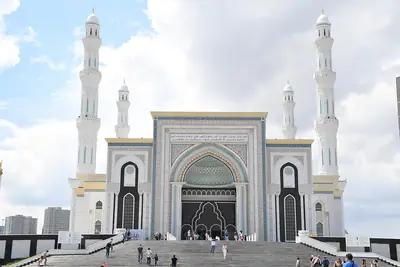
Khazret Sultan Mosque is the largest mosque in Kazakhstan and Central Asia. Completed in 2012, it is a Friday mosque designed for weekly congregational prayer and occupies an eleven-hectare complex.
Four 77-metre minarets frame the building. Its design combines classical Islamic architecture with Kazakh ornamental motifs, while Iznik tiles connect the contemporary structure with Ottoman and wider Islamic artistic traditions.
Atameken miniature park
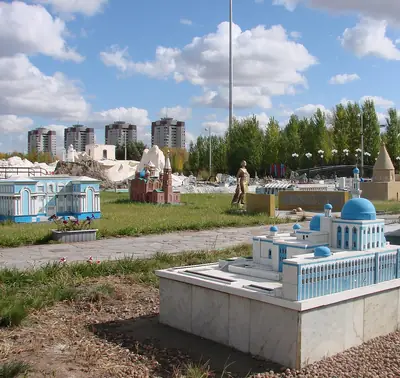
Atameken offers a compact way to discover Kazakhstan’s geography and landmarks. This open-air museum covers 1.7 hectares and contains more than 200 detailed models of notable sites from across the country.
The displays include modern cityscapes and ancient monuments, along with miniature forests, mountains and hills. The result is a small-scale portrait of Kazakhstan that can be explored on foot in under an hour.
Abu Nasr Al-Farabi Mosque
Known as the Nur-Astana Mosque until late 2021, the Abu Nasr Al-Farabi Mosque is one of Astana’s most distinctive religious buildings. Its 40-metre dome and four 63-metre minarets give the architecture a symbolic dimension: the measurements refer to moments in the life of the Prophet Muhammad.
The prayer hall holds 5,000 worshippers, with room for another 2,000 people in the outer areas. Glass, concrete, granite and alucobond panels create a contemporary appearance, while the mosque’s name honours the medieval philosopher and scientist Al-Farabi.
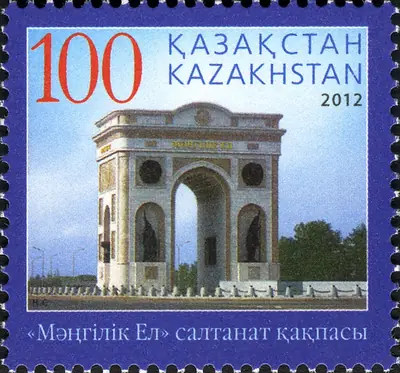
Mangilik El Triumphal Arch
The Mangilik El Triumphal Arch rises 20 metres above the city. Its name means “Eternal Nation”, and it was unveiled on December 16, 2011, to mark 20 years of Kazakhstan’s independence.
The monument is clad in granite and marble, and spiral staircases allow visitors to climb to the top for views over Astana. Four sculptures at its base represent an elder, motherhood and two batyrs, or legendary Kazakh warriors. Traditional patterns, the state emblem and a flag complete the monument’s national symbolism.
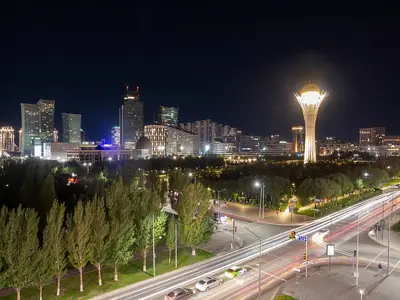
Bayterek
Bayterek is the unmistakable symbol of modern Astana. The 105-metre tower stands on Nurjol Boulevard, marking the place where Kazakhstan established its new capital in 1997.
Its design refers to the Kazakh legend of the tree of life and the mythical bird Samruk, which lays a golden egg in the crown of a magical poplar. A gilded sphere, 22 metres across, sits above the tower’s white stem. Inside it, an observation deck at 97 metres offers a 360-degree view of the capital.
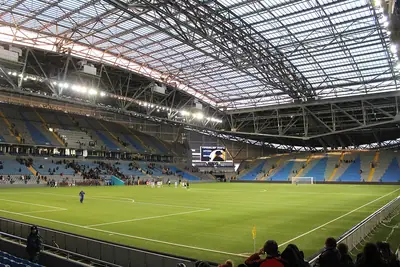
Astana Arena
Astana Arena is Kazakhstan’s largest stadium and the home of FC Astana and the Kazakhstan national football team. It accommodates 30,000 spectators and hosts football, wrestling, judo, boxing and major concerts.
Its retractable roof is a defining feature. The roof can open or close completely in 20 minutes, allowing events to continue in changing weather. The stadium was built between 2006 and 2009 and officially opened on July 3, 2009.
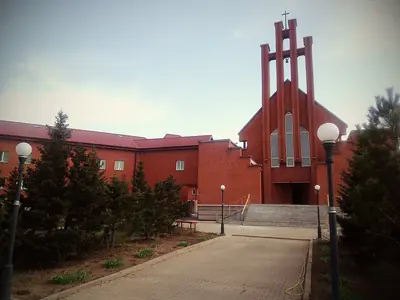
Our Mother of Perpetual Help Cathedral
Our Mother of Perpetual Help Cathedral is the Catholic cathedral of Astana and the spiritual centre of the Archdiocese of Mary Most Holy in Kazakhstan. It serves as the headquarters of the archdiocese and as the central church for Catholics across the region.
Kazakhstan Central Concert Hall
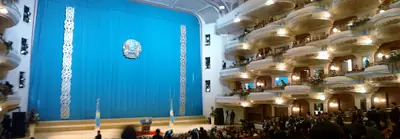
Known locally as the Flower of the Desert, the Kazakhstan Central Concert Hall is shaped like a group of large petals. Its curved walls are made from concrete covered with blue back-painted glass, a design that helps protect the building from Astana’s severe winters and hot summers.
The foyer rises 30 metres and covers more than 3,000 square metres. The complex contains three performance halls, including a main auditorium with 3,500 seats. Movable acoustic curtains and a special ceiling help adapt the hall for symphonies, rock concerts and other performances.
Khan Shatyr Entertainment Center
Khan Shatyr is one of Astana’s most recognizable buildings: a transparent tent rising 90 metres to its canopy and 150 metres to the top of its spire. Its name means “Khan among tents”.
The elliptical structure covers an area larger than ten football fields. Its roof consists of ETFE cushions suspended from steel cables, allowing sunlight into the interior while helping protect it from Astana’s extreme climate. The building was unveiled in December 2006 and has become a defining part of the capital’s skyline.
Astana Grand Mosque
The Astana Grand Mosque, also known as Nursultan Mosque, is one of the largest mosques in Central Asia and among the largest in the world. It was inaugurated on August 12, 2022.
Its main dome rises 83.2 metres and measures 62 metres across, while four minarets reach 130 metres. One tower is open to visitors and includes an elevator to a panoramic viewpoint. The entrance door is 12.4 metres high, made from iroko wood and decorated with traditional Kazakh patterns.
Beit Rachel Chabad Lubavitch Synagogue
Opened in September 2004, Beit Rachel Chabad Lubavitch Synagogue is the largest synagogue in Central Asia. Its presence in Astana represents the country’s religious diversity and the relationship between different faith communities.
The opening ceremony was attended by Kazakhstan’s then-president Nursultan Nazarbayev and Yona Metzger, the Chief Ashkenazi Rabbi of Israel.
Kalibek Kuanyshpaev Theatre
The Kazakh National Musical-Dramatic Theatre named after Kalibek Kuanyshbaev is Kazakhstan’s leading venue for Kazakh musical drama. The theatre company was founded in 1991, and its purpose-built home opened on Kuanyshbaev Street in 2020.
Performances combine epic narratives, music and vocals, bringing Kazakh stories and the emotional traditions of the steppe to the stage.
Explore Astana with Neywo
Download Neywo to follow an Astana self-guided walking tour without joining a group or following a fixed schedule. The app includes two walking tours:
- Astana’s Ceremonial Axis: From Bayterek to the Great Mosque — 5.32 km, 115 minutes and 6 narrated stops.
- The Big Tent, the Opera and Kazakhstan in Miniature — 5.44 km, 109 minutes and 5 narrated stops.
Each story plays as you reach the place, at your own pace, with no group and no schedule. Neywo’s Astana audio guide includes 23 narrated places, with narration available in 11 languages.
Astana is part of Kazakhstan, and travellers continuing their journey through the country can also explore Almaty.
Places with an audio guide in Astana
8 places in Astana with a Neywo audio guide. Each one starts telling its story as you reach it.
Self-guided tours in Astana
1 tour in Astana, free in the Neywo app. Each stop tells its story as you reach it.
- Walk
Astana's Ceremonial Axis: From Bayterek to the Great Mosque
Astana was built from nothing in the late 1990s, and this walk follows the grand axis that holds it together. Start at the golden-sphere tower of Bayterek, pass the Flower of the Desert concert hall and the blue-and-gold dome of Ak Orda, then cross to Independence Square and the biggest mosque and museum in Central Asia.
Bayterek · Kazakhstan Central Concert Hall · Ak Orda Presidential Palace · Khazret Sultan Mosque · Independence Square, Astana · National Museum of the Republic of Kazakhstan
Open this tour: Astana's Ceremonial Axis: From Bayterek to the Great Mosque
Walk Astana with Neywo
Neywo turns Astana into a self-guided audio tour. Stories arrive as you reach the place they belong to, and the route reshapes when you wander off it.

