Visiting Mombasa, Kenya: Top Sights on Foot
Things to Do in Mombasa: History, Faith and Indian Ocean Heritage
Mombasa is a coastal city in Kenya shaped by Indian Ocean trade, Swahili culture and centuries of contact between African, Arab, Portuguese, Omani and British powers. Its historic centre brings together a Portuguese fort, old mosques, colonial-era landmarks and religious buildings, making it a rewarding destination for travellers interested in the city’s layered past. Neywo has a free audio guide for Mombasa with 7 narrated places.
What to See in Mombasa
Fort Jesus Museum
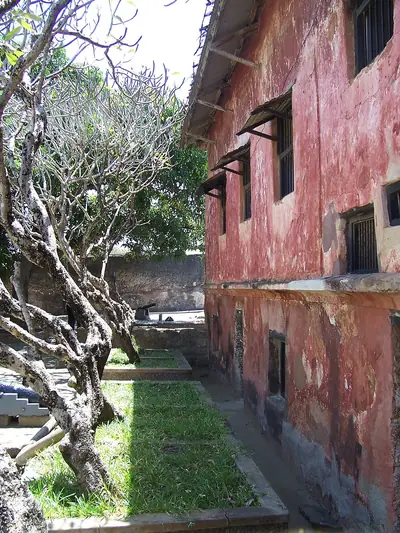
Fort Jesus Museum, also known as Fort Jesus, stands on Mombasa Island above the entrance to the Old Port. The fort was built to protect the harbour and became an important Portuguese stronghold on the route between Portugal and India.
Its design is especially striking. The roughly square fort has four corner bulwarks and is shaped like a human figure when viewed from above. It is considered a masterpiece of late Renaissance military fortification, although local Swahili communities are believed to have supplied the materials, masonry skills and labour used in its construction.
Fort Jesus changed hands several times between the Portuguese and the Turks. The British captured it in 1875 and used it as a prison. It became a national monument shortly before Kenyan independence and was added to the UNESCO World Heritage List in 2011.
Mandhry Mosque
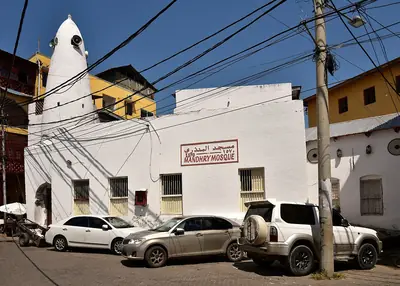
Mandhry Mosque is one of the key historic places to see in Mombasa’s Old Town. Built by Omani settlers in 1570, it has been maintained for centuries by Mombasa’s Mandhry clan.
The mosque is associated with an important place in Mombasa’s religious history: it is regarded as the oldest mosque in Mombasa and the second-oldest in Kenya. Its Swahili architectural style includes a distinctive rounded minaret. The building is also said to be one of only two mosques in the world with two mihrabs, the recessed spaces indicating the direction of prayer.
Holy Ghost Cathedral
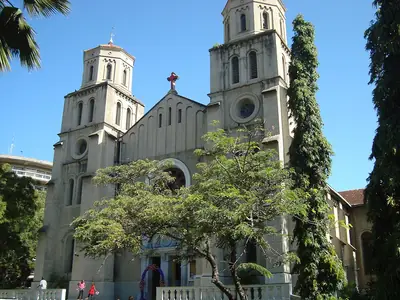
Holy Ghost Cathedral, also known as Mombasa Cathedral, is the main Catholic place of worship in the city and the seat of the Bishop of the Archdiocese of Mombasa.
The cathedral’s history began with Mombasa’s first Catholic mission, founded in 1889 by Father Alexander le Roy, a Missionary of the Holy Spirit. A church was completed on the present site in the Makadara area in 1898, but the growing Catholic community soon needed a larger building. Plans for a new church were made in 1919, and the present cathedral was completed in 1923.
Government Square
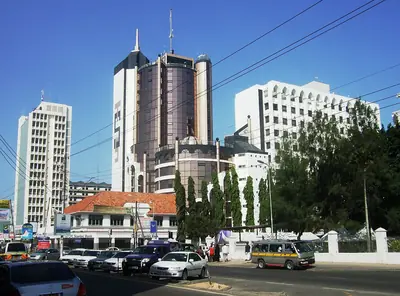
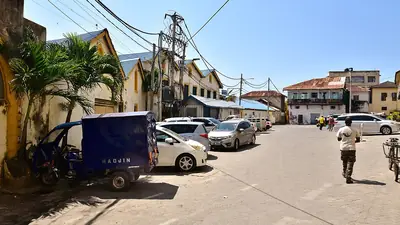
Government Square offers an open urban space within Mombasa’s historic city centre. It provides a simple pause between the older religious and colonial landmarks, and forms part of the city’s story as a centre of administration and trade.
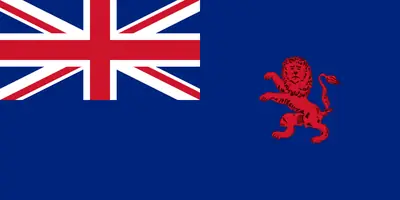
Mombasa’s political history includes its period as the first capital of British East Africa, before that role passed to Nairobi in 1907. The later colonial chapter is remembered by the name Kenya Colony: the Colony and Protectorate of Kenya existed from 1920 to 1963, when the colonial period ended and Kenya moved towards independence.
Africa Hotel
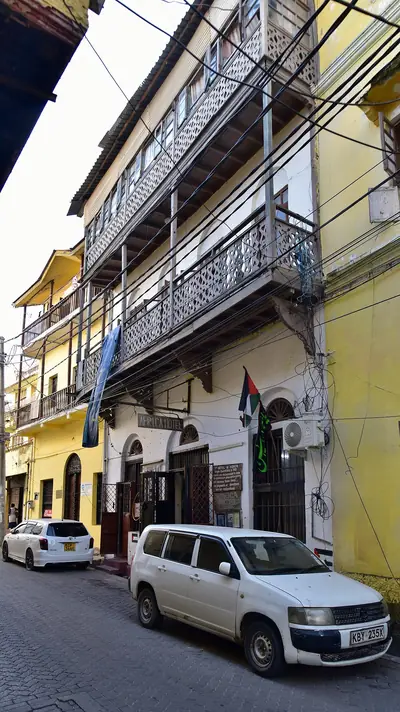
Africa Hotel is a historic local stop in Mombasa. It forms part of the city’s built heritage and can be included while walking between the cathedral, Government Square, Mandhry Mosque and Fort Jesus.
Mombasa’s Indian Ocean history
Mombasa is regarded in Kenyan school history books as having been founded around 900 AD. By the twelfth century, it was already a prosperous trading town, and the Arab geographer al-Idrisi mentioned it in 1151.
For centuries, the city belonged to wider Indian Ocean trading networks. It was associated with the Kilwa Sultanate from about the early fourteenth century until 1513, and later came under the control of the Omani Empire in the late seventeenth century. Ivory, millet, sesame and coconuts were among its important exports.
The city’s older religious architecture reflects this history. Mnara Mosque, built around 1300, is described as Mombasa’s oldest stone mosque. Mandhry Mosque, built in 1570, is known for its regional ogee arch on the minaret. Together, these landmarks show how Mombasa’s identity was shaped by commerce, migration and faith across the Indian Ocean.
Take a Mombasa Self-Guided Walking Tour with Neywo
Neywo’s Mombasa audio guide includes one walking tour: Old Town Mombasa: Portuguese Fort, Omani Mosque and Colonial Square. The walk covers 1.74 km, takes around 65 minutes and has 5 narrated stops: Holy Ghost Cathedral, Government Square, Mandhry Mosque, Africa Hotel and Fort Jesus Museum.
The app tells the story of each place as you reach it, at your own pace. There is no group and no schedule, so you can explore Mombasa independently while following the route through its historic centre. Narration is available in 11 languages.
Download Neywo and explore Mombasa with its free audio guide, or continue planning your trip with the wider Kenya guide and discover Nairobi.
Places with an audio guide in Mombasa
7 places in Mombasa with a Neywo audio guide. Each one starts telling its story as you reach it.
Self-guided tours in Mombasa
1 tour in Mombasa, free in the Neywo app. Each stop tells its story as you reach it.
- Walk
Old Town Mombasa: Portuguese Fort, Omani Mosque and Colonial Square
Start at the Holy Ghost Cathedral and walk into the Old Town, where the oldest mosque in Mombasa stands near Government Square. End at Fort Jesus, the Portuguese fortress shaped like a human figure, now a UNESCO World Heritage Site.
Holy Ghost Cathedral, Mombasa · Government Square · Mandhry Mosque · Africa Hotel · Fort Jesus Museum
Open this tour: Old Town Mombasa: Portuguese Fort, Omani Mosque and Colonial Square
Walk Mombasa with Neywo
Neywo turns Mombasa into a self-guided audio tour. Stories arrive as you reach the place they belong to, and the route reshapes when you wander off it.

