Things to Do in Nairobi, Kenya: Walking Guide
Things to Do in Nairobi: Museums, Wildlife and City History
Looking for things to do in Nairobi? Kenya’s capital brings together wildlife, museums, religious landmarks, railway history and cultural institutions, with Nairobi National Park close to the city centre. Neywo has a free audio guide for Nairobi with 24 narrated places, available in 11 languages.
What to See in Nairobi
Nairobi National Park
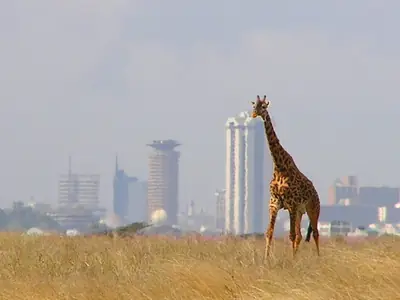
Nairobi National Park is Kenya’s first national park, established in 1946. It lies about seven kilometres from Nairobi’s city centre, making its open savannah a striking contrast with the nearby capital.
The park is fenced on three sides, while its southern boundary remains open so migratory wildlife can move between the park and the Kitengela plains. Despite its relatively small size and urban setting, it has a varied wildlife population and is known as one of Kenya’s most successful rhinoceros sanctuaries. Its nickname, “Kifaru Ark”, reflects that role.
Karen Blixen Museum
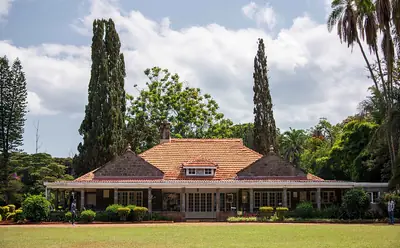
The Karen Blixen Museum occupies the former African home of the Danish author Karen Blixen, best known for her 1937 book Out of Africa. The house stands just outside Nairobi at the foot of the Ngong Hills, in the area associated with Blixen’s life and work.
Blixen was born in 1885 and died in 1962. During her time in Kenya, she wrote Out of Africa and Shadows of the Grass. The museum offers a direct connection with the home where those works were created. There is also another Karen Blixen Museum in Denmark, her homeland.
Nairobi National Museum
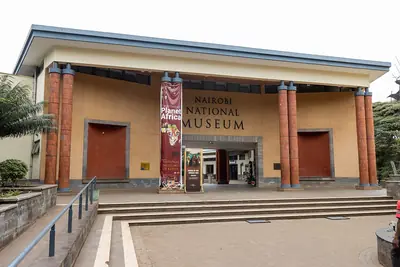
The Nairobi National Museum is Kenya’s largest and most interdisciplinary museum. Its collections offer a broad view of the country’s natural and cultural heritage, making it one of the most useful places to begin understanding Kenya.
The museum opened on 22 September 1930 and has preserved Kenya’s story for nearly a century. Its motto, “A place of discovery”, reflects its wide-ranging approach to the country’s history, culture and natural world.
National Museums of Kenya
The National Museums of Kenya is the state corporation responsible for managing museums, sites and monuments throughout the country. It acts as the national custodian of Kenya’s cultural and natural heritage.
Its origins go back to 1910, when it began as the East Africa Natural History Society. Today, its work extends beyond a single museum, connecting Nairobi with heritage sites and collections across Kenya.
Nairobi Railway Museum
Beside Nairobi’s main railway station, the Nairobi Railway Museum explores the railway heritage that helped shape the city and the wider region. It opened in 1971 under the East African Railways and Harbours Corporation and is now operated by Kenya Railways.
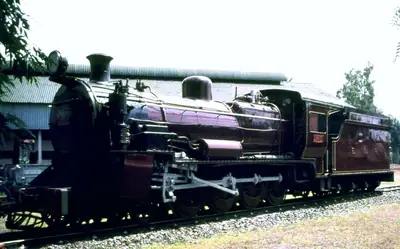
The museum preserves locomotives and rolling stock from the former East African Railways. Its own rail link to the main line allows exhibits to be moved to and from the workshop for maintenance. The collection includes early diesel locomotives and passenger coaches, while three historic steam locomotives are stored under cover and can be viewed by prior appointment.
Locomotive number 301, also known as 2301, appeared in the 1985 film Out of Africa. The museum also has a miniature railway formerly used by Kenya Railways at shows and exhibitions.
Kenya National Archives
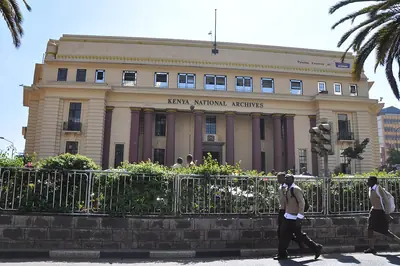
The Kenya National Archives stands on Moi Avenue at the edge of Nairobi’s central business district. Opened in 1965 through an Act of Parliament, it was created to preserve Kenya’s documentary heritage.
The building once housed the Kenya Commercial Bank. Inside, the Murumbi Gallery displays African artefacts collected in the nineteenth century, while the Archives’ holdings include around forty thousand volumes, from government records to rare publications.
Nairobi Gallery
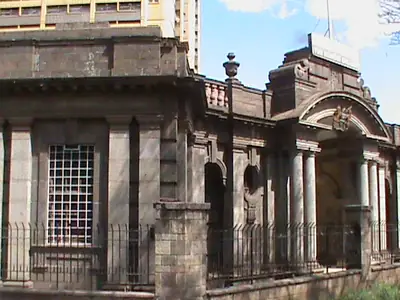
At the edge of the central business district, Nairobi Gallery provides a space dedicated to African art. Its exhibitions allow visitors to explore creative expressions from across the continent and add an artistic dimension to a visit through central Nairobi.
Cathedral Basilica of the Holy Family
The Cathedral Basilica of the Holy Family is a Catholic cathedral and basilica in the centre of Nairobi, as well as the seat of the Archdiocese of Nairobi.
The site’s story began in 1904, when Nairobi’s first stone building was erected there: a modest church that held between three hundred and four hundred worshippers. The present church was built between 1960 and 1963, solemnly blessed and opened on 6 July 1963. In 1982, it received the title of basilica.
Bomas of Kenya
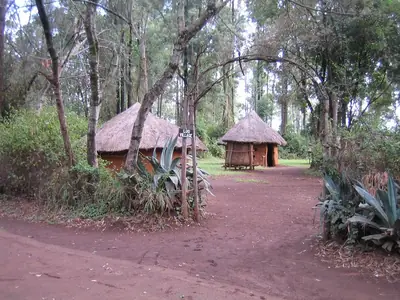
Bomas of Kenya is a cultural village on the outskirts of Nairobi presenting traditional homesteads associated with many of Kenya’s ethnic groups. It offers an introduction to the country’s cultural diversity through architecture, music and dance.
The centre’s auditorium is designed to resemble a traditional homestead and seats around 3,500 people. It has also hosted national events, including the constitutional conference that followed President Mwai Kibaki’s election in 2002. Performances of traditional music and dance take place inside the auditorium and attract both local and international visitors.
United Nations Office at Nairobi
The United Nations Office at Nairobi, also known as the Library Block, is the United Nations’ official headquarters in Africa. It is one of the organisation’s four major office sites worldwide and hosts the global headquarters of the United Nations Environment Programme and UN-Habitat, alongside other UN agencies.
The office was established in 1996, confirming Nairobi’s role as the UN’s headquarters on the African continent. In November 2004, the UN Security Council held a rare meeting there to discuss conflicts in southern and western Sudan.
Nairobi’s sites of recent history
Nairobi’s landmarks also reflect difficult chapters in recent history. On 7 August 1998, a truck bomb exploded outside the United States embassy in the city, killing more than 220 people and injuring thousands. The attack was followed by Operation Infinite Reach, launched by President Bill Clinton on 20 August 1998.
Westgate shopping mall was the site of another major attack on 21 September 2013, when four masked gunmen began a siege that lasted several hours. A fire caused part of the mall to collapse, complicating rescue efforts. More than 200 people were wounded, while reported death tolls differed. The mall was declared secure on 24 September.
These places form part of Nairobi’s contemporary history and should be approached with respect.
Explore Nairobi with Neywo
Neywo’s free Nairobi audio guide includes 24 narrated places and two walking tours. The walks are designed for independent exploration, with stories that play as you reach each place, at your own pace, with no group and no schedule. Narration is available in 11 languages.
The two routes are:
- Heart of Nairobi: Mosques, Cathedral and the City Square — a 4.7 km walk lasting 112 minutes, with 9 narrated stops.
- Museum Hill and the Campus: Nairobi’s Culture Quarter — a 1.74 km walk lasting 45 minutes, with 4 narrated stops.
Together, the routes cover places including Jamia Mosque, Nairobi Gallery, the Cathedral Basilica of the Holy Family, Kenyatta International Convention Centre, Kenya National Archives, Nairobi Railway Museum, Nairobi National Museum and the National Museums of Kenya.
Download Neywo and explore Nairobi while the app tells the story of each place as you arrive. You can also continue planning your trip with the Kenya guide or compare Nairobi with Mombasa.
Places with an audio guide in Nairobi
8 places in Nairobi with a Neywo audio guide. Each one starts telling its story as you reach it.
Self-guided tours in Nairobi
2 tours in Nairobi, free in the Neywo app. Each stop tells its story as you reach it.
- Walk
Heart of Nairobi: Mosques, Cathedral and the City Square
A full day-walk through Nairobi's historic centre: the University of Nairobi, two mosques founded in the early colonial years, the cathedral basilica, the KICC tower on City Square, the monument to Tom Mboya on Moi Avenue, the National Archives and, at the end, the railway museum beside the main station. Best done on a weekday morning; keep valuables out of sight and dress modestly at the mosques.
University of Nairobi · Khoja Mosque · Jamia Mosque · Nairobi Gallery · Cathedral Basilica of the Holy Family · Kenyatta International Convention Centre …
Open this tour: Heart of Nairobi: Mosques, Cathedral and the City Square - Walk
Museum Hill and the Campus: Nairobi's Culture Quarter
A short, shaded stroll north of the centre. Start at the first Swaminarayan temple built in Africa, continue to Kenya's largest museum and the national institution that carries on the Leakeys' work, and finish on the University of Nairobi campus.
Shri Swaminarayan Mandir, Nairobi · Nairobi National Museum · National Museums of Kenya · University of Nairobi
Open this tour: Museum Hill and the Campus: Nairobi's Culture Quarter
Walk Nairobi with Neywo
Neywo turns Nairobi into a self-guided audio tour. Stories arrive as you reach the place they belong to, and the route reshapes when you wander off it.

