What to See in Gjakova, Kosovo: Free Audio Guide
Things to Do in Gjakova: A Walk Through Kosovo’s Historic Market City
Looking for things to do in Gjakova? This western Kosovo city is best known for its Ottoman heritage, historic Hadum quarter, traditional tower houses and long connection with trade and craftsmanship. Its landmarks tell the story of a city shaped by different communities and periods, from the development of its bazaar around Hadum Mosque to the destruction and rebuilding of its Catholic cathedral.
Neywo has a free audio guide for Gjakova covering 11 narrated places, with stories available in 11 languages.
What to See in Gjakova
Hadum Mosque and the historic Hadum quarter
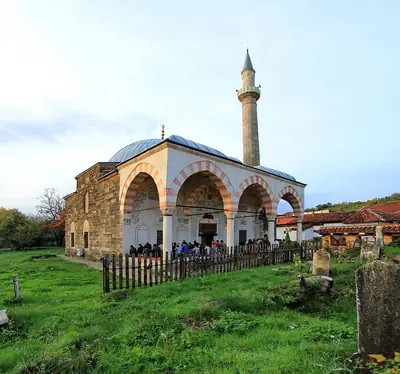
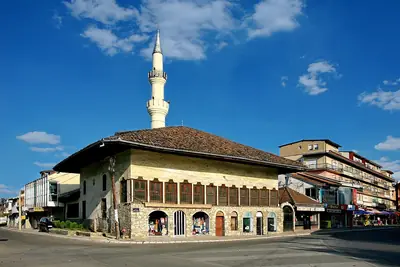
Hadum Mosque, also known as Hadumi Mosque or Xhamia e Hadum Agës, is one of Gjakova’s most important landmarks. Built in 1594 or 1595 during the Ottoman period, its construction was financed by Hadum Sylejman Efendia, better known as Hadum Aga.
The mosque stands in the historic Hadum quarter, alongside the library connected with the city’s earliest development. The mosque is identified as Gjakova’s oldest surviving building, and the quarter preserves the setting in which the city began to grow. The area became a commercial center, with shops, inns and other buildings gathered around the mosque.
A seventeenth-century account by the Turkish travel writer Evliya Çelebi described the growing settlement as having two thousand houses, several smaller mosques, two monumental mosques, lead-covered inns, a bathhouse and three hundred shops around the plain and Hadum Mosque.
Gjakova’s old bazaar
The old bazaar is central to understanding Gjakova’s identity. The city developed through trade and craftsmanship, and its historic market area remains associated with workshops, commercial life and the traditional character of the Hadum quarter.
The city’s origins are linked to Jakë Vula, an Albanian Catholic landowner from Mertur. According to Ottoman documents, Hadum Aga persuaded him to donate the land for a mosque and its library. The settlement grew around these buildings and was first known as Jakovë, a name associated with “the fields of Jak.” The form used today began to appear in the nineteenth century; the city may also be known by the Slavic forms Djakovica or Đakovica.
Gjakova and its surrounding area later played an important role in the national movement associated with the League of Prizren.
Kulla e Abdullah Pashë Drenit
Kulla e Abdullah Pashë Drenit, also called Kulla e Avdullah Pashe Drenit, is an architectural monument of Kosovo’s cultural heritage. The tower is part of Gjakova’s historic story and is included among the places that help explain the city’s built heritage.
It also has a connection with the turbulent history of the region. The surrounding area was involved in events linked to the League of Prizren, adding political and national significance to Gjakova’s historic landmarks.
Ethnographic Museum Gjakova
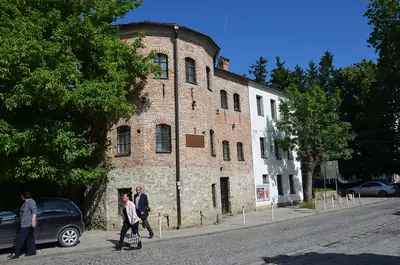
The Ethnographic Museum Gjakova is a cultural heritage monument and an architectural monument. It offers another way to explore the city’s cultural heritage, complementing the religious buildings, bazaar and traditional homes found in the old part of Gjakova.
Curri Tower House
Curri Tower House, known locally as Kulla e Currit, is a traditional family home built at the beginning of the nineteenth century. It was the home of the Curri family and is recognized as a cultural heritage monument.
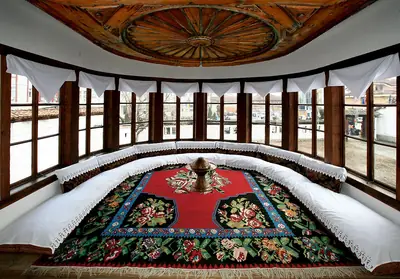
The house’s thick walls, made from stone and clay bricks, give it the robust appearance associated with a traditional tower house. Inside, one of its most notable details is the wooden ceiling in the men’s reception room on the second floor.
Church of St. Paul and St. Peter
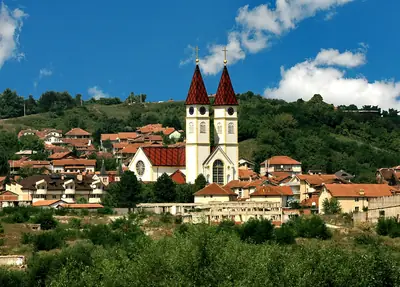
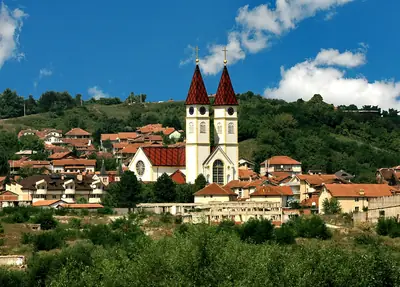
The Church of St. Paul and St. Peter reflects the long history of the Catholic community in Gjakova. Catholic tradition in the city reaches back to the Middle Ages, while the parish was renewed in 1851. The old Church of St. Peter was renewed in 1703 after the arrival of Albanian Catholics from mountain regions helped revive the community.
The first parish church stood in Çabrat before moving to the Catholic Quarter. It was dedicated to both Saint Paul and Saint Peter. The church was completely destroyed during the 1999 war, after which a new cathedral was built on the same site, continuing the name and Catholic presence associated with the place.
Sylejman Vokshi
The monument to Sylejman Vokshi commemorates a military commander and political figure in Albanian history. Born in 1815 and deceased in 1890, Vokshi was a leader of the League of Prizren and served on its Central Committee, where he headed the finance commission.
Terzi Bridge
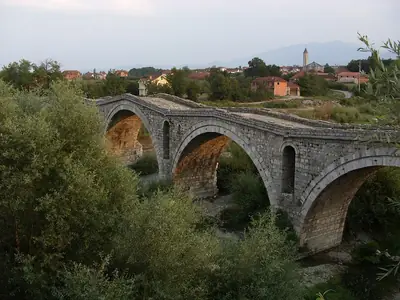
A short distance outside Gjakova, near the village of Bishtazhin, Terzi Bridge crosses the Erenik River. Also known as the Tailors Bridge or Ura e Terzive, it is an important surviving example of Ottoman bridge building in Kosovo.
Built from local stone, the bridge is about 192.8 metres long and between five and 5.1 metres wide. Its structure includes eleven semicircular arches of different sizes and ten smaller relieving openings. The bridge may date from the end of the fifteenth century, although its present appearance largely reflects major alterations carried out in the eighteenth century. Those works were financed by Gjakova’s tailors’ guild, which gave the bridge its name.
Large restoration and reconstruction works took place between 1982 and 1984, bringing the structure closer to its original appearance. Today, Terzi Bridge is recognized as a cultural heritage monument with historical, social, artistic, architectural and cultural value.
Gjakova and the wider region
Gjakova is the administrative centre of Gjakova District, one of Kosovo’s seven districts. Known in Albanian as Rajoni i Gjakovës, the district includes the municipalities of Gjakova, Deçani, Juniku and Rahoveci, as well as 164 smaller settlements. Its separate regional structure emerged after administrative changes carried out by the United Nations Interim Administration Mission in Kosovo after 1999.
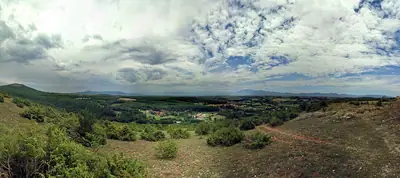
The city also lies within the broader historical and geographical region known as Metohija, or Rrafshi i Dukagjinit in Albanian. This southwestern Kosovo region includes the plain between Peja and Prizren and the areas around Gjakova, Peja and Prizren. Its two names reflect different historical and cultural traditions: Metohija derives from the Greek word metochion, associated with an area connected to an Orthodox monastery, while Rrafshi i Dukagjinit refers to the medieval Albanian figure Lekë Dukagjini.
Gjakova Airport, also known as Amiko, lies a few kilometres from the city. It is a military airbase rather than a conventional passenger airport. Until September 1999, it served as an agricultural airfield; it is now used for military and humanitarian flights.
Explore Gjakova with Neywo
Download Neywo and explore Gjakova with a self-guided walking tour that lets you discover the city at your own pace. The city has one walking route: a 2.44-kilometre tour lasting about 66 minutes, with five narrated stops covering the Church of St. Paul and St. Peter, the Ethnographic Museum Gjakova, Hadum Mosque, Kulla e Abdullah Pashë Drenit and Curri Tower House.
The app tells the story of each place as you reach it. There is no group and no schedule, so you can take the walk at your own pace while learning about Gjakova’s historic quarter and landmarks. If you are continuing through Kosovo, Neywo also offers guides for Pristina and other cities across the country.
Places with an audio guide in Gjakova
8 places in Gjakova with a Neywo audio guide. Each one starts telling its story as you reach it.
Self-guided tours in Gjakova
1 tour in Gjakova, free in the Neywo app. Each stop tells its story as you reach it.
- Walk
Gjakova Old Town: Tower Houses, Mosques and a Bazaar's Roots
A short stroll through the old quarter of Gjakova, the Ottoman trading town in western Kosovo. Visit the rebuilt Catholic church, the 16th-century Hadum Mosque that gave birth to the Grand Bazaar, and the stone tower houses of the Curri and Abdullah Pasha Drenit families.
Church of St. Paul and St. Peter, Gjakova · Ethnographic Museum Gjakova · Hadum Mosque · Kulla e Abdullah Pashë Drenit · Curri Tower House
Open this tour: Gjakova Old Town: Tower Houses, Mosques and a Bazaar's Roots
Walk Gjakova with Neywo
Neywo turns Gjakova into a self-guided audio tour. Stories arrive as you reach the place they belong to, and the route reshapes when you wander off it.

