Pristina, Kosovo: Self-Guided Walking Tour
Things to Do in Pristina: What to See in Kosovo’s Capital
Pristina is Kosovo’s capital, a compact city where Ottoman heritage, Yugoslav-era architecture and symbols of independent Kosovo stand side by side. The city is worth visiting for its distinctive landmarks, museums and lively central streets—and Neywo offers a free audio guide for Pristina with 24 narrated places.
What to See in Pristina
The main sights are concentrated around the centre and can be explored on foot. Together, they trace Pristina’s Ottoman past, socialist history, religious diversity and modern political identity.
National Theatre of Kosovo and Skanderbeg Square
The National Theatre of Kosovo is the country’s highest-ranking theatre institution and its only public theatre. It began in Prizren in the mid-1940s before moving to Pristina, where performances resumed in 1949 after the construction of a new building. Over its history, it has presented more than 400 premieres to audiences of over three million people.
Nearby, Skanderbeg Square—also known as Gjergj Kastrioti Skënderbeu Square—is one of the city’s central public spaces.
Assembly of the Republic of Kosovo
The Assembly of the Republic of Kosovo is the country’s unicameral parliament. It has 120 members, with 20 seats reserved for representatives of Kosovo’s communities. The institution was established in 2001 by the United Nations Interim Administration Mission in Kosovo to provide provisional democratic self-government.
The building is also associated with one of the most important moments in Kosovo’s recent history.
The declaration of independence
On 17 February 2008, the Assembly of Kosovo proclaimed the Republic of Kosovo an independent, sovereign and democratic state. During the extraordinary session, 109 of the 120 members were present, and all 109 voted in favour. The declaration was adopted at 3:39 in the afternoon.
This political moment helps explain the significance of several nearby monuments and public spaces.
Monument of Brotherhood and Unity
The 25-metre Monument of Brotherhood and Unity stands in the central square now known as Sheshi Adem Jashari, or Adem Jashari Square. Designed by sculptor Miodrag Živković, it was erected in 1961 to represent the three nationalities living in Kosovo: Albanians, Serbs and Montenegrins.
The obelisk is also called the Monument of the Revolution and commemorates fighters who fell during the Second World War. The square itself was created during the modernization of Pristina’s centre in the 1950s, on the site of older Turkish buildings and a bazaar.
Bazaar Mosque
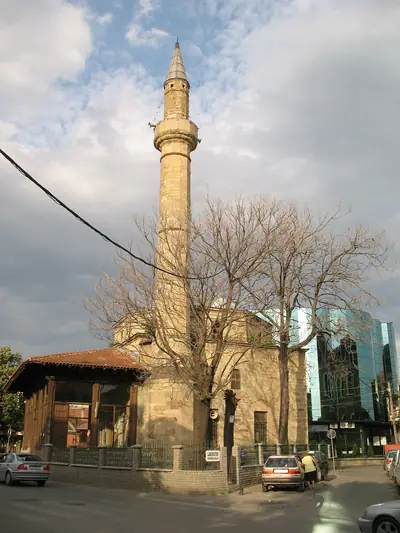
The Çarshi Mosque, also called the Bazaar Mosque or Stone Mosque, is considered the oldest building in Pristina and marks the beginning of the old town. Its foundation was laid in 1389 during the rule of Ottoman Sultan Bayezid the First, while construction continued in the fifteenth century under Sultan Murad the Second.
The mosque was built to celebrate the Ottoman victory in the 1389 Battle of Kosovo. Its stone-topped minaret has survived for more than six centuries, despite restorations to the mosque itself.
National Museum of Kosovo
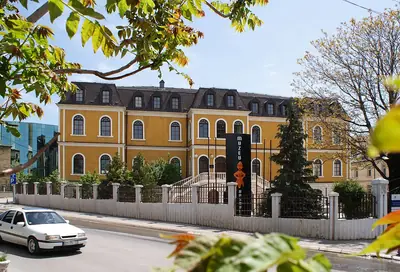
The National Museum of Kosovo occupies a striking nineteenth-century building in the old centre. Dating from 1889, the building originally served as the headquarters of the high military command. Founded in 1949, the museum is Kosovo’s oldest and largest museum institution.
Its collections preserve, conserve and present movable heritage from across Kosovo. The complex includes an Ethnological Museum, a Museum of Independence and an archaeological park used as a lapidarium. It also publishes the Albanian-language Bulletin of the Museum of Kosovo.
Jashar Pasha Mosque
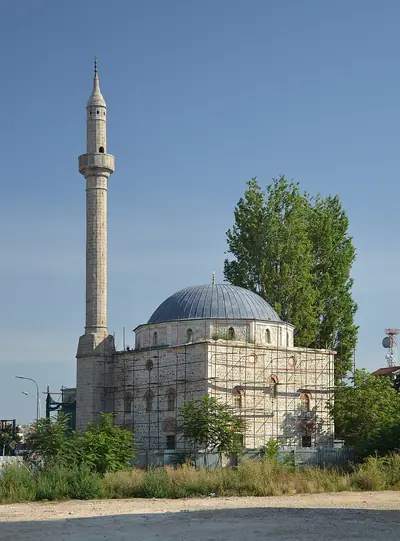
The Jashar Pasha Mosque, known locally as Xhamia e Jashar Pashës, is one of the older mosques in Kosovo and a recognized cultural heritage monument. It was built in 1834 by Jashar Mehmet Pasha, the mayor of Skopje, linking this Pristina landmark to the wider Ottoman administration of the region.
King’s Mosque
The King’s Mosque is also known as the Imperial Mosque, Xhamia e Madhe or the Mosque of Sultan Mehmed the Conqueror. Sultan Mehmed the Conqueror built it in 1461, a date recorded in an Arabic inscription above the entrance portal.
The mosque is regarded as an important example of Islamic architecture in Eastern Europe. Its triangular courtyard is bordered by three streets, creating a distinctive urban setting. The building was restored in 1961 and 1962, while its minaret was rebuilt between 1964 and 1967 after the original collapsed. During the late seventeenth century, Austrian forces temporarily adapted it as a Catholic church.
Ethnological Treasure of Kosovo
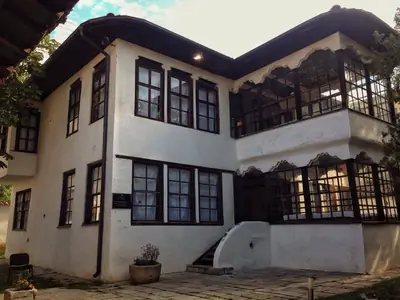
The Ethnological Treasure of Kosovo is housed in the Emin Gjiku Complex, an eighteenth-century monument of culture. The historic complex belonged to the family of Emin Gjikolli and now contains an ethnographic museum devoted to everyday life in Ottoman Kosovo.
The permanent exhibition opened in 2002 in the house and guest house around the inner courtyard. Its displays include traditional costumes, household utensils, containers, furniture, tools, handicrafts and old weapons.
Newborn monument
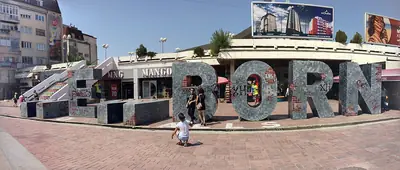
Newborn is one of Pristina’s most recognizable public monuments. The large capital letters spelling “Newborn” stand directly in front of the Palace of Youth and Sports. The monument was unveiled on 17 February 2008, the day Kosovo formally declared independence from Serbia.
The letters were initially painted bright yellow. They were later covered with the flags of states that recognized Kosovo, and the monument was announced as a work whose colours would change each year on the anniversary of Kosovo’s independence movement day.
Cathedral of Saint Mother Teresa
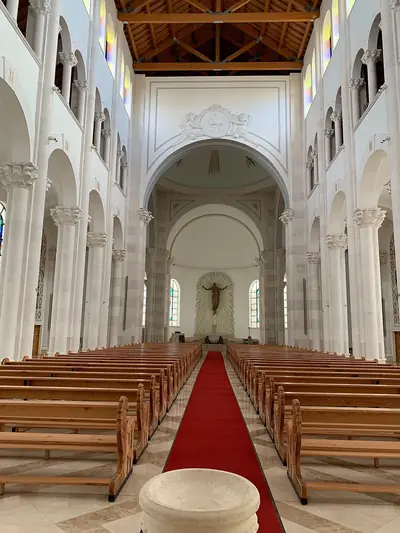
The Cathedral of Saint Mother Teresa, or Katedralja Shën Nënë Tereza, is a Roman Catholic cathedral dedicated to Saint Teresa of Calcutta. Plans for its construction were approved by the Government of Kosovo in 2007.
The cathedral is one of Pristina’s notable religious landmarks and connects Catholic worship with the memory of a figure known as Mother Teresa.
National Library of Kosovo
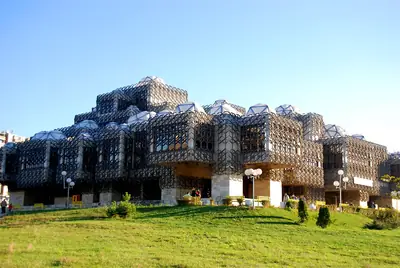
The National Library of Kosovo, also known as the Kosovo National Library “Pjetër Bogdani,” is both a major cultural institution and one of Pristina’s most distinctive buildings. Established in 1962, it serves as Kosovo’s highest library institution, collecting, preserving, promoting and providing access to the country’s documentary and intellectual heritage.
The present building was designed in 1971 by Croatian architect Andrija Mutnjaković, who sought an authentic national architectural expression. Its unusual exterior is associated with Yugoslav brutalism and has attracted considerable debate. Inside, the library preserves almost one million nine hundred thousand documents, as well as exhibitions and an archive of national newspapers.
Christ the Saviour Cathedral
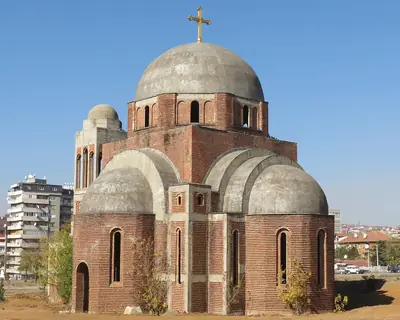
Christ the Saviour Cathedral is an unfinished Serbian Orthodox Christian church on the campus of the pre-war University of Pristina. Construction began in 1992, with completion intended for 1999, but the Kosovo War interrupted the project.
The church was planned in the shape of a cross, with a single nave, central dome and bell tower. Its design combines traditional Serbian architecture with Byzantine influence. The concrete framework was faced with brick walls, but the building remains unfinished and damaged, leaving its uncertain future part of the site’s story.
Great Hamam of Prishtina
The Great Hamam of Prishtina is an Ottoman-era monument dating from the fifteenth century. It was built as part of the Imperial Mosque complex and also served as a place for people to gather during spring and summer.
The hamam is currently being restored, with plans for it to become the Museum of Pristina. It has been protected as cultural heritage since 1985 and recognized as part of the cultural heritage of Kosovo since October 2012.
Explore Pristina with a self-guided audio tour
Neywo’s [Pristina audio guide] lets you explore the city independently. It includes two walking tours and one bus route:
- Ottoman Stone and Socialist Obelisks: Pristina’s Old Centre: a 2.16 km walk lasting 94 minutes, with 12 narrated stops.
- Mother Teresa Boulevard: Newborn, Brutalism and an Unfinished Cathedral: a 2.13 km walk lasting 90 minutes, with 8 narrated stops.
- Bus 7: Museum Quarter to Mother Teresa Cathedral: a 10.5 km bus route lasting 45 minutes, with 8 narrated stops.
The app tells the story of each place as you reach it, at your own pace, with no group and no schedule. Download Neywo and explore Pristina while its landmarks unfold around you. You can also continue through Kosovo, or discover nearby Prizren, Peja and Gjakova.
Places with an audio guide in Pristina
8 places in Pristina with a Neywo audio guide. Each one starts telling its story as you reach it.
Self-guided tours in Pristina
3 tours in Pristina, free in the Neywo app. Each stop tells its story as you reach it.
- Bus ride
Bus 7: Museum Quarter to Mother Teresa Cathedral
Trafiku Urban line 7 is a regular city bus that links the bus station with the centre and Mother Teresa Boulevard. Ride it from the National Gallery past the Academy, the theatre, the Assembly and the National Museum, then St Nicholas church and the university, to the Catholic cathedral. One cheap ride through the civic heart of Pristina.
National Gallery of Kosovo · Academy of Sciences and Arts of Kosovo · National Theater of Kosovo · Assembly of the Republic of Kosovo · National Museum of Kosovo · Saint Nicholas Orthodox church in Pristina …
Open this tour: Bus 7: Museum Quarter to Mother Teresa Cathedral - Walk
Ottoman Stone and Socialist Obelisks: Pristina's Old Centre
Pristina's oldest layers sit a few steps from its civic heart. Start at the theatre and Skanderbeg Square, pass the parliament and the Yugoslav-era obelisk, then dive into the old bazaar quarter with its Ottoman mosques, the museum in the former military headquarters and the Emin Gjiku house. The walk ends at the Orthodox church of St Nicholas and the puppet theatre of Dodona.
National Theater of Kosovo · Skanderbeg Square, Pristina · Assembly of the Republic of Kosovo · Monument of Brotherhood and Unity, Pristina · Bazaar Mosque in Pristina · National Museum of Kosovo …
Open this tour: Ottoman Stone and Socialist Obelisks: Pristina's Old Centre - Walk
Mother Teresa Boulevard: Newborn, Brutalism and an Unfinished Cathedral
Pristina's modern face along its main boulevard. See the Newborn letters that were unveiled on independence day, the Clinton statue, the Catholic cathedral named for Mother Teresa, the university quarter with its brutalist National Library, and the half-built Orthodox cathedral that became a symbol of a city still writing its story.
Newborn monument · Bill Clinton Boulevard · Cathedral of Saint Mother Teresa in Pristina · University of Pristina · National Library of Kosovo · Christ the Saviour Cathedral …
Open this tour: Mother Teresa Boulevard: Newborn, Brutalism and an Unfinished Cathedral
Walk Pristina with Neywo
Neywo turns Pristina into a self-guided audio tour. Stories arrive as you reach the place they belong to, and the route reshapes when you wander off it.

