Kuwait City, Kuwait: Self-Guided Walking Tour
Things to Do in Kuwait City: What to See in Kuwait’s Capital
Looking for things to do in Kuwait City? Kuwait’s capital brings together historic souqs, important mosques, cultural institutions, and bold modern architecture along the Arabian Gulf. Its landmarks reveal the city’s religious life, commercial heritage, national identity, and rapid transformation.
Neywo has a free audio guide for Kuwait City with 14 narrated places, available in 11 languages. Each story plays as you reach the place, so you can explore independently and at your own pace.
What to See in Kuwait City
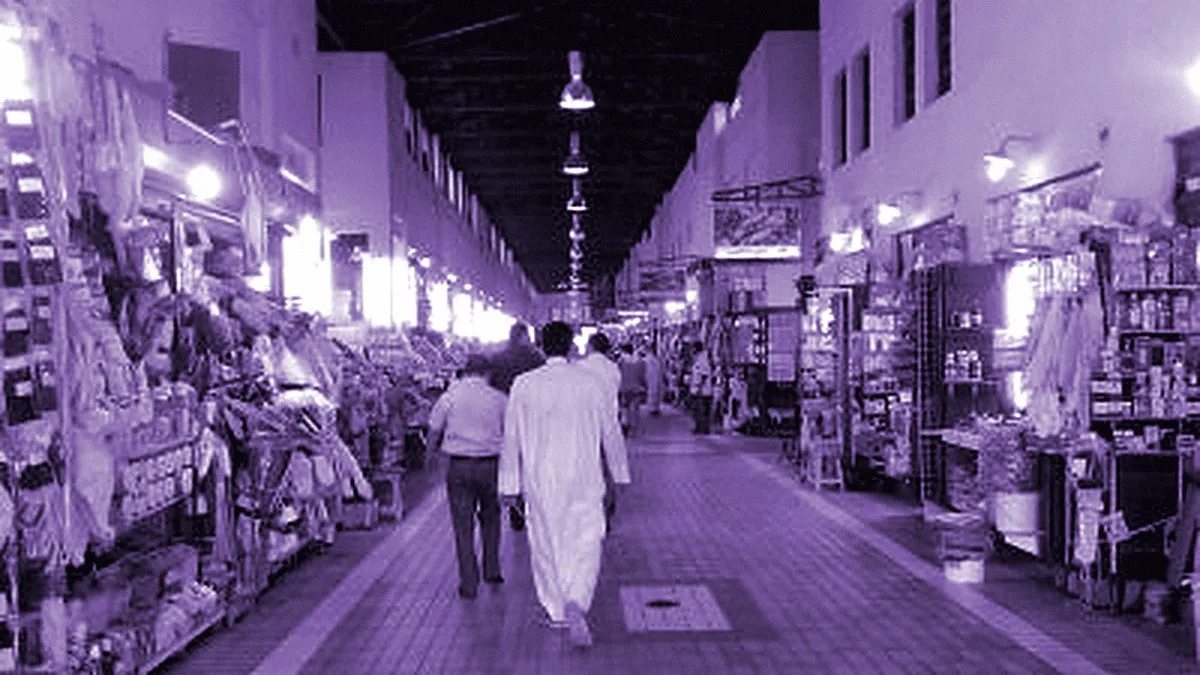
Mubarakiya Old Market and the Gold Souk
Mubarakiya Old Market is one of Kuwait’s oldest traditional souqs, with more than two hundred years of commercial history. Its narrow alleys and shops reflect the trading culture that existed before the discovery of oil.
The market sells Persian silk carpets, Arab antiques, musk and oud perfumes, traditional clothing, dates, honey, spices, sweets, fresh produce, and jewelry. The Gold Souk is especially distinctive for its displays of twenty-one- and twenty-two-carat gold, often decorated with Arabic or Kuwaiti details.
Near Al-Bahar, or Sea Mosque, a courtyard lined with traditional cafés and small restaurants offers a place to pause. Tea is brewed over coals, while Arabic, Indian, and Persian dishes are served in the open air. The market was damaged during the Iraqi invasion in 1990 and later renovated to restore its traditional character.
Bin Nabhan Mosque
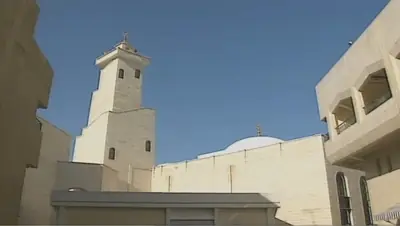
Bin Nabhan Mosque stands beside the Bin Nabhan family home and diwan in the Bin Nabhan quarter of Souq Al Duaij. Ibrahim bin Nabhan founded it in 1871, setting aside land as a charitable religious endowment after building his home and diwan.
The original mosque was modest, covering no more than about 40 to 50 square metres. Neighbours helped build it by contributing labour, money, or materials. It was renovated more than four times, and the family home and diwan were later incorporated into the mosque complex. The site shows how religious buildings were closely connected with neighbourhood and family life in historic Kuwait.
Grand Mosque
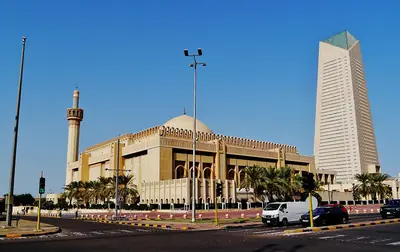
The Grand Mosque is Kuwait’s largest and official mosque, near the coast of the Arabian Gulf. Its spacious grounds and Andalusian-inspired design give the complex a monumental presence.
The mosque covers about 45,000 square metres, including open paths and a park-like area. Its main prayer hall measures 72 metres on each side and has teakwood doors and 144 windows. The dome is 26 metres in diameter and rises 43 metres high; its decoration features the Asma al-Husna, the 99 names of God.
Construction began in 1979, and the mosque opened in 1986 at the request of Sheikh Jaber Al-Ahmad Al-Sabah. The architect, Mohammed Saleh Makiya, also gave the minaret an Andalusian architectural design.
Holy Family Cathedral
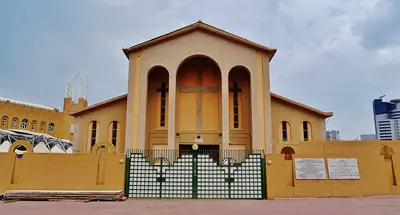
Holy Family Cathedral is a Catholic cathedral in the Qibla area on the eastern side of Kuwait City. It serves as a place of worship and a spiritual centre for Kuwait’s Catholic community.
The Kuwaiti government donated the land, and the first stone was laid on January 27, 1957. Architect Emilio Tenca designed the sandstone building, which was consecrated on March 16, 1961. Inside, a smaller replica of a cedar statue of Our Lady of Arabia recalls the original statue preserved at the Catholic church in Ahmadi, Kuwait.
The cathedral once served as the seat of the bishop and the Apostolic Vicariate of Northern Arabia. After the vicariate’s seat moved to the Cathedral of Our Lady of Arabia in Bahrain, Holy Family Cathedral became a co-cathedral. Its activities also include religious education and preparation for Catholic sacraments.
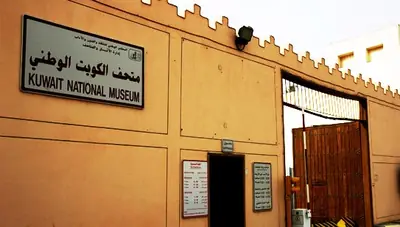
Kuwait National Museum
The Kuwait National Museum presents the country’s traditions, heritage, history, and civilization through sections covering local culture, archaeology, astronomy, and contemporary art.
The museum began in 1957, when Sheikh Abdullah Al Jaber Al Sabah established it in his palace in the Al Sharq area. Its first displays focused on artifacts representing the Kuwaiti environment. Archaeological discoveries from Failaka Island were added in 1958, including finds from the Bronze and Greek periods.
The collections later moved to Bait Al Badr in 1976. The museum’s current location on Arabian Gulf Street opened on February 24, 1983. Designed by Michel Ecochard, it is arranged as a group of buildings around a central garden. Elevated walkways connect the buildings, while the layout reflects the traditional Arab mud house with an inner courtyard.
Museum of Modern Art
The Museum of Modern Art occupies a building with an important history of its own. Built in 1939 for Madrasa Al Sharqiya, or the Eastern School, it was one of Kuwait’s oldest and most respected schools. Generations of prominent Kuwaitis studied there, including the former Emir, Sabah Al Ahmad.
Since the beginning of the last decade, the building has been adapted into a museum devoted to modern Arab and international art. In 2026, works by the Portuguese artists Miguel Rodrigues and Manuel Correia were added to its collection.
The museum is located along Arabian Gulf Street, close to Sadu House, a traditional Kuwaiti house and museum dedicated to Sadu weaving. Sadu preserves the Bedouin craft of weaving wool and making tents and traditional tent homes, while also hosting exhibitions and training courses.
Kuwait National Assembly Building
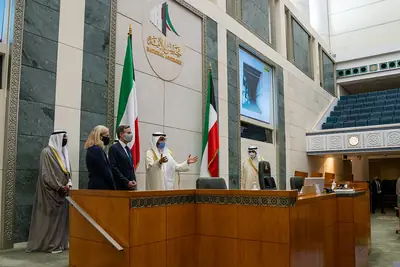
The Kuwait National Assembly Building is one of the city’s most distinctive examples of modern architecture. Designed by Danish architect Jørn Utzon, with work carried out under the direction of his son, Jan, it combines Danish design with Islamic architectural ideas.
Utzon imagined the complex as a walled miniature city. Its departments are arranged around courtyards and connected by a central hall that recalls a traditional souk. The building includes the parliamentary chamber, a large conference hall, and a separate freestanding mosque.
The chamber and conference hall have curved, sagging roofs, while the mosque has a flat roof. A covered square facing the sea forms a focal point beside the ceremonial entrance. The current building was inaugurated on February 23, 1986, under the patronage of Sheikh Jaber Al Ahmad Al Sabah.
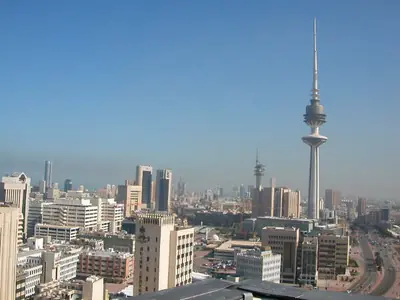
Kuwait Liberation Tower
Kuwait Liberation Tower, also known as Burj al-Tahrir, rises 372 metres above the city. It is a telecommunications tower and a symbol of Kuwait’s liberation and progress. The structure is the second-tallest in Kuwait.
Construction began in April 1987, when the tower was known as the Kuwait Telecommunications Tower. Work was interrupted during the Iraqi invasion of Kuwait on August 2, 1990, when the project was nearly halfway complete. Construction resumed in 1993, and the finished tower opened on March 10, 1996, under its new name.
The tower has two principal sections. The lower section rises to 150 metres and includes a revolving restaurant and an observation balcony. A second section, between 170 and 210 metres, contains six floors of technical offices used by the Ministry of Communications and other official bodies. The tower itself is not publicly accessible to tourists, but its scale and history make it a powerful part of Kuwait City’s skyline.
Explore Kuwait City with a Self-Guided Walking Tour
For a Kuwait City self-guided walking tour, download Neywo and follow the walk “Parliament, Museums and the Great Mosque.” It covers 3.96 kilometres in around 94 minutes and includes seven narrated stops: Holy Family Cathedral, Kuwait National Assembly Building, Museum of Modern Art, Kuwait National Museum, Bin Nabhan Mosque, Kuwait Liberation Tower, and Grand Mosque.
The app tells the story of each place as you reach it. You choose your own pace, with no group and no schedule. This walking tour connects several of Kuwait City’s most important cultural, religious, and architectural landmarks in a single route.
Download Neywo’s free Kuwait City audio guide and explore Kuwait City with the stories playing at the places where they happened.
Places with an audio guide in Kuwait City
7 places in Kuwait City with a Neywo audio guide. Each one starts telling its story as you reach it.
Self-guided tours in Kuwait City
1 tour in Kuwait City, free in the Neywo app. Each stop tells its story as you reach it.
- Walk
Kuwait City: Parliament, Museums and the Great Mosque
A walk along the Arabian Gulf shoreline through Kuwait's civic and spiritual heart. See a sandstone cathedral, Jorn Utzon's sea-facing parliament, a school turned art museum and the national museum's courtyard. Then cross the old Souq Al Duaij quarter to the Liberation Tower and the country's largest mosque.
Holy Family Cathedral, Kuwait · Kuwait National Assembly Building · Museum of Modern Art · Kuwait National Museum · Bin Nabhan Mosque · Kuwait Liberation Tower …
Open this tour: Kuwait City: Parliament, Museums and the Great Mosque
Walk Kuwait City with Neywo
Neywo turns Kuwait City into a self-guided audio tour. Stories arrive as you reach the place they belong to, and the route reshapes when you wander off it.

