Things to Do in Asunción, Paraguay: Walking Guide
Things to do in Asunción: what to see in Paraguay’s capital
Looking for things to do in Asunción? Paraguay’s capital brings together historic buildings, museums, theatres, churches and cultural spaces around the Paraguay River. It is a city where the country’s colonial past, independence, political history and contemporary cultural life can be explored on foot. Neywo has a free audio guide for Asunción with 43 narrated places.
What to see in Asunción
Palacio de López
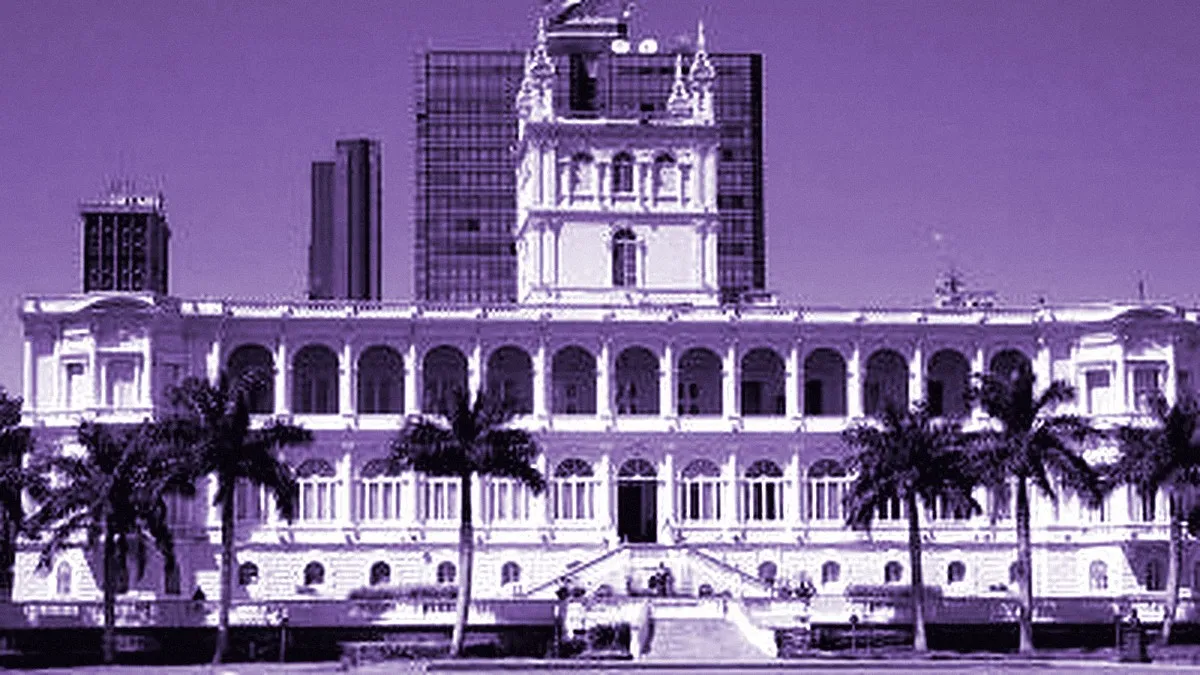
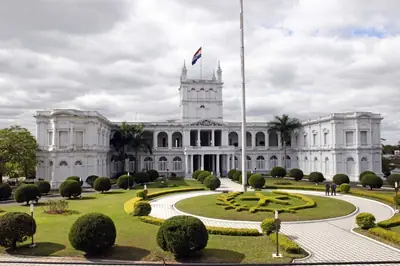
The Palacio de López, officially the Palacio de Gobierno, is the seat of Paraguay’s executive power and the president’s workplace. It stands beside Asunción Bay and is one of the capital’s most recognizable landmarks.
Carlos Antonio López commissioned the palace in 1857 as a residence for his son and designated successor, General Francisco Solano López. English architect Alonso Taylor designed it in a neoclassical style with Palladian influences. Its U-shaped plan includes two main floors and a four-storey central tower, topped by pinnacles and the national flag.
The building’s materials came from different parts of Paraguay: stone from Emboscada and Altos, wood and tiles from Ñeembucú and Yaguarón, and bricks from Tacumbú. Its construction was nearly complete in 1867 when the War of the Triple Alliance began, and Asunción was sacked by Brazilian and Argentine forces in 1869.
Metropolitan Cathedral of Our Lady of the Assumption
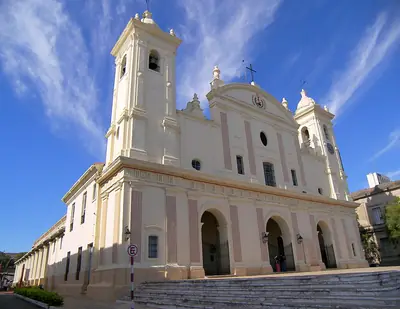
The Metropolitan Cathedral is the principal Catholic church in Asunción and the seat of the metropolitan archdiocese. It stands in the historic centre, facing Plaza Independencia.
The cathedral’s origins date to 1687, although the present building took shape in the mid-nineteenth century. Architect Carlos Zucchi directed its reconstruction, and it was inaugurated in 1845 during the presidency of Carlos Antonio López.
Inside, the high altar is covered in silverwork made by Jesuit and Franciscan artisans. The cathedral also has a wider historical importance: the Diocese of Paraguay was created in 1547 and later became a metropolitan archdiocese in 1929.
Cultural Center of the Republic, El Cabildo
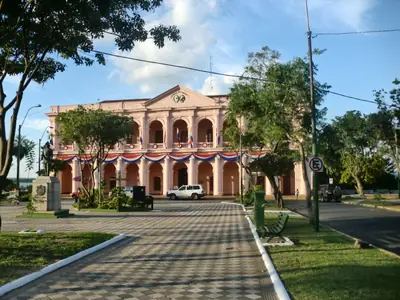
The Cultural Center of the Republic, commonly known as El Cabildo, occupies one of Asunción’s most historic sites. The location began as the fort of Nuestra Señora de la Asunción, founded by Captain Juan de Salazar y Espinosa in 1537. It later became a civilian settlement and the administrative centre of Spanish colonial power in the region.
The present building took shape in 1844 during the government of Carlos Antonio López. Today, El Cabildo works as a cultural centre dedicated to Paraguay’s historical memory and heritage, with activities connected to art, literature, music and theatre.
Museo Nacional de Bellas Artes de Asunción
The Museo Nacional de Bellas Artes is one of Paraguay’s major cultural institutions. Juan Silvano Godoy founded it in 1909, and his personal collection became the basis of the museum. It received official national status in 1939.
The collection includes more than 650 pieces, spanning the seventeenth to the twentieth centuries. Paintings, sculptures, ceramics, photographs, prints, antique furniture, coins and personal objects are displayed alongside European works, especially from the Italian and French schools of the nineteenth century, as well as Argentine and Paraguayan art.
Casa de la Independencia Museum
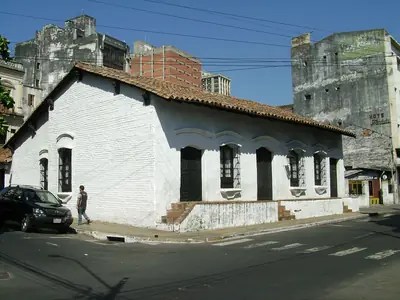
Casa de la Independencia Museum occupies a house built in 1772 and regarded as the oldest building in Asunción. On the night of May 14, 1811, Paraguayan independence conspirators emerged from the house to declare independence from Spanish colonial rule.
The building is also a valuable example of traditional colonial construction. Its thatched roof, bamboo framework and adobe-brick walls reveal historical building methods used in Paraguay. Since 1965, the house has operated as a museum, with period furniture, old coins and historical documents connected to the independence era.
Museo de las Memorias
The Museo de las Memorias documents the dictatorship that governed Paraguay from August 1954 until February 1989 under Alfredo Stroessner. Its purpose is to preserve the memory of a period marked by systematic human-rights violations.
The exhibitions use documents, objects, photographs and personal testimonies. Together, they present the experiences of repression and resistance through individual stories and historical evidence.
Museo del Barro
The Museo del Barro, or Museum of Clay, explores Paraguay’s artistic heritage, from indigenous ceramics to contemporary art. It began in 1979 as a private travelling collection before settling in its present home after seven years.
The museum has three divisions: a pottery museum, an indigenous art museum and a contemporary art collection. Its displays include pre-Columbian ceramics, wood carvings, ñandutí lacework, clay caricatures and historical figures, including detailed saints dating from the sixteenth century.
National Pantheon of the Heroes
The National Pantheon of the Heroes is a national mausoleum and an active oratory dedicated to the Virgin of the Assumption. It stands between Palma and Chile streets in the centre of Asunción.
Francisco Solano López ordered its construction in 1863 as a chapel to the Assumption of Mary. Italian architect Alejandro Ravizza and builder Giacomo Colombino worked on the design, but the War of the Triple Alliance left the building unfinished for more than seventy years. Construction resumed after the Chaco War, and the Pantheon was completed and inaugurated on October 12, 1936.
Its architecture changed over time: what began as a Gothic-style chapel became a monument combining artistic, cultural and historical elements. The façade bears the Latin inscription Fides et Patria.
Municipal Theatre Ignacio A. Pane
The Municipal Theatre Ignacio A. Pane is Asunción’s oldest theatre. Its auditorium has a classic horseshoe-shaped design, with a main floor and three tiers of boxes surrounding the stage beneath an octagonal drum. The theatre has 700 seats.
It came under municipal administration in the late nineteenth century and officially took its present name in 1949. A long restoration project began in 1997 with support from the Spanish Cooperation Agency and the Asunción Workshop School. The restored complex includes El Café del Teatro and the intimate Baudilio Alió room, while the upper floor contains the Jacinto Herrera room.
Manzana de la Rivera
Manzana de la Rivera is a cultural complex built around restored historic houses. Its centrepiece is Castelví House, built in 1804 by José Castelví, a Catalan-born merchant who also served as the city’s deputy mayor.
The house is a rare surviving example of pre-Franciscan colonial architecture in Paraguay. Its original doors, windows, iron railings and parts of the colonial flooring remain, while its position set back from the street preserves the character of its former private garden. That space is now the Patio Arecayá, opened to the city as part of the complex.
Botanical Garden and Zoo of Asunción
The Botanical Garden and Zoo of Asunción covers approximately 110 hectares in the northern part of the capital. It began in the 1840s as the private estate of President Carlos Antonio López. His neoclassical home, Casa López, now serves as a museum of ethnology, history and wildlife.
German scientist Karl Fiebrig and his wife, Anna Gertz, transformed the estate into a botanical garden and zoo in 1914. The garden contains more than 500 plant species, including many medicinal plants, and trees more than 150 years old. The zoo houses about 64 animal species, mainly from South America, including the tagua, a rare peccary from the Chaco that was believed extinct until its rediscovery in the 1980s.
Explore Asunción with a self-guided audio tour
Neywo offers two walking tours in Asunción, one bus route and one bike route. The walks include Asunción: Where Paraguay Was Born, a 2.75-kilometre route lasting 97 minutes with 10 narrated stops, and Memory, Books and Skyscrapers: Modern Asunción, covering 5.07 kilometres in 95 minutes with five stops.
The bus route covers 6.6 kilometres in 28 minutes and includes five narrated stops. The bike route from Plaza Uruguaya to the Museo Nacional de Bellas Artes covers 1.1 kilometres in six minutes and has three stops.
The app tells the story of each place as you reach it, at your own pace, with no group and no schedule. Download Neywo and explore Asunción independently, whether you choose a walking route, a bus journey or a short bike tour.
Places with an audio guide in Asunción
8 places in Asunción with a Neywo audio guide. Each one starts telling its story as you reach it.
Self-guided tours in Asunción
3 tours in Asunción, free in the Neywo app. Each stop tells its story as you reach it.
- Bike ride
Plaza Uruguaya to the Fine Arts Museum by Bike
A short ride along an OSM-mapped cycle lane from Plaza Uruguaya, with its steam locomotive and book market, past the LEGO-like Wilson Tower to the national fine arts museum.
Plaza Uruguaya · Wilson Tower · Museo Nacional de Bellas Artes de Asunción
Open this tour: Plaza Uruguaya to the Fine Arts Museum by Bike - Bus ride
Line 1A: Temple to Pantheon through the Old Centre
Ride the public Line 1A, a local bus Asunción residents use daily, from the white granite temple on Avenida España into the historic centre. Hop off at the cathedral, the Municipal Theatre, the Casa de la Independencia and the National Pantheon of the Heroes.
Asunción Paraguay Temple · Metropolitan Cathedral of Our Lady of the Assumption, Asunción · Municipal Theatre Ignacio A. Pane · Casa de la Independencia Museum · National Pantheon of the Heroes
Open this tour: Line 1A: Temple to Pantheon through the Old Centre - Walk
Asunción: Where Paraguay Was Born
Asunción was founded in 1537 and is one of the oldest cities in South America. Walk from the presidential palace on the bay through colonial houses, the Pantheon of the Heroes, the old Cabildo and the cathedral with its silver altar, and see where Paraguay declared its independence in 1811. Finish on Plaza Uruguaya, where a steam locomotive and a covered book market wait.
Palacio de López · Museo Memoria de la Ciudad · Casa de la Independencia Museum · National Pantheon of the Heroes · Plaza de la Democracia · Municipal Theatre Ignacio A. Pane …
Open this tour: Asunción: Where Paraguay Was Born
Walk Asunción with Neywo
Neywo turns Asunción into a self-guided audio tour. Stories arrive as you reach the place they belong to, and the route reshapes when you wander off it.

