What to See in Harare, Zimbabwe: Free Audio Guide
Things to Do in Harare: Museums, Art and National Memory
Looking for things to do in Harare? Zimbabwe’s capital combines museums, contemporary art, religious landmarks and important sites of national memory. Its most interesting places reveal the country’s human history, creative life and political past. Neywo offers a free audio guide for Harare with 10 narrated places, available in 11 languages.
What to See in Harare
Zimbabwe Museum of Human Sciences
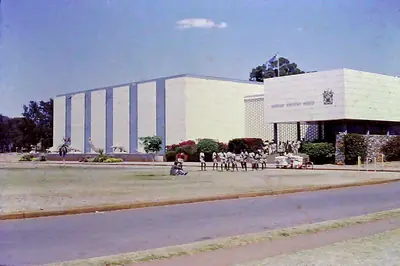
The Zimbabwe Museum of Human Sciences is a national museum devoted to archaeology and anthropology. Its collections explore Zimbabwe’s human history, cultural heritage and wildlife through exhibition galleries, a library, ethnographic and archaeological material, and a model Shona village.
The museum opened in 1903 as the Queen Victoria Museum. Designed and built by James Cope Christie, it was renamed the Zimbabwe Museum of Human Sciences after independence in 1980. Its most remarkable object is Ngoma Lungundu, a Lemba artifact said to be 700 years old and described as the oldest wooden object ever found in sub-Saharan Africa. Wildlife displays in the public galleries add a natural-history dimension to the museum’s cultural focus.
First Floor Gallery Harare
First Floor Gallery Harare is an artist-run space in downtown Harare and an important part of the city’s independent creative scene. Founded in 2009, it was Harare’s first artist-run gallery, giving local artists a place to exhibit their work and helping to mentor and promote emerging talent.
The gallery later extended its activities beyond the capital: in 2021, it opened a new office and gallery in Victoria Falls. A visit to its Harare space offers a direct introduction to the city’s contemporary art community.
National Gallery of Zimbabwe
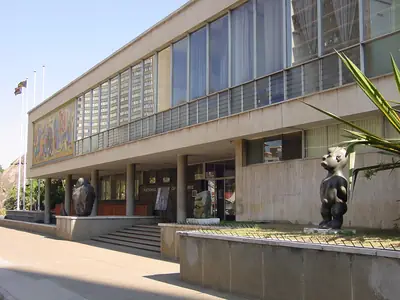
The National Gallery of Zimbabwe is a contemporary art museum dedicated to presenting and conserving Zimbabwe’s contemporary art and visual heritage. Its collection can include stone, metal and wooden sculptures, along with paintings, drawings and installations by Zimbabwean artists.
The institution began as the National Gallery of Rhodesia and was officially opened on 16 July 1957 by Queen Elizabeth, the Queen Mother. Queen Elizabeth II later attended the sixth Zimbabwe Heritage Exhibition there in October 1991. For visitors interested in Zimbabwean art, the gallery provides a broad view of the country’s visual expression.
Sacred Heart Cathedral, Harare
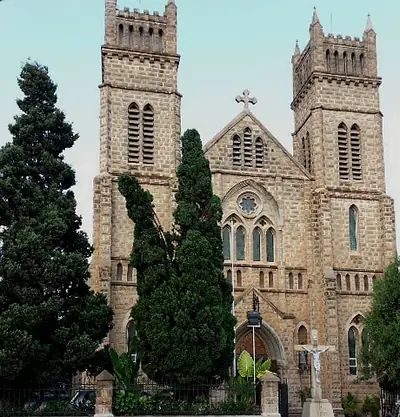
The Cathedral of the Sacred Heart of Jesus stands on Fourth Street in central Harare. This Catholic cathedral is one of the city’s significant religious landmarks and offers an opportunity to see an important part of Harare’s faith life while exploring the centre.
National Heroes Acre
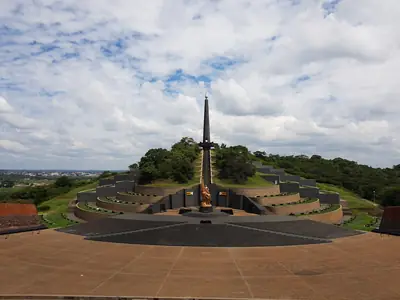
National Heroes’ Acre, also known simply as Heroes’ Acre, is both a cemetery and a national monument. Set on a ridge about seven kilometres from Harare towards Norton, the 23-hectare memorial site commemorates Patriotic Front guerrillas who died during the Rhodesian Bush War, as well as other Zimbabweans considered deserving of burial there.
Work began in 1981, one year after Zimbabwe gained independence. The central monument is shaped like two AK-47s lying back to back, while the graves resemble their magazines. Its design closely mirrors the Revolutionary Martyrs’ Cemetery outside Pyongyang, North Korea, and the monument was an early project by the North Korean firm Mansudae Overseas Projects.
The 2017 political transition
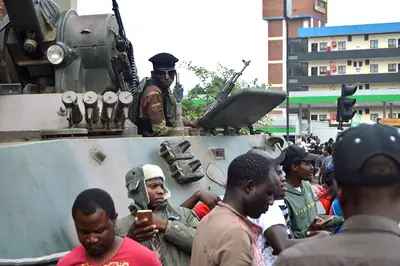
Harare was at the centre of one of Zimbabwe’s most dramatic recent political episodes in November 2017. Over several days, a bloodless military takeover removed Robert Mugabe from the presidency and from the leadership of ZANU–PF.
The crisis began on the evening of 14 November, when elements of the Zimbabwe Defence Forces gathered around Harare and took control of the Zimbabwe Broadcasting Corporation and key areas of the city. The military said the following day that it was not carrying out a coup and that Mugabe was safe. On 19 November, ZANU–PF replaced Mugabe as party leader with Mnangagwa and gave Mugabe a deadline to resign or face impeachment. Mugabe announced his resignation on 21 November, and Emmerson Mnangagwa was sworn in as president on 24 November 2017.
Balancing Rocks
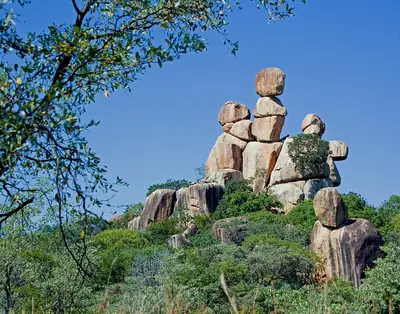
Near Epworth, southeast of Harare, the Balancing Rocks—also known as the Chiremba or Epworth Balancing Rocks—form one of the area’s most distinctive natural landscapes. Igneous rocks appear to balance without additional support, creating formations that have become strongly associated with Zimbabwe.
The Reserve Bank of Zimbabwe featured the rocks on several series of Zimbabwean banknotes. They have also been used as a metaphor for balancing development with the preservation of the country’s fragile environment.
Chitungwiza
Chitungwiza lies on the outskirts of Harare and forms part of the wider Harare urban area. Zimbabwe’s third-largest urban centre, it is also one of the country’s fastest-growing cities.
The city was formed in 1978 from three communities: Seke, Zengeza and Saint Mary. It gained municipal status three years later, in 1981. Including Chitungwiza gives a broader perspective on the urban area beyond the capital’s central districts.
University of Zimbabwe
The University of Zimbabwe, commonly known as UZ, is Zimbabwe’s oldest university. It opened in 1952 as the University College of Rhodesia and Nyasaland, initially affiliated with the University of London. It later became the University of Rhodesia before taking its present name in 1980.
Today, the public university has eleven faculties, covering subjects including agriculture, arts, business, education, engineering, law, science, veterinary science, medicine and health sciences. English is the language of instruction, and the university also supports specialist research through centres and institutes.
Robert Gabriel Mugabe International Airport
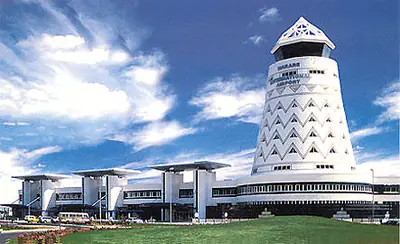
Robert Gabriel Mugabe International Airport is the main airport serving Harare and the largest airport in Zimbabwe. It is an important base for Air Zimbabwe, the country’s national flag carrier.
The airport was previously known as Harare International Airport and, earlier, Salisbury Airport. In 2019, it was renamed Robert Gabriel Mugabe International Airport. Its current airport codes are HRE and FVRG. The runway measures 4,725 metres, making it one of the longest in Africa according to the supplied information.
Explore Harare with a self-guided walking tour
Neywo’s Harare self-guided walking tour is designed for exploring the city’s art, museums and religious heritage without joining a group. The walk, “Harare’s Art and Memory: Galleries, Museums and the Sacred Heart”, covers 2.63 km in around 58 minutes and includes four narrated stops: the Zimbabwe Museum of Human Sciences, First Floor Gallery Harare, the National Gallery of Zimbabwe and Sacred Heart Cathedral, Harare.
Download Neywo to explore Harare with a free audio guide. The app tells the story of each place as you reach it, at your own pace, with no group and no schedule. In Harare, one walking tour includes four narrated stops, while the city guide contains 10 narrated places. If you are continuing through Zimbabwe, you can also discover Zimbabwe and visit Bulawayo.
Places with an audio guide in Harare
8 places in Harare with a Neywo audio guide. Each one starts telling its story as you reach it.

Self-guided tours in Harare
1 tour in Harare, free in the Neywo app. Each stop tells its story as you reach it.
- Walk
Harare's Art and Memory: Galleries, Museums and the Sacred Heart
A short stroll through central Harare, starting at the museum founded in 1903 as the Queen Victoria Museum, then on to the city's first artist-run gallery, the National Gallery where Shona stone sculpture reached the world, and the cathedral on Fourth Street.
Zimbabwe Museum of Human Sciences · First Floor Gallery Harare · National Gallery of Zimbabwe · Sacred Heart Cathedral, Harare
Open this tour: Harare's Art and Memory: Galleries, Museums and the Sacred Heart
Walk Harare with Neywo
Neywo turns Harare into a self-guided audio tour. Stories arrive as you reach the place they belong to, and the route reshapes when you wander off it.

