Melk, Austria: Self-Guided Walking Tour
Things to do in Melk
Melk is a small Austrian town set on the Danube, best known for its towering Baroque abbey and a historic centre that invites leisurely strolls. Visitors come to see the UNESCO‑listed Melk Abbey, wander pastel‑coloured streets, admire fountains and statues, and reflect at the memorial site of the former Melk concentration camp. Neywo offers a free audio guide for Melk with 17 narrated places to enrich your walk.
What to See in Melk
Melk Abbey
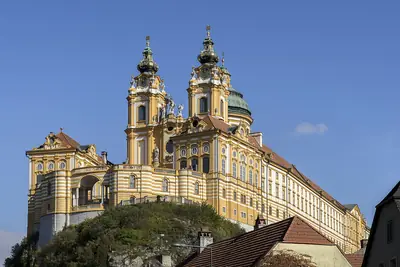
The Benedictine abbey dominates the town from its rocky hilltop. Founded in 1089 when Margrave Leopold II gave a castle to the monks, the present Baroque complex began construction in 1702 under architect Jakob Prandtauer and was finished by his pupil Franz Munggenast after Prandtauer’s death in 1726. The abbey church is dedicated to Saints Peter and Paul, while Saint Coloman is the patron and is buried here. Its interior features frescoes by Johann Michael Rottmayr, and the library is renowned for a large collection of medieval manuscripts, reflecting a long tradition of learning.
Altes Posthaus Melk
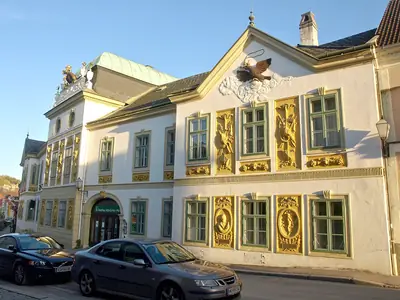
Also called Stadtsaal, this building houses the Stadtmuseum Melk. Among its highlights is an idol with a bird‑like face that dates back roughly 6,500 years, offering a tangible glimpse into the region’s deep past.
Kolomanibrunnen
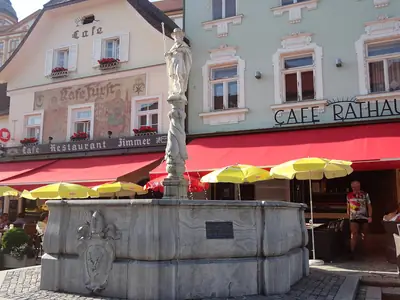
Located at Rathausplatz, this historic fountain honors Saint Koloman. Erected in 1687, it originally stood in the abbey’s prelate courtyard but was given to the town in 1722 by Abbot Berthold Dietmayr when it no longer fit the Baroque design. A statue of Saint Koloman, shown with a pilgrim’s hat and staff, stands on the fountain’s pedestal.
Mariä‑Himmelfahrt‑Kirche
Known locally as the Stadtpfarrkirche, this Roman Catholic church forms part of Melk’s built heritage. Its simple façade contributes to the town’s historic skyline.
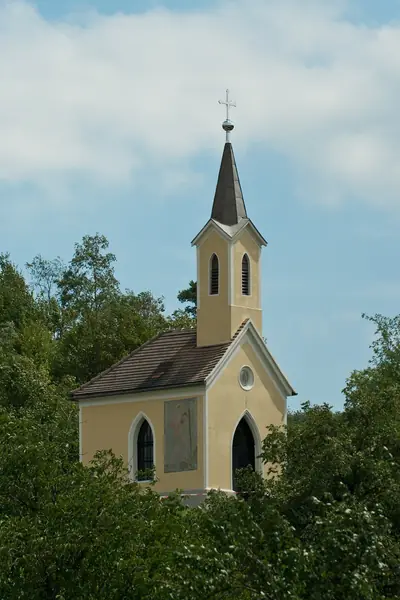
Ortskapelle Winden
A modest chapel situated in the outskirts of Melk, it represents the local religious architecture found throughout the area.
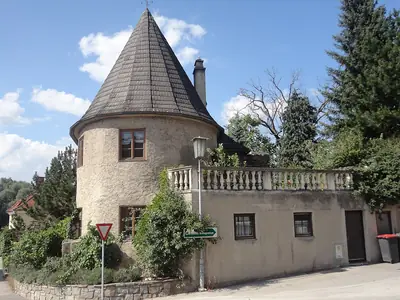
Brauhausturm Melk
This building, often referred to simply as the Brauhausturm, is a notable landmark on the town’s streetscape and appears on several walking routes.
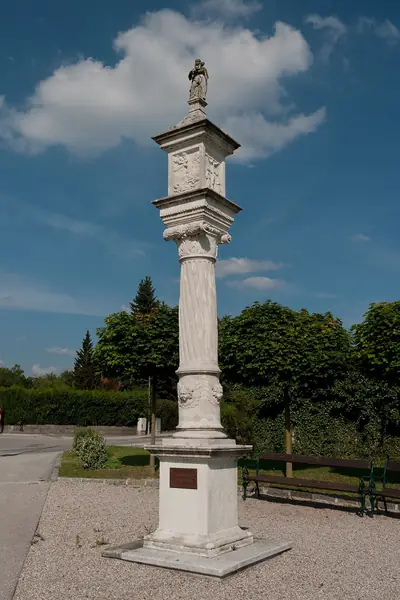
Spielberger‑Kreuz
At the junction of Wiener Strasse and Spielberger Strasse stands this wayside cross, dating from the seventeenth century. It links the street corner to the broader history of Melk and Lower Austria.
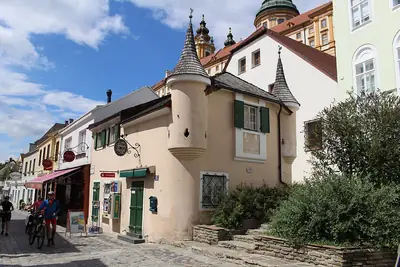
Bürgerhaus (former Salzstadel/Brotladen)
This historic building has served various functions over time—first as a salt store (Salzstadel), later as a bread shop (Brotladen). Its layered past is recalled in its name.
Gartenbaudenkmal Melk
Also known as Wetterhäuschen, this site is one of Melk’s named points of interest. It incorporates the sculpture La Farfalla by Franz Kremser, adding an artistic touch to the surroundings.
Town Hall Melk (Rathaus)
The town hall, locally called the Rathaus, is a central civic building and one of Melk’s points of interest, visible on the main square.
Doora
A contemporary sculpture by Kris Lemsalu, Doora stands in Melk and invites passersby to pause and consider its form.
Goliath
Situated somewhere in the city, the sculpture named Goliath offers another modern artistic encounter for those exploring Melk’s streets.
Bischöfliches Seminar Melk
Located at Wiener Straße 45, this former episcopal seminary served the Diocese of St. Pölten until its sale in 2015. The building, including its chapel, is protected as a historic monument and reflects the town’s religious administrative history.
Evangelische Pfarrgemeinde A.B. Melk‑Scheibbs
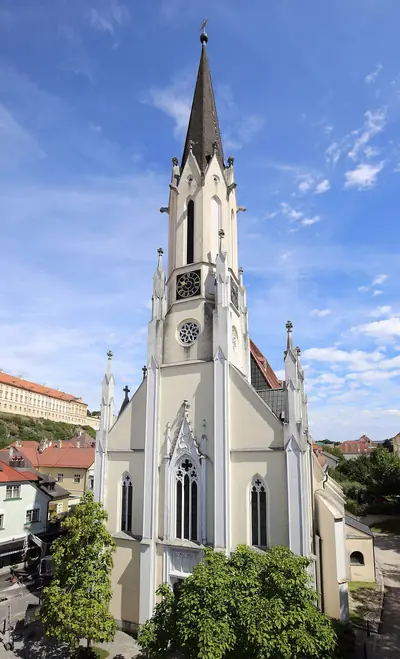
Known as the Erlöserkirche Melk, this evangelical church provides a distinct Protestant presence within the town and is worth a brief visit for its architecture and community role.
Melk Concentration Camp
The memorial site KZ‑Gedenkstätte Melk marks the location of a forced‑labor subcamp of Mauthausen that operated from January 1944 to April 1945. Initially housing about 500 prisoners who prepared the site, the camp officially opened on 20‑21 April 1944 and remained until liberation on 5 May 1945. Prisoners were tasked with driving tunnels into the mountain near Roggendorf for the Steyr‑Daimler‑Puch company’s planned ball‑bearing production, building barracks in the surrounding area (including the Luftwaffe colony in Loosdorf), and working at a sawmill in Amstetten to produce timber supports. The camp was designed to hold thousands in 18 blocks, and overcrowding soon led to dire sanitary conditions.
Explore Melk with Neywo
Neywo’s free audio guide covers 17 narrated places in Melk and includes two walking tours and one bus route. The “From Brewery Tower to the Baroque Abbey” walk spans 2.61 km, takes about 119 minutes and stops at 11 sites, including the Evangelische Pfarrgemeinde, Brauhausturm, Altes Posthaus, Gartenbaudenkmal, the Schubert Denkmal, Stadtpark, Mariä‑Himmelfahrt‑Kirche, the Bürgerhaus, Kolomanibrunnen, the abbey itself, the Bischöfliches Seminar and the Spielberger‑Kreuz. The “Memory and Faith on Melk’s Quiet Side” walk is 1.2 km long, lasts roughly 48 minutes and visits five stops: the Melk concentration camp, Evangelische Pfarrgemeinde, Brauhausturm, Altes Posthaus and the Goliath sculpture. The bus line “Bus 719 along Wiener Strasse” covers 2.9 km in about 12 minutes with five stops: Spielberger‑Kreuz, Bischöfliches Seminar, Gartenbaudenkmal, Brauhausturm and Goliath. Each story plays automatically as you reach the location, letting you explore at your own pace with no group and no schedule. Narration is available in 11 languages.
Ready to discover Melk at your own rhythm? Download Neywo, start a tour, and let the town’s stories unfold step by step.
Places with an audio guide in Melk
8 places in Melk with a Neywo audio guide. Each one starts telling its story as you reach it.
Self-guided tours in Melk
3 tours in Melk, free in the Neywo app. Each stop tells its story as you reach it.
- Bus ride
Bus 719 along Wiener Strasse
Ride Postbus 719 through Melk from the eastern edge of town along Wiener Strasse to the old town, passing a wayside cross, the former episcopal seminary, a garden monument and the brewery tower.
Spielberger-Kreuz · Bischöfliches Seminar Melk · Gartenbaudenkmal Melk · Brauhausturm Melk · Goliath
Open this tour: Bus 719 along Wiener Strasse - Walk
From Brewery Tower to the Baroque Abbey
Start at the old brewery tower and climb through Melk's compact old town, past the town park, the parish church and the Kolomani fountain that once belonged to the abbey. The walk ends under the great Baroque abbey of Melk, with a stretch east along Wiener Strasse to a former seminary and a seventeenth-century wayside cross.
Evangelische Pfarrgemeinde A.B. Melk-Scheibbs · Brauhausturm Melk · Altes Posthaus Melk · Gartenbaudenkmal Melk · Schubert Denkmal, Stadtpark Melk · Mariä-Himmelfahrt-Kirche …
Open this tour: From Brewery Tower to the Baroque Abbey - Walk
Memory and Faith on Melk's Quiet Side
A short, sober walk from the Melk concentration camp memorial, a subcamp of Mauthausen, through the Protestant church and the old brewery tower to the town museum and a playful sculpture. It shows the side of Melk that the abbey crowds rarely see.
Melk concentration camp · Evangelische Pfarrgemeinde A.B. Melk-Scheibbs · Brauhausturm Melk · Altes Posthaus Melk · Goliath
Open this tour: Memory and Faith on Melk's Quiet Side
Walk Melk with Neywo
Neywo turns Melk into a self-guided audio tour. Stories arrive as you reach the place they belong to, and the route reshapes when you wander off it.

