What to See in Jajce, Bosnia and Herzegovina: Free Audio Guide
Discover Jajce: Bosnia’s Historic Town Beneath a Waterfall
Set among wooded hills and defined by its dramatic waterfall, Jajce is one of the most distinctive small towns in the Federation of Bosnia and Herzegovina. It combines medieval history with natural scenery in a remarkably compact area. Exploring the historic urban area is made easy with Neywo’s free audio guide for Jajce, featuring 17 narrated places.
What to See in Jajce
Jajce Citadel
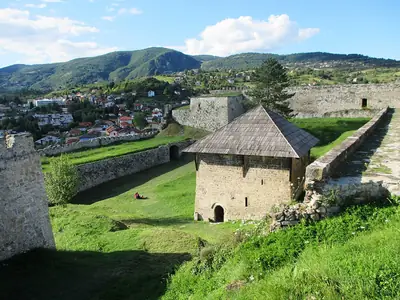
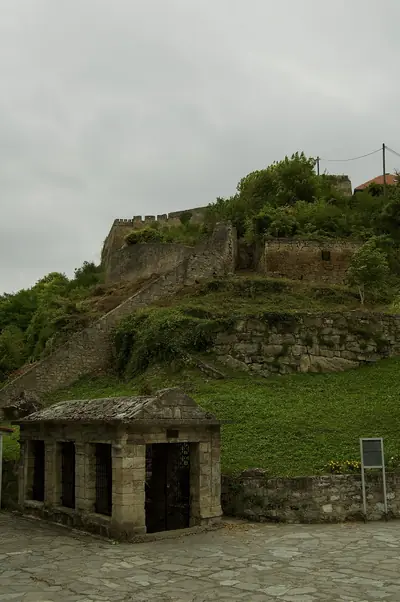
Rising on a karst hill above the Pliva waterfall, the fortified heart of the Old Town is a national monument. The citadel covers about 11,200 square metres, enclosed by walls stretching roughly 1,300 metres. Its high walls follow the egg-like shape of the hill, which, along with the Pliva and Vrbas rivers, helped protect this stronghold. Archaeological discoveries here reveal a long and layered history, including remains of a Copper Age settlement, material from the Bronze Age, and finds from the Roman period. The royal court is first mentioned here in 1457 during the reign of King Stjepan Tomaš.
St. Mary’s Church and St. Luke’s Belltower
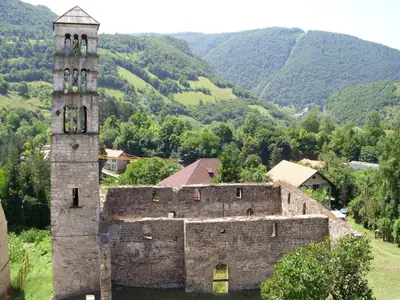
At the foot of the citadel stand the ruins of Saint Mary’s Church alongside the preserved Saint Luke’s Belltower. The church dates back to the twelfth or thirteenth century and was renewed by Franciscan friars in 1404. The belltower was added between 1460 and 1463 when the relics of Saint Luke the Evangelist were kept in the church. Its lower section is Gothic, while its three upper galleries display Romanesque features.
Catacombs of Jajce
Beneath the fortress walls lies an underground church carved directly into the living rock. Commissioned around 1400 by Hrvoje Vukčić, the Bosnian nobleman who founded the city, it served as a family burial place until his death in 1416. Craftsmen carved the rooms out of solid rock, creating a two-level space featuring a presbytery, a baptistery, and a cross, alongside unfinished chambers and carved figures.
Clock Tower of Jajce
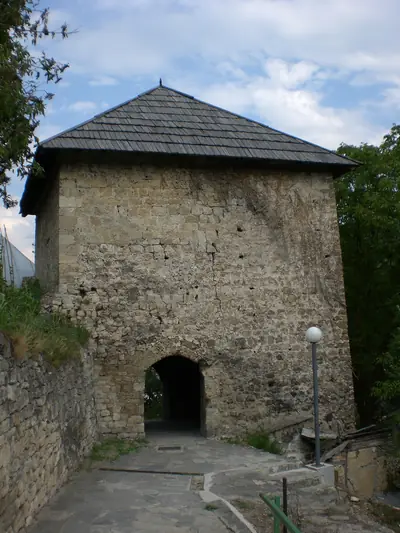
Located in the Upper Town, the Sahat kula began as a medieval entrance tower leading toward the settlement below the fortress. It dates from the period when the outer defensive enclosure was built under Hrvoje Vukčić Hrvatinić. During Ottoman rule, it was converted into a clock tower with a mechanism hung above the eastern arch, though Austro-Hungarian soldiers later removed the clock and bell.
Sultana Esma Mosque
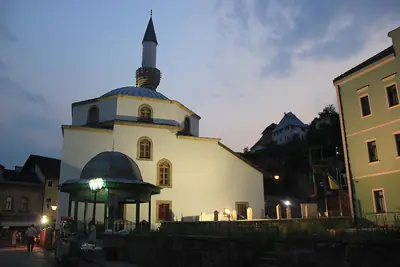
Situated on the main street, this mosque is a distinctive landmark because it is the only one in Bosnia and Herzegovina named after a woman. The surrounding architectural ensemble includes the remains of an associated fountain, a residential building, a mekteb, and a graveyard.
Jajce Mithraeum
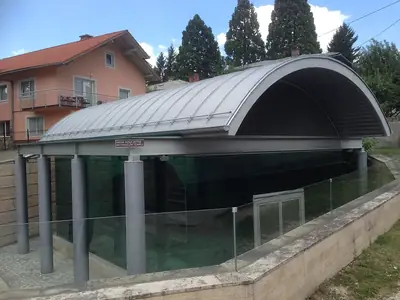
This Roman-era temple dedicated to Mithra was rediscovered during an archaeological dig in 1931, preserving a unique piece of antiquity in the town.
Kršlak House and Musafirhana Jajce
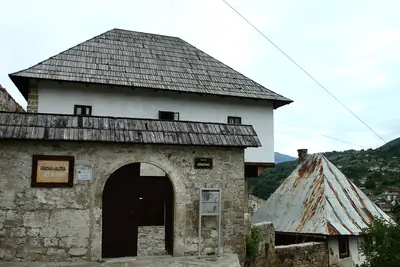
Kršlak House represents a historic building and architectural ensemble in the town. Nearby, Musafirhana Jajce, also known as Omerbeg House, forms another historic site alongside Travnik Gate.
Museum of the Second Session of AVNOJ
Also known as the Museum of the National Struggle for Liberation, this history museum preserves the memory of the Second Session of AVNOJ. Founded in 1953, its national monument building houses historical material, including portraits of Tito, Stalin, Roosevelt, and Churchill.
Franciscan Monastery of Saint Luke
Built between 1877 and 1885 and later renovated by architect Karel Pařík, this Roman Catholic monastery carries the name of Saint Luke following efforts by Franciscans in the 1970s. The town is also home to the Church of the Assumption of the Blessed Virgin Mary and the Orthodox Church of the Most Holy Mother of God, alongside Kraljev grob, which features a stećak and a grave.
Explore Jajce with a Self-Guided Walking Tour
If you are planning what things to do in Jajce, you can experience the town at your own pace using the app. Neywo offers 1 walking tour—“The Last Kings of Bosnia: Waterfall, Fortress and Catacombs”—spanning 2.06 km over 97 minutes across 10 narrated stops. The app tells the story of each place as you reach it, with no group and no schedule, and narration available in 11 languages. From Jajce, you can continue your travels to nearby destinations like Sarajevo and Mostar.
Places with an audio guide in Jajce
8 places in Jajce with a Neywo audio guide. Each one starts telling its story as you reach it.
Self-guided tours in Jajce
1 tour in Jajce, free in the Neywo app. Each stop tells its story as you reach it.
- Walk
The Last Kings of Bosnia: Waterfall, Fortress and Catacombs
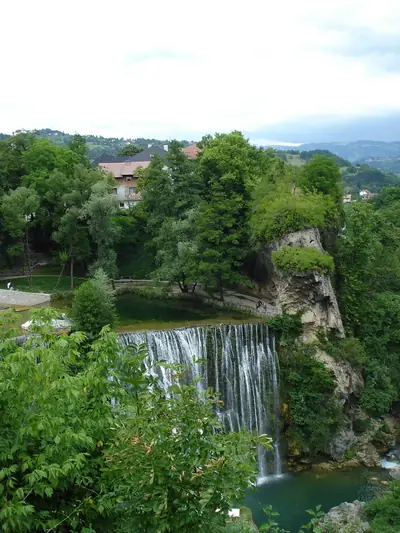
Jajce was the seat of Bosnia's last kings, and the whole town climbs a rock above a 22-metre waterfall. Walk from the Bazaar Mosque and the Travnik Gate to the foot of the Pliva falls, climb to the Clock Tower and the royal citadel, then drop through the belltower of St Luke, the rock-cut catacombs, the AVNOJ museum where Tito's Yugoslavia was born, and end at a Roman temple to Mithra.
Franciscan monastery of Saint Luke, Jajce · Sultana Esma Mosque · Musafirhana Jajce · Pliva · Clock Tower of Jajce · Jajce Citadel …
Open this tour: The Last Kings of Bosnia: Waterfall, Fortress and Catacombs
Walk Jajce with Neywo
Neywo turns Jajce into a self-guided audio tour. Stories arrive as you reach the place they belong to, and the route reshapes when you wander off it.

