Things to Do in Hanga Roa, Chile: Walking Guide
Things to Do in Hanga Roa
Hanga Roa is the main settlement and capital of Easter Island (Rapa Nui), a remote Chilean territory in the southeastern Pacific famous for its monumental moai statues and living Polynesian culture. Visitors come to explore the island’s archaeological sites, coastal landscapes, and community life, all centered around this lively town. Neywo offers a free audio guide for Hanga Roa with 22 narrated places to help you discover the town and its surroundings at your own pace.
Explore Hanga Roa and its surroundings
Rapa Nui National Park
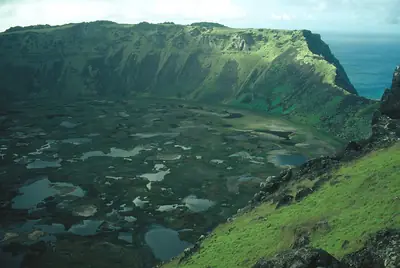
Rapa Nui National Park covers much of Easter Island and protects the archaeological heritage of the Rapa Nui people. The park contains the island’s famous moai, ceremonial villages, altars, caves with rock carvings, and other ancient remains. It is divided into nine sections, with the offshore islets (motus) counted as one section. The 887 surviving moai date from the early Rapa Nui period (300–1200 AD). In 1995 the park was inscribed as a UNESCO World Heritage Site, and it had been declared a national park and National Historic Monument of Chile on 16 January 1935.
Ahu Tongariki
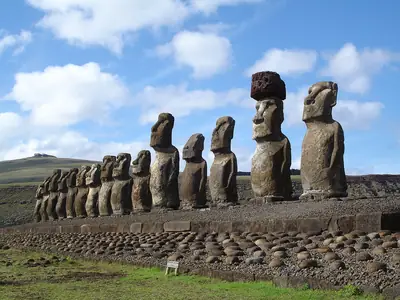
Ahu Tongariki is the largest ahu on Rapa Nui, situated on the southeast coast beneath the slopes of Rano Raraku, the principal moai quarry. Fifteen moai stand in a line on the restored platform, their backs to the Pacific Ocean. During the winter solstice the statues all face the sunset, creating a striking view. The ahu was built during a flourishing period of ancestral culture, later the moai were toppled in civil wars, and a tsunami swept the platform inland in the twentieth century. Archaeological work in the 1990s reconstructed the site; among the statues one wears a pukao and another weighs eighty‑six tonnes, the heaviest moai ever erected on the island.
Father Sebastian Englert Anthropological Museum
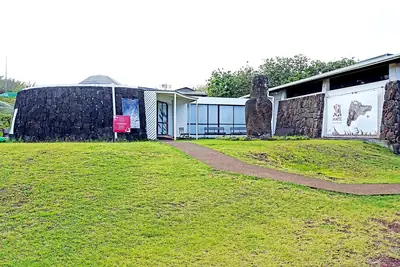
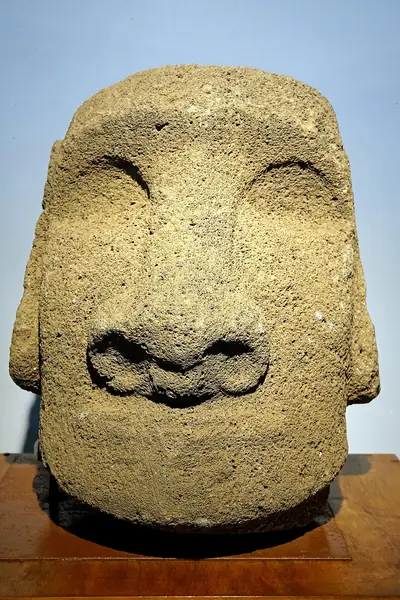
A short walk from the centre of Hanga Roa brings you to the Father Sebastian Englert Anthropological Museum, also known as the Museum of Easter Island. Founded in 1973 and named after the Bavarian missionary Sebastian Englert, the museum preserves wooden kava kava figures, photographs, archives of traditional music, and the William Mulloy Library with three thousand titles. One notable object is described as the only clearly identified female moai.
Ahu Hotake
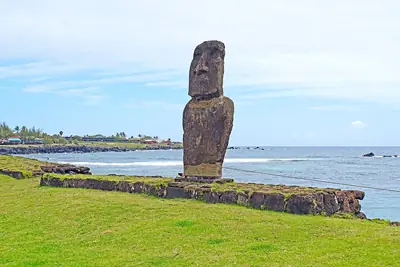
Ahu Hotake is an ahu that forms part of Easter Island’s distinctive landscape. It offers a place to pause and take in the surrounding setting.
Ahu Ko Te Riku
Ahu Ko Te Riku is another ahu on Easter Island where visitors can stop and experience the island’s characteristic ceremonial platforms.
Ahu Mahatua
Ahu Mahatua provides a quiet spot to look around and appreciate the island’s ahu landscape.
Ahu One Makihi
Ahu One Makihi is a ceremonial platform that invites a moment of reflection amid the island’s archaeological scenery.
Ahu Taharoa
Ahu Taharoa is a sacred site where you can pause and experience one of Easter Island’s distinctive places of worship.
Ahu Tautira
Ahu Tautira is an ahu whose name invites you to notice the distinctive landscape around it.
Easter Island
Easter Island is one of the world’s most remote inhabited islands, a Chilean territory known for its moai, Polynesian heritage, and dramatic Rapa Nui landscape. The island’s most famous sight is its collection of enormous human‑shaped statues, accompanied by stone platforms called ahu. Archaeological remains also include the unique Oceanic writing system rongorongo. Rapa Nui National Park protects much of this heritage; UNESCO declared it a World Heritage Site in 1995, and since 2016 the Rapa Nui community has administered the park through the Indigenous Polynesian Community Ma’u Henua. The Dutch navigator Jakob Roggeveen arrived on 5 April 1722, a date linked to the island’s Spanish name, Easter Island. Chile annexed the island in 1888, Rapa Nui people received Chilean citizenship in 1966, and the island became a constitutional special territory in 2007.
Hanga Roa
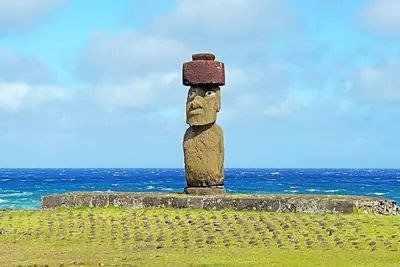
Hanga Roa is the island’s principal town, port, and capital. Its name means “long bay” in Rapanui, and almost all residents live here alongside shops, restaurants, hotels, public buildings, and an artisan market. The town reflects a difficult chapter in the island’s history: after Chile annexed Easter Island on 9 September 1888, the population was forced to gather in Hanga Roa at the beginning of the twentieth century while much of the rest of the island was used for sheep raising. Avenida Policarpo Toro commemorates the Chilean naval captain associated with the annexation. A little further south, in the Tahai area, you’ll find the Padre Sebastián Englert Anthropological Museum, and nearby three sacred platforms have been restored to show the moai as they could have been seen when first placed. The same area also preserves a traditional priestly cave house, offering another glimpse into the island’s cultural heritage.
Holy Cross Church, Hanga Roa
Set among gardens on Te Pito Te Henua Street, the Holy Cross Church (Iglesia de la Santa Cruz) is a Catholic church established in 1937 through the efforts of missionary Sebastián Englert. It belongs to the Diocese of Valparaíso. The façade combines Christian religious motifs with native Rapa Nui elements, creating a distinctive visual feature. Inside, locally carved images represent Jesus Christ, the Virgin Mary, and Christian saints, giving the interior a clear local style while expressing familiar Christian subjects.
Ahu Akivi
Ahu Akivi features a remarkable line of seven moai that stand inland rather than on the coast, looking out toward the Pacific Ocean. The statues are strikingly similar in shape and size. The site is also known as a celestial observatory established around the sixteenth century; the seven moai face the setting sun during the spring equinox and have their backs to the rising sun during the autumn equinox, an astronomically precise arrangement found nowhere else on the island.
Tukuturi
Tukuturi is a distinctive moai shown kneeling on the slope of the Rano Raraku volcano. Unlike the familiar standing figures, this statue is carved below the waist with legs clearly represented, making it the only known moai in a kneeling or crouching position. It is considered the oldest moai discovered so far, estimated to date from the sixth century, and was uncovered in 1956 by the expedition led by Thor Heyerdahl.
Explore Hanga Roa with Neywo
Neywo’s free audio guide for Hanga Roa includes 22 narrated places that play automatically as you reach each spot, letting you explore at your own pace with no group and no schedule. The app also offers one walking tour and one bike route:
- Walking tour: “Hanga Roa, the Long Bay: Harbour Ahu, Church and Museum” – 3.36 km, 78 minutes, 6 stops (Hanga Roa, Ahu Tautira, Ahu Hotake, Holy Cross Church, Hanga Roa, Father Sebastian Englert Anthropological Museum, Ahu Ko Te Riku).
- Bike route: “Tahai Coast to Vinapu: Moai by Bike” – 6.1 km, 30 minutes, 5 stops (Ahu Hotake, Ahu Ko Te Riku, Father Sebastian Englert Anthropological Museum, Holy Cross Church, Hanga Roa, Ahu Vinapu).
Narration is available in 11 languages. Simply download the Neywo app, choose the Hanga Roa guide, and let the stories of the island unfold as you walk or ride.
Places with an audio guide in Hanga Roa
8 places in Hanga Roa with a Neywo audio guide. Each one starts telling its story as you reach it.
Self-guided tours in Hanga Roa
2 tours in Hanga Roa, free in the Neywo app. Each stop tells its story as you reach it.
- Bike ride
Tahai Coast to Vinapu: Moai by Bike
A flat, easy ride from Hanga Roa's seafront to the Tahai platforms and the anthropological museum, back through town to the Santa Cruz church, then out along the paved road past the airport to Ahu Vinapu, where the stonework rivals Peru's. Bicycles are allowed on the park's roads, so keep to them.
Ahu Hotake · Ahu Ko Te Riku · Father Sebastian Englert Anthropological Museum · Holy Cross Church, Hanga Roa · Ahu Vinapu
Open this tour: Tahai Coast to Vinapu: Moai by Bike - Walk
Hanga Roa, the Long Bay: Harbour Ahu, Church and Museum
Walk the waterfront of Rapa Nui's only town, from the harbour platforms of Tautira and Hotake to the carved saints of the Santa Cruz church. Finish at the museum that keeps the island's heritage and the ahu beside it.
Hanga Roa · Ahu Tautira · Ahu Hotake · Holy Cross Church, Hanga Roa · Father Sebastian Englert Anthropological Museum · Ahu Ko Te Riku
Open this tour: Hanga Roa, the Long Bay: Harbour Ahu, Church and Museum
Walk Hanga Roa with Neywo
Neywo turns Hanga Roa into a self-guided audio tour. Stories arrive as you reach the place they belong to, and the route reshapes when you wander off it.

