What to See in Guatemala City, Guatemala: Free Audio Guide
Things to Do in Guatemala City: Historic Buildings, Museums and Maya Heritage
The best things to do in Guatemala City include exploring its historic centre, visiting museums dedicated to Maya culture and Guatemalan history, and discovering landmarks that connect the modern capital with its past. From the ancient archaeological site of Kaminaljuyu to the National Palace and the jaguar-shaped Teatro Nacional, the city offers much more than a starting point for travelling around Guatemala. Neywo has a free audio guide for Guatemala City with 26 narrated places.
What to See in Guatemala City
Kaminaljuyu: an ancient Maya city
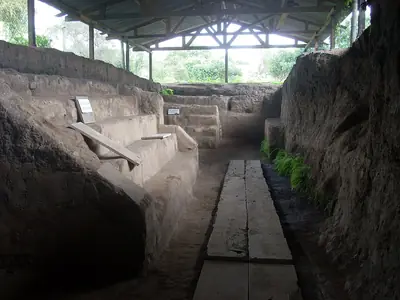
Kaminaljuyu is an archaeological site in the heart of modern Guatemala City. Once a major Mesoamerican urban centre, it was regarded as one of the largest archaeological sites in the New World. At its height, the city represented a high point of Maya demographic, economic, social, architectural and artistic achievement.
Around two hundred platforms and pyramidal mounds remain, although much of the original settlement has been overtaken by urban development. The surviving structures were made from hardened adobe rather than the limestone commonly used in the Maya lowlands, which helps explain their deterioration.
Museo Miraflores
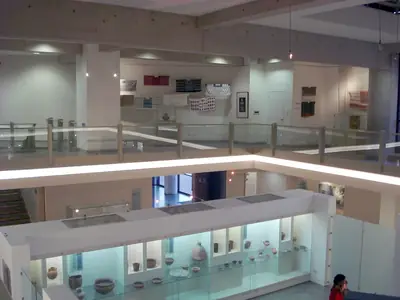
The Museo Miraflores brings the ancient city of Kaminaljuyu to life through archaeology and preserved remains. Three mounds survive on the museum grounds, while the building itself covers around 1,200 square metres.
Opened in 2002, the museum is managed by the Fundación Miraflores. Its labels are available in Spanish and English, and its collections provide context for understanding the Maya city whose remains are scattered across the capital.
National Palace of Culture
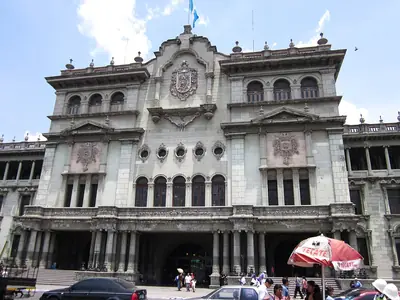
At the centre of the historic city stands the National Palace of Culture, a striking green building that serves both as a museum and a working government seat. It houses art collections, temporary exhibitions, and painting and sculpture displays, while also hosting official ceremonies.
Declared a Historical and Artistic Monument in 1980, the building is affectionately known as Palacio Verde or Guacamolón, a nickname inspired by its green façade and its resemblance to the traditional pre-Columbian dish.
Cathedral of Guatemala City
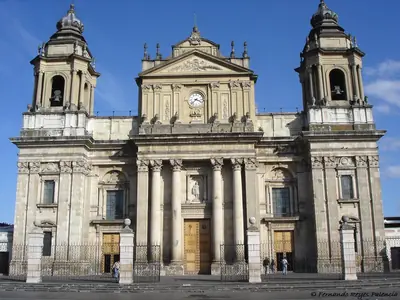
Facing the east side of Plaza de la Constitución, the Cathedral of Guatemala City is the country’s principal cathedral and the seat of the Archdiocese of Santiago de Guatemala. It was built between 1782 and 1815, with its towers completed in 1867.
The cathedral combines neoclassical, Baroque and Classical elements. Its massive walls and columns, more than a metre thick, helped it withstand earthquakes, although it suffered serious damage in 1917 and 1976. The interior is relatively sober, with richly ornamented altars and a powerful sense of scale.
Twelve pillars in front of the cathedral bear the names of many people who disappeared during Guatemala’s civil war. They recall the earlier pedestals that held statues of the twelve apostles before those statues were destroyed in the 1917 earthquake.
Museo del Ferrocarril FEGUA
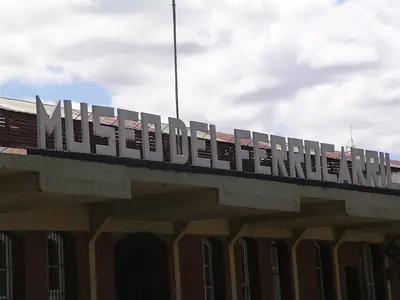
The Guatemala City Railway Museum occupies the city’s former main railway station. Its collections preserve the country’s railway heritage, from the network’s earliest beginnings to the present.
Visitors can see steam and diesel locomotives, passenger carriages, other rolling stock and railway-related objects. Exhibits also explain the historical development of Guatemala’s railway system.
Centro Cultural Miguel Ángel Asturias
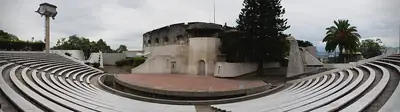
Known commonly as the Teatro Nacional, the Centro Cultural Miguel Ángel Asturias is one of the most distinctive buildings in Guatemala City’s Centro Cívico. Its exterior emulates a seated jaguar, giving the complex a dramatic presence among the surrounding civic buildings.
Completed in 1978, the centre was designed and brought to life by engineer Efraín Recinos, with contributions from Carlos Alberto Haeussler. It includes the Gran Sala Efraín Recinos, the chamber theatre Hugo Carrillo and the open-air Teatro al Aire Libre Otto René Castillo.
Museo de Arqueología y Etnología
The National Museum of Archaeology and Ethnology explores Guatemala’s archaeological and ethnological heritage. Its origins go back to the creation of the Museo Nacional by government decree in 1898. The archaeology section was founded in 1931 and moved to its current location in 1946.
The museum now has 4,200 square metres of exhibition space, with another 2,000 square metres dedicated to restoration and research. Its collections include around 35,000 archaeological objects and 15,000 ethnological pieces, alongside sculptures, paintings, replicas, models, dioramas and scenographic displays.
Museo Popol Vuh
On the campus of the Universidad Francisco Marroquín in Zone 10, the Museo Popol Vuh preserves and displays Guatemala’s pre-Columbian and colonial heritage. It is a private nonprofit institution and is known for its collection of Maya art.
The museum is particularly renowned for funerary ceramics. Its holdings also include Preclassic portable stone sculptures and some well-preserved Maya vases and bowls. The institution is funded through its own resources and external donations.
Ixchel Museum of Indigenous Textiles and Clothing
The Ixchel Museum focuses on Guatemala’s diverse weaving traditions and indigenous dress customs. Its collections include textiles, ceramics, jewellery and books, making it a useful place to explore the country’s cultural diversity through clothing and craft.
Mapa en Relieve de Guatemala
The Relief Map of Guatemala is a large three-dimensional map laid out on the ground in Guatemala City. Its horizontal scale is 1:10,000 and its vertical scale is 1:2,000, emphasising the country’s changes in elevation and offering a tangible view of its terrain.
Plaza España
In Zone 9, Plaza España provides a public space centred on the Fuente Carlos III. The fountain, dedicated to King Carlos III of Spain, dates from 1789 and originally stood in Plaza de la Constitución. It was moved to Plaza España in 1933, and the square adopted its current name in 2002.
Guatemala City Guatemala Temple
The Guatemala City Guatemala Temple is a white-marble sanctuary belonging to The Church of Jesus Christ of Latter-day Saints. It was the church’s first house of worship in Central America and the thirty-second temple built worldwide.
The temple was announced in 1981, with construction beginning in 1982. It was dedicated in December 1984. Set in the Vista Hermosa 1 neighbourhood, it has six spires and an exterior clad in natural white Guatemalan marble.
Guatemala City’s wider history
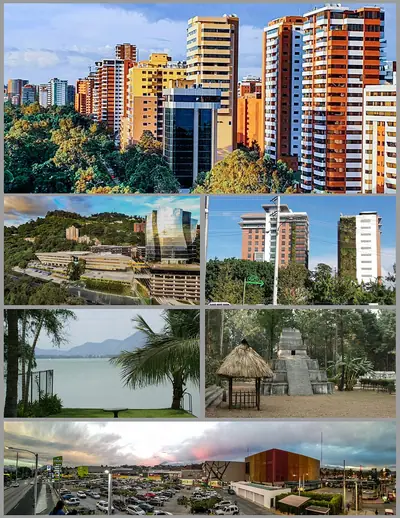
Guatemala City is the capital of Guatemala Department, one of the country’s 22 departments. The department contains the capital, its surrounding suburbs and seventeen municipalities, including Mixco and Villa Nueva.
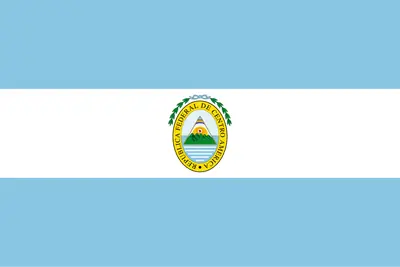
The city also played an important role in the short-lived Federal Republic of Central America. Formed in 1823 by Guatemala, El Salvador, Honduras, Nicaragua and Costa Rica, the federation initially had its capital in Guatemala City. It adopted a constitution in 1824, but the union eventually broke apart between 1839 and 1841.
For a deeper understanding of the country’s recent past, several places in the city recall the Guatemalan Civil War, an internal conflict that lasted from 1960 to 1996 and left lasting effects on Guatemalan society.
Explore Guatemala City with Neywo
Neywo offers a Guatemala City self-guided walking tour experience through two walking tours and one bike route, with 26 narrated places in total. The walks are:
- Zona 1 and the Civic Centre: Palace, Cathedral and Jaguar Theatre — 5.6 km, 120 minutes and 8 stops.
- Hermitage on the Hill: Cerrito del Carmen to the Old Square — 5.18 km, 109 minutes and 7 stops.
There is also a bike route:
- Sixth Avenue Ciclovía: Palace to the Relief Map — 2.2 km, 11 minutes and 2 stops.
Download Neywo to explore the city at your own pace. The app tells the story of each place as you reach it, with no group and no schedule. Narration is available in 11 languages. You can also continue your journey through Antigua Guatemala, Quetzaltenango, Chichicastenango, Panajachel and San Juan La Laguna.
Places with an audio guide in Guatemala City
8 places in Guatemala City with a Neywo audio guide. Each one starts telling its story as you reach it.
Self-guided tours in Guatemala City
3 tours in Guatemala City, free in the Neywo app. Each stop tells its story as you reach it.
- Bike ride
Sixth Avenue Ciclovía: Palace to the Relief Map
Follow the Zona 1 bike lane along Sexta Avenida from the National Palace to the giant relief map of Guatemala at Parque Minerva, a flat ride through the old centre.
Mapa en Relieve de Guatemala · National Palace
Open this tour: Sixth Avenue Ciclovía: Palace to the Relief Map - Walk
Zona 1 and the Civic Centre: Palace, Cathedral and Jaguar Theatre
Guatemala City was moved here in 1776 after earthquakes destroyed the old capital, and its centre still bears the marks of the quakes of 1917 and 1976. Start at baroque La Recolección, cross the Old Central Square to the green National Palace and the cathedral, pass the Rosary basilica, then follow the old railway to the Museo del Ferrocarril, the jaguar-shaped national theatre and the Theater of Fine Arts.
La Recoleccion Church, Guatemala City · Carrera Theater · National Palace · Cathedral of Guatemala City · Santo Domingo Church in Guatemala City · Museo del Ferrocarril …
Open this tour: Zona 1 and the Civic Centre: Palace, Cathedral and Jaguar Theatre - Walk
Hermitage on the Hill: Cerrito del Carmen to the Old Square
Climb the hill where a hermitage stood a century before the capital moved here, then drop through Santo Domingo to the cathedral and the green palace on the main square, and finish at La Recolección and the Theater of Fine Arts, a former cinema on Avenida Elena.
Cerrito del Carmen · Santo Domingo Church in Guatemala City · Cathedral of Guatemala City · National Palace · Carrera Theater · La Recoleccion Church, Guatemala City …
Open this tour: Hermitage on the Hill: Cerrito del Carmen to the Old Square
Walk Guatemala City with Neywo
Neywo turns Guatemala City into a self-guided audio tour. Stories arrive as you reach the place they belong to, and the route reshapes when you wander off it.

