Things to Do in Quetzaltenango, Guatemala: Walking Guide
Things to Do in Quetzaltenango, Guatemala: What to See in Xela
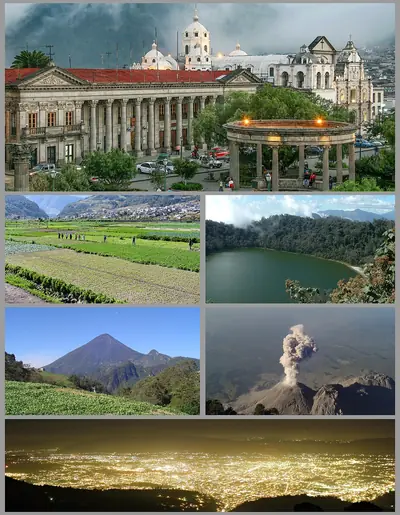
Quetzaltenango, also known as Xela or Xelajú, is one of Guatemala’s largest cities and the capital of the department of Quetzaltenango. Set in the western highlands, it brings together K’iche’ Maya heritage, a layered colonial history, cultural landmarks, and the dramatic volcanic landscape of Guatemala. Neywo has a free audio guide to Quetzaltenango with six narrated places, available in 11 languages.
What to See in Quetzaltenango
The most important places to visit in Quetzaltenango range from historic buildings in the city center to landmarks and volcanoes beyond it. Together, they reveal the history, culture, and geography of Xela.
Holy Spirit Cathedral
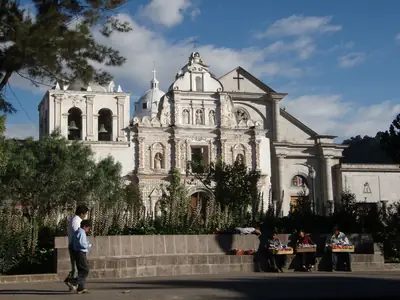
The Holy Spirit Cathedral, also known as Quetzaltenango Cathedral, stands beside the eastern side of Parque a Centro América in the city center. It is the seat of the Archdiocese of Los Altos Quetzaltenango-Totonicapán and is one of the first churches founded in Quetzaltenango.
The cathedral was established by the Spanish conquistadors shortly after the defeat of Tecun Uman, a legendary local hero. Quetzaltenango was dedicated to the Holy Spirit, which gave the church its name. Inside, two of the region’s most revered images are preserved: the Divine Just Judge and the Virgin of the Rosary.
The building has undergone at least three changes. Its façade, which survived from the latest modification, provides a visible reminder of the cathedral’s changing architectural history.
Quetzaltenango Municipal Theatre
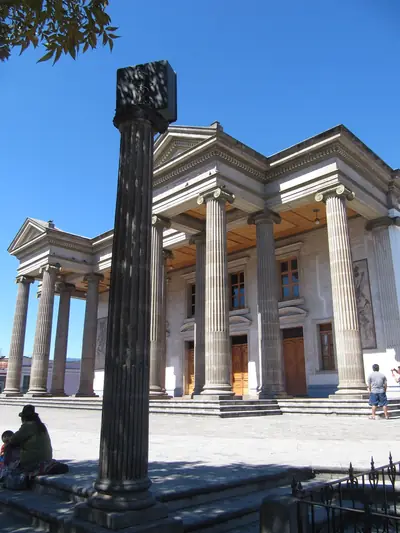
The Quetzaltenango Municipal Theatre, or Teatro Municipal, is a historic cultural venue in the city’s center. It was inaugurated on July 19, 1895, and continues to host theatrical performances and jazz concerts.
Its continuing role as a performance space makes it an important part of Quetzaltenango’s cultural life. The theatre also reflects the city’s long-standing connection with the arts and its historic importance in the western highlands.
Quetzaltenango Guatemala Temple
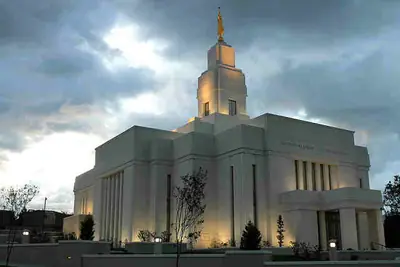
On a hill at the western edge of Quetzaltenango, near Parque Zoológico Minerva, the Quetzaltenango Guatemala Temple is a distinctive landmark. Its single spire and gold-leafed statue of the angel Moroni make it easy to recognize.
The temple has a precast concrete exterior fabricated in Mexico and a total floor area of 21,085 square feet, or 1,959 square meters. It stands on a 6.47-acre, or 2.6-hectare, site. The intention to build it was announced on December 16, 2006, by church president Gordon B. Hinckley. At its dedication, it became the church’s 136th temple in operation worldwide.
Santa María Volcano
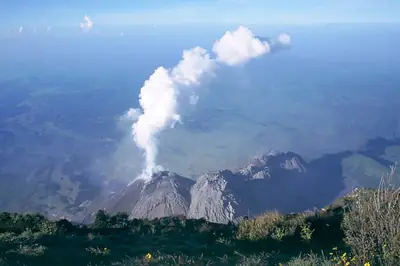
Santa María is a large active volcano near Quetzaltenango and part of the Sierra Madre mountain range. It rises to 3,772 metres above sea level and is one of the defining features of the city’s surrounding landscape.
Its history includes one of the most powerful eruptions of the twentieth century. In 1902, Santa María erupted for 19 days, expelling about 20 cubic kilometres of volcanic material and sending an ash column as high as 28 kilometres. Much of the mountainside was destroyed, while mudflows known as lahars continued to cause damage in the following years.
The eruption also created a new volcanic vent inside the enormous crater left by the event. In 1922, this vent formed Santiaguito, a new volcano that has remained active since then. Santiaguito now forms a cone several hundred metres high and reaches about 2,500 metres in elevation.
One of Santa María’s remarkable features is the view from its summit: from there, it is possible to look down toward active eruptions at Santiaguito. The volcano gives Quetzaltenango a powerful connection to the geological forces that shaped the region.
Quetzaltenango’s History and Cultural Setting
Quetzaltenango has also been known as Xelajú and Xela. It is the capital of the department of Quetzaltenango and was once the capital of the historic region of Los Altos.
The area was formerly part of the K’iche’ Kingdom of Q’umarkaj. Spanish forces under Pedro de Alvarado defeated the kingdom in decisive battles near the city then known as Xelajú. In the nineteenth century, the region became part of the short-lived Central American state of Los Altos, while the department of Quetzaltenango was created by decree in 1845.
The department’s importance does not come from a single landmark. Its character comes from the combination of Maya heritage, living cultural traditions, mountain environments, and productive landscapes. Its capital reflects that mix through its historic center, religious buildings, cultural venues, and position among the volcanoes of Guatemala’s western highlands.
Quetzaltenango is one of several destinations that show the variety of Guatemala. It offers a different urban experience from Antigua Guatemala, while other journeys through the country can lead to Chichicastenango, Panajachel, or San Juan La Laguna.
Explore Quetzaltenango with Neywo
Download Neywo’s free Quetzaltenango audio guide and discover six narrated places around the city. The app tells the story of each place as you reach it, at your own pace, with no group and no schedule. Narration is available in 11 languages, making it an easy way to follow a self-guided visit while exploring Xela.
Places with an audio guide in Quetzaltenango
6 places in Quetzaltenango with a Neywo audio guide. Each one starts telling its story as you reach it.
Walk Quetzaltenango with Neywo
Neywo turns Quetzaltenango into a self-guided audio tour. Stories arrive as you reach the place they belong to, and the route reshapes when you wander off it.

