What to See in Aqaba, Jordan: Free Audio Guide
Things to do in Aqaba: history, the Red Sea and the desert
Aqaba is Jordan’s only coastal city and seaport, set at the northern tip of the Red Sea where desert landscapes meet the water. The best things to do in Aqaba include exploring the remains of ancient Aila, visiting landmarks connected with the Arab Revolt, and discovering the coral reefs, mountains and desert landscapes of the far south. Neywo offers a free audio guide for Aqaba with 9 narrated places, available in 11 languages.
What to see in Aqaba
Aqaba’s location has shaped its history for thousands of years. Known as Elath in the Hebrew Bible and Aila under Roman and early Islamic rule, the city developed as a regional center for maritime and overland trade. Copper from nearby mountains was shipped from the coast, while the port connected Asia and Africa.
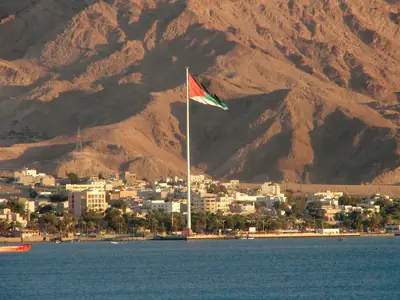
The city is about 330 kilometres south of Amman and remains Jordan’s only maritime outlet. Across the water are the lights of Eilat in Israel, while the Saudi coast lies a short drive away. For a wider introduction to the country, see the Jordan destination guide.
Aqaba Church
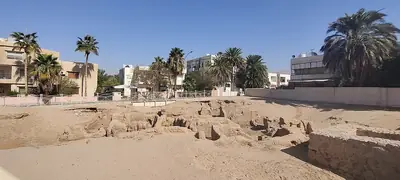
The remains of Aqaba Church are among the city’s most important archaeological sites. Excavated in 1998, the building is regarded as the world’s oldest known purpose-built Christian church.
Its first construction phase dates from between 293 and 303 CE, earlier than the Church of the Holy Sepulchre in Jerusalem and the Church of the Nativity in Bethlehem. The basilical plan had a central nave and side aisles, with mudbrick walls on stone foundations. Excavations also revealed oil lamps, pottery fragments and traces of red and black paint on white plaster.
Aqaba Archaeological Museum
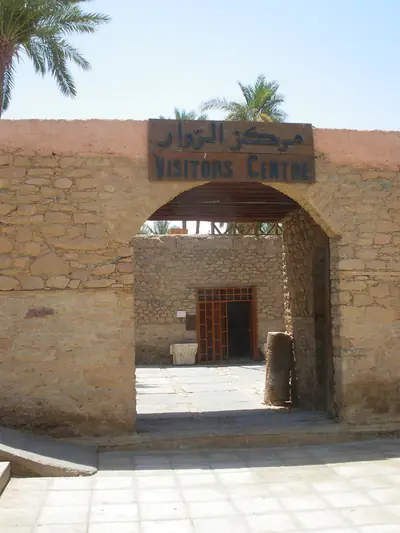
The Aqaba Archaeological Museum occupies the former private palace of Sharif Hussein bin Ali, the leader who launched the Arab Revolt in 1916. The museum opened in January 1990 and displays objects excavated from the ancient Islamic city of Aila.
Its collection covers the early Islamic, Umayyad, Abbasid and Fatimid periods, from the mid-seventh century to the early twelfth century. Among the highlights are a Kufic inscription of the Ayat al-Kursi verse, once placed above Aila’s eastern gate, and coins minted in Morocco alongside Fatimid dinars. Together, these objects show the reach of the trade networks that passed through Aqaba.
Aqaba Fortress
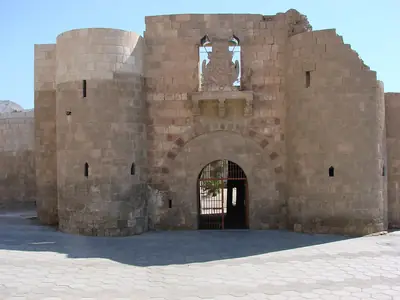
Aqaba Fortress stands beside the Red Sea and has served several roles over the centuries. It began as a fortified caravanserai, providing shelter for pilgrims and traders travelling towards Mecca and Medina. Its present form dates mainly from the Mamluk and Ottoman periods, particularly the sixteenth century.
Before the First World War, the building became an Ottoman military stronghold. In July 1917, Arab forces captured it during the Battle of Aqaba in a daring overland assault involving camel troops. The victory was a major moment in the Arab Revolt and transformed Aqaba into an important supply base. The fortress is also connected with Lawrence of Arabia, who rode from the captured stronghold to Cairo with news of the victory.
Sharif Hussein bin Ali Mosque
Between Aqaba’s old market area and the beach, the Sharif Hussein bin Ali Mosque is both a religious building and a central urban landmark. Its gardens, shaded seating areas and open courtyards provide a green space in the middle of the city, where people gather, pray and stroll.
The architecture draws on classical Islamic traditions. Its position near Al-Shata Street and Al-Ghandour Beach makes it a useful stop when walking between the market and the waterfront.
Aqaba’s Red Sea coastline
The Gulf of Aqaba is the eastern arm of the Red Sea and gives Jordan its only coastline. The area is known for coral reefs and marine species, making the water particularly important for diving and snorkeling.
Jordan’s coastal access was extended in 1965, when Jordan and Saudi Arabia agreed on a land swap. Jordan received twelve kilometres of Red Sea shoreline near Aqaba in exchange for 6,000 square kilometres of inland desert. The industrial port is about fifteen kilometres south of the beaches and city center, keeping the heavy port activity separate from the main coastal areas.
Aqaba Bird Observatory
The Aqaba Bird Observatory lies on a migration route between Europe, Asia and Africa. Established in 2004, it is managed by the Royal Society for the Conservation of Nature.
The site combines wetlands, wooded areas and desert habitats, creating different environments for migrating birds. Monitoring teams have recorded 271 species there, including 17 rare species observed during the last decade. More than a quarter of a million birds pass through during the two annual migration seasons, making spring and autumn especially significant for birdwatching.
Beyond the city: Wadi Rum and Jordan’s southern mountains
Aqaba also provides access to the dramatic landscapes of southern Jordan. Nearby Wadi Rum, known as the Valley of the Moon, is a desert valley of sandstone and granite covering more than 700 square kilometres. It has been a UNESCO World Heritage site since 2011, and its rock walls preserve prehistoric petroglyphs and inscriptions. Visitors come for guided tours, hiking and rock climbing.
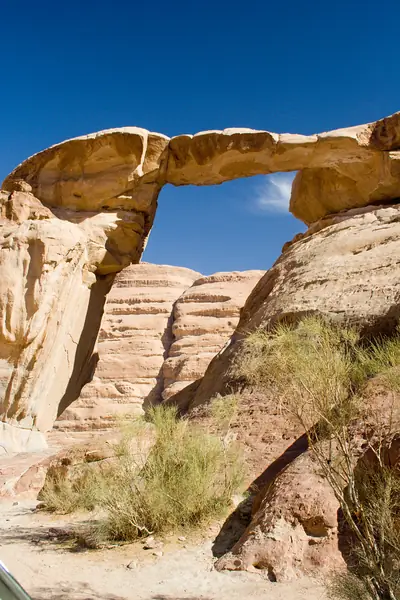
Jabal Umm Fruth Bridge
Jabal Umm Fruth Bridge is one of Wadi Rum’s striking natural formations. The sandstone and granite landscape has been shaped over a long geological history, leaving bridges and other rock structures across the desert valley.
Jabal Umm ad Dami
At 1,854 metres above sea level, Jabal Umm ad Dami is the highest mountain in Jordan. It stands in the Aqaba Governorate near the Saudi Arabian border, in the historic landscape of Wadi Rum.
The ascent takes about two hours and is not technically difficult, although some rocky sections require careful footing. At the summit, an astronomical observatory makes use of the clear desert skies. On a clear day, views extend across Wadi Rum towards the Saudi border.
Explore Aqaba with a self-guided audio tour
For a flexible way to discover the city, download Neywo and try its Aqaba self-guided walking tour. The app currently offers one walking tour:
- Aila to Aqaba: From the First Church to the Arab Revolt — 2.78 km, approximately 65 minutes, with 5 narrated stops.
The route connects Aqaba Church, the city of Aqaba, the Sharif Hussein bin Ali Mosque, the Aqaba Archaeological Museum and Aqaba Fortress. Each story plays as you reach the place, at your own pace, with no group and no schedule. It is a free walking tour Aqaba visitors can follow independently while the app explains the history around them.
Places with an audio guide in Aqaba
8 places in Aqaba with a Neywo audio guide. Each one starts telling its story as you reach it.



Self-guided tours in Aqaba
1 tour in Aqaba, free in the Neywo app. Each stop tells its story as you reach it.
- Walk
Aila to Aqaba: From the First Church to the Arab Revolt
Follow Jordan's only seaport through 1,700 years in an easy waterfront stroll. See the ruins of the world's oldest purpose-built church, look out over the Gulf toward Sinai, then visit the palace of Sharif Hussein, its museum of early Islamic Ayla and the Mamluk fortress where the 1917 Arab Revolt won its prize.
Aqaba Church · Aqaba · Sharif Hussein bin Ali Mosque, Aqaba · Aqaba Archaeological Museum · Aqaba Fortress
Open this tour: Aila to Aqaba: From the First Church to the Arab Revolt
Walk Aqaba with Neywo
Neywo turns Aqaba into a self-guided audio tour. Stories arrive as you reach the place they belong to, and the route reshapes when you wander off it.

