Things to Do in Chisinau, Moldova: Walking Guide
Things to Do in Chisinau: What to See in Moldova’s Capital
Looking for things to do in Chisinau? Moldova’s capital brings together Orthodox and Catholic cathedrals, Jewish heritage, museums, historic mansions and broad civic spaces shaped by several different eras. Neywo’s free audio guide for Chisinau covers 102 narrated places, helping you discover the city while you walk.
Chisinau is a rewarding destination for travellers interested in architecture and history. Its central streets connect national monuments with quieter religious sites, museums and reminders of the city’s changing communities. As the capital of Moldova, it is also a useful starting point for understanding the country’s cultural heritage.
What to See in Chisinau
The following places bring together some of the most important things to see in Chisinau, from the city’s central cathedral square to its museums and historic religious buildings.
Nativity of Christ Cathedral and Cathedral Park
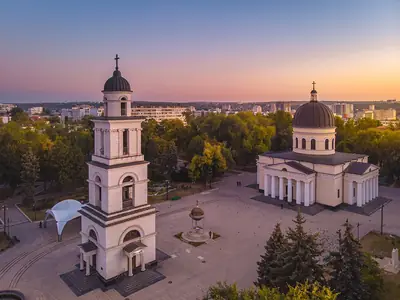
The Nativity of Christ Cathedral is the main cathedral of the Moldovan Orthodox Church and one of Chisinau’s most important landmarks. Built between 1830 and 1836 to a design by Avraam Melnikov, it follows the Russian classical style.
The central structure is crowned by a large dome on a round drum with eight tall windows. Four six-column porticos mark the façades, giving the building a balanced and monumental appearance. The cathedral was badly damaged by bombing in June 1941, and restoration continued into the early 1950s. Its original parabolic dome was replaced with a spherical one during that restoration.
The cathedral forms part of a historic and architectural ensemble with Cathedral Park, the Great National Assembly Square and the Triumphal Arch.
Triumphal Arch
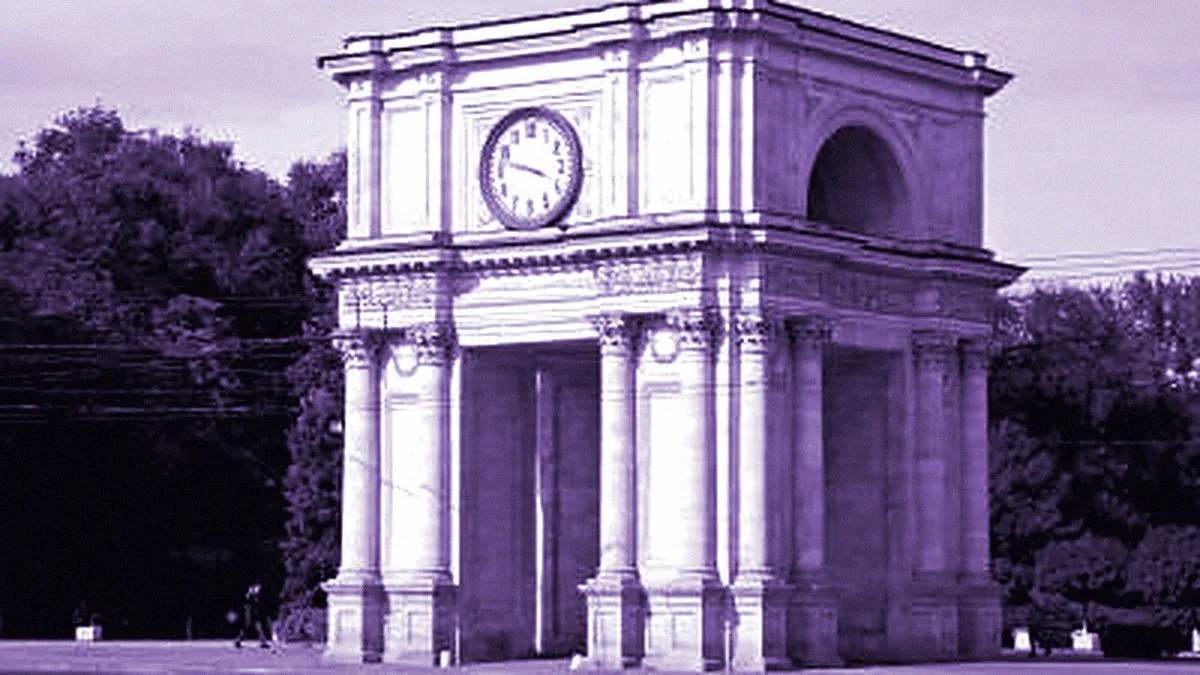
The Triumphal Arch stands in the city centre, facing the Great National Assembly Square and forming part of the cathedral ensemble. Built in the 1840s, it commemorates the Russian army’s victory in the Russo-Turkish War of 1828 and 1829.
The compact, square-shaped monument rises 13 metres and has two levels. Corinthian columns decorate its four lower piers, while a clock on one side chimes every fifteen minutes. Inside, a 6.4-tonne bell was cast from metal taken from Turkish cannons captured during the war.
The monument has also been known as the Holy Gate and, during the Soviet period, the Arch of Victory.
Stephen the Great Monument
In Chisinau’s Public Garden, the Stephen the Great Monument honours Ștefan cel Mare, the Moldavian ruler who lived from 1457 to 1504. The bronze statue commemorates his successful defence of the country against Turkish invasion and is considered one of Moldova’s national symbols.
The monument has had a complicated history. After Moldova joined the Romanian Kingdom in 1918, it was intended to replace a statue of the Russian Emperor Alexander the Second. It was moved several times between Chisinau and Romania before finally returning to its original place in 1989.
Water Tower of Chisinau and the City History Museum
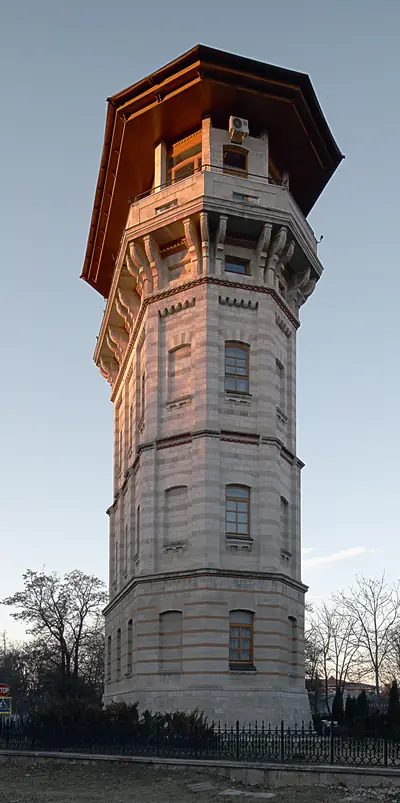
The Water Tower of Chisinau, also known as Castelul de Apă, was built at the end of the nineteenth century as part of the city’s water system. Designed by Alexander Bernardazzi, it stood at what was then the highest point in the city.
Its load-bearing walls are made from local shell rock and brick, reaching about two metres in thickness at the base. The original wooden upper section was destroyed by an earthquake and rebuilt between 1980 and 1983. The tower rises 22 metres to its crowning cornice, and its original spiral metal staircase has survived.
The tower was also the first home of the institution responsible for supplying drinking water to the city. It is now associated with the Muzeul de Istorie al Orașului Chișinău.
National Museum of History of Moldova
The National Museum of History of Moldova traces the country’s past through archaeology, historical objects, documents and works of art. Founded in 1983, it occupies a former educational building in central Chisinau.
Its ten exhibition halls cover archaeology and ancient history, the medieval period, the history of Bessarabia, contemporary history and the Treasury. A monument of the Roman she-wolf with Romulus and Remus stands at the entrance. Temporary exhibitions add new subjects to the permanent collection each year.
National Museum of Fine Arts
The National Museum of Fine Arts brings together Moldovan, European, Russian and Oriental art. Its collection follows the development of visual arts from the fifteenth century to the twenty-first, including painting, sculpture, graphic art and decorative and applied art.
The museum was founded in November 1939 by sculptor Alexandru Plămădeală and French painter Auguste Baillayre. Its building, designed by Alexander Bernardazzi in the mid-nineteenth century, is itself an architectural monument. Before becoming a museum, it served at different times as a school, gymnasium, hospital and warehouse.
National Museum of Ethnography and Natural History
Founded in October 1889, the National Museum of Ethnography and Natural History is the oldest currently functioning museum in Moldova. Its collections combine the natural world with the culture of Bessarabia, including fossils, animals, archaeology and local traditions.
The present building was designed by Vladimir Tsyganko and completed between 1903 and 1905. Its façade has a triangular pediment resting on two Doric columns. Since 1991, the museum has carried its current name, reflecting its two central themes: nature and culture.
Măzărache Church
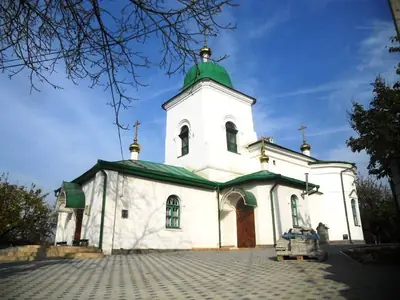
Măzărache Church is considered Chisinau’s oldest surviving building. Built in 1752 during the period of Moldavian rule, it is a monument of national importance and is also known as the Church of the Protection of the Mother of God.
Its modest form is associated with medieval Moldavian architecture. Today, the church belongs to the Old Believer Orthodox community, which received it in the 1960s. Its history also reflects the changing ecclesiastical jurisdictions that shaped religious life in the city.
Cathedral of Divine Providence
The Cathedral of Divine Providence is the cathedral of the Roman Catholic Diocese of Chisinau and a nationally important architectural monument. Built between 1840 and 1843 in the classical style, it is attributed to the Saint Petersburg architect Iosif Ivanovich Charlemagne.
Religious activity ceased after Soviet power arrived in 1944, and the church closed in 1963. The building was returned to the parish in 1989. It became the seat of the newly established Diocese of Chisinau in 2001, following restoration work completed between 2002 and 2004.
Synagogue of the Glaziers
Also known as Sinagoga Geamgiilor or the Central Synagogue, the Synagogue of the Glaziers was built between 1896 and 1898. Its eclectic façades, surviving interior wall paintings and rebuilt decorative elements reflect the building’s long history.
The synagogue was partly destroyed during the Second World War and rebuilt between 1946 and 1948 using the surviving walls and decorations. The complex includes a mikveh and a bakery where challah is made. Inside, the prayer hall contains a wooden Torah carved with classical motifs, while a balcony is reserved for women.
When other synagogues in the city were closed in 1964, this was the only one that continued to operate. It remained Chisinau’s sole legally active synagogue for more than forty years and is now administered by the Hasidic Chabad movement.
Former Synagogue with Retirement Home
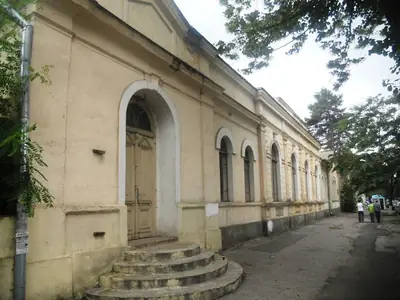
The ruined remains of the former Rabbi Tsirelson Synagogue, also called the Complex of the Former Synagogue with Retirement Home, offer a visible reminder of Chisinau’s Jewish heritage. The site is recognized as an architectural and historical monument.
The building was severely damaged by an earthquake. Its ruined state is now part of the site’s story, preserving a fragment of the city’s religious and community history.
Memorial House of Aleksandr Pushkin
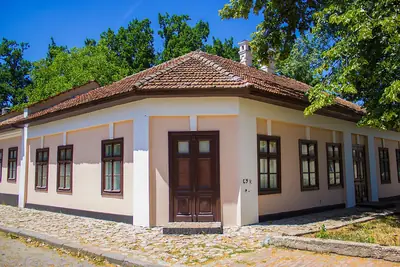
The Memorial House of Aleksandr Pushkin occupies the building where the poet lived when he first arrived in Chisinau. Pushkin reached the capital of tsarist Bessarabia on September 21, 1820, after being exiled there by the tsarist administration, and stayed in the house until the middle of November.
The building had previously been the inn and home of the merchant Naumov and later belonged to General Inzov. The museum’s exhibits explore Pushkin’s life and work during his years in Bessarabia, with prints, paintings, sculptures, decorative art and editions of works written during this period, including the first part of Eugene Onegin.
National Museum of Romanian Literature
The National Museum of Romanian Literature, also known as the Mihail Kogălniceanu National Museum of Literature, explores literary heritage through books, art and historical documents. Created in 1965 under the auspices of the Writers’ Union of Moldova, it now holds more than 230,000 items.
Art-Labyrinth and the former Zemstvo building
On Alexei Șciusev Street, the Muzeul Zemstvei preserves Chisinau’s history through its architecture. The nationally important building was first constructed as an orphanage and later became the administration of the Bessarabian Provincial Zemstvo.
It is listed in Moldova’s Register of Architectural Monuments under that former identity. The building also appears in Chisinau’s Register of Historical and Cultural Monuments.
National Dramatic Theatre Anton Chekhov
The National Dramatic Theatre Anton Chekhov, also known as the Anton Chekhov State Russian Drama Theatre, is one of Chisinau’s theatrical landmarks. It adds a performing-arts dimension to the city’s museums, churches and civic monuments.
Explore Chisinau with a Self-Guided Audio Tour
For a Chisinau self-guided walking tour, Neywo offers five walks, one bus route and one bike route. Together, they cover the city’s central monuments, museums, religious heritage and historic buildings:
- Stephen the Great Boulevard: Arch, Cathedral and Classics — 1.75 km, 78 minutes, 10 narrated stops
- Museums, a Roman Wolf and the Water Tower — 2.17 km, 93 minutes, 10 narrated stops
- Jewish, Armenian and Old Believer Chisinau — 3.4 km, 106 minutes, 9 narrated stops
- Cathedral Quarter and the Seat of Power — 1.74 km, 61 minutes, 7 narrated stops
- Mansions, a Greek Church and the Eminescu Theatre — 1.33 km, 52 minutes, 7 narrated stops
- Route A3: Along Stefan cel Mare Boulevard — 8.7 km, 37 minutes, 9 narrated stops by bus
- Stefan cel Mare Boulevard by Bike — 3.2 km, 16 minutes, 8 narrated stops
Download Neywo and explore Chisinau at your own pace. The app tells the story of each place as you reach it, with no group and no schedule. Narration is available in 11 languages, so you can turn a visit to Moldova’s capital into your own guided walk.
Places with an audio guide in Chisinau
8 places in Chisinau with a Neywo audio guide. Each one starts telling its story as you reach it.
Self-guided tours in Chisinau
7 tours in Chisinau, free in the Neywo app. Each stop tells its story as you reach it.
- Bike ride
Stefan cel Mare Boulevard by Bike
Ride the cycle lane along Chisinau's main boulevard from St. Nicholas church past Parliament, the Alley of Classics, the Triumphal Arch and City Hall to the Eminescu Theatre, then on to the Kotovsky statue. About 3 km, flat, through the capital's showpiece avenue.
St. Nicholas church in Chișinău · Transfiguration Church of Chișinău · Parliament of the Republic of Moldova · Alley of Classics · Triumphal Arch, Chișinău · Chișinău City Hall …
Open this tour: Stefan cel Mare Boulevard by Bike - Bus ride
Route A3: Along Stefan cel Mare Boulevard
A regular city bus that runs the length of the capital's main boulevard. Ride it past two turn-of-the-century churches, the Stephen the Great monument and the Triumphal Arch to the Organ Hall, then on past the Kotovsky statue and the Train of Pain memorial at the railway station to the twin towers called the Gates of Chisinau. A cheap way to see central Chisinau without walking.
St. Nicholas church in Chișinău · Transfiguration Church of Chișinău · M. Kligman's urban villa · Stephen the Great Monument · Triumphal Arch, Chișinău · Organ Hall of Chișinău …
Open this tour: Route A3: Along Stefan cel Mare Boulevard - Walk
Stephen the Great Boulevard: Arch, Cathedral and Classics
Walk the grand axis of Chisinau, from the Soviet-era Parliament shaped like an open book to the Triumphal Arch and its 6.4-tonne bell. Pass an open-air gallery of 28 writers' busts, the oldest park in the city, the bronze Stephen the Great, the square that has changed its symbols three times and the neoclassical Nativity Cathedral, then finish at the Italian Gothic City Hall and the concert hall that began as a bank.
Parliament of the Republic of Moldova · Alley of Classics · Ștefan cel Mare Central Park · Stephen the Great Monument · Bessarabia Governorate · Triumphal Arch, Chișinău …
Open this tour: Stephen the Great Boulevard: Arch, Cathedral and Classics - Walk
Museums, a Roman Wolf and the Water Tower
Chisinau's museum quarter in one loop: history and fine art beside a bronze she-wolf from Rome and the puppet theatre called Firefly, then Moldova's oldest museum with its giant dinotherium skeleton, the old Zemstvo building and the Bernardazzi water tower that still holds the city's history museum.
National Museum of History of Moldova · National Library of Moldova · National Museum of Fine Arts · Teatrul Republican de Păpuși „Licurici” · Capitoline Wolf, Chișinău · Palace of the Republic …
Open this tour: Museums, a Roman Wolf and the Water Tower - Walk
Jewish, Armenian and Old Believer Chisinau
Follow the city's layered communities, from Pushkin's exile house to the Holocaust memorial at the ghetto gate. Visit the Armenian church, Mazarache church (the oldest surviving building in Chisinau), the Orthodox Ascension cathedral, the ruins of Rabbi Tsirelson's synagogue, St. Haralambios and the Glaziers' Synagogue that stayed open under Soviet rule.
Memorial house of Aleksandr Pushkin, Chișinău · Monument of the victims of the Jewish ghetto in Chișinău · Armenian church "Saint Mary" of Chișinău · Măzărache Church · Cathedral of the Ascension of the Lord and funeral monuments · Complex of the former synagogue with retirement home, Chișinău …
Open this tour: Jewish, Armenian and Old Believer Chisinau - Walk
Cathedral Quarter and the Seat of Power
A short walk through Chisinau's political and religious centre. Start at the opera house, pass a neoclassical Catholic cathedral and the glass presidential palace that was stormed in 2009, then visit a rare neoclassical villa, the Parliament and two churches built at the turn of the 20th century, one of which was once a planetarium.
National Opera and Ballet Theatre of Moldova · Cathedral of Divine Providence, Chișinău · Presidential Palace in Chișinău · M. Kligman's urban villa · Parliament of the Republic of Moldova · Transfiguration Church of Chișinău …
Open this tour: Cathedral Quarter and the Seat of Power - Walk
Mansions, a Greek Church and the Eminescu Theatre
Leave the boulevard for the quieter streets to its south. Walk from the Soviet-era National Palace past the cathedral of Saint Teodora, the Greek church of Saint Pantaleon and the mansions of Chisinau's merchants on Mihai Eminescu Street, and end at the neoclassical theatre that carries the poet's name.
Nicolae Sulac National Palace · St. Teodora de la Sihla Church · Urban mansion of Pisarjevski · St. Pantaleon church in Chișinău · Building of the former Red Cross of Hîrbovăț monastery · Urban mansion of Inglezi …
Open this tour: Mansions, a Greek Church and the Eminescu Theatre
Walk Chisinau with Neywo
Neywo turns Chisinau into a self-guided audio tour. Stories arrive as you reach the place they belong to, and the route reshapes when you wander off it.

