Things to Do in Tiraspol, Moldova: Walking Guide
Things to Do in Tiraspol: What to See on a Self-Guided Walk
Looking for things to do in Tiraspol? The capital of Transnistria offers a distinctive journey through imperial history, Soviet memory, religious heritage and everyday city life. Its fortress, historic squares, churches, university and parks can be explored on foot, giving the city a strong sense of place. Neywo has a free audio guide for Tiraspol with 12 narrated places, available in 11 languages.
Tiraspol is in Moldova, whose capital, Chisinau, provides a contrasting urban experience elsewhere in the country. In Tiraspol, the story is especially visible in the streets and buildings: the city grew around an eighteenth-century fortress, while later landmarks reflect the region’s changing political and cultural history.
What to see in Tiraspol
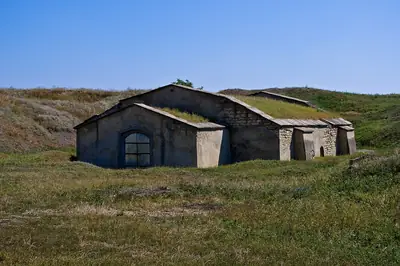
Tiraspol Fortress
The Tiraspol Fortress, also known as the Middle Fortress, is one of the most important eighteenth-century defensive structures on the left bank of the Dniester River. It was built between 1792 and 1793 under the command of Russian general Alexander Suvorov, with the design handled by French architect François Sainte de Wollant.
The city of Tiraspol grew around these fortress walls after being established by decree of Catherine the Great. This makes the fortress more than a historic monument: it is closely connected to the origins of the city itself.
Borodino Square
Borodino Square is the oldest square in Tiraspol and another place where the city’s early history is concentrated. At the beginning of the nineteenth century, the area formed part of the Tiraspol Fortress.
The square is intersected by Karl Liebknecht Street and bordered by Pravda Street, Raevski Lane and Krupskaia Street. The House of Officers of the Russian Army stands here, while the nearby fortress was also where the Decembrist and Russian poet Vladimir Raevski was held for four years.
The Old Believers Church
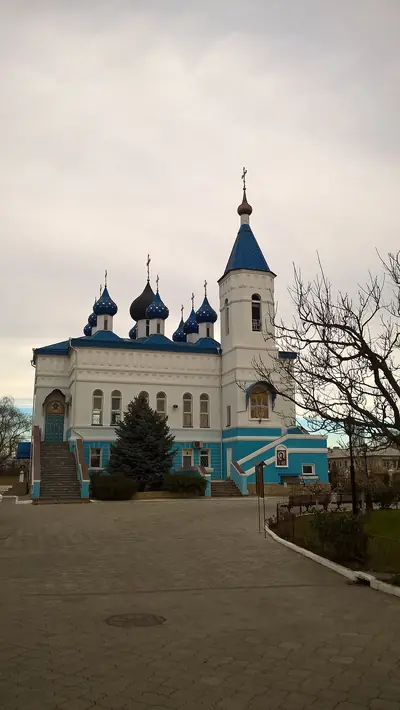
Dating from the nineteenth century, the Old Believers Church on Lunacharsky Street is an architectural monument of national importance in Moldova. It has quietly witnessed more than a century of Tiraspol’s history.
Its most notable distinction is that it was the only church in Tiraspol never to close during the Soviet years. It should not be confused with the Edinoverie Pokrovskaya Church, which was destroyed in 1934.
The October Cinema
The former October Cinema is a reminder of the Soviet period that shaped much of Tiraspol’s identity. Its name refers to the October Revolution of 1917, the event that brought the Bolsheviks to power and led to the creation of the Soviet Union.
The building offers a useful stop for understanding how political history entered everyday urban life. In Tiraspol, Soviet references are not confined to museums: they remain part of the city’s built environment.
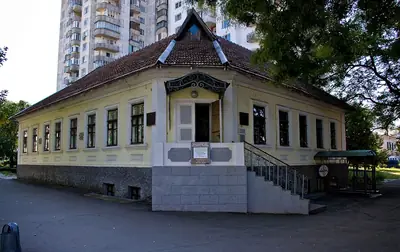
The Kotovsky Museum
The Kotovsky Museum is a military history museum dedicated to Red commander Grigory Kotovsky and the operations of his cavalry brigade in Moldova and Ukraine during the Civil War. It is described as the only museum of its kind focused on this subject.
The museum occupies the former Paris Hotel, a building with its own unusual story. Together, the collection and its setting make it one of Tiraspol’s significant historical landmarks.
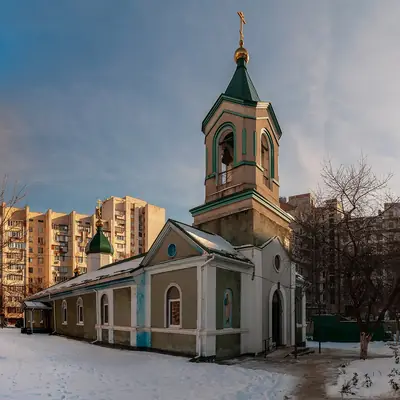
The Church of the Protection of the Theotokos
Known locally as Pokrovskaya Church, the Church of the Protection of the Theotokos belongs to the Tiraspol and Dubăsari Eparchy of the Moldovan Metropolis of the Russian Orthodox Church.
Before the Nativity Cathedral was completed, it served as Tiraspol’s main place of Orthodox worship. That former role explains its importance in the religious history of the city.
The Monastery of Presentation of Mary and Saint Pachomius
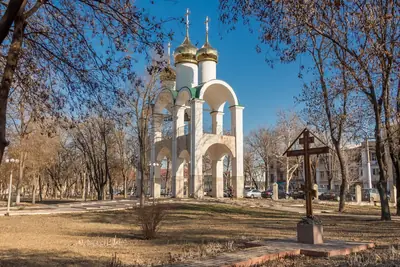
The Monastery of the Presentation of the Mother of God and Saint Pachomius is a women’s monastery located inside Pokrovsky Park, in the heart of Tiraspol. It is also known as the Vvedensko-Pachomievsky Monastery.
The monastery forms part of the Tiraspol Diocese of the Moldovan Orthodox Church, under the Moscow Patriarchate. Its setting in a city park places religious heritage alongside Tiraspol’s green public spaces.
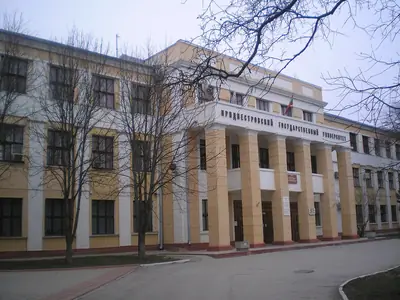
Shevchenko Transnistria State University
Shevchenko Transnistria State University is the largest higher education institution in Transnistria and the oldest university in Moldova. Its 12 buildings are spread across the city, and its students come from Transnistria and abroad.
The institution began in 1930 as an Institute of Public Education. It became the Moldavian Pedagogical Institute in 1933, was evacuated to Buguruslan in the Orenburg region from 1941 to 1944, and became the Tiraspol State Pedagogical Institute named after Taras Shevchenko in 1951. Its history reflects the changing educational and political institutions of the region.
State Drama Theatre Nadejda Aronetskaya
The State Drama Theatre Nadejda Aronetskaya is one of the oldest theatres in Moldova and a historical and architectural monument of national importance.
It opened in the early 1930s, when Tiraspol was the capital of the Moldavian Autonomous Soviet Socialist Republic. Beginning as a theatre studio, it later developed into a city drama theatre and then a republican drama and comedy theatre.
Victory Park
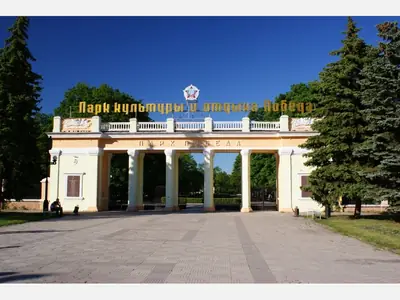
Victory Park is Tiraspol’s main park of culture and recreation. Locals sometimes call it Jungle Park, and it has been a popular meeting place since 1947.
The park covers 15 hectares, offering a large green space in the centre of the city. It has long served as a place for residents and visitors to relax away from the formal avenues and historical monuments.
De Wollant Square
De Wollant Square is a small city park in central Tiraspol, directly opposite the monument to Alexander Suvorov. It is named after François Sainte de Wollant, the French architect associated with the design of the Tiraspol Fortress.
The square connects the city’s present-day public space with its eighteenth-century origins, when the fortress helped shape the settlement that became Tiraspol.
The Moldavian Autonomous Soviet Socialist Republic
Tiraspol also makes more sense when viewed through the history of the Moldavian Autonomous Soviet Socialist Republic. This autonomous republic existed within the Ukrainian Soviet Socialist Republic from October 12, 1924, to August 2, 1940.
It covered the left-bank part of modern Moldova—most of today’s Transnistria—as well as districts now belonging to Ukraine’s Odesa region. Its creation was connected to Bolshevik nationalities policy after Bessarabia was lost to Romania in 1918. The republic was first called the Autonomous Moldavian Soviet Socialist Republic and adopted its better-known name with the 1936 Soviet Constitution.
Explore Tiraspol with Neywo
Neywo’s free Tiraspol audio guide includes 12 narrated places and two walking tours. Each story plays as you reach the place, at your own pace, with no group and no schedule. The narration is available in 11 languages.
The first route, Suvorov’s Fortress to the Kotovsky Museum: Imperial Tiraspol, covers 5 km in 105 minutes and includes five narrated stops: Tiraspol Fortress, Borodino Square, the Old Believers Church, the former October Cinema and the Kotovsky Museum.
The second, Cloister, Campus and Stage: Tiraspol’s Green Eastern Side, covers 1.88 km in 47 minutes and includes four stops: the Monastery of Presentation of Mary and Saint Pachomius, Shevchenko Transnistria State University, the State Drama Theatre Nadejda Aronetskaya and Victory Park.
Download Neywo and turn your visit into a Tiraspol self-guided walking tour: the app tells the story of each place as you arrive, so you can explore independently and follow the city’s history at your own pace. Tiraspol is part of Moldova, but its fortress, Soviet landmarks and religious buildings give it an atmosphere all its own.
Places with an audio guide in Tiraspol
8 places in Tiraspol with a Neywo audio guide. Each one starts telling its story as you reach it.

Self-guided tours in Tiraspol
1 tour in Tiraspol, free in the Neywo app. Each stop tells its story as you reach it.
- Walk
Cloister, Campus and Stage: Tiraspol's Green Eastern Side
A quieter walk through the eastern half of Tiraspol: a women's monastery inside Pokrovsky Park, the university that is the oldest in Moldova, the drama theatre that dates to the republic's first capital years, and finally the leafy paths of Victory Park, known locally as Jungle Park.
Monastery of Presentation of Mary and st. Pachomius · Shevchenko Transnistria State University · State Drama Theatre Nadejda Aronetskaya · Victory Park, Tiraspol
Open this tour: Cloister, Campus and Stage: Tiraspol's Green Eastern Side
Walk Tiraspol with Neywo
Neywo turns Tiraspol into a self-guided audio tour. Stories arrive as you reach the place they belong to, and the route reshapes when you wander off it.

