What to See in Rotorua, New Zealand: Free Audio Guide
Things to do in Rotorua: what to see in New Zealand’s geothermal and cultural centre
Wondering what to do in Rotorua? Set on the southern shores of Lake Rotorua in New Zealand’s Bay of Plenty, the city brings together powerful geothermal landscapes, Māori heritage and a long history as a visitor destination. Its museums, memorials, churches, sculptures and nearby volcanic features offer different ways to understand the character of the region. Neywo has a free audio guide for Rotorua with 12 narrated places.
What to see in Rotorua
Rotorua’s identity has been shaped by two forces: geothermal activity and Māori culture. Te Arawa Māori settled here in the fourteenth century, and the people who became Ngāti Whakaue established a pā at Ohinemutu. The city later developed as a spa and tourism destination because of its geothermal activity and surrounding landscape.
Rotorua Museum and the Government Gardens
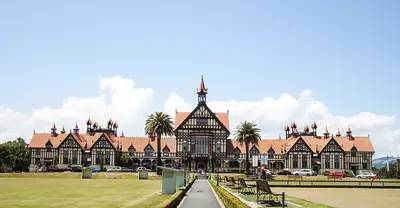
Rotorua Museum, also known as Te Whare Taonga o Te Arawa, stands in the Government Gardens near the city centre. The museum and art gallery is dedicated to the art, culture and heritage of Rotorua and wider New Zealand.
The building has been closed since 2016 after damage caused by the Kaikōura earthquake. As it is listed by Heritage New Zealand as a Category One Historic Place, a strengthening and restoration project is underway. Even while the museum is closed, its setting in the Government Gardens forms part of a central Rotorua walk.
Te Hāhi o te Whakapono / St Faith’s Anglican Church Ohinemutu
In Ohinemutu, Te Hāhi o te Whakapono, also known as St Faith’s Anglican Church, is one of Rotorua’s notable places of worship. The church is part of an area closely connected with the city’s Māori history and the early settlement of Te Arawa and Ngāti Whakaue.
Jean Batten Memorial
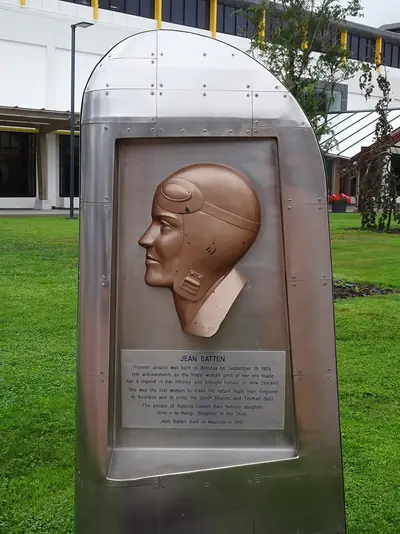
Jean Batten Square contains a memorial to Jean Batten, the pioneer aviator born in Rotorua. Created by Hamilton artist Marshall Watt, the memorial was gifted to the Rotorua Museum in 1994 and later installed in the park on Arawa Street.
Its design turns flight into a public monument: a steel aeroplane wing carries a bronze relief of Jean Batten’s head. The result is a simple, distinctive tribute to her aviation career.
Sir Howard Morrison Performing Arts Centre
The Sir Howard Morrison Performing Arts Centre is a Rotorua venue dedicated to live artistic performances. It adds a cultural dimension to the city’s attractions, alongside its museums, historic places and Māori heritage sites.
Wylie Memorial
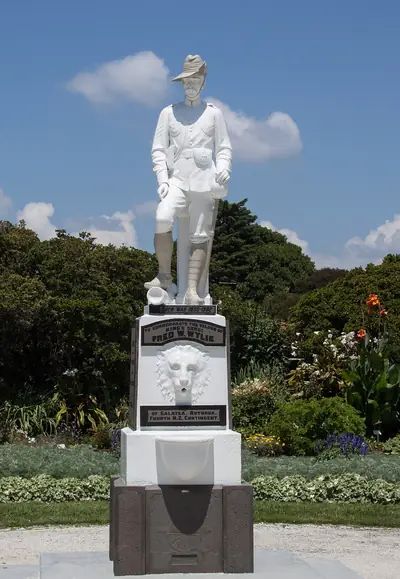
The Wylie Memorial, also known as the Rotorua South African War memorial, is another point of interest in the city. It provides a reminder of the historical memorials found among Rotorua’s more prominent cultural and geothermal attractions.
Waitūkei sculpture
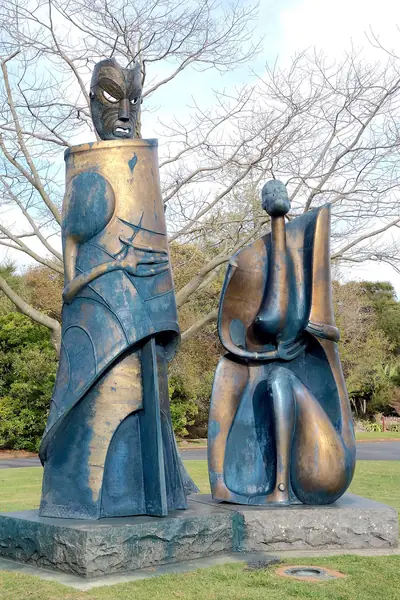
The Waitūkei sculpture is another public artwork to notice while exploring Rotorua. Its place on the city route makes it one of several smaller landmarks that can be discovered on foot between the better-known gardens, churches and civic attractions.
Te Ahi Tupua
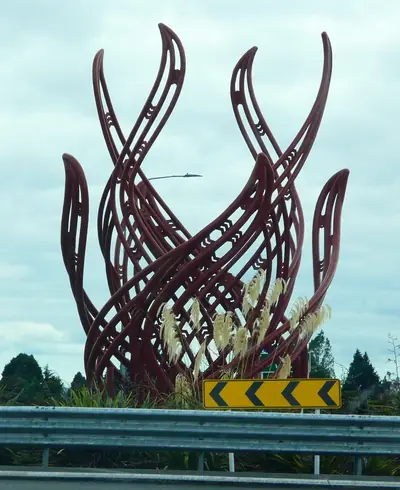
At a Rotorua roundabout, the twelve-metre sculpture Te Ahi Tupua creates a striking landmark. Also known as the Hemo Gorge Gateway, its name means “The Eternal Fire”.
Created by the New Zealand Māori Arts and Crafts Institute, the sculpture takes inspiration from the nearby Pōhutu Geyser. Its story brings together Ngātoroirangi, connections with other tribal groups and manaakitanga, the Māori value of hospitality. Work began in 2015, but installation was delayed until 2020.
Saint Mary of the Cross MacKillop Church
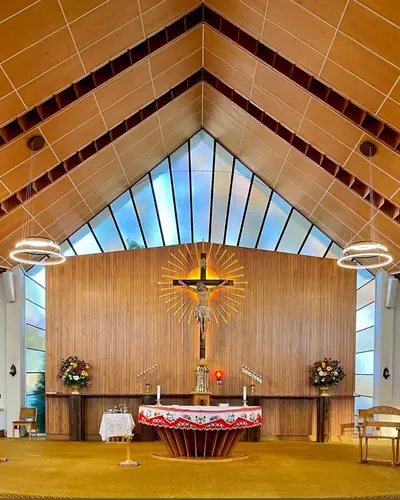
Saint Mary of the Cross MacKillop Church is another local place of worship in Rotorua. It offers a quieter point of interest among the city’s public art, memorials and cultural venues.
Whakarewarewa Catholic Church
Whakarewarewa Catholic Church is a further church building to encounter in Rotorua. Like the other places of worship around the city, it contributes to the varied character of the urban landscape.
Rotorua’s volcanic landscape
Geothermal activity is central to Rotorua’s identity and to the wider landscape of the New Zealand North Island. The city’s connection with volcanic forces can be seen especially clearly at Mount Tarawera and Champagne Pool.
Mount Tarawera
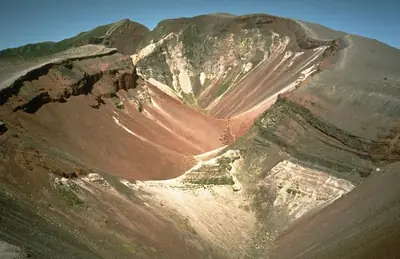
Mount Tarawera lies about 24 kilometres southeast of Rotorua and rises to 1,111 metres within the still-volcanically-active Ōkataina Caldera. The mountain consists of several rhyolitic lava domes, including Ruawahia Dome, Tarawera Dome and Wahanga Dome.
A powerful explosive basaltic eruption in 1886 split Mount Tarawera down the middle. Fissures extend for about 17 kilometres from northeast to southwest. The eruption was one of New Zealand’s largest historical eruptions and killed many people. It also created or substantially changed several nearby lakes, including Lakes Tarawera and Rotomahana, as well as Rerewhakaaitu, Ōkataina, Ōkareka, Tikitapu, also called Blue Lake, and Rotokākahi, also called Green Lake.
The eruption also destroyed the Pink and White Terraces, with which Rotorua was once closely associated.
Champagne Pool
Champagne Pool is one of the prominent geothermal features of the Waiotapu geothermal area. Carbon dioxide rises through the hot water in abundant bubbles, creating the appearance suggested by its name.
The hot spring formed about 900 years ago in a hydrothermal eruption. Its crater measures about 65 metres across and reaches a maximum depth of around 62 metres, containing an estimated 50,000 cubic metres of geothermal fluid.
Explore Rotorua with a self-guided audio tour
For a Rotorua self-guided walking tour, Neywo’s walk Wings, Warriors and Waters: Rotorua’s Government Gardens covers 1.99 km in 58 minutes and includes six narrated stops. The route visits Te Hāhi o te Whakapono / St Faith’s Anglican Church Ohinemutu, the Jean Batten Memorial, Sir Howard Morrison Performing Arts Centre, Wylie Memorial, Waitūkei sculpture and Rotorua Museum.
Neywo is a free Rotorua audio guide with 12 narrated places in total. The app tells the story of each place as you reach it, at your own pace, with no group and no schedule. Narration is available in 11 languages.
Download Neywo and explore Rotorua with an audio guide that lets you discover its gardens, memorials, churches, public art and cultural landmarks as you walk. When planning a wider trip through the region, you can also continue to Tauranga, Mount Maunganui or Matamata.
Places with an audio guide in Rotorua
8 places in Rotorua with a Neywo audio guide. Each one starts telling its story as you reach it.
Self-guided tours in Rotorua
1 tour in Rotorua, free in the Neywo app. Each stop tells its story as you reach it.
- Walk
Wings, Warriors and Waters: Rotorua's Government Gardens
A short, flat stroll around the lakefront heart of Rotorua. Start at the carved Ohinemutu church on the lake, pass a steel memorial shaped like an aeroplane wing for the pioneer aviator Jean Batten, a war memorial and a public sculpture, and end at the grand Tudor-style museum in the Government Gardens, home to over two thousand Māori taonga.
Te Hāhi o te Whakapono / St Faith's Anglican Church Ohinemutu · Jean Batten Memorial · Sir Howard Morrison Performing Arts Centre · Wylie Memorial · Waitūkei sculpture · Rotorua Museum
Open this tour: Wings, Warriors and Waters: Rotorua's Government Gardens
Walk Rotorua with Neywo
Neywo turns Rotorua into a self-guided audio tour. Stories arrive as you reach the place they belong to, and the route reshapes when you wander off it.

