Things to Do in Russell, New Zealand: Walking Guide
Things to Do in Russell, New Zealand
Russell is a historic seaside settlement in New Zealand’s Bay of Islands, known to Māori as Kororāreka. Its heritage sites reveal a past shaped by Māori history, maritime activity, missionary work and early colonial government, while the waterfront offers a peaceful setting today. Neywo has a free audio guide for Russell with 20 narrated places, available in 11 languages.
What to See in Russell
Christ Church
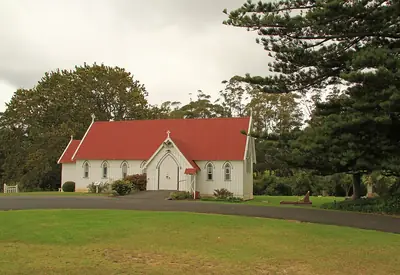
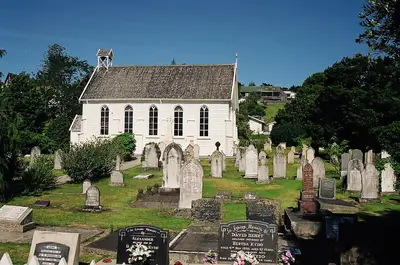
Christ Church, also known by its Māori name, Te Whare Karakia o Kororareka, is one of Russell’s most important historic buildings. Built in 1835 by Gilbert Mair under the supervision of Charles Baker, it is recognised as New Zealand’s oldest surviving church.
The original services were held in both English and Māori. Heritage New Zealand registered Christ Church as registration number one on 24 November 1983, with a Category One listing. The church remains a significant link with Russell’s early history and the beginnings of Anglicanism in the country.
Russell Museum
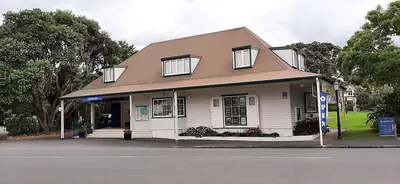
The Russell Museum offers an opportunity to explore the local history of Russell, New Zealand. It is one of the places to include when discovering the town’s heritage and its changing role in the Bay of Islands.
Russell’s historic centre and waterfront
Russell’s compact centre is well suited to exploring on foot. Historic buildings, cafés and sailing vessels line the waterfront, with calm views across the water. The atmosphere today is peaceful, but the settlement once had a very different reputation.
Known as Kororāreka, Russell attracted whalers, traders and visiting ships during the early 19th century. As maritime traffic grew, sailors came ashore for entertainment, and the town became associated with drinking, gambling and disorder. It eventually gained the nickname “the hell hole of the Pacific”.
Russell later became New Zealand’s first capital. Its waterfront and heritage buildings make that complex history especially visible.
Historic places around the Bay of Islands
Several important sites near Russell help explain the wider history of Northland, also known in Māori as Te Tai Tokerau. The region occupies the northernmost part of New Zealand’s North Island and includes Whangārei, the Far North District and the Kaipara District.
Treaty House and Waitangi
Treaty House, or Whare Tiriti, was the former home of James Busby, the British Resident in New Zealand. The grounds are central to the country’s national story: the Declaration of the Independence of New Zealand was signed there in 1835, followed by the signing of the Treaty of Waitangi on 6 February 1840.
The house and grounds remained privately owned until 1932, when Governor-General Viscount Bledisloe purchased them and donated them to the nation. The site became a national reserve in 1934.
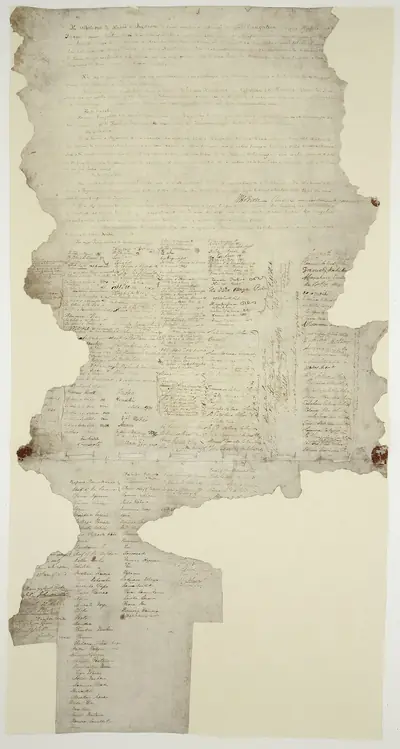
The nearby Te Rau Aroha is associated with the Treaty of Waitangi, known in Māori as Te Tiriti o Waitangi. The first signing brought Captain William Hobson, acting for the British Crown, together with Māori chiefs, or rangatira. The treaty was written and translated before copies were taken around New Zealand for further signatures. Its meaning, particularly the question of whether Māori leaders ceded sovereignty to the Crown, remains an enduring part of New Zealand’s history.
Kerikeri Mission House
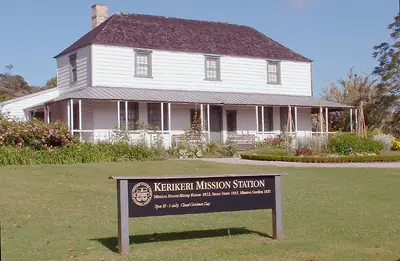
Also known as Kemp House, Kerikeri Mission House is the oldest surviving building in New Zealand. Built in 1822 in the Kerikeri Basin, it formed part of a Church Missionary Society station established near the Ngāpuhi pā.
The two-storey Georgian house was built with help from Māori workers and European specialists. Most of the structure uses kauri timber, while the original shingles came from Australia. A veranda was enlarged in 1843, and a bathroom was added behind the kitchen in the 1920s. The building has been restored to represent its appearance around 1843, although its present veranda and roof differ from the original design.
Together with the Stone Store, Mission House is open as a museum and was registered as New Zealand’s second historic monument.
Stone Store
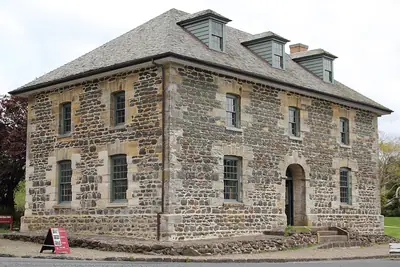
The Stone Store is New Zealand’s oldest undamaged stone building. Constructed between 1832 and 1836 for the Church Missionary Society, it was designed in the Georgian style by John Hobbs and served as a warehouse.
Its robust construction allowed it to survive after the Church Missionary Society declined. The building is now managed as a tourist attraction and is registered by Heritage New Zealand as a Category One building.
St. James Church
St. James Church dates from 1878 and replaced a larger chapel built in 1829. Its connection with the early establishment of Christianity and Anglicanism in New Zealand has earned it a Category One registration with Heritage New Zealand.
Williams Memorial Church of St Paul
Williams Memorial Church of St Paul, also known as Saint Paul’s Anglican Church, is another Anglican church to encounter while exploring the area. Its place in the local journey connects the surrounding settlements with the region’s religious heritage.
Other places to visit in Northland
Russell can also serve as a starting point for discovering places across New Zealand, including historic sites, viewpoints and natural landmarks in the north.
Cape Reinga / Te Rerenga Wairua
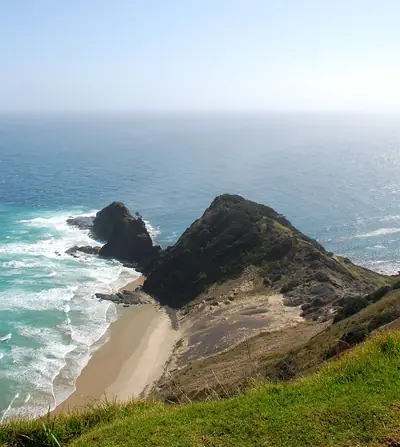
Cape Reinga, or Te Rerenga Wairua, stands at the northwesternmost tip of the Aupōuri Peninsula, at the northern end of New Zealand’s North Island. The cape is surrounded by inlets, bays and beaches. Hills rise towards the southeast, while the southwest is flatter; the highest nearby point reaches 201 metres and lies 1.4 kilometres south of Cape Reinga.
Tāne Mahuta
Tāne Mahuta, also known as the Lord or God of the Forest, is the largest living kauri tree known today and one of New Zealand’s most famous trees. It was identified in January 1924 while contractors surveyed the route of the present State Highway 12 through the forest, and was identified again by road workers in 1928.
Te Matua Ngahere
Te Matua Ngahere means “Father of the Forest”. This giant kauri in Waipoua Forest is not as tall or massive as Tāne Mahuta, but it is much stouter. Its girth measures just over sixteen metres, making it the stoutest known kauri and the largest-girth tree in New Zealand.
Its age cannot be reliably measured, and estimates range from about twelve hundred years to as much as four thousand. Severe winter storms in July 2007 caused major damage, bringing down a rata growing on the tree along with its central leader and several branches.
South Head
South Head is a viewpoint at Hokianga Harbour. The harbour itself is the main feature, offering a place to pause and take in the surrounding setting.
Hundertwasser Toilets
On Gillies Street in Kawakawa, the Hundertwasser Toilets are a functioning public facility and an internationally recognised work of art. Completed in 1999, they were designed by Friedensreich Hundertwasser, the architect and visual artist who lived in Kawakawa from 1973 until his death in 2000.
The design includes curved lines, irregular ceramic tiles, small sculptures, coloured glass and a tree incorporated into the structure. The attraction is described as New Zealand’s most photographed toilet.
Aperahama Church
Aperahama Church in Kaikohe is another church building to discover in the area. It forms part of the wider journey through Northland’s historic settlements.
Explore Russell with Neywo
There are no scheduled tours listed for Russell, but the Neywo app offers a free audio guide with 20 narrated places. Narration is available in 11 languages, and each story plays as you reach the place, at your own pace, with no group and no schedule.
Download Neywo and explore Russell while the app tells the story of each place as you arrive.
Places with an audio guide in Russell
8 places in Russell with a Neywo audio guide. Each one starts telling its story as you reach it.
Walk Russell with Neywo
Neywo turns Russell into a self-guided audio tour. Stories arrive as you reach the place they belong to, and the route reshapes when you wander off it.

