Visiting Managua, Nicaragua: Top Sights on Foot
Things to Do in Managua: What to See in Nicaragua’s Capital
Looking for things to do in Managua? Nicaragua’s capital is a lakeside city shaped by earthquakes, political history, cultural life and constant renewal. Its historic landmarks, museums, theatres and waterfront spaces offer a different experience from the colonial streets of León and Granada. Neywo has a free audio guide for Managua with 20 narrated places, available in 11 languages.
What to See in Managua
Old Cathedral of Managua
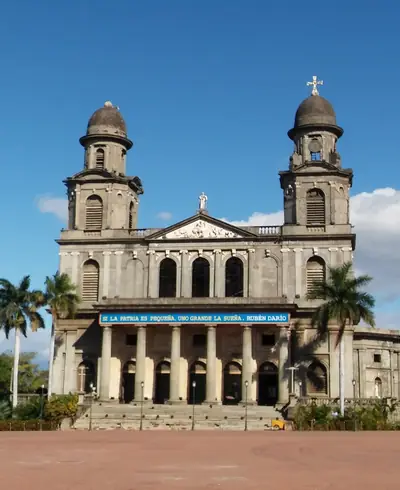
The Old Cathedral of Managua, also known in Spanish as Catedral de Santiago or Saint James’ Cathedral, is one of the city’s most important historic landmarks. This neoclassical church was designed by Belgian architects, with construction taking place between 1928 and 1938 under the supervision of Belgian engineer Pablo Dambach. The iron used for its core was shipped from Belgium.
Its structure survived the 1931 Nicaragua earthquake because only the iron framework had been erected at that point. The earthquake of December 23, 1972, caused much more serious damage. The cathedral was condemned afterward but preserved, leaving its damaged façade as a visible reminder of the earthquakes that transformed Managua. Its closure eventually led to the construction of the city’s New Cathedral.
National Palace of Culture
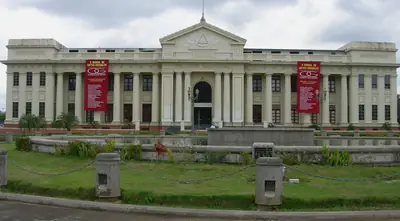
The National Palace of Culture stands on the south side of Plaza de la República, also known as Plaza de la Revolución. Built between 1936 and 1940, the neoclassical building is one of Managua’s oldest surviving structures.
It originally served as the seat of national government. Until 1979, Nicaragua’s National Congress met here, with both the Senate and Chamber of Deputies operating inside the building. Today, it houses the national museum, the national art gallery, the Julio Cortázar Museum of Contemporary Art and the Nicaraguan Institute of Culture.
Julio Cortázar Museum of Contemporary Art
Inside the National Palace of Culture, the Julio Cortázar Museum of Contemporary Art presents contemporary art from Nicaragua and other countries. The museum was inaugurated in 1987 and takes its name from the Argentine writer Julio Cortázar.
Its name also reflects Cortázar’s solidarity with the Sandinista Popular Revolution and the Nicaraguan people. For visitors interested in Managua’s cultural life, it adds a contemporary dimension to the historic palace.
Rubén Darío National Theatre
The Rubén Darío National Theatre is Nicaragua’s premier venue for performing arts and one of Managua’s central cultural landmarks. The idea for a theatre dedicated to the poet Rubén Darío emerged in 1964, with the aim of completing it for the centennial of his birth on January 18, 1967.
The main auditorium seats 1,200 people and hosts concerts, plays and major cultural events. A smaller experimental theatre, with 230 seats, is intended for more intimate productions and innovative work. The Crystal Room is another notable space, with views over Lake Managua and three chandeliers gifted by Spain.
Immaculate Conception Cathedral
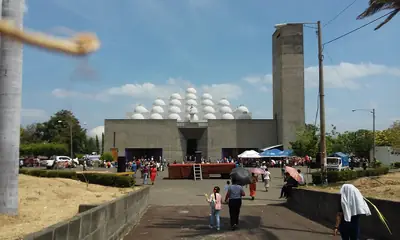
The Metropolitan Cathedral of the Immaculate Conception, commonly called Managua Cathedral or the New Cathedral, is the seat of the Archdiocese of Managua. Its unusual design combines eclectic, Arab and Romanesque elements, giving the building an appearance reminiscent of an Islamic mosque.
The cathedral is especially recognizable for its 63 domes. This number represented the parishes of the archdiocese when the building was constructed. Its history also includes a serious attack on July 31, 2020, when an unidentified person threw a bomb into the Chapel of the Blood of Christ, causing a fire. No deaths or injuries were reported.
La Sombra de Sandino
At the top of Loma de Tiscapa, La Sombra de Sandino rises as a large steel silhouette of General Augusto C. Sandino. The monument shows Sandino in profile, with his hat brim lowered as he looks across the city.
Sandino led Nicaragua’s nationalist resistance movement, and the monument has become one of Managua’s most recognizable symbols. It connects the city’s contemporary skyline with the country’s struggle for sovereignty.
Plaza de la Fe Juan Pablo II
Plaza de la Fe Juan Pablo II is a spacious public square beside Lake Xolotlán, also known as Lake Managua. It was inaugurated in 2000 as a symbol of national reconciliation and spirituality.
The square takes its name from Pope John Paul II’s visit to Nicaragua in 1996. Its lakeside setting makes it part of Managua’s wider relationship with the water and the public spaces along the shore.
Malecón
The Malecón is Managua’s lakeside promenade, stretching along the shore of Lake Xolotlán in the historic center. It was first built in 1944, creating a formal connection between the capital and the lake.
After decades of wear and earthquake damage, the promenade was completely revitalized in the 2010s. Today, it forms part of the city’s renewed waterfront and offers a way to experience Managua beside the lake.
Puerto Salvador Allende
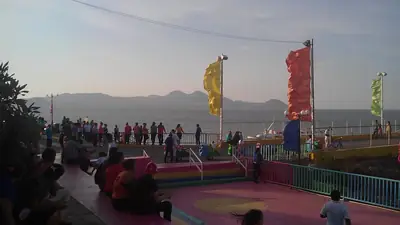
Puerto Salvador Allende is a waterfront recreational complex on the shore of Lake Xolotlán. It opened on June 26, 2008, after the National Port Company developed the site to bring new life to a neglected section of Managua’s lakefront.
The complex has expanded through four phases of development. Its broad promenade, green areas and spaces for sitting make it a gathering place for families, particularly around sunset. Lake Xolotlán, Nicaragua’s second-largest lake, stretches out beyond the waterfront.
Ancient Footprints of Acahualinca
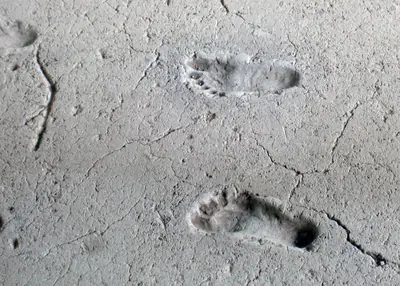
The Ancient Footprints of Acahualinca, or Huellas de Acahualinca, preserve evidence of prehistoric human presence near the southern shore of Lake Managua. The tracks were left in volcanic ash and mud by a group of up to 15 people, with the material later hardening and preserving their passage from roughly 2,120 years ago.
Although a popular story says the people were running from a volcanic eruption, the spacing of the tracks indicates that they were walking. Fossilized animal footprints cross the human tracks, showing that the animals were not travelling together with the group.
Other places to notice
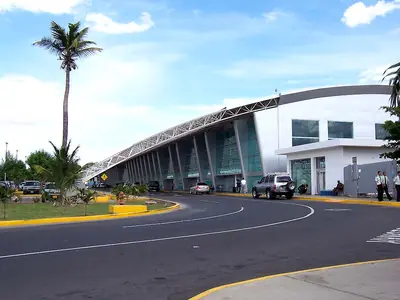
Managua also includes Parque Las Madres, a city park, and Iglesia Santa María de Guadalupe, a Catholic church in the municipality of Managua. The city’s main international gateway is Augusto C. Sandino International Airport, a joint civil and military facility in Distrito 6. It opened in 1968 as Las Mercedes Airport and takes its current name from Nicaraguan revolutionary Augusto César Sandino.
The wider Nicaragua context is also visible in Managua. The surrounding Managua Department connects the Pacific coast with Lake Managua and includes landscapes of city and countryside. Its history reaches back to the Nahua and Chorotega peoples and the pre-Columbian señorío of Tekwantepek.
Explore Managua with a self-guided audio tour
A Managua self-guided walking tour is a practical way to connect the city’s landmarks without following a group. Neywo’s walk, Managua’s Historic Heart: Earthquakes, Poets and the Lake, covers 5.19 km in around 115 minutes and includes seven narrated stops: Puerto Salvador Allende, the Rubén Darío National Theatre, August 22nd Plaza, the National Palace of Culture, the Old Cathedral of Managua, La Sombra de Sandino and the Immaculate Conception Cathedral.
Download Neywo and explore Managua at your own pace. The app tells the story of each place as you reach it, with no group and no schedule. With one walking tour and 20 narrated places in total, it lets you experience the capital as you move through its historic heart, cultural landmarks and lakeside spaces.
Places with an audio guide in Managua
8 places in Managua with a Neywo audio guide. Each one starts telling its story as you reach it.
Self-guided tours in Managua
1 tour in Managua, free in the Neywo app. Each stop tells its story as you reach it.
- Walk
Managua's Historic Heart: Earthquakes, Poets and the Lake
Start on the lakeside promenade of Puerto Salvador Allende and walk south through Managua's old civic centre: the theatre named for poet Rubén Darío, the neoclassical Palace of Culture and the Old Cathedral, stripped by the 1972 earthquake but still standing on its iron frame. Climb Tiscapa Hill to the steel silhouette of Sandino, then finish at the 63-domed New Cathedral.
Puerto Salvador Allende · Rubén Darío National Theatre · August 22nd Plaza · National Palace of Culture · Old Cathedral of Managua · La Sombra de Sandino …
Open this tour: Managua's Historic Heart: Earthquakes, Poets and the Lake
Walk Managua with Neywo
Neywo turns Managua into a self-guided audio tour. Stories arrive as you reach the place they belong to, and the route reshapes when you wander off it.