Visiting Muscat, Oman: Top Sights on Foot
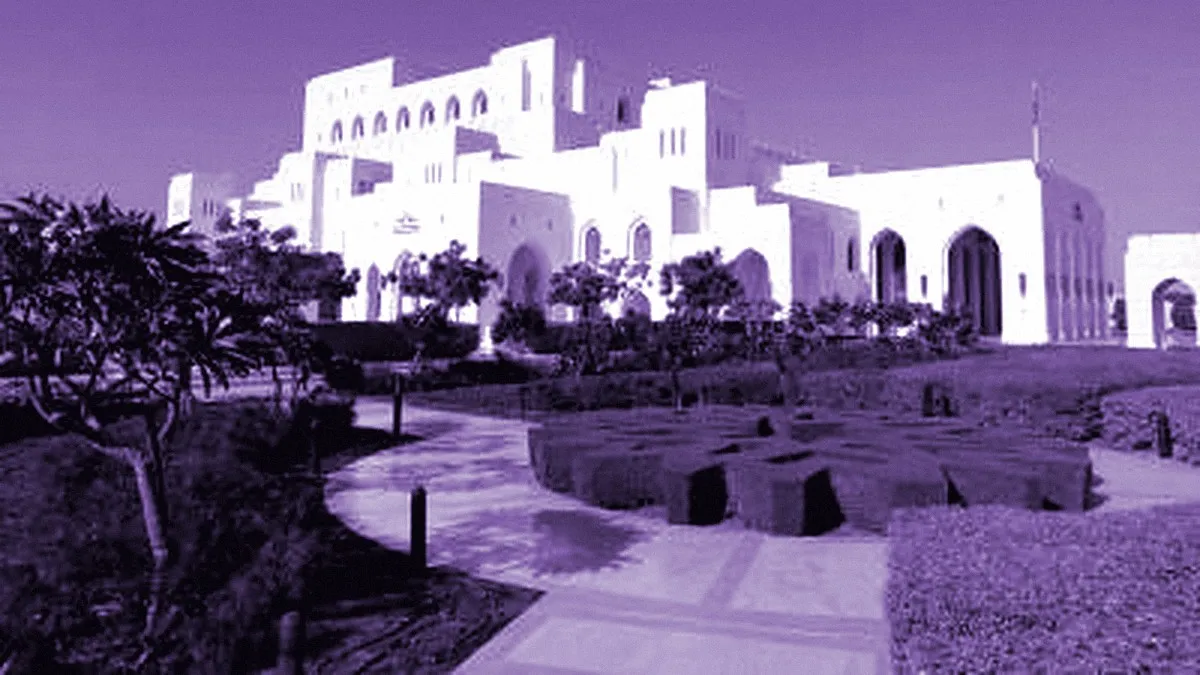
Things to Do in Muscat: A Self-Guided Walk Through Old Muscat
Looking for things to do in Muscat? Start in Old Muscat, where Portuguese forts, ceremonial palaces, museums and historic religious sites surround the city’s natural harbor. Muscat’s most memorable sights reveal Oman’s military history, maritime connections and cultural heritage within a landscape framed by rocky hills and the Gulf of Oman.
Neywo has a free audio guide for Muscat with 11 narrated places, available in 11 languages.
What to See in Muscat
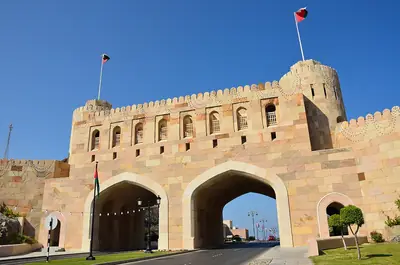
Muscat Gate Museum
The Muscat Gate Museum stands within the fortress walls above the modern Muscat Gate. Its exhibitions follow Oman’s history from Neolithic times to the present and explain how Muscat developed from a busy port into the capital.
The museum also explores the city’s water sources, including wells, underground channels and the falaj irrigation system. Displays on souqs, houses, mosques, harbors and forts provide useful context for exploring Old Muscat. Architectural details such as mosque niches, wooden doors and arches show the craftsmanship behind the city’s traditional buildings.
The museum was created in 1995 as a modern interpretation of the old Muscat Gate and opened to visitors in January 2001. The grand staircase leading to the entrance also provides a broad view from above the gate.
Bait Al Zubair Museum
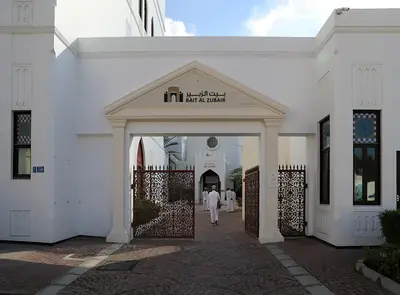
Bait Al Zubair Museum offers an intimate introduction to Omani heritage through the private collection of the Zubair family. Established in 1998, the cultural center brings together traditional weapons, jewelry, costumes, household objects, furniture, musical instruments, coins, stamps, documents, manuscripts and books.
Its collection of Omani weaponry is especially notable for its rare selection of khanjars. Exhibits on costume and jewelry offer further insight into Omani identity and everyday life. The complex includes six buildings, making the setting part of the visit, while maps, prints, photographs and satellite images extend the story to the Arabian Peninsula and East Africa.
The National Museum – Sultanate of Oman
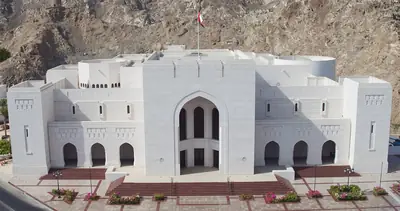
The National Museum of the Sultanate of Oman is the country’s flagship cultural institution. Its displays cover Oman’s heritage from the earliest human presence in the Oman Peninsula to the present day.
Fourteen galleries present more than 5,500 objects alongside 43 digital interactive displays. The collection includes prehistoric metal artifacts, silver objects, copper crafts, Omani vessels, and objects associated with the Al Busaidi dynasty and the rulers of Zanzibar.
The museum also includes a learning center, conservation facilities and laboratories, an audiovisual gallery and discovery areas for children. Its open-plan storage concept gives visitors a view of some of the processes involved in caring for artifacts. The museum was established by royal decree in 2013 and opened to the public in 2016.
Al Alam Palace
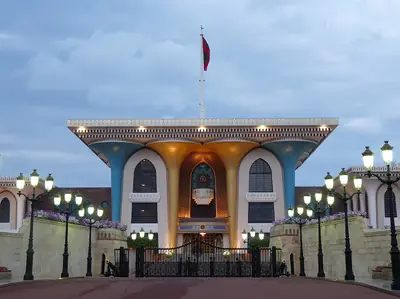
Al Alam Palace is the ceremonial palace of the Sultan of Oman and one of Old Muscat’s most recognizable landmarks. Its gold and blue façade stands out among the surrounding white buildings and traditional Omani architectural details.
The palace is used for official occasions, including welcoming foreign dignitaries and heads of state. It has a history of more than two centuries and was built under the supervision of Imam Sultan bin Ahmed. In 1972, it was reconstructed to serve as a royal residence.
The entrance features polished marble surfaces. Nearby government buildings continue the local architectural style, with white exteriors, crenelated rooftops and wooden balconies.
Fort Al-Mirani
Fort Al-Mirani overlooks the harbor of Old Muscat from a prominent waterfront position. It already existed before the Portuguese invasion, who rebuilt it in 1587. This reconstruction made it the first fort in Oman to use cannons, marking an important development in its defensive role.
Later additions included cannon-firing positions, artillery areas, storage for supplies and ammunition, a chapel, and quarters for the commander and guards. The fort remains one of the defining military landmarks of the historic harbor.
Fort Al Jalali
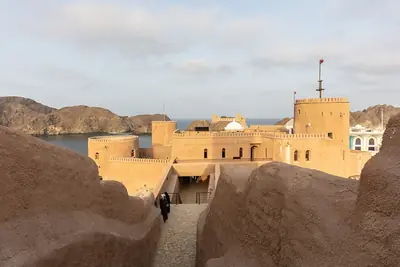
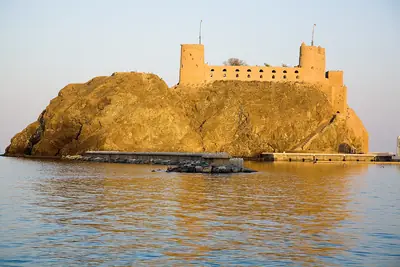
Across the harbor, Fort Al Jalali rises from the rocks above the Gulf of Oman. The Portuguese built it in the 1580s on the site of an earlier Omani fortress, after Muscat had been attacked twice by Ottoman forces. Omani forces captured the fort in 1650.
Its position allowed the harbor and city to be monitored from several directions. During the civil wars between 1718 and 1747, Persian forces captured it twice. At other times, it served as a refuge or a prison for a member of the royal family.
The fort was extensively rebuilt over the centuries. Its thick walls, towers and cannons show its defensive purpose, while the steep staircase to the entrance emphasizes the rocky setting. Today, it houses a museum dedicated to Omani culture and history, with traditional clothing, jewelry and weapons among its exhibits.
The Omani French Museum
Near Al Alam Palace, the Omani French Museum occupies Bait Faransa, an elegant white building that once served as the residence of the French Consul. The museum explores the historical relationship between Oman and France.
The building was presented by Sultan Faisal bin Turki to the French Consul in 1896. In 1992, Sultan Qaboos bin Said and French President François Mitterrand established the museum to preserve the history of Omani-French relations.
Collections include photographs of French diplomats, historical documents, maps, ship models, costumes, jewelry and furniture. The Hall of Maritime Navigation focuses on ships and seafaring, while a detailed map of Paris recalls the Sultan’s state visit in 1989.
Shiva Temple
The Shiva Temple, also known as Motishwar Mandir, is a Hindu temple complex near Al Alam Palace in the Muttrah area of Old Muscat. It is regarded as one of the oldest Hindu temples in the Middle East region.
The temple has particular importance for Muscat’s Hindu community. Maha Shivaratri is its busiest occasion, when more than twenty thousand Hindus visit the complex.
Riyam Park
Riyam Park provides a green retreat above the Muttrah Corniche. Its elevated position offers views over the Corniche, the Sea of Oman and Muttrah Harbour. Gardens, shaded benches, gazebos, fountains and picnic areas make it a place to pause between historic sights.
The park’s most striking landmark is the Incense Burner Monument, built in 1990 to mark Oman’s twentieth National Day. Illuminated at night, it symbolizes the country’s progress and cultural heritage.
Riyam Park also has historical significance: it was the site of a crucial peace treaty with the Portuguese in 1648. Families can find an amusement park, while coffee shops, food stalls, toy shops, swings and shaded seating encourage visitors to stay longer.
Bait Muzna Gallery
Bait Muzna Gallery brings modern art and cultural events to a carefully renovated three-story traditional home in Old Muscat. Founded in 2000 by Sayyida Susan Al-Said, it presents solo and group exhibitions by emerging and established Omani and Arab artists.
The former royal residence creates a distinctive setting for the artwork, combining an informal atmosphere with a strong sense of Omani cultural identity. The gallery has become a respected institution in Oman and across the Gulf Cooperation Council region.
Explore Muscat with a Free Audio Guide
Neywo’s Muscat self-guided walking tour covers 2.35 km in 67 minutes and includes six narrated stops. The walk, Old Muscat: Gates, Palace and Portuguese Forts, visits Muscat Gate Museum, Bait Al Zubair Museum, The National Museum – Sultanate of Oman, Al Alam Palace, Fort Al-Mirani and Fort Al Jalali.
The app tells the story of each place as you reach it, at your own pace, with no group and no schedule. Download Neywo to explore Muscat independently, and discover more of Oman or continue your journey to Nizwa.
Places with an audio guide in Muscat
7 places in Muscat with a Neywo audio guide. Each one starts telling its story as you reach it.

Self-guided tours in Muscat
1 tour in Muscat, free in the Neywo app. Each stop tells its story as you reach it.
- Walk
Old Muscat: Gates, Palace and Portuguese Forts
Walk the old harbour quarter of Oman's capital. Climb to the Muscat Gate Museum, step into a family-run heritage house, see the gold and blue Al Alam Palace, and finish beneath the two Portuguese forts that guard the bay.
Muscat Gate Museum · Bait al Zubair Museum · The National Museum - Sultanate of Oman · Al Alam Palace · Fort Al-Mirani · Fort Al Jalali
Open this tour: Old Muscat: Gates, Palace and Portuguese Forts
Walk Muscat with Neywo
Neywo turns Muscat into a self-guided audio tour. Stories arrive as you reach the place they belong to, and the route reshapes when you wander off it.

