Visiting Castries, Saint Lucia: Top Sights on Foot
Things to Do in Castries: What to See in Saint Lucia’s Capital
Castries is the capital and largest city of Saint Lucia, a compact Caribbean centre built around a sheltered harbour. Its grid-patterned streets, reclaimed land, commercial activity and historic buildings make it worth exploring on foot. Neywo offers a free audio guide for Castries, with 5 narrated places available in 11 languages.
What to See in Castries
Castries and its harbour
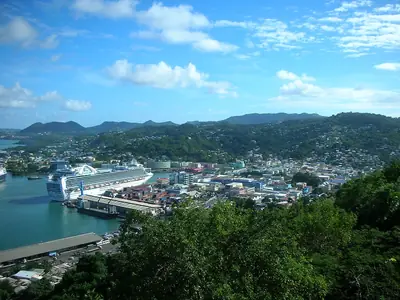
Castries is Saint Lucia’s commercial heart, and everyday life remains closely connected to the water. The city stands on a flood plain and includes land reclaimed from the sea, while its sheltered harbour receives cargo vessels, ferries and cruise ships.
The city was founded by the French in 1650 and was once known as Carenage. Its present name comes from Charles Eugène Gabriel de la Croix, Marquis de Castries. As you walk through the centre, the compact layout offers a glimpse of Saint Lucia’s government, commerce, harbour activity and cultural life.
Derek Walcott Square
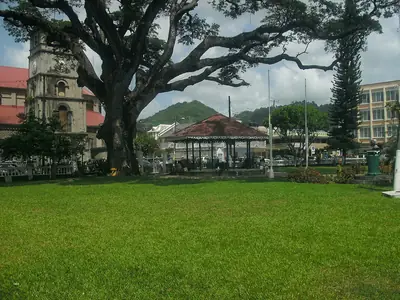
Derek Walcott Square is a green public square in the centre of Castries, offering a calm open space amid the city. The Cathedral of the Immaculate Conception and the Castries Central Library are located around it.
The square has had several names over the years. It was formerly known as Place d’Armes and Promenade Square, then became Columbus Square in 1892. In 1993, it was renamed Derek Walcott Square in honour of Nobel laureate Derek Walcott.
Cathedral Basilica of the Immaculate Conception
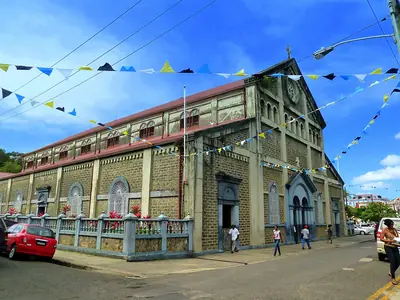
The Cathedral Basilica of the Immaculate Conception, usually called Castries Cathedral, is one of the city’s most prominent landmarks. It is the cathedral of the Roman Catholic Archdiocese of Castries and stands on a site used by earlier churches since the eighteenth century.
The present building was constructed between 1897 and 1931 and consecrated in 1931. Measuring 61 metres long and 30 metres wide, it is described as the largest church in the Caribbean.
The interior is especially distinctive. Biblical scenes cover the surfaces, while trompe-l’œil columns create the impression of architectural forms that have been painted rather than built. Saint Lucian artist Dunstan St. Omer created the murals in 1985, ahead of Pope John Paul the Second’s visit on 7 July 1986.
On 11 May 1999, one hundred years after the first Mass, Pope John Paul the Second granted the cathedral the additional title of Minor Basilica. Its dedication is to Mary under the title of the Immaculate Conception.
Government House on Morne Fortune
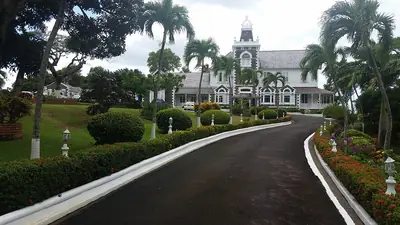
High above Castries, on the crest of Morne Fortune, Government House is the official residence of Saint Lucia’s governor-general. The present brick building dates from 1895, although the site has been used for Government Houses since the early nineteenth century.
The first Government House was destroyed by a hurricane in 1817 before construction was complete. A second wooden building was finished in 1819, but deteriorated and was abandoned in 1865. Government House was later moved to an unused barracks before the present building was begun in 1894 and completed the following year.
The building first served as the home and office of Saint Lucia’s Commissioners until 1958 and later housed Administrators. From 1967, it became the seat of the Governors of Saint Lucia; since independence in 1979, it has been used by the governor-general. It also hosts the Le Pavillon Royal Museum. Tours are available by appointment.
Look towards the Lesser Antilles
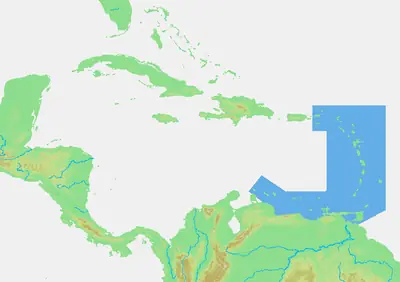
Castries also provides a setting for understanding the wider Caribbean. Across the sea lie the Lesser Antilles, an arc of islands along the eastern edge of the Caribbean Sea. The chain forms part of the West Indies and is distinct from the larger islands of the Greater Antilles.
Many of the islands belong to a partly volcanic arc created where the Caribbean Sea meets the Atlantic Ocean. Their formation is linked to subduction, as Atlantic plates moved beneath the Caribbean Plate. The island chain is divided into the Leeward Islands, the Windward Islands, and Trinidad and Tobago, names connected with the region’s prevailing northeast trade winds.
Explore Castries with Neywo
Neywo’s free Castries audio guide includes 5 narrated places. There are no scheduled walks or group tours: the app tells the story of each place as you reach it, at your own pace, with no group and no schedule. Choose your language from the 11 available and explore the capital while its history, buildings and harbour come to life around you.
Places with an audio guide in Castries
5 places in Castries with a Neywo audio guide. Each one starts telling its story as you reach it.
Walk Castries with Neywo
Neywo turns Castries into a self-guided audio tour. Stories arrive as you reach the place they belong to, and the route reshapes when you wander off it.

