Visiting Riyadh, Saudi Arabia: Top Sights on Foot
Things to Do in Riyadh: Historic Forts, Palaces and Modern Landmarks
Looking for things to do in Riyadh? Saudi Arabia’s capital brings together historic fortresses, royal residences, traditional Najdi architecture, museums and striking modern buildings. Its most important sights trace the city’s role in the formation of the Saudi state, while places such as the Kingdom Centre show its transformation into a modern metropolis.
Neywo has a free audio guide for Riyadh with 69 narrated places, available in 11 languages.
What to See in Riyadh
Masmak Fort
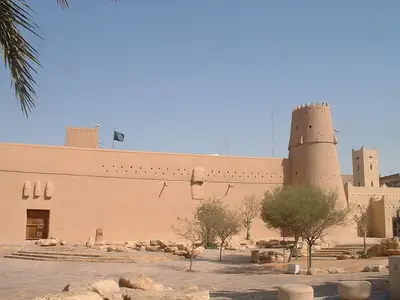
Masmak Fort, also known as Al Masmak Palace, is one of Riyadh’s defining historic landmarks. Built from clay and mud brick, it stands in the ad-Dirah neighborhood near Al Hukm Palace in the Qasr Al Hukm District.
The fortress was commissioned by Abdullah bin Faisal Al Saud in 1865 and completed in 1895. In 1902, it became the setting for the Battle of Riyadh, an event that began the process leading to the unification of Saudi Arabia. The former palace was converted into a public museum in 1995, making it an especially useful place to start learning about Riyadh’s history.
At-Turaif District in Diriyah
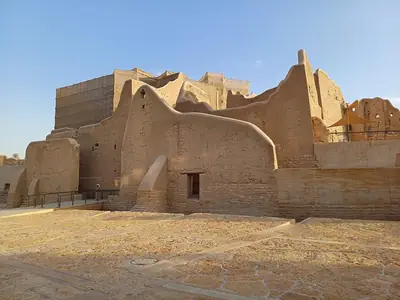
North-west of Riyadh, At-Turaif District preserves the remains of the original home of the House of Saud and the first capital of the early Saudi kingdom. At-Turaif served as the country’s first capital from 1727 until the Ottoman conquest in 1818.
Founded in the fifteenth century, the district contains the remains of palaces and a city built beside the Diriyah oasis. Its mud-brick buildings are important examples of Najdi architecture. Diriyah became a UNESCO World Heritage Site in 2010, recognizing the area’s historical and architectural value.
The district is part of the story of the First Saudi State, whose capital was Diriyah before Riyadh became the center of government in 1824. To place the site in its wider setting, you can also explore the history of Saudi Arabia.
Murabba Palace
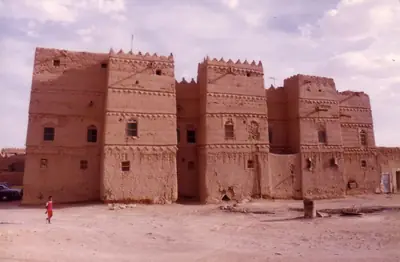
Murabba Palace stands in Riyadh’s Al Murabba neighborhood within the King Abdulaziz Historical Center. Built in 1936 and 1937, it was among the first buildings constructed outside the walls of the old city.
From 1938 until his death in 1953, the palace was the main residence and official workplace of King Abdulaziz ibn Saud. Its name means “Square Palace”, referring to the square form associated with the complex.
Today, the restored palace functions as a museum. Exhibits include documents and photographs related to King Abdulaziz, his life and the formation of the Kingdom of Saudi Arabia. The main diwan has been arranged as a living museum, showing how the palace served both as a home and as a place of administration. The palace opened to the public as a museum in 1999.
King Abdulaziz Mosque
Beside Murabba Palace and the National Museum Park, the King Abdulaziz Mosque forms part of the same historic setting. It was first built in the 1940s, around the time of the palace’s construction.
The original building was later removed and rebuilt by the Royal Commission for Riyadh City using compressed earth. This construction method connects the mosque with traditional building practices. The mosque also has a place in modern Saudi history: funeral prayers for King Faisal bin Abdulaziz were held here in 1975 after his assassination.
Imam Turki bin Abdullah Mosque
Imam Turki bin Abdullah Mosque is one of Riyadh’s important religious landmarks. It contributes to the historic character of the city center and reflects the central role of mosques in Riyadh’s cultural landscape.
The mosque is included in Neywo’s walks through the historic center, alongside Masmak Fort, Deera Square and the Palace of Government.
Saqer Aljazirah Aviation Museum
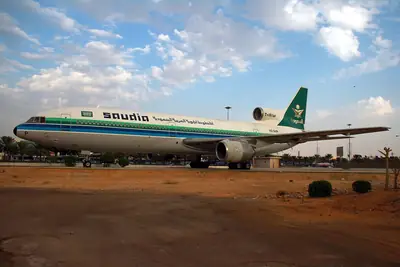
The Saqer Aljazirah Aviation Museum, also known as the Royal Saudi Air Force Museum, follows the development of Saudi aviation from its earliest period to modern operations. It was established in 1999 to mark the centenary of the recapture of Riyadh.
The museum combines indoor galleries with an outdoor aircraft display. Full-size aircraft include a Lockheed L-1011 Tristar formerly operated by Saudia, a C-130 Hercules, Tornado ADV and IDS aircraft, and a Boeing 707. The Tristar can also be seen from the East Ring Road, where it serves as a gate guard.
Inside, the collections include aircraft, flight suits, weapons, engines, radar systems, photographs and historical documents. Flight simulators recreate aircraft such as the F-15 and Typhoon.
Kingdom Centre
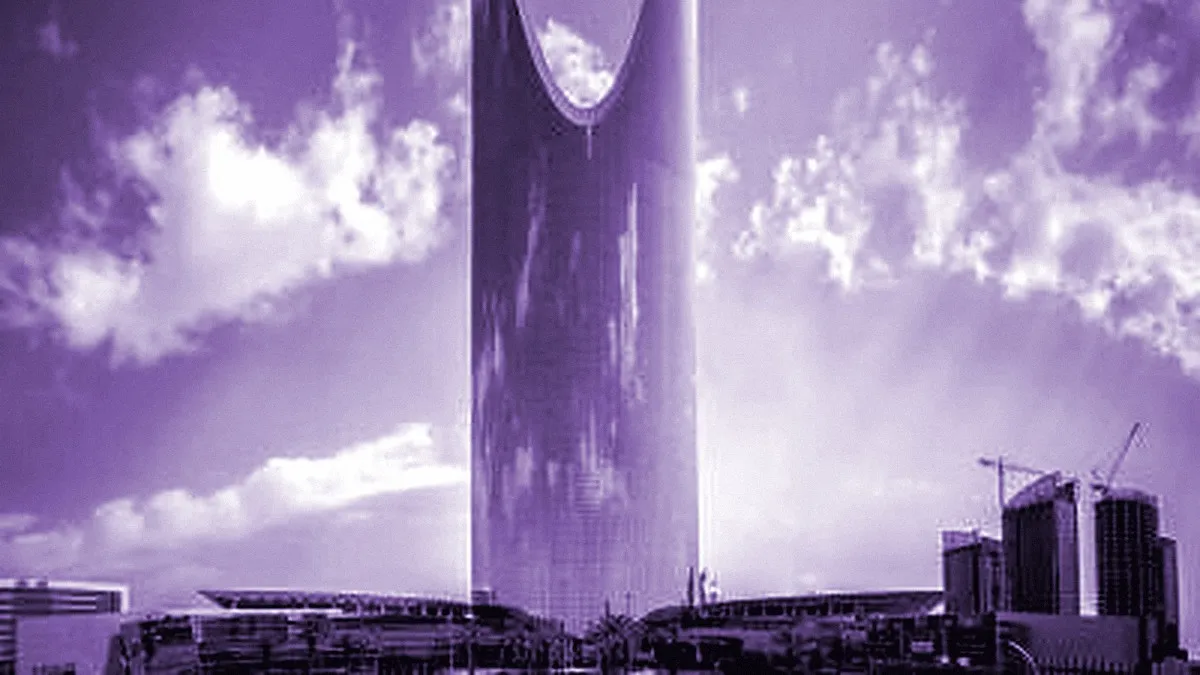
Kingdom Centre is one of Riyadh’s most recognizable modern landmarks. The 302.3-metre, 99-story skyscraper was completed in 2002 and is distinguished by the large opening near its summit.
A 65-metre enclosed skybridge spans this opening. Its windows look out across the city, while the tower’s upper section forms an inverted parabolic arch. The building was developed by Prince Al-Waleed bin Talal and designed by Ellerbe Becket and Omrania.
Kingdom Centre is also a mixed-use complex, containing the Al-Mamlaka shopping mall, offices, luxury apartments, the Four Seasons Hotel Riyadh and restaurants. The mall occupies three levels and includes more than 150 stores.
King Fahd International Stadium
King Fahd International Stadium is known for its sweeping roof, inspired by the shape of an Arab tent. This distinctive design has given it the nickname “the Tent Stadium”.
The stadium’s construction began on December 7, 1982, and lasted four years and four months. Its stands were designed with an individual seat for every spectator and have accommodated more than 68,000 people.
The stadium is currently closed for reconstruction. The project is expected to expand its capacity to approximately 70,200 seats by late 2026.
Palace of Yamamah
The Palace of Yamamah is both the residence and workplace of the King of Saudi Arabia and the seat of the royal court. Built in 1988 during the reign of King Fahd bin Abdulaziz, it stands in Riyadh’s al-Hada district.
The palace takes its name from the historic al-Yamama region. Its interior combines Italian marble floors with carved panels on the ceilings and walls. It is used for receiving senior state guests and for drafting royal decrees, and King Salman chairs weekly government meetings there.
Riyadh Water Tower
The Riyadh Water Tower is one of the landmarks included in Neywo’s walks around the historic center and Murabba area. It can be visited on a route that also includes Murabba Palace, King Abdulaziz Mosque and Qaṣr ash-Shamsīyyah.
Explore Riyadh with a Free Audio Guide
Neywo offers three self-guided walking tours in Riyadh:
- From Masmak Fort to the Square Palace: 4.2 km, 113 minutes and 9 narrated stops.
- Where Riyadh Began: Fort, Square and Palace: 2.3 km, 74 minutes and 7 narrated stops.
- The Square Palace and the Water Tower: 1.45 km, 48 minutes and 5 narrated stops.
The app tells the story of each place as you reach it, at your own pace. There is no group and no schedule: simply follow the walk and listen when you arrive at each stop. Download Neywo to explore Riyadh with a free audio guide and discover the city through its forts, mosques, palaces and landmarks.
Places with an audio guide in Riyadh
8 places in Riyadh with a Neywo audio guide. Each one starts telling its story as you reach it.
Self-guided tours in Riyadh
3 tours in Riyadh, free in the Neywo app. Each stop tells its story as you reach it.
- Walk
From Masmak Fort to the Square Palace
Riyadh's story in one long walk: the mud-brick fort where the Saudi state was reborn in 1902, the clock tower and the Justice Palace around Deera Square, then north to the Swedish-designed water tower, the Square Palace of King Abdulaziz, an earth-built Friday mosque and a princess's ruined palace.
Masmak Fort · Al Deerah Tower · Deera Square · Imam Turki bin Abdullah Mosque · Palace of Government · Riyadh Water Tower …
Open this tour: From Masmak Fort to the Square Palace - Walk
Where Riyadh Began: Fort, Square and Palace
Walk the mud-brick heart of Najd's old walled town. Start at Masmak Fort, where the 1902 battle began the Saudi state, and trace how Riyadh's rulers became kings. Pass the clock tower, Deera Square, one of the city's oldest mosques, the Grand Mosque and the Palace of Government.
Masmak Fort · Sultanate of Nejd · Al Deerah Tower · Deera Square · Sheikh Muhammad bin Ibrahim Mosque · Imam Turki bin Abdullah Mosque …
Open this tour: Where Riyadh Began: Fort, Square and Palace - Walk
The Square Palace and the Water Tower
A short stroll through the King Abdulaziz Historical Center. See the Swedish-designed mushroom water tower, a princess's ruined palace, the palace where the founder of Saudi Arabia lived and worked, an earth-built mosque and the capital's story told at the centre of it all.
Riyadh Water Tower · Qaṣr ash-Shamsīyyah · Murabba Palace · King Abdulaziz Mosque · Riyadh
Open this tour: The Square Palace and the Water Tower
Walk Riyadh with Neywo
Neywo turns Riyadh into a self-guided audio tour. Stories arrive as you reach the place they belong to, and the route reshapes when you wander off it.

