Things to Do in Gothenburg, Sweden: Walking Guide
Things to Do in Gothenburg: A Guide to Sweden’s Coastal City
Gothenburg is Sweden’s west-coast city, shaped by the Göta River, maritime trade and centuries of defensive architecture. The best things to do in Gothenburg range from exploring historic fortifications and museums to discovering Nordic art, science and the city’s relationship with the sea. Neywo has a free audio guide for Gothenburg with 58 narrated places, so you can explore while hearing the story of each stop.
What to See in Gothenburg
Gothenburg Cathedral
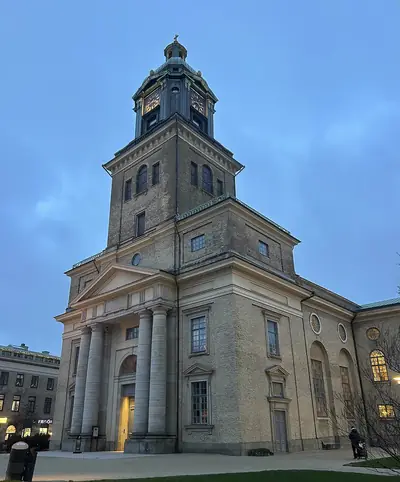
Gothenburg Cathedral, also known as Gustavi domkyrka or Göteborgs domkyrka, stands on one of the city’s earliest church sites. The first cathedral was completed in 1633, but fires in 1721 and 1802 shaped the building’s later history. The present cathedral was completed in 1815, with its tower finished in 1825.
Its Classical exterior features a main portal supported by four Doric columns. Inside, the bright interior combines Classical and Empire details, including white-and-gold fittings, Ionic pilasters and an Empire-style pulpit decorated with gilded leaves. Baroque angel figures from the 18th century stand at the altar.
Lion Redoubt
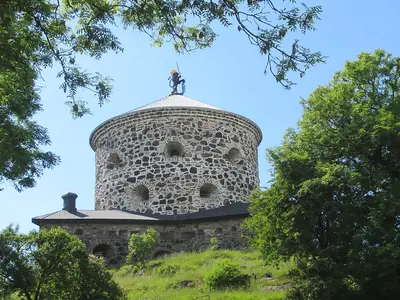
On Gullberg, Lion Redoubt—also called Skansen Lejonet, or the Lion Sconce—rises above the surrounding area. Built between 1687 and 1692, it formed part of Gothenburg’s defensive system against a possible Danish attack. Its twin, Skansen Kronan, was built two weeks earlier.
The fortification stands 57 metres above sea level, while the structure itself is 29 metres high. It occupies the site of an earlier medieval castle and was decommissioned in 1822. An engraving in Erik Dahlbergh’s Suecia antiqua et hodierna refers to the newly built fort as “Leo Gothicus”, meaning “Göta Lion”.
Crown Redoubt
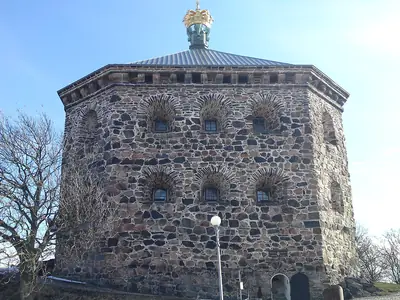
Skansen Kronan, or the Crown Redoubt, guarded Gothenburg against attack from the south. Construction began in 1687, and the fortress was introduced in 1698 with 23 cannons. Its roof was completed in 1700.
The four-sided tower has walls about four metres thick, made from granite, gneiss and diabase. Although it was ready for action, the fortress was never attacked and its cannons remained silent. It later became a military museum, which opened in 1904 and closed in 2004. The hilltop setting also provides panoramic views of Gothenburg.
Gothenburg Museum of Art
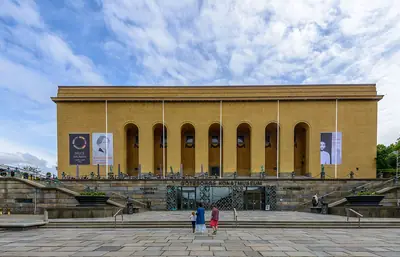
The Gothenburg Museum of Art, or Göteborgs konstmuseum, is one of Sweden’s major art museums. It is particularly known for Nordic art from the late 19th century and was named “Museum of the Year” in 2018. By number of works, it is Sweden’s third-largest art museum.
The museum’s listed building was designed by Sigfrid Ericsson and built between 1919 and 1923. An eastern extension followed between 1966 and 1968. Inside, the Fürstenberg Gallery displays works by artists including P.S. Krøyer, Carl Larsson, Bruno Liljefors, Edvard Munch and Anders Zorn, alongside older and contemporary Nordic and international art.
Museum of World Culture
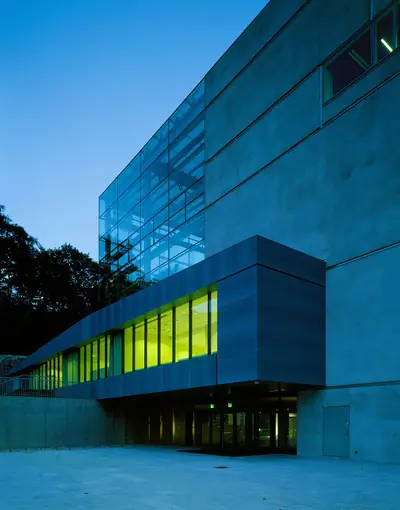
The Museum of World Culture, or Världskulturmuseet, explores how people live together and how cultures connect and change. It opened in 2004, drawing on collections from the former Göteborgs Etnografiska Museum.
Its modern building combines cement and glass. A four-storey glass atrium looks towards nearby mountains and forests, while a 43-metre-long display window allows passers-by to see into the largest exhibition hall. The exhibitions present world culture as dynamic and open-ended, focusing on exchange, change and connections between societies.
The Maritime Museum and Aquarium
The Maritime Museum and Aquarium brings together Gothenburg’s maritime heritage and marine life. Its three floors explore the relationship between people and the sea through model ships, illustrations and exhibitions about port culture and maritime practices.
The aquarium includes species from tropical and Nordic waters, including dragonfish and clownfish. A ship simulator adds an interactive element, allowing visitors to experience the challenges of navigating a vessel under different conditions.
Maritiman
Maritiman is a floating maritime museum and is known as the world’s largest floating ship museum. Its collection consists of 15 connected ships, including the destroyer HMS Småland, the submarine HMS Nordkaparen, the battleship HMS Sölve, the tug Herkules and the lightship Fladen.
It offers a particularly direct way to explore Gothenburg’s maritime identity: the museum experience takes place aboard the vessels themselves rather than only inside a conventional exhibition building.
Radiomuseet, Göteborg
Radiomuseet is a working-life museum dedicated to the history of radio and related technology. Its collection covers broadcasting, television, amateur radio, private radio, CB radio, military radio, aviation, shipping and mobile communications.
The museum also includes landline telephones, measuring instruments, gramophones and tape recorders. It began its activities in 1983 and is run by the Radiohistoriska föreningen i Västsverige.
Museum of Medical History
The Museum of Medical History, or Medicinhistoriska museet, traces changing ideas about sickness, health and medical treatment. It is housed in the Oterdahl House, which was given to the hospital in 1808 and later functioned as a hospital from 1823 to 1854.
The permanent exhibition draws on collections from Sahlgrenska Hospital, Lillhagens Hospital and other institutions. Together, the objects tell Gothenburg’s medical history over about 400 years, including the development of its first hospitals and the occasions when scientific progress met scepticism or opposition.
New Elfsborg Fortress
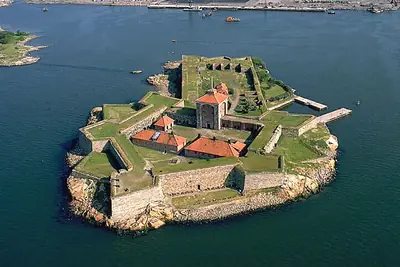
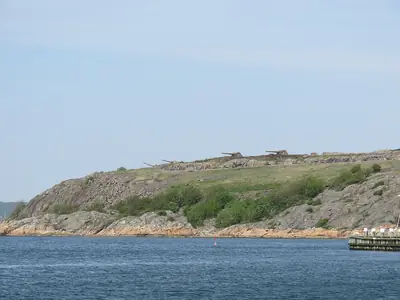
New Elfsborg Fortress, also called Nya Älvsborg, stands on Kyrkogårdsholmen at the mouth of the Göta River. Built from 1653, it guarded the entrance to Gothenburg’s harbour against the Danish fleet.
The fortress saw action during the Scanian War and the Great Northern War, including conflicts with Danish-Norwegian naval forces led by Admiral Peder Tordenskjold between 1717 and 1719. It remained in military service until 1869 and was later used increasingly as a prison, a role that continued until 1866.
Älvsborg Fortress
The ruins of Älvsborg Fortress, also known as Gamla Älvsborg or Old Älvsborg, occupy the rocky outcrop of Klippan by the outlet of the Göta River. The fortified site was important from the 14th to the 17th century.
The Danes captured it in 1502, 1563 and 1612. In 1660, it was demolished and replaced by New Älvsborg on an island at the river’s mouth. Today, remnants of the Renaissance castle can still be seen close to the southern pylon of the Älvsborg Bridge.
Elfsborg Fortress
Elfsborg Fortress, or Älvsborgs fästning, is a former Swedish fortification at the mouth of the Göta River. Its main facility, Oscar II’s Fort, was built between 1899 and 1907. It remained in service until 1955 and was completely taken out of use in the 1970s.
The fortifications became a state building monument in 2018, preserving the site’s importance in Gothenburg’s military history.
Ragnhildsholmen
Ragnhildsholmen is an island on the southern shore of the Nordre älv, in the Hisingen area of Gothenburg Municipality. Its main feature is the ruin of a castle dating from the 13th century.
The remains are closely connected with the early medieval town of Kungahälla, which stood nearby. For visitors interested in older history, the site offers a glimpse of the region’s medieval past beyond the city centre.
Stora Gårda
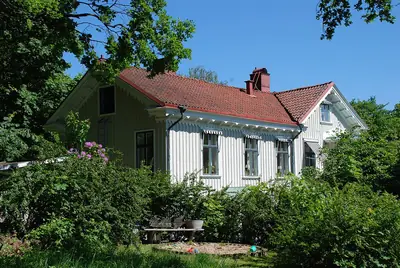
Stora Gårda is a historic manor house in Örgryte. The oldest recorded reference to the site dates from 1550, when its residents were described as tax-paying farmers. Gothenburg’s first mayor, Nils Börjesson, bought the estate in 1633. After he was ennobled in 1647 and took the name Drakenberg, the farm became a manor.
Its buildings developed over several centuries. The east wing was built in 1756, a smaller cellar was added in the 1830s, and a veranda and stairwell followed in the 1880s. The southern bay window was created by city engineer Albert Lilienberg in 1922.
Explore Gothenburg with a Self-Guided Audio Tour
Neywo’s free audio guide to Gothenburg is designed for independent exploration. The app offers two walking tours and one bike route, covering 58 narrated places in total. Each story plays as you reach the place, at your own pace, with no group and no schedule. Narration is available in 11 languages.
The walking tours are:
- The harbour: Maritiman and the cathedral — 2.28 km, 65 minutes and 4 narrated stops: Radiomuseet, Göteborg, Maritiman, Museum of Medical History, Gothenburg and Gothenburg Cathedral.
- Avenyn and Götaplatsen — 1.21 km, 55 minutes and 7 narrated stops: Gothenburg Museum of Art, Gothenburg City Theatre, Götaplatsen, Göteborgs konsthall, Gothenburg Concert Hall, Vasa Church and Röhsska Museum.
The bike route is:
- Gothenburg by Bike: From Avenyn to the Opera — 2.9 km, 14 minutes and 5 narrated stops: Götaplatsen, Alfie Atkins’ Cultural Centre, Gothenburg Central Station, Lilla Bommen and Göteborgsoperan.
Download Neywo and explore Gothenburg as you move through it—listening to the city’s history when you arrive at each place, without following a guide or keeping to a timetable. When planning a wider trip through Sweden, you can also continue on to Malmö or Stockholm.
Places with an audio guide in Gothenburg
8 places in Gothenburg with a Neywo audio guide. Each one starts telling its story as you reach it.
Self-guided tours in Gothenburg
3 tours in Gothenburg, free in the Neywo app. Each stop tells its story as you reach it.
- Bike ride
Gothenburg by Bike: From Avenyn to the Opera
Ride the city's cycle lanes from Götaplatsen, the cultural square at the end of Avenyn, north past the children's cultural centre and Sweden's oldest railway station still in use to the red-and-white Lipstick building and the Opera on the harbour.
Götaplatsen · Alfie Atkins' Cultural Centre · Gothenburg Central Station · Lilla Bommen · Göteborgsoperan
Open this tour: Gothenburg by Bike: From Avenyn to the Opera - Walk
The harbour: Maritiman and the cathedral
Two kilometres from the floating museum fleet — nineteen ships including a submarine and a destroyer — past the radio and medical history collections to the cathedral in the old grid.
Radiomuseet, Göteborg · Maritiman · Museum of Medical History, Gothenburg · Gothenburg Cathedral
Open this tour: The harbour: Maritiman and the cathedral - Walk
Avenyn and Götaplatsen
Up Gothenburg's boulevard to the square at the top, where the art museum's Nordic collection, the concert hall, the city theatre and Milles's Poseidon all face each other. The Röhsska design museum is on the way.
Gothenburg Museum of Art · Gothenburg City Theatre · Götaplatsen · Göteborgs konsthall · Gothenburg Concert Hall · Vasa Church …
Open this tour: Avenyn and Götaplatsen
Walk Gothenburg with Neywo
Neywo turns Gothenburg into a self-guided audio tour. Stories arrive as you reach the place they belong to, and the route reshapes when you wander off it.

