Visiting Keelung, Taiwan: Top Sights on Foot
Things to Do in Keelung: Historic Forts, Temples and Harbor Views
Keelung is a coastal city in Taiwan shaped by its harbor, hills, religious traditions and military history. The best things to do in Keelung include exploring marine science, historic forts, hillside viewpoints, temples and the remains of early European activity on Heping Island. Neywo offers a free audio guide for Keelung with 22 narrated places, so you can discover the city while walking at your own pace.
What to See in Keelung
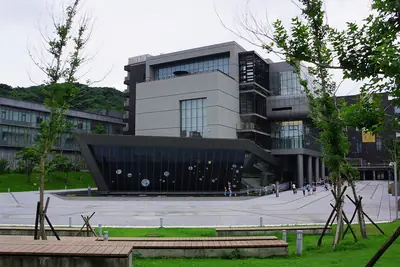
National Museum of Marine Science and Technology
The National Museum of Marine Science and Technology occupies a distinctive position between Keelung’s hills and the sea. Its exhibitions explore marine science and technology through science, technology and direct experiences of the surrounding coastal environment.
The museum has nine exhibition halls, including the Ocean Environment Hall and the Ocean Science Hall. Together, they introduce different aspects of the marine world and the technologies connected with it.
Khóo Tsú-song old house
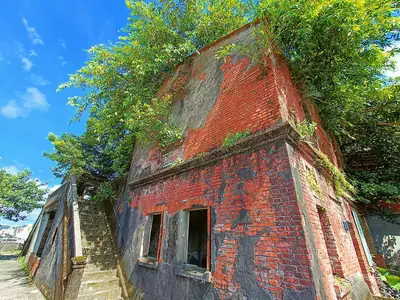
Near Keelung’s famous night market, a narrow passage and a flight of stairs lead to the remains of Khóo Tsú-song old house, also known as 慶餘堂. Built in 1931 for Khóo Tsú-song, whose Mandarin name was Hsu Tsu-sun, the house offers an unusual view across the city’s rooftops.
Hsu Tsu-sun served as head of Keelung during the Japanese period and was a member of the Taipei provincial council. He was also connected with poets from across Taiwan. The surviving red brick walls and windows reveal a building that combined European-style brickwork with elements of Fukien architecture. Abandoned for more than thirty years, the house is now partly ruined: the second floor no longer has a roof. It was officially listed as a historical building in 2004.
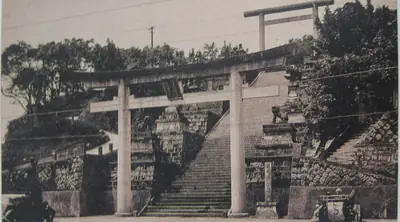
Kiirun Shrine
Kiirun Shrine, also known as Keelung Tower or 主普壇, is linked to the site now occupied by Keelung Martyrs’ Shrine and Keelung Zhongzheng Park. Although the Shinto shrine no longer exists, its history reflects Keelung’s period under Japanese rule.
The site was established in 1912 as Keelung Kotohira Shrine and renamed Kiirun Shrine in 1915. At the time, it stood in Yichong Town, in Keelung City, then part of Taipei Prefecture.
Zhongzheng Park
Set on a hillside above the eastern shore of Keelung Harbor, Zhongzheng Park is one of the city’s most important public open spaces. Its facilities are arranged along the slopes, creating a broad and peaceful setting above the harbor.
The park’s most striking landmark is the twenty-five-meter statue of Guanyin at its summit. The statue is described as the largest goddess statue in Southeast Asia and creates one of Keelung’s most memorable viewpoints. The park dates back to 1933, when it was created as Ishizaka Park by Sōsaku Ishizaka, who donated it to the government of the then city of Kiirun.
Keelung City Indigenous Cultural Hall
The Keelung City Indigenous Cultural Hall, also known as 原住民廣場, provides an introduction to Indigenous culture in Keelung. It is one of the places to include when exploring the city’s cultural heritage beyond its harbor and military landmarks.
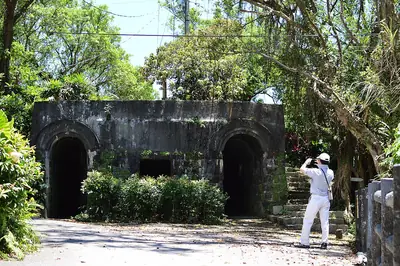
Sheliao East Fort
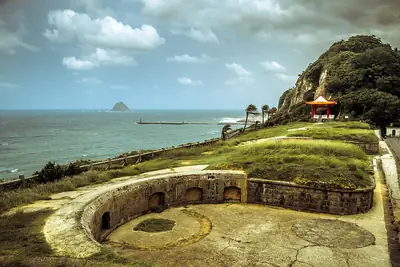
Sheliao East Fort, or 社寮東砲台, is the ruin of an artillery fortification on Heping Island, at the northern end of Keelung. It was first built during the period of Japanese rule in Taiwan and formed part of the facilities under the Keelung Fortress Command.
Archaeological site of the Todos los Santos Church in Hoping Island
The archaeological site of Todos los Santos Church, also known as the Church of All Saints or 和平島教會, preserves the remains of a Catholic church connected with the earliest Catholic missionary activity in Taiwan.
The Spanish Empire established the church during the 1620s or 1630s near San Salvador Castle. Together with its monastery, it became one of the earliest places where Catholic missionaries worked in Taiwan.
Heping Island Park
Heping Island Park is a coastal park on Heping Island in Keelung’s Zhongzheng District. It is also known by the names Huangdidian and 千疊敷. Its position on the island makes it a natural companion to the area’s historic fortifications and archaeological sites.
Gongzi Liao Fort
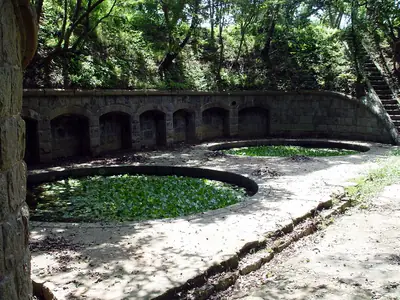
Gongzi Liao Fort, also known as 槓子寮砲台, is a former military site in the Gongzi Liao section of Xinyi District. During Japanese rule in Taiwan, it belonged to the jurisdiction of the Keelung Fortress Command. The ruins are protected as a national monument under Taiwan’s Ministry of Culture.
Baimiweng Fort
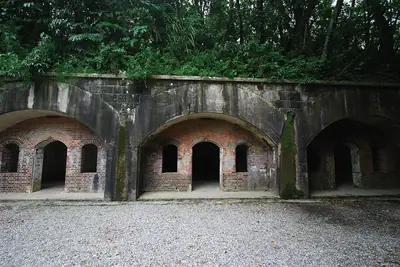
Baimiweng Fort, or 白米甕炮台, is also called Holland Castle or the Gun Emplacement of Fort Holland. The historic fort stands in Taibai Village, in Keelung’s Zhongshan District.
During Japanese rule, it formed part of the facilities under the Keelung Fortress Command. Today, it is designated a municipal historic monument under Keelung City.
Dawulun Fort
Dawulun Fort, also known as Ta Wu Lun Fort or 大武崙砲台, is a historic fortification site on Mount Dawulun. It stands in Anle District, near Keelung’s Lover’s Lake area, and was once part of the area administered by the Keelung Fortress Command.
Shihciouling Gun Emplacement
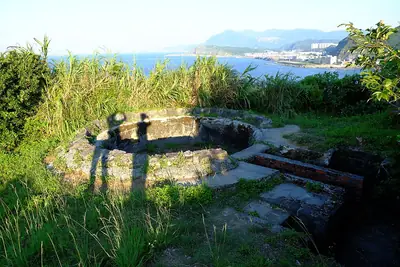
The Shihciouling Gun Emplacement, also known as 早安堂, preserves the remains of a gun emplacement in Shihciouling, in Keelung’s Ren’ai District. It was first built during Taiwan’s Qing rule period and is now designated a municipal historic monument of Keelung City.
Dingzun Fude Temple
Dingzun Fude Temple is a local shrine dedicated to the Earth God beside the Keelung River. Its setting is closely connected with the area’s irrigation canal, while a pair of trees on the temple grounds is also enshrined. The trees are regarded as a married couple, giving this small riverside shrine a distinctive local story.
Lingquan Chan Temple
Lingquan Chan Temple, also known as 功德堂, is a Buddhist temple in Keelung’s Xinyi District. Its affiliated buildings have been designated historic buildings by Keelung City, connecting the temple’s religious role with the city’s architectural heritage.
Keelung Wangfugong
Keelung Wangfugong is a local Wangyeh temple in Dawulun, Keelung City. It is part of the neighborhood’s religious landscape and offers another perspective on the traditions found beyond the central harbor.
Explore Keelung with a Self-Guided Audio Tour
A Keelung self-guided walking tour lets you explore the city without joining a group or following a fixed timetable. Neywo’s free Keelung audio guide includes 22 narrated places, with narration available in 11 languages. Each story plays as you reach the place, at your own pace.
The available routes include:
- Two walking tours: one downtown walk covering 3.5 km in 88 minutes with 7 narrated stops, and one Heping Island walk covering 2.59 km in 57 minutes with 4 narrated stops.
- One bus route: a 7.1 km route taking 30 minutes, with 4 narrated stops.
The downtown walk explores temples, shrines, historic buildings and Zhongzheng Park. The Heping Island route focuses on Spanish missionary history, Indigenous culture and Japanese fortresses. The bus route connects harbor landmarks with the archaeological site of Todos los Santos Church.
Download Neywo and explore Keelung as its stories unfold around you—on foot or by bus, with no group and no schedule. If you are continuing through Taiwan, Keelung can also be combined with a visit to Taipei or other destinations across the island.
Places with an audio guide in Keelung
8 places in Keelung with a Neywo audio guide. Each one starts telling its story as you reach it.
Self-guided tours in Keelung
3 tours in Keelung, free in the Neywo app. Each stop tells its story as you reach it.
- Bus ride
Bus 101 to Hoping Island: Harbour, Temple and Spanish Ruins
Keelung city bus 101 links the downtown harbour front with Heping Island along Zhongzheng Road. Ride it past the oceanic museum, the City God Temple and the cultural centre to the site of the first Spanish church in Taiwan.
YM Oceanic Culture and Art Museum · Keelung Cultural Center · Archaeological site of the Todos los Santos Church in Hoping Island
Open this tour: Bus 101 to Hoping Island: Harbour, Temple and Spanish Ruins - Walk
Keelung Harbour Downtown: Temples, Shrines and a Goddess on the Hill
Rain is part of the charm in Taiwan's harbour city. Start at a maritime museum in a Japanese shipping office, visit the City God Temple, one of Keelung's three great temples, and climb through the ruined red-brick mansion of a poet-mayor. End on the hillside where a Shinto shrine once stood, beneath a 25-metre Guanyin overlooking the port, then walk down to the Holy Trinity Church.
YM Oceanic Culture and Art Museum · Khóo Tsú-song old house · Keelung Cultural Center · Kiirun Shrine · Zhongzheng Park · Holy Trinity Church (Keelung)
Open this tour: Keelung Harbour Downtown: Temples, Shrines and a Goddess on the Hill - Walk
Hoping Island: Spanish Missionaries and Japanese Fortresses
A coastal stroll on Heping (Hoping) Island, where Spaniards built a church in the 1620s, the first Catholic mission in Taiwan, and where Japanese engineers later dug artillery forts into the headland. Finish on the wave-cut sandstone terraces of the island park.
Keelung City Indigenous Cultural Hall · Sheliao East Fort · Archaeological site of the Todos los Santos Church in Hoping Island · Heping Island Park
Open this tour: Hoping Island: Spanish Missionaries and Japanese Fortresses
Walk Keelung with Neywo
Neywo turns Keelung into a self-guided audio tour. Stories arrive as you reach the place they belong to, and the route reshapes when you wander off it.

