Things to Do in Tainan, Taiwan: Walking Guide
Things to do in Tainan: historic temples, forts and museums
Tainan is a historic city in Taiwan known for its temples, monuments, museums and living religious traditions. From the island’s oldest Confucian temple and earliest Mazu temple to the fortifications and waterways of Anping, there are plenty of things to do in Tainan for visitors interested in history and culture. Neywo offers a free audio guide for Tainan with 155 narrated places, so you can explore while the story of each site plays as you arrive.
What to see in Tainan
The best way to discover Tainan is to move through its historic districts and notice how different periods of the city’s past remain visible in its temples, ancestral halls, public buildings and cultural institutions.
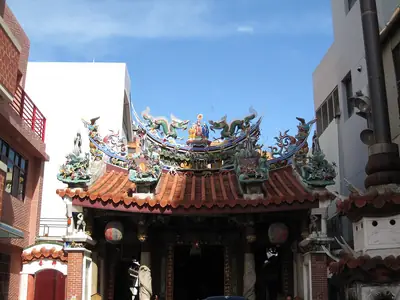
Kaiji Tianhou Temple
Kaiji Tianhou Temple is dedicated to Mazu, the goddess of the sea, and is regarded as the earliest Mazu temple in Taiwan. Its name, Kaiji, means “founding” or “original”. Locals also call it the Small Mazu Temple, or the Shuizaiwei Mazu Temple, after the area where it stands in Tainan’s North District.
The temple was designated a second-class historical monument in 1985. Following changes to Taiwan’s cultural heritage legislation, it became a provincial monument and is now recognized as a national monument.
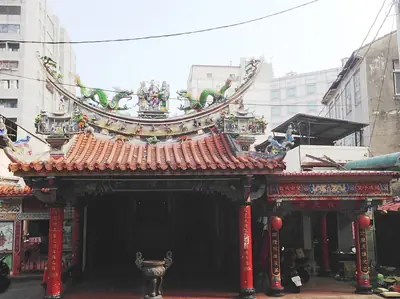
Khai-liông Temple
Built in 1732 during the Qing Dynasty, Khai-liông Temple is the oldest temple in Taiwan dedicated to the Seven Ladies, or Seven Niangniang. It is also known as Qiniangjing Temple and was formerly called Sannai Temple; a stone tablet from that period remains preserved at the site.
The temple is closely connected with the Sixteen Years Old coming-of-age custom. Families have traditionally brought their children here to mark this important milestone, making the temple a place of continuing local tradition rather than only a historic building.
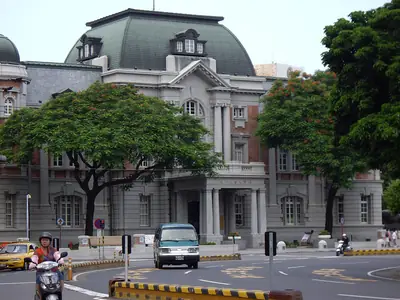
National Museum of Taiwan Literature
The National Museum of Taiwan Literature is Taiwan’s first national literature museum. Its work includes collecting, preserving, researching, displaying and promoting Taiwanese literature, while connecting it with world literature.
Its collection includes approximately 130,000 items as of May 2023, with works in Taiwanese, Japanese, Mandarin and Classical Chinese. The museum also continues the cultural spirit associated with the Taiwan Cultural Association, founded in 1921 by Chiang Wei-shui and other pioneers.
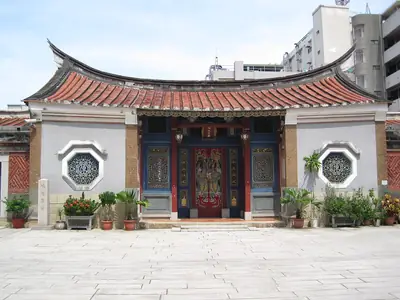
Chen De-Jiu Family Hall
Chen De-Jiu Family Hall is the principal ancestral hall for Chen families throughout Taiwan. The building dates to the Ming Zheng period, during the Yongli era, when it was the residence of Chen Ze, a Right Vanguard Commander under the Eastern Ning Grand Commander. It was therefore once known as the Commander’s Residence, and the adjacent lane is still called Commander’s Lane.
During the Qing dynasty, Chen family descendants renovated the residence and turned it into a family temple. Under Japanese rule, it became communal ancestral property.
Kaiji lingyou Temple
Kaiji lingyou Temple is considered the earliest temple dedicated to Xuantian Shangdi, the Supreme Emperor of the Dark Heavens. Scholars believe it was already standing around 1665, during the Ming dynasty’s Yongli era.
The temple was built through the joint efforts of military and civilian communities, and government officials later contributed to its restoration. This history has led some scholars to view it as having had a semi-official, government-affiliated character. To distinguish it from another nearby temple dedicated to Xuantian Shangdi, locals called it the Small Supreme Emperor Temple.
Eternal Golden Castle
The Eternal Golden Castle is a historic defensive fortification in Anping District and a designated national monument under Taiwan’s Ministry of Culture. Originally built during the Qing Dynasty, it was once known as the Anping Great Battery and has had several names over time.
Its sturdy coastal-defense design reflects the strategic importance of Anping’s shoreline. Today, the fortification is one of the area’s most recognizable landmarks.
Tainan Dongyue Temple
Tainan Dongyue Temple is dedicated to the Great Emperor of the Eastern Peak, a deity associated with the afterlife and judgment in Chinese folk religion. It was officially built in 1673 by Zheng Jing, the son of Koxinga, during the Ming Zheng period.
The temple is considered the earliest in Taiwan dedicated to the Eastern Peak Emperor. In 1985, it was designated a municipal historic monument of Tainan City.
Fongshen Temple
Fongshen Temple is the only surviving temple in Taiwan dedicated primarily to the God of Wind. Located in Tainan’s West Central District, it is a municipally designated historic site and part of the historic group known as the Seven Temples and Eight Monasteries of old Tainan City.
The temple square also contains Jieguan Pavilion, a historic ceremonial reception hall for arriving officials. Fongshen Temple is known locally as Xiluo Temple and Sanjiao Zhenhai Temple, names linked to the city’s merchant guild history.
Tainan Confucian Temple
Built in 1665 during the Ming Zheng period, Tainan Confucian Temple is the oldest Confucian temple in Taiwan. It is also known as the First Academy of Taiwan.
During the early Qing dynasty, it was the only place in Taiwan where young students could formally enroll to study. Its history makes it one of the clearest places to understand Tainan’s long-standing role as a center of education and culture.
Canal Museum
The Canal Museum stands beside the Tainan Canal in Anping. During the Japanese colonial era, the building served as the Anping Customs House, monitoring merchant ships entering and leaving Anping Harbor.
The museum now presents the canal’s history through fishing tools used by early settlers and artifacts from the former customs office. The building was designated a municipal historic monument on May 13, 2003.
Sinhua Jie-Yi-Chang
Sinhua Jie-Yi-Chang is the only remaining street office building south of Changhua. It served as the administrative center of Sinhua during Japanese rule and continued as the Sinhua Township office until 1996.
The building was nearly demolished for an underground parking lot. Instead, it was moved to a nearby fruit-market parking area during construction and later returned to its original location. It was voted fourth in a national survey of Taiwan’s top 100 historical buildings in 2001 and designated a historical building on November 18, 2002. It now houses a restaurant, with the Yang Kui Literature Memorial Hall next door.
Taijiang Cetacean Museum
The Taijiang Cetacean Museum is a specimen museum in Tainan’s Annan District, within the Sicao Wildlife Protection Area. It opened on April 8, 2005.
The site originally contained the Anshun Salt Field Ship Channel and the Anshun Salt Branch Office of the Monopoly Bureau’s Tainan Branch. The canal transported salt from the Anshun Salt Fields during the Japanese colonial period, and the historic site was designated a municipal monument on May 13, 2003. The Taijiang Bird Ecological Center is also located within the protected area.
Tsung-Yeh Arts and Cultural Center
In Madou District, the Tsung-Yeh Arts and Cultural Center combines art and culture in a group of distinctive red-brick buildings. It is also known as the Red-Brick Office Building.
The center includes a small stage and a sightseeing platform, with spaces used for performances, exhibitions and other cultural events.
Yanshui Hubi Temple
Yanshui Hubi Temple is the main temple of old Yanshui and is dedicated to Mazu. It is also known as Yuegang Hubi Temple or Yanshui Mazu Temple.
The temple’s importance is reflected in the former name of the street where it stands: Zhongzheng Road was once called Mazu Temple Street. It remains a living place of worship where local residents come to pay their respects and seek Mazu’s protection.
National Cheng Kung University Museum
The National Cheng Kung University Museum is located on the university campus in Tainan’s East District. It was Taiwan’s first self-funded public university museum to be formally incorporated into a university’s organizational charter.
The museum includes a main museum, a campus environment museum and specialized museums connected with different departments and institutes. Its main building was originally the main hall of the old Tainan Higher Industrial School, preserving part of the university’s institutional history.
Explore Tainan with a self-guided audio tour
A Tainan self-guided walking tour is a flexible way to connect the city’s temples, historic buildings and museums without joining a group. Neywo has five walking tours and one bus route in Tainan, with 155 narrated places in total:
- First Academy and Prefecture Hall: 2.93 km, 101 minutes and 10 narrated stops.
- Gods, Gates and a Governor’s Clock House: 3.92 km, 109 minutes and 10 stops.
- Anping: Fort, Harbour and Salt: 4.44 km, 114 minutes and 9 stops.
- Where Taiwan’s Temples Began: 3.94 km, 113 minutes and 9 stops.
- The Old City Wall and a Campus Full of Gates: 3.05 km, 77 minutes and 6 stops.
- Red Trunk Line: Through Old Tainan to the Hills: a 16 km bus route lasting 69 minutes, with 7 stops.
The app tells the story of each place as you reach it, at your own pace, with no group and no schedule. Narration is available in 11 languages. Download Neywo and explore Tainan independently, from its oldest temples and Confucian heritage to the fort, canal and cultural sites of Anping.
For more destinations around the island, continue with Taiwan, or compare Tainan with Kaohsiung, Taichung and Taipei.
Places with an audio guide in Tainan
8 places in Tainan with a Neywo audio guide. Each one starts telling its story as you reach it.
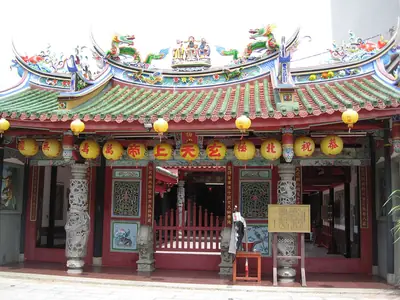
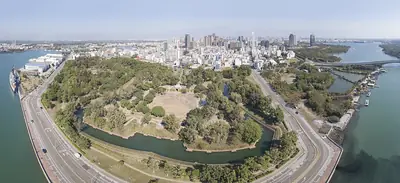
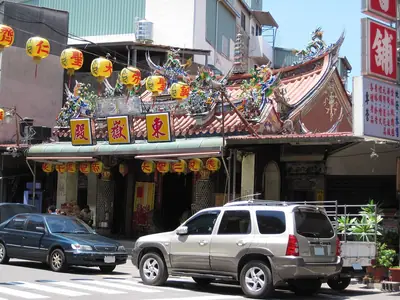
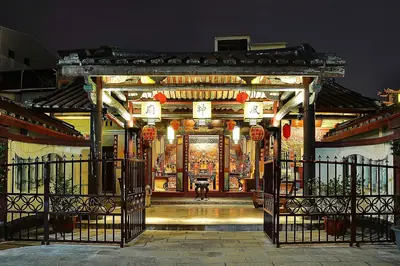
Self-guided tours in Tainan
5 tours in Tainan, free in the Neywo app. Each stop tells its story as you reach it.
- Bus ride
Red Trunk Line: Through Old Tainan to the Hills
Tainan's red trunk bus cuts east along the old walled city, passing the Presbyterian church, the literature museum in the old prefecture hall, the oldest Catholic church of the region, the Eastern Peak temple and the Great East Gate. Ride it to see how much history sits on a single main road, then carry on towards the hills for Qingning Temple and the Lord Guan temple of Guanmiao at the end of the line.
Thai-Ping-Keng Maxwell Memorial Church · National Museum of Taiwan Literature · Immaculate Conception Church · Tainan Dongyue Temple · Yingchun Gate · Qingning Temple …
Open this tour: Red Trunk Line: Through Old Tainan to the Hills - Walk
First Academy and Prefecture Hall
Start at the Japanese-era court and the Great South Gate stele garden, then follow the lanes where Koxinga's commanders lived and pass Taiwan's first Confucian temple, a Japanese-era prefecture hall turned literature museum, the new art museum and the Maxwell memorial church, and end at the oldest Catholic church in Tainan. A compact first look at the old walled city.
Old Tainan District Court · Tainan Confucian Temple · Chen De-Jiu Family Hall · Khai-liông Temple · National Museum of Taiwan Literature · Tainan Art Museum …
Open this tour: First Academy and Prefecture Hall - Walk
Gods, Gates and a Governor's Clock House
A walk through the east side of old Tainan, from the Bamboo Creek temple, the Fahua temple and the old girls' school to neighbourhood earth-god shrines and a Chinese-palace cathedral, then the Eastern Peak temple founded by Koxinga's son. It ends at the Great East Gate, the largest surviving city-gate tower in Taiwan, after passing the Clock Building where a future emperor once stayed.
Fahua Temple (Tainan) · Yintong Zu Temple · Dapu Fude Shrine · Cathedral of Our Lady of China · Tainan Dongyue Temple · Old Tainan Magistrate Residence …
Open this tour: Gods, Gates and a Governor's Clock House - Walk
Anping: Fort, Harbour and Salt
Walk the old harbour district where the Dutch built Fort Zeelandia in the 1620s. You will pass the last salt office of the Japanese era, a Qing soldiers' hall, the customs house on the canal, a giant statue of the sea goddess Mazu, a retired destroyer moored as a museum, and the lighthouse at the harbour mouth.
Former Anping Office of the Tainan Branch of the Taiwan Governor-General's Monopoly Bureau · Fort Zeelandia Museum, Tainan · Haishan Hall · Canal Museum · Linmoniang Park · Eternal Golden Castle …
Open this tour: Anping: Fort, Harbour and Salt - Walk
Where Taiwan's Temples Began
Tainan holds the island's earliest temples to Mazu, to Baosheng and to the Dark Emperor, all within a few streets. Start at the Blueprint creative park and the Grand Market, pass the only surviving temple of the God of Wind and a working city gate, and finish at the earth-god temple whose roads form a centipede's antennae.
Blueprint Culture and Creative Park · West Market · Fongshen Temple, Tainan · Duiyue Gate · Puji Temple, Tainan · Kaiji Kaishan Temple …
Open this tour: Where Taiwan's Temples Began
Walk Tainan with Neywo
Neywo turns Tainan into a self-guided audio tour. Stories arrive as you reach the place they belong to, and the route reshapes when you wander off it.

