Visiting Lincoln, United States: Top Sights on Foot
Things to Do in Lincoln
Lincoln, the capital of Nebraska, blends university energy with a rich mix of art, history, and outdoor spaces. Visitors find a welcoming city where museums, gardens, and architectural landmarks create a relaxed yet engaging experience. Neywo provides a free audio guide for Lincoln with 19 narrated places to enhance your self‑guided exploration.
Explore Lincoln’s Highlights
William Jennings Bryan House (museum)
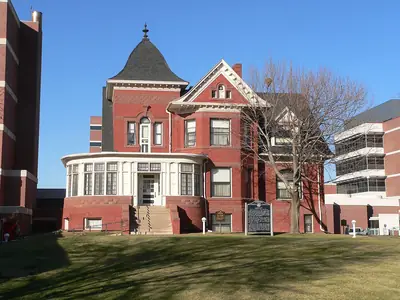
The William Jennings Bryan House, known as Fairview, stands on the Bryan Health hospital campus. Built between 1902 and 1903, it was the home of politician William Jennings Bryan, who lived from 1860 to 1925. Designated a U.S. National Historic Landmark in 1963, the ground floor now houses museum displays about Bryan’s life, while the upper floors accommodate the William Jennings Bryan Institute.
Great Plains Art Museum (museum)
Located at Hewit Place on Q Street downtown, the Great Plains Art Museum focuses on art from the Great Plains region. Opened in 1981 at the University of Nebraska–Lincoln, it is operated by the university’s Center for Great Plains Studies and began with the Christlieb Collection donated by John and Elizabeth Christlieb of Bellevue, Nebraska. The original collection includes sculptures, paintings, drawings, and photographs by artists such as Albert Bierstadt, William Henry Jackson, Frederic Remington, Charles Marion Russell, and Olaf Wieghorst. Later additions feature works by Lyman Byxbe, John Philip Falter, Michael Forsberg, Veryl Goodnight, Jackson Pollock, Norman Rockwell, and Grant Wood. Admission is free and exhibitions rotate several times a year, offering fresh perspectives on the region’s artistic heritage.
International Quilt Study Center & Museum (museum)
Situated on the University of Nebraska–Lincoln’s East Campus, this museum holds the largest known public collection of quilts in the world. Founded in 1997 and relocated to its current site in 2008, it was formerly called the International Quilt Study Center and Museum and is now also known as the International Quilt Museum. The collection spans centuries of quiltmaking, showcasing a remarkable variety of techniques, patterns, and cultural stories.
Museum of American Speed (museum)
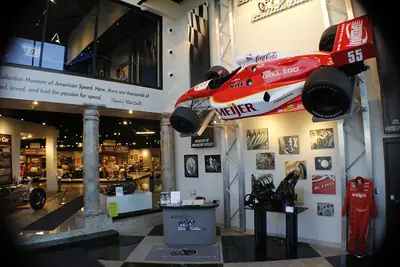
Just ahead, the Museum of American Speed celebrates American motoring from the early twentieth century to modern Indy Cars. Operating since 1992, by 2013 its collection filled a 135,000‑square‑foot facility. Visitors can view classic midget cars, go‑karts, antique automobiles, motorized toys, a Soap Box Derby collection, model cars, and assorted automotive memorabilia. An unexpected highlight is a music room where autographed guitars are displayed on the ceiling alongside Buck Rogers memorabilia.
Nebraska State Historical Society Building (museum)
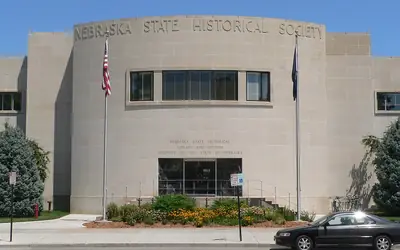
This two‑story building has housed the Nebraska State Historical Society since its construction in 1953. Added to the National Register of Historic Places in 2003, it contains the James E. Potter Research Room, open Wednesday through Friday from 9 a.m. to 4 p.m. and on Mondays by appointment. The room offers a space to examine historical documents and artifacts related to Nebraska’s past.
Sheldon Museum of Art (museum)
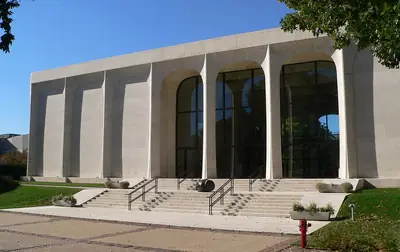
On the University of Nebraska–Lincoln campus, the Sheldon Museum of Art presents American art from the nineteenth and twentieth centuries, with more than 12,000 works in its collection. Established in 1963 when the university’s art collection moved into a dedicated building at 451 North 12th Street, the museum’s holdings trace multiple American art movements. Designed by architect Philip Johnson and funded by siblings Mary Frances and Adams Bromley Sheldon, the building is faced in Italian travertine and features a grand hall and a distinctive central staircase. Outside, a sculpture garden extends the experience with over thirty large‑scale works. The museum was added to the National Register of Historic Places in 2013.
University of Nebraska State Museum (museum)
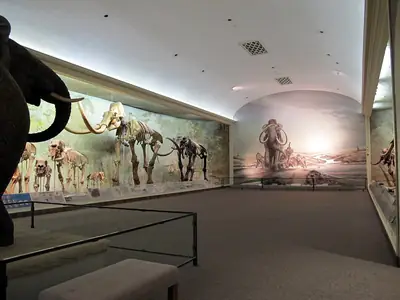
Housed in Morrill Hall on the UNL campus, this natural history museum explores ancient life, evolution, wildlife, gems and minerals, and the cultural diversity of the Great Plains. Founded in 1871, it spans four floors and ten permanent exhibits, including paleontology, wildlife, gems and minerals, and American Indian and African artifacts. A highlight is Elephant Hall, which displays a collection of fossil elephants, including the world’s largest articulated fossil mammoth. The Mueller Planetarium, an interactive science center, adds a hands‑on dimension to the exhibits on ancient life, evolution, wildlife, and minerals.
Cathedral of the Risen Christ (cathedral)
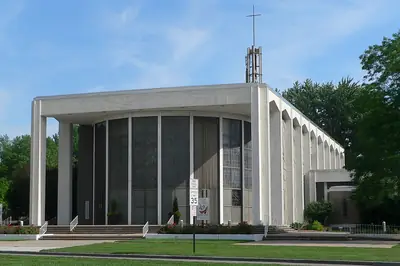
As the mother church of the Roman Catholic Diocese of Lincoln, Nebraska, the Cathedral of the Risen Christ traces its parish roots to Holy Family Church, founded in 1926 and organized in 1932. Construction began on June 20, 1963, and the building was dedicated on August 18, 1965.
St. Mary’s Church (cathedral)
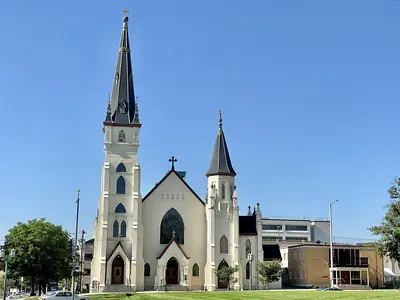
Located in the city, St. Mary’s Church invites visitors to pause and take in its architecture and quiet atmosphere.
Lancaster County (other)
Lincoln sits within Lancaster County, a Nebraska county whose seat and largest city is Lincoln. The county forms part of the Lincoln metropolitan area and is characterized by a flat landscape dotted with creeks, rivers, lakes, and reservoirs such as Salt Creek, Antelope Creek, the Big Nemaha River system, Branched Oak Lake, Pawnee Lake, and Wagon Train Lake. When Nebraska’s license plate system launched in 1922, Lancaster County received the prefix 2 due to its second‑largest number of registered vehicles; that prefix was used until 2002.
University of Nebraska–Lincoln (university)
Chartered by the Nebraska Legislature in 1869 under the Morrill Act, the University of Nebraska–Lincoln is the state’s oldest university and the flagship of the University of Nebraska system. It remained the University of Nebraska until 1968, when it absorbed the Municipal University of Omaha and helped create the current system. UNL operates two principal campuses in Lincoln: City Campus, close to downtown, and East Campus, northeast of it. Together with Nebraska Innovation Campus, the university encompasses more than one hundred classroom buildings and research facilities.
Statue of Abraham Lincoln (statue)
On the Nebraska State Capitol grounds stands the Statue of Abraham Lincoln, also known as The Gettysburg Lincoln. Created by Daniel Chester French and produced in 1912, the bronze figure is 8.67 feet tall on a six‑foot granite base. Behind it rises a 20‑foot granite stele inscribed with the text of Lincoln’s Gettysburg Address. The monument was commissioned by the Abraham Lincoln Memorial Association of Lincoln, Nebraska; the bronze was cast by Jno. Williams, Inc. of New York, and the architectural setting was designed by Henry Bacon, French’s longtime collaborator.
Sunken Gardens (garden)
Sunken Gardens is a distinctive public garden in Lincoln, recognized in the National Geographic Guide to Public Gardens as one of the 300 best gardens to visit in the United States and Canada. Constructed during the winter of 1930‑31, it remains the only Nebraska garden included in that guide, giving it a special status among regional public spaces.
Groundwater Colossus (artwork)
This sculpture in Lincoln invites passersby to pause and experience its distinctive form as part of the city’s artistic landscape.
Lester F. Larsen Tractor Test and Power Museum (museum)
Devoted to Nebraska’s tractor testing heritage, this museum is operated by the University of Nebraska–Lincoln. Its story begins with the Nebraska Tractor Test Law of 1919, which requires performance testing for every tractor with forty horsepower or more sold in the state. The facility started as the Nebraska Tractor Test Laboratory, became a museum in 1998, and was renamed for longtime chief engineer Lester F. Larsen. Today it is described as the only tractor testing museum and the only complete tractor test laboratory in the world.
Explore Lincoln with Neywo
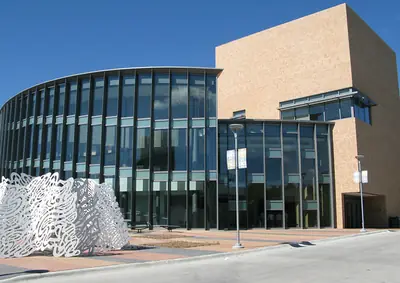
Neywo’s free audio guide for Lincoln includes 19 narrated places and one walking tour: “Speed, Art, Bones and the Capitol: Lincoln’s Museum Mile.” This route covers 5.41 kilometers, takes about 117 minutes, and stops at eight sites: the Museum of American Speed, Lied Center for Performing Arts, Sheldon Museum of Art, University of Nebraska State Museum, Nebraska State Historical Society Building, St. Mary’s Church, the Statue of Abraham Lincoln, and Tifereth Israel Synagogue. As you reach each location, the app tells the story of that place, allowing you to move at your own pace with no group and no schedule. Narration is available in 11 languages. Download Neywo to enjoy this self‑guided experience and discover Lincoln’s art, history, and scenery on your terms.
Places with an audio guide in Lincoln
8 places in Lincoln with a Neywo audio guide. Each one starts telling its story as you reach it.
Self-guided tours in Lincoln
1 tour in Lincoln, free in the Neywo app. Each stop tells its story as you reach it.
- Walk
Speed, Art, Bones and the Capitol: Lincoln's Museum Mile
Start with American racing at the Museum of American Speed, then walk the University of Nebraska's cultural corridor: a Philip Johnson art museum, a hall of fossil elephants and a concert hall within a few minutes of each other. Finish at the Capitol grounds, with Daniel Chester French's Gettysburg Lincoln, a church and a synagogue that tell the story of the city's communities.
Museum of American Speed · Lied Center for Performing Arts · Sheldon Museum of Art · University of Nebraska State Museum · Nebraska State Historical Society Building · St. Mary’s Church …
Open this tour: Speed, Art, Bones and the Capitol: Lincoln's Museum Mile
Walk Lincoln with Neywo
Neywo turns Lincoln into a self-guided audio tour. Stories arrive as you reach the place they belong to, and the route reshapes when you wander off it.

