Trenton, United States: Self-Guided Walking Tour
Things to Do in Trenton, New Jersey
The best things to do in Trenton include exploring Revolutionary War sites, historic churches, museums, and New Jersey’s working state capital. The city combines early American history with cultural institutions and distinctive historic buildings, making it a rewarding destination for a self-guided visit. Neywo has a free audio guide for Trenton covering 16 narrated places.
Trenton is the capital of New Jersey, in the United States, and its story is especially closely tied to the American Revolution. Much of the city’s history can be explored on foot, while a bus route follows South Broad Street and connects several important sites.
What to see in Trenton
Old Barracks Museum
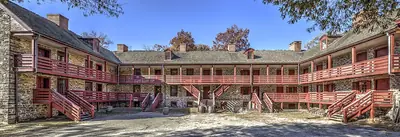
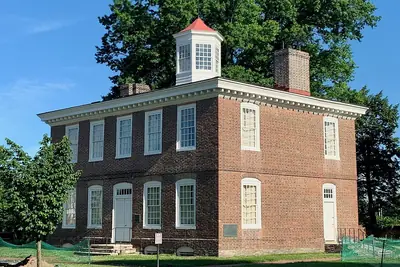
The Old Barracks Museum is one of Trenton’s most important historic sites. Built in 1758 to house soldiers of the British Army, it is the only remaining colonial barracks in New Jersey and one of the few surviving places directly connected with the 1776 Battle of Trenton.
The building was added to the National Register of Historic Places in 1971 and designated a National Historic Landmark in 1972 for its military significance. Today, it operates as a state-run historic site and museum dedicated to colonial and Revolutionary War history.
New Jersey State Museum
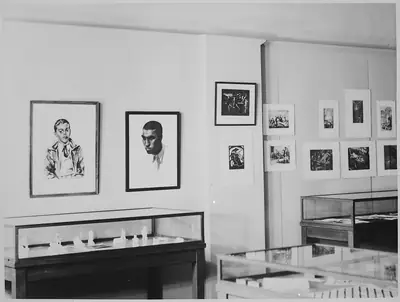
The New Jersey State Museum brings together natural history, archaeology, ethnography, cultural history, and fine art. Its collections range from natural history specimens and archaeological finds to ethnographic objects, cultural history material, and works of art.
The museum also presents exhibitions, educational programs, research initiatives, and lectures. Its facilities include a 140-seat planetarium and a 384-seat auditorium. It first received accreditation from the American Alliance of Museums in 1974 and most recently renewed that accreditation in 2019.
New Jersey State House
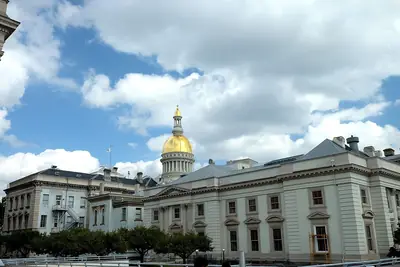
The New Jersey State House is the state capitol and one of the oldest state houses in continuous legislative use in the United States. Originally built in 1792, it is the country’s third-oldest continuously used state house, after the Maryland State House in Annapolis and the Virginia State Capitol in Richmond.
Designed by Jonathan Doane, the building has been expanded and renovated over time. It contains the Senate and General Assembly chambers, as well as offices for the governor, lieutenant governor, and state government departments. Unlike many capitol buildings, it is integrated into downtown Trenton rather than set apart on a park-like campus.
Cathedral of St. Mary of the Assumption
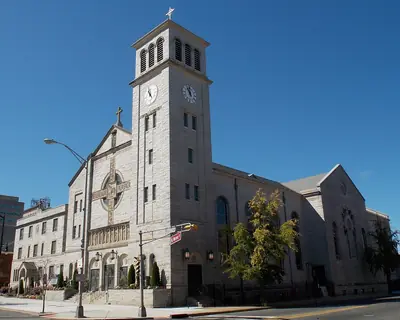
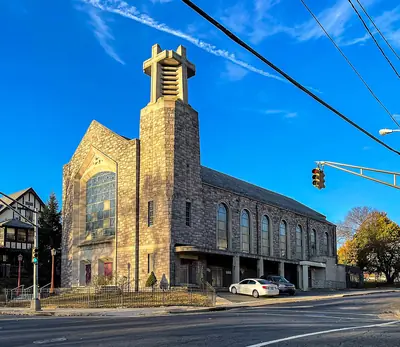
The Cathedral of St. Mary of the Assumption is the mother church of the Diocese of Trenton and one of its two seats. Its site was purchased in 1865 by the Reverend Anthony Smith and had previously formed part of the battlefield during the Battle of Trenton.
A plaque on the rectory marks the place where Hessian commander Johann Rall died on December 27, 1776. The original church was dedicated in 1871, and St. Mary’s became the cathedral when the Diocese of Trenton was established in 1881. The original cathedral was destroyed by fire in 1956; the present building is the rebuilt version.
William Trent House
The William Trent House is the oldest building in Trenton, dating from 1719. It was built for William Trent, who founded the town that later became New Jersey’s capital.
The house also served as the residence of three New Jersey governors. Its Early Georgian Colonial architecture earned it designation as a National Historic Landmark in 1970.
The Battle of Trenton
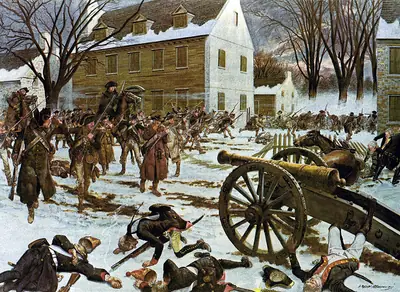
The Battle of Trenton was fought on December 26, 1776, when General George Washington led the Continental Army against Hessian forces stationed in the town. The action followed Washington’s overnight crossing of the icy Delaware River in severe winter weather.
The Continental Army had suffered a series of defeats and retreated through New Jersey into Pennsylvania. Washington’s forces marched south through the night and surprised the Hessian garrison, turning the site into one of the most significant places connected with the American Revolutionary War.
Mansion House in Cadwalader Park
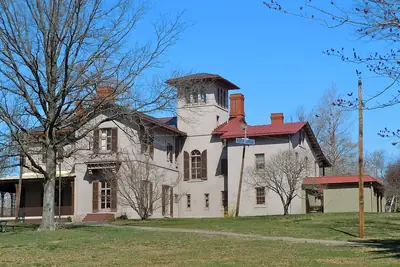
Mansion House, also known as Ellarslie or the McCall House, stands in Cadwalader Park. Built in 1848 as a summer retreat for Henry McCall Sr., a prominent Philadelphia figure, it is one of the earliest examples of Italianate architecture in the United States.
The house was added to the National Register of Historic Places in 1973 for its importance in architecture and landscape architecture. Its park setting offers a different atmosphere from Trenton’s downtown historic sites.
Trenton’s historic churches
Trenton’s churches reveal the city’s long religious and civic history. St. Michael’s Church is an Episcopal church whose parish was established in 1703, making it a founding parish of the Episcopal Diocese of New Jersey. The present building at 140 North Warren Street dates from 1747 and 1748 and was later renovated in 1810 and 1847–1848. It was added to the National Register of Historic Places in 1982.
First Presbyterian Church traces its congregation to 1712, with its first church building constructed in 1726. The church and its surrounding cemetery were added to the National Register of Historic Places in 2005 for their architectural, political, religious, and social history.
Sacred Heart Church, at 343 South Broad Street, was built in 1889 and dedicated on June 30 of that year. It was added to the National Register of Historic Places in 2002. Other churches included among Trenton’s narrated places are Divine Mercy Parish, Blessed Sacrament Church, Trinity Episcopal Cathedral, and St. Hedwig’s Parish. Trinity serves as the seat of the Diocese of New Jersey.
Taylor Opera House
The Taylor Opera House was Trenton’s first theater. It opened on March 18, 1867, at 18 South Broad Street and hosted performers including Mark Twain, Ethel Barrymore, and George M. Cohan.
The building also served as a venue for political conventions, Bible conferences, musical revues, meetings, and gubernatorial inaugurations. In 1921, it became Keith’s Capitol Theatre, a movie and vaudeville palace, and later operated as the RKO International. The building was demolished in 1969, but a historical marker commemorates the site.
Explore Trenton with a self-guided audio tour
Neywo’s Trenton self-guided walking tour lets you explore the city without joining a group or following a fixed schedule. The app tells the story of each place as you reach it, at your own pace, with no group and no schedule.
Trenton has:
- 2 walking tours
- Trenton, Where the Revolution Turned: 2.99 km, 88 minutes, 9 narrated stops
- Cadwalader Park to the Capitol: 4.17 km, 85 minutes, 5 narrated stops
- 1 bus route
- Route 613 down South Broad Street: Sacred Heart to St. Hedwig’s: 6.8 km, 29 minutes, 4 narrated stops
Download Neywo to explore Trenton with a free audio guide and hear the story of its museums, churches, state institutions, and Revolutionary War sites as you arrive. Narration is available in 11 languages, and the experience works at your own pace rather than according to a group itinerary or schedule.
Places with an audio guide in Trenton
8 places in Trenton with a Neywo audio guide. Each one starts telling its story as you reach it.
Self-guided tours in Trenton
3 tours in Trenton, free in the Neywo app. Each stop tells its story as you reach it.
- Bus ride
Route 613 down South Broad Street: Sacred Heart to St. Hedwig's
NJ Transit's 613 runs along South Broad Street through downtown Trenton. Ride it past Sacred Heart Church, the site of the Taylor Opera House and the Cathedral of St. Mary of the Assumption, then continue out to St. Hedwig's parish.
Sacred Heart Church · Taylor Opera House · Cathedral of St. Mary of the Assumption · St. Hedwig's Parish
Open this tour: Route 613 down South Broad Street: Sacred Heart to St. Hedwig's - Walk
Trenton, Where the Revolution Turned
Walk the capital of New Jersey on the ground of Washington's Christmas night victory in 1776. You pass the only colonial barracks left in the state, the third-oldest working statehouse in the country, the churches that stood through the battle, and the oldest house in the city.
New Jersey State Museum · New Jersey State House · Old Barracks Museum · Cathedral of St. Mary of the Assumption · St. Michael's Church, Trenton, New Jersey · First Presbyterian Church …
Open this tour: Trenton, Where the Revolution Turned - Walk
Cadwalader Park to the Capitol
Begin at the Italianate Mansion House in Cadwalader Park, built as a summer retreat in 1848. Pass two of Trenton's northwest churches, then walk down into the centre to the State Museum and the State House, the third-oldest statehouse still in use.
Mansion House · Blessed Sacrament Church (Trenton, New Jersey) · Trinity Episcopal Cathedral · New Jersey State Museum · New Jersey State House
Open this tour: Cadwalader Park to the Capitol
Walk Trenton with Neywo
Neywo turns Trenton into a self-guided audio tour. Stories arrive as you reach the place they belong to, and the route reshapes when you wander off it.

