What to See in Copacabana, Bolivia: Free Audio Guide
Things to do in Copacabana
Copacabana is a small town on the southeastern shore of Lake Titicaca in Bolivia, known for its religious heritage, high‑altitude setting and role as the main gateway to Isla del Sol. Visitors come to see its historic basilica, explore ancient astronomical sites and enjoy the tranquil lake views that contrast with the bustling pilgrimage atmosphere. Neywo offers a free audio guide for Copacabana with 4 narrated places available in 11 languages, letting you discover the town at your own pace.
What to See in Copacabana
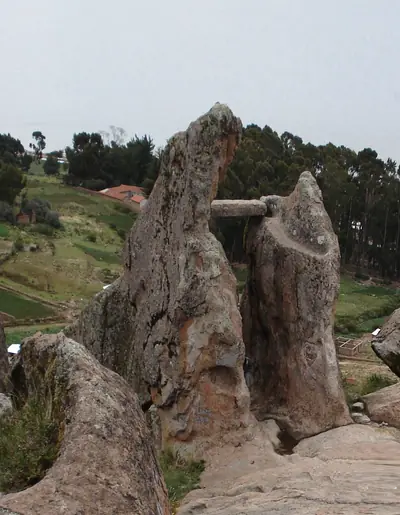
Pachat’aqa (pre‑Inca observatory)
About six hundred metres south of the town centre, on the slopes of Mount Kesanani, lies Pachat’aqa – also called Pachataka or the Inca Gallows. The site consists of two parallel stone blocks forming a lintel that served as a pre‑Inca astronomical observatory. It was used to track the seasons, follow lunar movements and predict eclipses. The Aymara name Pachataka means “the place where time is measured,” reflecting its original purpose before the Spanish mistakenly dubbed it the “Inca Gallows.”
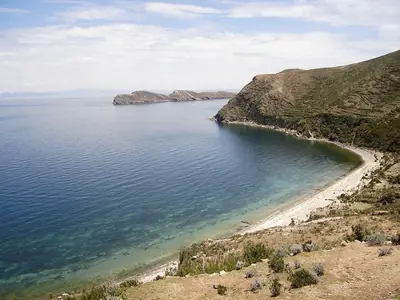
Isla del Sol (Island of the Sun)
Located in the southern part of Lake Titicaca, Isla del Sol covers roughly 14.3 km² of rocky, hilly terrain dotted with eucalyptus trees. The island’s steep slopes are terraced for agriculture, and there are no motor vehicles or paved roads; farming, fishing and tourism sustain the local economy. More than 80 ruins, mostly from the Inca period of the fifteenth century, are scattered across the island, with evidence of human settlement dating back to the third millennium BC. In Inca belief the island is the birthplace of the sun god Inti, and it is also linked to the legendary founders Manco Cápac and Mama Ocllo. Notable remains include Titi Qala, Q’asa Pata, Pillkukayna and the Chinkana complex.
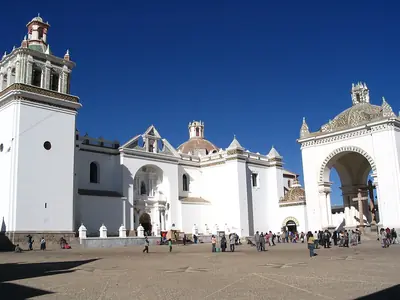
Basilica of Our Lady of Copacabana
Dominating the town’s skyline, the Basilica of Our Lady of Copacabana is a major Marian shrine dedicated to the Virgin of Candelaria, also known as Our Lady of Copacabana, the patron saint of Bolivia. Construction began in 1550 and the building was rebuilt between 1610 and 1651, blending original Renaissance elements with the Moorish style visible today. The basilica’s full Spanish name, Basílica de la Virgen de la Candelaria de Copacabana, recalls its longstanding devotion. Outside the church, a colorful blessing of vehicles takes place, a local custom that illustrates how religious practice intertwines with daily life.
Copacabana district
Set on a peninsula between Mount Calvario and Mount Niño Calvario, Copacabana combines a lakeside setting with grass‑covered highlands. The town stands at a very high altitude, offering sweeping views of Lake Titicaca and the surrounding Andes. Its quaint atmosphere is shaped by the basilica, traditional markets and the steady flow of pilgrims heading to Isla del Sol. The district’s layout invites leisurely walks along the waterfront and up the gentle hills that frame the settlement.
Experience Copacabana with Neywo
If you prefer to explore the town independently, download the Neywo app and activate the free audio guide for Copacabana. The guide contains four narrated stops that play automatically as you reach each location, allowing you to move at your own pace without a group or a fixed schedule. Narration is available in eleven languages, so you can listen in the language that suits you best. Although Neywo does not currently offer preset walking, bus or bike tours for Copacabana, the audio‑guide experience itself provides a self‑guided way to discover the basilica, Pachat’aqa, the town’s lakeside setting and the departure point for boats to Isla del Sol. Simply put on your headphones, start the guide and let the stories of each place unfold as you walk.
Places with an audio guide in Copacabana
4 places in Copacabana with a Neywo audio guide. Each one starts telling its story as you reach it.

Walk Copacabana with Neywo
Neywo turns Copacabana into a self-guided audio tour. Stories arrive as you reach the place they belong to, and the route reshapes when you wander off it.

