Things to Do in Potosi, Bolivia: Walking Guide
Things to do in Potosí: Bolivia's Silver City
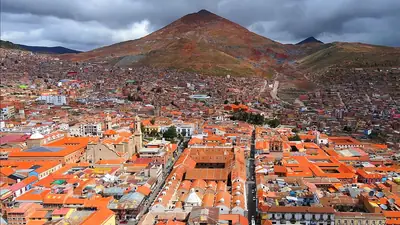
Rising dramatically in the high Andes, Potosí is one of the world’s highest urban settlements and a destination defined by its extraordinary colonial history and rugged mountain setting. Known in colonial times as Villa Imperial de Potosí, the city sits at the foot of the legendary Cerro Rico and holds a place on UNESCO’s World Heritage List for its well-preserved historic center. To explore the city’s highlights at your own pace, Neywo offers a free audio guide for Potosí featuring 10 narrated places.
What to see in Potosí: Key Landmarks and Heritage
Potosí’s rich past unfolds across its historic streets, grand squares, and striking religious architecture. Exploring the city reveals a living monument to the colonial era, when silver from the Andes helped shape global trade.
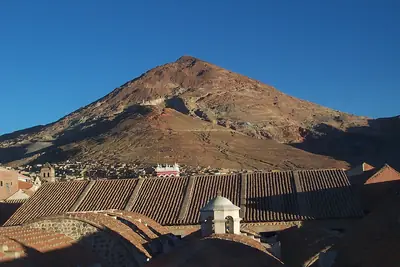
Cerro Rico
The rugged silhouette of Cerro Rico rises immediately above the landscape, known locally as Sumaq Urqu or the Rich Mountain. Historical accounts suggest this mountain provided about eighty-five percent of the silver from the central Andes during the colonial era, and some estimates say it yielded roughly eighty percent of the world’s silver between the sixteenth and seventeenth centuries. Visitors can explore the historic Pailaviri mine, a state-run operation divided into seventeen levels reachable by an elevator that descends about twenty-four meters every three meters, for a total depth of around two hundred forty meters. The mountain’s outline also appears on Bolivia’s national coat of arms.
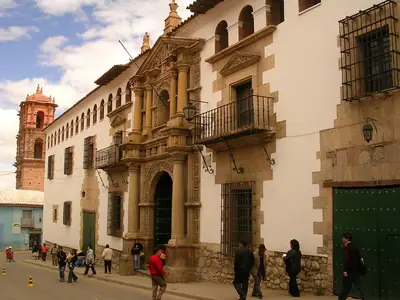
National Mint of Bolivia
Housed in the historic former mint of Potosí, this institution struck most of the silver coins that traveled the Spanish Main during the colonial era, creating the Spanish dollar that became the world’s major international currency. Founded in 1572 by the Viceroy of Peru, Francisco de Toledo, its second location operated from 1773 until 1951. Today, the site functions as a museum and historical archive dedicated to Bolivia’s monetary heritage.
Plaza 10 de Noviembre
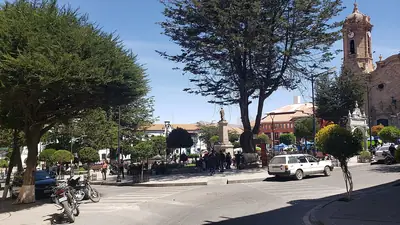
Plaza 10 de Noviembre serves as the lively heart of Potosí and is recognized as part of Bolivia’s Cultural Heritage. The square is adorned with four sculptures: a Statue of Liberty, a heron perched on the fountain, a Muse, and a cherub. Surrounding the plaza are important historic buildings such as the Royal Palace, the Mint, the Potosí Cathedral, and the Cabildo. Historically nicknamed ‘Plaza de Regocijo,’ celebrations and joyful events have long been held here.
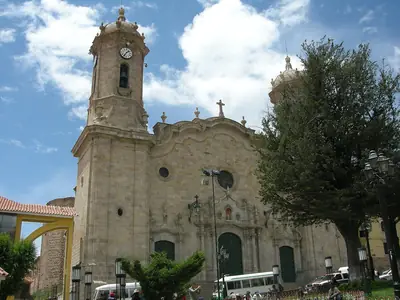
Cathedral Basilica of Our Lady of Peace
Anchoring Plaza 10 de Noviembre, this stone-faced cathedral serves as a minor basilica and the seat of the Diocese of Potosí. Its stone façade showcases a mix of Baroque detailing and Neoclassical symmetry, introduced to the city by Franciscan friar-architect Manuel de Sanahuja. Construction began in 1808 on the site of an earlier church that collapsed, and the building was completed in 1836. Inside, visitors can view precious gold and silver religious relics, alongside a museum of sacred art.
San Lorenzo Church
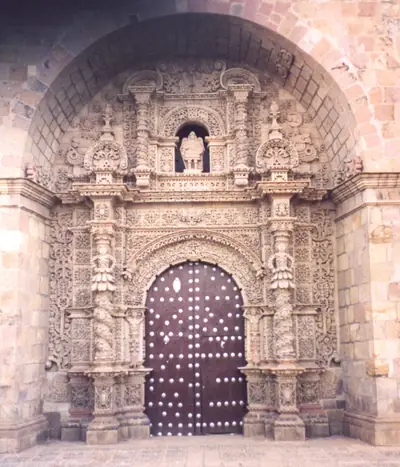
San Lorenzo de Carangas is a Roman Catholic church protected as a national monument. Originally founded in the sixteenth century, the church underwent its most transformative changes in the eighteenth century with the completion of a raised dome and an elaborately decorated Andes Baroque portal in 1744. The stone carvings display a vivid fusion of Inca and Spanish motifs, including vizcachas, alpacas, puma heads, sun discs, angel faces, a mermaid playing an instrument, and ears of corn.
Santuario de Manquiri
Nestled in a striking ravine east of Potosí, the Santuario de Manquiri is an 18th-century mestizo baroque church built in the 1700s. It blends European baroque elements with local artistic traditions, reflecting the religious and artistic developments of colonial Bolivia during that period.
Explore Potosí with Neywo
Discover the city with a Potosí audio guide that brings its history to life as you walk. Neywo offers 2 walking tour options to help you navigate the streets: a 0.67 km route taking about 43 minutes across 6 stops, and a longer 1.26 km walk lasting about 56 minutes with 7 stops. Each story plays automatically as you reach the place, allowing you to explore completely at your own pace with no group and no schedule. Narration is available in 11 languages.
When planning further travels through the region, you can also explore guides for neighboring destinations including Sucre, La Paz, Cochabamba, Santa Cruz de la Sierra, Copacabana, and the wider country overview for Bolivia.
Places with an audio guide in Potosi
7 places in Potosi with a Neywo audio guide. Each one starts telling its story as you reach it.
Self-guided tours in Potosi
2 tours in Potosi, free in the Neywo app. Each stop tells its story as you reach it.
- Walk
National Mint of Bolivia & Cathedral Basilica of Our Lady of Peace, Potosí
A 0.67 km walk of 6 stops from Museo Universitario Ricardo Bohórquez to San Lorenzo Church, Potosí, taking in 2 museums, 1 cathedral, 1 square. About 43 minutes at a slow pace with time to look.
Museo Universitario Ricardo Bohórquez · Cathedral Basilica of Our Lady of Peace, Potosí · Potosí · Plaza 10 de Noviembre · National Mint of Bolivia · San Lorenzo Church, Potosí
Open this tour: National Mint of Bolivia & Cathedral Basilica of Our Lady of Peace, Potosí - Walk
The Ultimate Tour: Museo Ingenio San Marcos to San Lorenzo Church, Potosí
A 1.26 km walk of 7 stops from Museo Ingenio San Marcos to San Lorenzo Church, Potosí, taking in 3 museums, 1 square, 1 cathedral. About 56 minutes at a slow pace with time to look.
Museo Ingenio San Marcos · Potosí · Plaza 10 de Noviembre · Cathedral Basilica of Our Lady of Peace, Potosí · National Mint of Bolivia · Museo Universitario Ricardo Bohórquez …
Open this tour: The Ultimate Tour: Museo Ingenio San Marcos to San Lorenzo Church, Potosí
Walk Potosi with Neywo
Neywo turns Potosi into a self-guided audio tour. Stories arrive as you reach the place they belong to, and the route reshapes when you wander off it.

