What to See in Sucre, Bolivia: Free Audio Guide
Things to do in Sucre: Discover Bolivia’s White City
Perched high in the Andes at nearly 2,800 meters above sea level, Sucre is Bolivia’s constitutional capital and a UNESCO World Heritage Site. Celebrated for its exceptionally preserved colonial and republican architecture, the city blends Hispanic and republican styles reminiscent of Cusco and Quito. Neywo features a free audio guide for Sucre with 15 narrated places and narration available in 11 languages to help you explore its rich history and local chocolate specialties.
What to see in Sucre: Key Landmarks and Historic Sites
Plaza 25 de Mayo
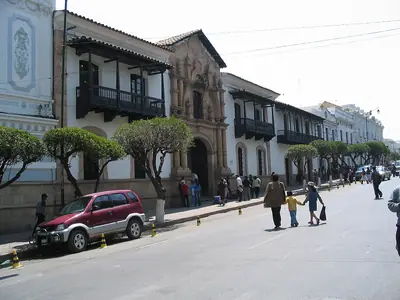
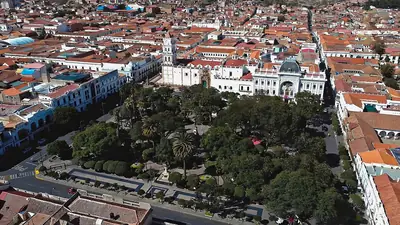
Plaza 25 de Mayo is the lively heart of Sucre, sitting at nearly 2,800 meters above altitude and declared Bolivia’s Cultural and Historical Heritage in 2014. The central park features monuments to the liberators Simón Bolívar, Antonio José de Sucre, and Bernardo de Monteagudo. Surrounding the square are the Casa de la Libertad, the Metropolitan Cathedral, the Municipal City Hall, and the Governor’s Office.
Sucre Cathedral
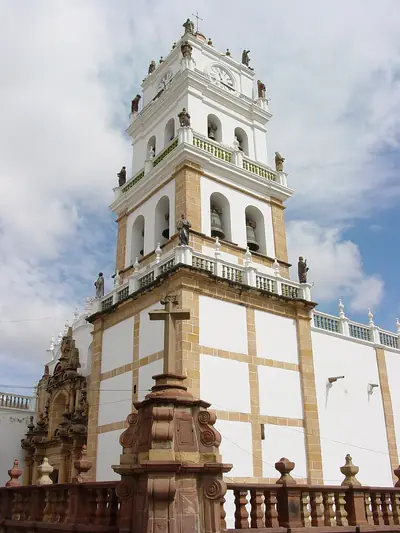
Also known as the Cathedral of the Immaculate Conception or the Catedral Basílica de Nuestra Señora de Guadalupe, this 16th-century Roman Catholic church stands right on Plaza 25 de Mayo. Construction began in 1559 and lasted until 1712. It serves as the seat of the Roman Catholic Church in Bolivia and the Archdiocese of Sucre, holding minor basilica status and municipal cultural heritage recognition.
House of Freedom
Located just a few steps from the city center, the House of Freedom (Casa de la Libertad) operates as a museum in the historic hall where Bolivia’s Act of Independence was signed in 1825. The country’s first constitution was drafted here, and the Bolivian Congress met in these halls until 1898.
Palacio de la Prefectura de Chuquisaca
Standing on Plaza 25 de Mayo beside the Metropolitan Cathedral, this building was originally constructed to serve as Bolivia’s presidential palace and is also known as the Palacio Nacional. Following the Bolivian civil war, the national government moved to La Paz, leaving the building to house the departmental government of Chuquisaca.
Basílica de San Francisco
The Basílica de San Francisco is a Franciscan temple located in the heart of Sucre’s historic centre. Since the 19th century, the former Franciscan convent attached to the church has served as the seat of Bolivia’s National Army.
Teatro Gran Mariscal
The Teatro Gran Mariscal is a prominent theatre situated within the historic capital.
La Recoleta Monastery
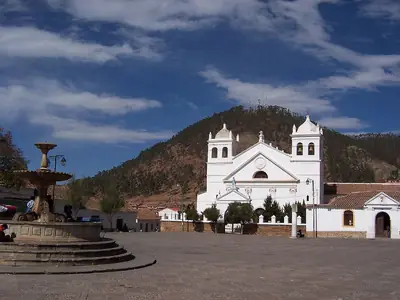
La Recoleta Monastery is a tranquil Franciscan monastery situated in the constitutional capital of Bolivia.
Palacete del Guereo
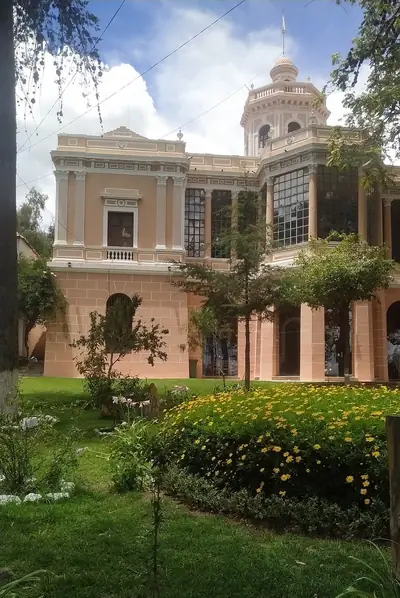
The Palacete del Guereo is a cultural heritage building in the historic heart of Sucre that hosts cultural activities.
Castillo de La Glorieta
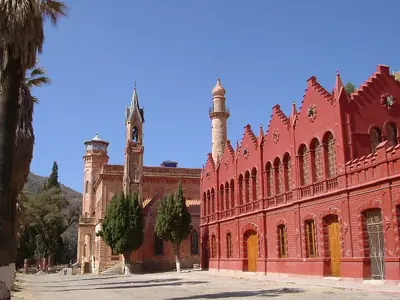
Located on the outskirts of Sucre, the Castillo de La Glorieta is a national monument of Bolivia. It once served as the seat of the Principality of La Glorieta, a small sovereign entity created for Clotilde Urioste and Francisco Argandoña Revilla, who both held the title of prince, before being named a National Monument in 1970.
Palacio de La Florida
Set on the banks of the Quirpinchaca ravine in the El Tejar area, the Palacio de La Florida is a 19th-century country residence built for former president Aniceto Arce. Resembling an old colonial-type hacienda, it reflects his modernizing vision and fondness for European architecture amidst extensive gardens with centenary trees.
Cal Orck’o and Parque Cretácico
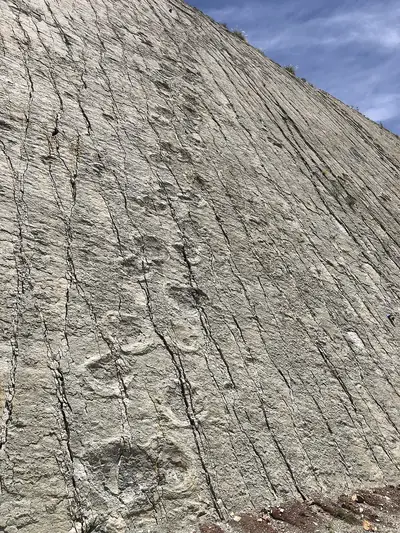
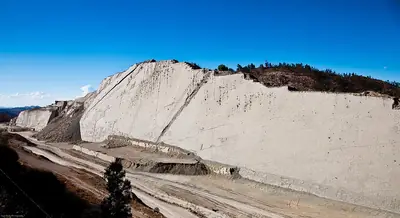
Just a few kilometers northwest of Sucre in a working limestone quarry lies Cal Orck’o, a natural monument preserving between five thousand and ten thousand individual dinosaur footprints across more than four hundred trackways made by at least fifteen different dinosaur types. The nearly vertical wall measures roughly twelve hundred meters long and rises eighty meters high, earning a declaration as a Natural Paleontological Monument in October 1998. Opposite the quarry, Parque Cretácico features life-size dinosaur models and a viewpoint looking out over the upper Cretaceous fossilized tracks.
Explore Sucre with Neywo
If you are planning a Sucre self-guided walking tour, download Neywo and explore with a free walking tour Sucre has to offer. The app includes 1 walking tour spanning 4.13 km and 112 minutes, featuring 10 narrated stops that cover Simón Bolívar, Teatro Gran Mariscal, Basílica de San Francisco, Plaza 25 de Mayo, the Sucre Cathedral, the Palacio de la Prefectura de Chuquisaca, the House of Freedom, La Recoleta Monastery, and the Palacete del Guereo.
The app tells the story of each place as you reach it, allowing you to move at your own pace with no group and no schedule. Continue your journey through the region with guides to Bolivia and neighboring destinations like Potosi, Cochabamba, Santa Cruz de la Sierra, and Copacabana.
Places with an audio guide in Sucre
8 places in Sucre with a Neywo audio guide. Each one starts telling its story as you reach it.
Self-guided tours in Sucre
1 tour in Sucre, free in the Neywo app. Each stop tells its story as you reach it.
- Walk
Sucre, the White City Where Bolivia Was Born
Walk the historic centre of Bolivia's constitutional capital, a UNESCO World Heritage city. Start by the Bolívar statue and the Gran Mariscal theatre, pass the Franciscan basilica, the plaza where the republic was declared, the cathedral, the palace and the House of Freedom where independence was signed in 1825, and finish at the quiet Recoleta quarter.
Simón Bolívar · Teatro Gran Mariscal · Basílica de San Francisco, Sucre, Bolivia · Plaza 25 de Mayo · Sucre Cathedral · Palacio de la Prefectura de Chuquisaca …
Open this tour: Sucre, the White City Where Bolivia Was Born
Walk Sucre with Neywo
Neywo turns Sucre into a self-guided audio tour. Stories arrive as you reach the place they belong to, and the route reshapes when you wander off it.

