What to See in London, Canada: Free Audio Guide
Things to do in London, Ontario
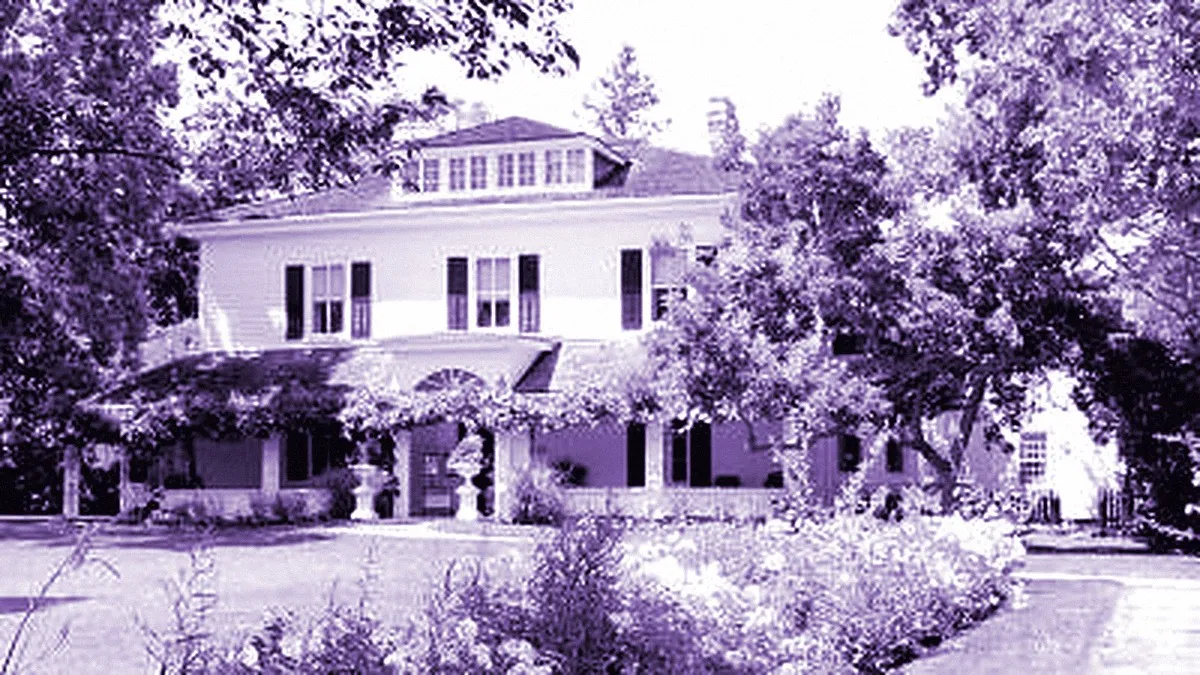
London, Ontario, is known as the “Forest City” for its riverfront parks and green corridors that weave through a downtown rich in cultural and medical heritage. Visitors come to explore the birthplace of insulin, historic churches, museums and theatres, all set against the scenic Thames River. Neywo provides a free audio guide for London with 56 narrated places, letting you discover the city at your own pace.
Explore London’s Highlights
Banting House
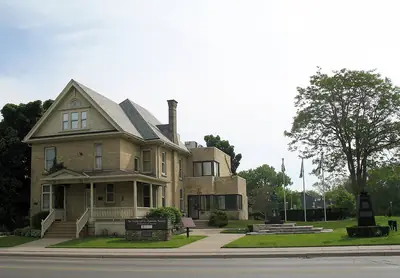
This modest late‑19th‑century home is celebrated as the Birthplace of Insulin. On the night of October 31, 1920, Frederick Banting woke at 2 a.m. with the idea that would lead to a life‑saving diabetes treatment. The house has been a museum since 1984, preserving the bedroom where he recorded his insight and displaying photographs, instruments and personal items linked to his work with Charles Best.
Canadian Medical Hall of Fame
Founded in 1994, this national institution honours Canadians who have advanced disease understanding and health care. Located in a former Kellogg’s cereal factory, it uses interactive displays, digital panels, interviews and a Laureate Theatre to tell the stories of its inductees across categories such as applied medical research.
Jet Aircraft Museum
Situated at London International Airport, the museum preserves the history of Canadian Forces jet aircraft, from the early De Havilland Vampire to more recent models. Its mission goes beyond display: it strives to keep the jets flying whenever possible. The museum opened as a charitable foundation on September 12, 2009.
Museum of Ontario Archaeology
Dedicated to over 11,000 years of human history in Ontario, this northwest‑London facility holds more than two million artefacts, a laboratory, library and spaces for exhibitions, theatre and classroom activities. Adjacent to the museum is a reconstruction of the Lawson Site, a 16th‑century pre‑contact Attawandaron (Neutral Iroquoian) village that can be toured.
Museum London
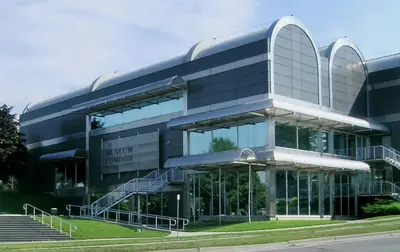
Located near the forks of the Thames River, Museum London has been sharing the city’s art and history since 1940. The building, designed by Raymond Moriyama, features exposed concrete and brick terraces that slope toward the river, letting in plentiful natural light. Its collection includes over 5,000 works of Ontario and Canadian art and roughly 45,000 historical artefacts, with pieces by artists such as Lawren Harris and Kent Monkman.
St. Peter’s Cathedral Basilica
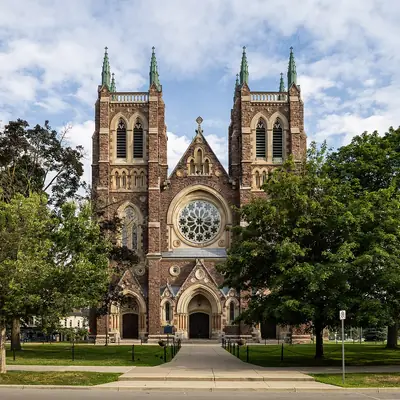
This striking neo‑Gothic church serves as the seat of the Roman Catholic Diocese of London. Construction ran from 1880 to 1885, and the building was dedicated on June 28, 1885; it received the title of minor basilica from Pope John XXIII in 1961. Designed by Joseph Connolly in a 13th‑century French Gothic Revival style, the limestone structure has pointed arches, tall windows and twin towers that were completed in 1957‑1958.
Grand Theatre
A professional theatre at 471 Richmond Street, the Grand Theatre has been a cultural fixture since 1901. Its main Spriet Stage seats 839 patrons, while the smaller Auburn Theatre downstairs holds about 150. The venue is also known for the unsolved disappearance of its former owner, Ambrose Small, in 1919, a legend that adds intrigue to its history.
London Children’s Museum
Opened in 1975 as Canada’s first children’s museum, this hands‑on learning space moved to a larger, purpose‑built facility in early 2025. Exhibits are organised around movement, engineering and community, featuring a fossil dig and field lab in the “Unearthed” gallery, a long water table in the Stream gallery that shows how rivers shape their surroundings, a treehouse climbing structure and a small‑town role‑play area.
Royal Canadian Regiment Museum
This museum traces the story of one of Canada’s oldest infantry regiments, founded in 1883, through the South African War, both World Wars, Korea and later missions. Highlights include a replica of a scarf knitted by Queen Victoria, medals linked to General Charles Foulkes and personal items belonging to Victoria Cross recipient Milton F. Gregg. The exhibits combine uniforms, weapons, letters and photographs to show both the broad history and individual experiences of soldiers.
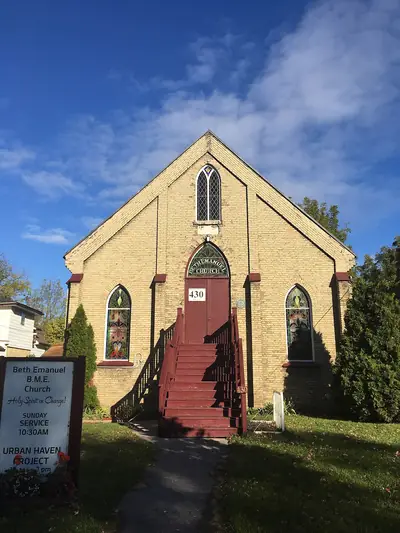
Beth‑Emmanuel British Methodist Episcopal Church
A historic church building located in London, Ontario, this site represents the city’s religious heritage, though the source notes provide no further detail about its architecture or history.
Bishop Cronyn Memorial Church
Erected in memory of Benjamin Cronyn, the first bishop of the Anglican Diocese of Huron who died in 1871, this Gothic Revival landmark opened in 1873 and received its full name in 1955. Built with local yellow brick and red brick accents, it features pointed arches, tall narrow windows and a central tower. Regular Anglican services ended in 2015, and the building has since hosted music programmes through Aeolian Hall.
Aeolian Hall Performing Arts Centre
Originally constructed between 1883 and 1884 as the Town Hall for London East, this High Victorian building blends Italianate and Second Empire elements. It has served as a courthouse, school, library branch and telegraphy school over the years. A 1969 renovation exposed the original wooden beams, enhancing the hall’s sightlines and acoustics, and today it hosts a variety of live performances.
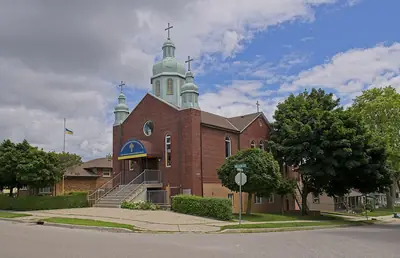
Christ the King Ukrainian Catholic Church
Described as a distinctive place of worship in London, Ontario, this church invites visitors to appreciate its architecture and explore it at their own pace.
Christ Church (Anglican)
Built between 1862 and 1863, this two‑storey wooden structure wrapped in white brick was the second Anglican church erected in London after the Diocese of Huron was established. Its western face shows three tall lancet windows framed by buttresses, and the interior includes a shallow chancel with a gallery and staircase, plus three stained glass windows on the east wall. Designated under the Ontario Heritage Act in 2007, the church closed in 2014 after its congregation dwindled to 25 members; the building now operates as the Jesus Is Lord Church.
Dundas Street Centre United Church
With origins in a Wesleyan Methodist group formed in 1856, this Romanesque Revival church was completed after a fire destroyed an earlier building in 1895 and dedicated in May 1896. It joined the United Church of Canada in 1925. The exterior features red brick and stone, rounded arches, three towers and a slate roof. Inside, the sanctuary follows an amphitheatre layout centred on the pulpit and choir, topped by a domed ceiling and a semicircular balcony, and it houses a pipe organ with over 3,000 pipes, fine woodwork and stained glass throughout.
Experience London with Neywo
Neywo’s free audio guide for London includes 56 narrated places and offers two walking tours, one bus route and one bike route.
- Forks of the Thames: Cathedrals, Stage and Eldon House – 2.81 km, 79 minutes, 8 stops (Eldon House, Museum London, First Christian Reformed Church, Canada Life Place, Grand Theatre, St. Paul’s Cathedral, St. Peter’s Cathedral Basilica, Holy Roller).
- Insulin and Steeples: East of Richmond Street – 3.2 km, 79 minutes, 6 stops (Christ Church (Anglican), London Towers, Dundas Street Centre United Church, Banting House, The Palace Theatre, St. Mary Church).
- LTC 2B Dundas: From the East End to the Forks – 7.4 km, 32 minutes, 5 stops (St. Patrick Church, The Palace Theatre, Dundas Street Centre United Church, Museum London, Banting House).
- Bike to the Birthplace of Insulin – 3.6 km, 18 minutes, 4 stops (St. Michael Church, Dundas Street Centre United Church, Banting House, The Palace Theatre).
As you reach each stop, the app tells the story of that place, allowing you to explore at your own pace with no group and no schedule. Narration is available in 11 languages. Download Neywo today and let the city’s history unfold step by step.
Places with an audio guide in London
8 places in London with a Neywo audio guide. Each one starts telling its story as you reach it.


Self-guided tours in London
4 tours in London, free in the Neywo app. Each stop tells its story as you reach it.
- Bike ride
Bike to the Birthplace of Insulin
A short ride on London's cycle lanes from St. Michael's Church in the north, past the three-towered Dundas Street Centre United Church and Banting House, where the idea for insulin was written down in 1920, to the Palace Theatre.
St. Michael Church · Dundas Street Centre United Church · Banting House · The Palace Theatre
Open this tour: Bike to the Birthplace of Insulin - Bus ride
LTC 2B Dundas: From the East End to the Forks
The Dundas Street line is the main east-west bus in London. Ride it from St. Patrick's in the east past the Palace Theatre and the red-brick Dundas Street Centre United Church, to Museum London at the forks of the Thames and Banting House, birthplace of insulin.
St. Patrick Church · The Palace Theatre · Dundas Street Centre United Church · Museum London · Banting House
Open this tour: LTC 2B Dundas: From the East End to the Forks - Walk
Forks of the Thames: Cathedrals, Stage and Eldon House
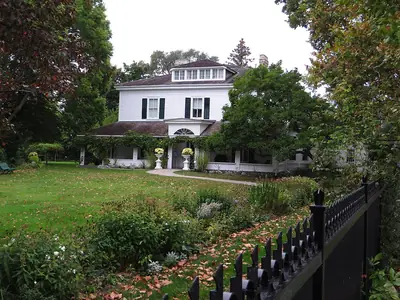
Downtown London, Ontario, at the place where the Thames forks. Start at the city's oldest house, then pass a concrete museum by Raymond Moriyama, a Gothic Revival church from 1881, the arena and the theatre whose owner vanished in 1919, and two cathedrals, one Anglican from 1846 and one Catholic with Gothic twin towers. Finish in Victoria Park beside a tank that fought from D-Day to VE Day.
Eldon House · Museum London · First Christian Reformed Church · Canada Life Place · Grand Theatre · St. Paul's Cathedral …
Open this tour: Forks of the Thames: Cathedrals, Stage and Eldon House - Walk
Insulin and Steeples: East of Richmond Street
Walk east along Dundas Street from a wooden-framed Victorian church wrapped in white brick, past a bell tower and a Romanesque Revival church with three towers, to the small bedroom where Frederick Banting woke at 2 a.m. in 1920 with the idea that led to insulin. Finish at a classic cinema and a Catholic church on the east side.
Christ Church (Anglican) · London Towers · Dundas Street Centre United Church · Banting House · The Palace Theatre · St. Mary Church
Open this tour: Insulin and Steeples: East of Richmond Street
Walk London with Neywo
Neywo turns London into a self-guided audio tour. Stories arrive as you reach the place they belong to, and the route reshapes when you wander off it.

