What to See in Charlottetown, Canada: Free Audio Guide
Things to do in Charlottetown
Charlottetown is the historic seaside capital of Prince Edward Island, where Canadian heritage, island culture and waterfront scenery come together. The city’s compact centre invites you to stroll past red‑brick façades, visit landmarks that shaped Confederation and enjoy fresh Atlantic fare at a relaxed pace. Neywo offers a free audio guide for Charlottetown with 25 narrated places, letting you explore at your own speed.
Explore Charlottetown’s historic centre
St. Dunstan’s Basilica
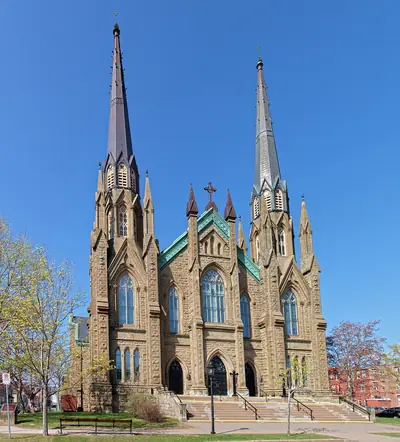
Rising between the harbour and the Confederation Centre of the Arts, St. Dunstan’s Basilica is a striking example of French Gothic architecture built from Island sandstone. Its twin spires each reach 61 metres, and the façade features three portals beneath pointed arches accessed by a monumental staircase. After a fire in 1913 destroyed the original stone cathedral, the community rebuilt it, completing the work in 1919 with an English Gothic interior set within the original stonework.
Prince Edward Battery
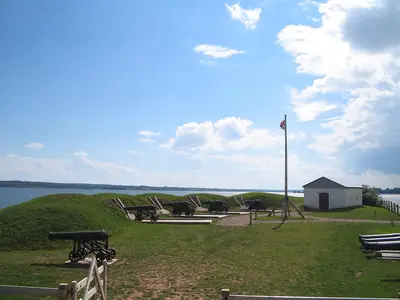
Overlooking Charlottetown Harbour at Battery Point (also called Governor’s Point), the Prince Edward Battery is a historic defence site first erected in 1805 during the Napoleonic Wars. Its cannons never saw combat but were used for drills and ceremonies. Over the years the armament evolved from twelve‑pounders to eighteen‑pounders by the War of 1812, then to nine‑pounders with masonry magazines in 1865, later to thirty‑two‑pounders and finally to sixty‑four‑pounder rifled muzzle‑loading guns by the early 1900s. Today nine period guns remain on display, mounted on iron and wooden ship‑style carriages.
St. Peter’s Cathedral
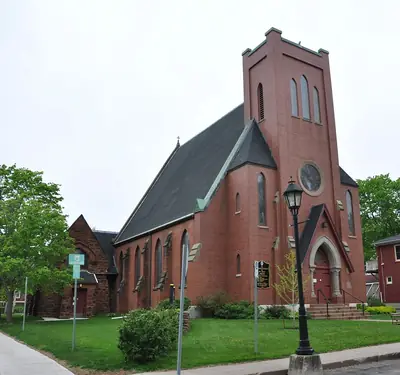
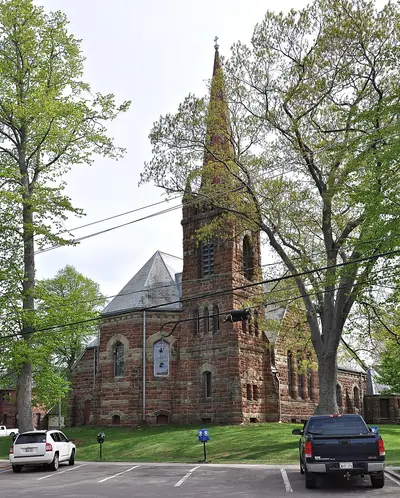
Founded in 1869, St. Peter’s Cathedral serves the Anglican Diocese of Nova Scotia and Prince Edward Island as an Anglo‑Catholic place of worship. Construction began in 1867, services were held by mid‑1869, and the cathedral was consecrated on the Feast of Saint Peter and Saint Paul a decade later. Though often noted as possibly the smallest cathedral in Canada, its High Victorian Gothic interior, built from local sandstone, makes a memorable impression. Attached to the west side is All Souls’ Chapel, erected in 1888 for the cathedral’s first clergy leader and designed by William Critchlow Harris.
Central Christian Church
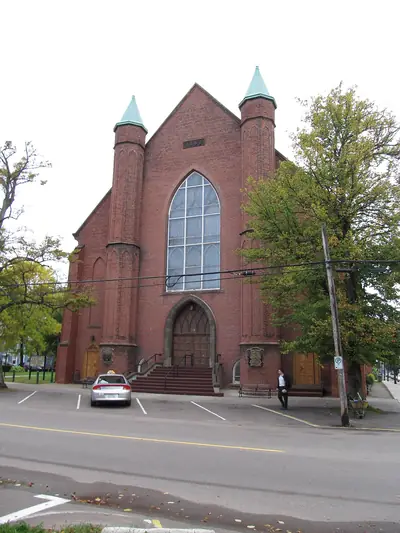
Set among the city’s streets, Central Christian Church offers a quiet spot to notice one of Charlottetown’s Christian landmarks. The building contributes to the town’s religious landscape without extensive detail in the source material.
Confederation Centre Art Gallery
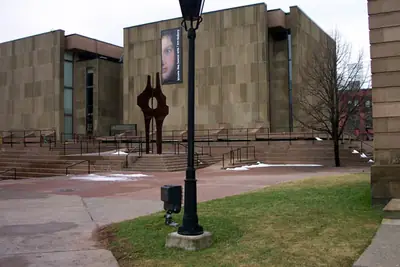
Located in the northeast pavilion of the Confederation Centre of the Arts, the Confederation Centre Art Gallery showcases Canadian art from past to present. Seven exhibition rooms provide roughly 3,250 square metres of space. The gallery opened in October 1964 alongside the rest of the complex and was created to honour the Fathers of Confederation.
Confederation Centre of the Arts
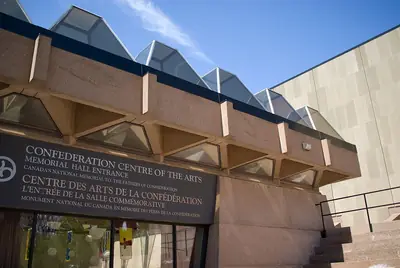
Opened in 1964, the Confederation Centre of the Arts is a Brutalist cultural centre that occupies an entire city block. Its monolithic exterior, terraced plazas and U‑shaped layout bring four pavilions together around Memorial Hall. Built with contributions from every provincial government matched by the federal government, it stands as a national memorial to the 1864 Charlottetown Conference. The Sobey Family Theatre inside has 1,100 seats, making it the largest theatre of its kind east of Montreal, and the centre hosts the Charlottetown Festival, famed for the long‑running production of Anne of Green Gables: The Musical.
MacKenzie Theatre (The Mack)
A few steps from the main complex, The Mack is an intimate live‑performance venue run by the Confederation Centre of the Arts. Originally the Capitol Theatre—a movie house with over 500 seats opened around 1927—it became a cinema until 1965, then was renovated into a performance‑focused space seating about 200. Its cabaret‑style tables, cozy atmosphere and clear sightlines make it a favoured spot for music, comedy and theatre, and it bears the name of a bequest from Dr. David Wallace MacKenzie Junior’s estate.
St. Paul’s Anglican Church Rector
Built in 1896 from locally sourced sandstone, St. Paul’s Anglican Church displays a Gothic Revival design by William Critchlow Harris. The parish traces its roots to the earliest Anglican services on Prince Edward Island, which were once held in the ballroom of Richardson’s Coffee House. After a violent windstorm destroyed an earlier building in 1833, the congregation consecrated a replacement in 1836 and continued to enlarge the church through the nineteenth century. Inside, a wooden groined ceiling rises above a space that once accommodated about 450 worshippers, and the interior was later enhanced with a brick chancel and imported stained‑glass windows.
Trinity United Church
Trinity United Church offers a peaceful setting to pause and appreciate one of Charlottetown’s religious landmarks. The source notes it as a quiet place for reflection without further detail.
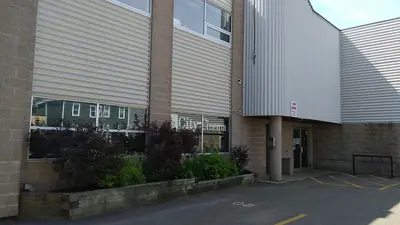
City Cinema
For film lovers, City Cinema provides a venue devoted to movies in Charlottetown. It functions as a local cinema within the city’s cultural offerings.
Charlottetown Farmers Market
More than sixty vendors gather at the Charlottetown Farmers Market, where island abundance meets community spirit. Operating for over two centuries, the market moved into a permanent, purpose‑built space in the early 1980s and now runs as a non‑profit, membership‑based co‑operative. Stalls display leafy greens, Prince Edward Island’s celebrated red potatoes, berries, freshly baked breads, pastries and ready‑to‑eat dishes, letting visitors meet the growers and makers behind the products.
Dalton Hall
Dalton Hall is a historic university building originally erected as the second residence for male students at Saint Dunstan’s College. Its durable brick structure is accented with decorative cement blocks, plaster and a slate roof, reflecting early‑twentieth‑century design. After serving as a dormitory until 1972, the building was renovated for offices and classrooms and now houses services such as Accessibility Services, the Registrar’s Office, international student support, recruitment and advising, and the Webster Centre for Student Success.
Peake’s Wharf Complex
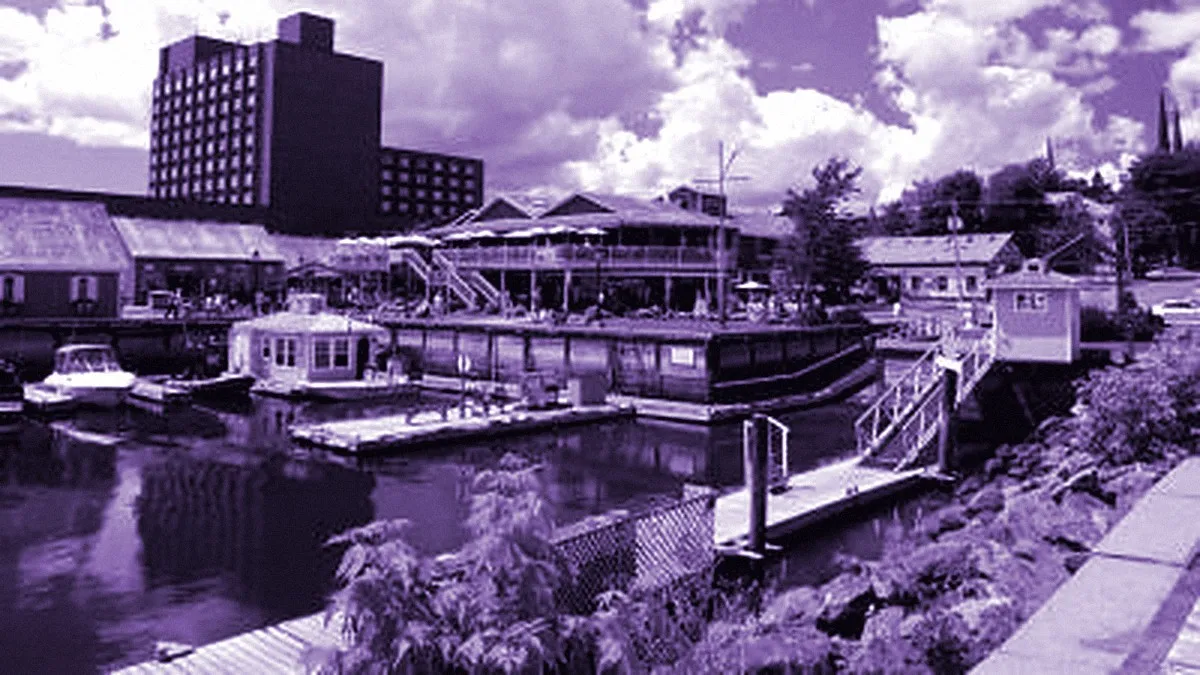
Peake’s Wharf Complex blends Charlottetown’s working‑harbour past with a lively waterfront district. Historic wooden buildings now house craft studios, boutiques, galleries, gift shops and food counters, while a broad boardwalk opens the area toward the shoreline. The wharf began in 1872 when the Peake Brothers built their third pier, exporting Island goods such as oats, potatoes, dried fish and timber to markets across the Maritimes, Britain and the United States. By 1904 the federal Department of Marine and Fisheries added storage, testing facilities, an oil depot and a lifesaving station. A major renewal in 1989 preserved the character of the site while introducing a 150‑slip marina that replaced the old warehouse. Today the wharf is especially lively in summer and early fall, featuring warm weather, live music and occasional festivals.
Government House
Known locally as Fanningbank, Government House is the official residence of the Lieutenant Governor of Prince Edward Island. Built in 1834 on land set aside in 1789 by Governor Edmund Fanning, it is a two‑storey wood‑frame structure in a neoclassical style with Georgian or Palladian influences. Its most striking feature is a tall double‑height portico supported by Doric columns and framed by a wrap‑around verandah. Designated a National Historic Site of Canada in 1971, the building once housed the colonial administration before responsible government arrived in 1851 and now hosts state dinners, investitures, receptions and other ceremonies.
Province House
Province House has been the meeting place of Prince Edward Island’s Legislative Assembly since 1847 and remains an active seat of government today. Constructed between 1843 and 1847 in a neoclassical style by Isaac Smith using local artisans, it is Canada’s second‑oldest seat of government, with its halls in use since January 1847. The building gained lasting fame in September 1864 when it hosted the Charlottetown Conference, the first gathering of delegates to discuss Canadian Confederation. Inside, the Confederation Chamber has been restored to reflect its 1864 setting alongside other period rooms and the province’s active legislative assembly. Province House became a National Historic Site in 1973 and is one of only three provincial legislatures in Canada to receive that honour. Visitors can also see a bronze Veterans Memorial, plaques dedicated to the Island’s Fathers of Confederation and a Boer War monument.
Discover Charlottetown with Neywo
Neywo’s free audio guide for Charlottetown includes 25 narrated places and offers one walking tour and one bike route. The walking tour, “Birthplace of a Nation: Charlottetown’s Confederation Trail,” covers 2.65 kilometres in about 94 minutes with 11 stops, including Prince Edward Battery, Government House, St. Peter’s Cathedral, Charlottetown City Hall, the Sobey Family Theatre, the Confederation Centre Art Gallery, Province House, St. Paul’s Anglican Church Rector, the Pavilion Hotel, Inns on Great George, St. Dunstan’s Basilica and Peake’s Wharf Complex. The bike route, “Market to Brewery: A Charlottetown Cycle‑Lane Hop,” spans 2.8 kilometres in roughly 14 minutes with two stops at the Charlottetown Farmers Market and the PEI Brewing Company. As you walk or cycle, the app tells the story of each location when you reach it, allowing you to explore at your own pace with no group and no schedule. Narration is available in 11 languages, making the experience accessible to visitors from around the world.
Ready to explore?
Download Neywo today and let the city’s history, culture and seaside charm unfold at your own rhythm. Whether you follow the historic walking trail or pedal from market to brewery, the guide puts the story of Charlottetown right in your ear as you arrive at each sight. Enjoy the freedom to wander, pause and discover without any fixed timetable.
Places with an audio guide in Charlottetown
8 places in Charlottetown with a Neywo audio guide. Each one starts telling its story as you reach it.
Self-guided tours in Charlottetown
2 tours in Charlottetown, free in the Neywo app. Each stop tells its story as you reach it.
- Bike ride
Market to Brewery: A Charlottetown Cycle-Lane Hop
A short ride along the city's cycle lanes from the Charlottetown Farmers' Market, where local potatoes, pastries and crafts are sold by their makers, to the craft brewery in a former Coca-Cola plant. Fuel up first, sample later.
Charlottetown Farmers Market · PEI Brewing Company
Open this tour: Market to Brewery: A Charlottetown Cycle-Lane Hop - Walk
Birthplace of a Nation: Charlottetown's Confederation Trail
In September 1864 delegates stepped off their ships and walked up these streets to dream up Canada. Follow them from the old harbour guns past gothic spires, a modernist memorial and the chamber where Confederation began, finishing on the working wharf where the island's goods once sailed.
Prince Edward Battery · Government House · St. Peter's Cathedral · Charlottetown City Hall · Sobey Family Theatre · Confederation Centre Art Gallery …
Open this tour: Birthplace of a Nation: Charlottetown's Confederation Trail
Walk Charlottetown with Neywo
Neywo turns Charlottetown into a self-guided audio tour. Stories arrive as you reach the place they belong to, and the route reshapes when you wander off it.

