Visiting Winnipeg, Canada: Top Sights on Foot
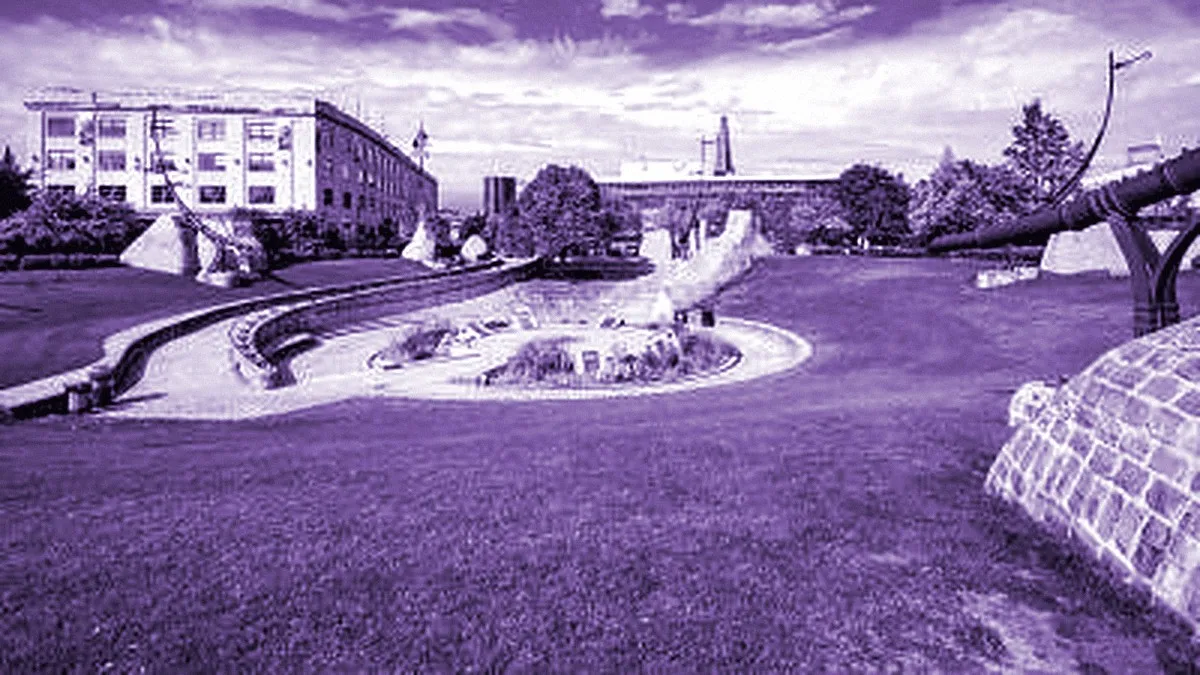
Things to do in Winnipeg
Winnipeg, Manitoba’s capital, sits where the Red and Assiniboine Rivers meet, a historic crossroads that shaped its role in trade, migration and western expansion. The city’s landmarks—from early Ukrainian churches to Métis homes, national museums and vibrant art centres—showcase the layered heritage of the Canadian Prairies. Neywo offers a free audio guide for Winnipeg with 106 narrated places.
Explore Winnipeg’s key sites
Tin Can Cathedral
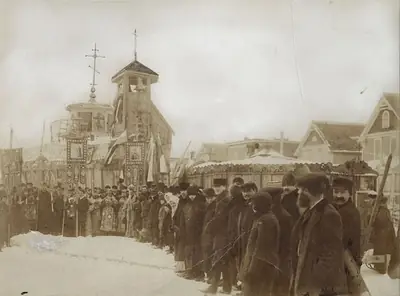
This site marks the location of the first independent Ukrainian church in North America. Built in 1891 by immigrants from Bukovina (Eastern Orthodox) and Galicia (Greek Catholic), the humble structure earned its nickname “Tin Can Cathedral” because it was assembled from scrap metal. The Ukrainian name, Blyashana Katedra, carries the same meaning, reflecting a community’s faith forged from whatever materials were at hand.
Riel House
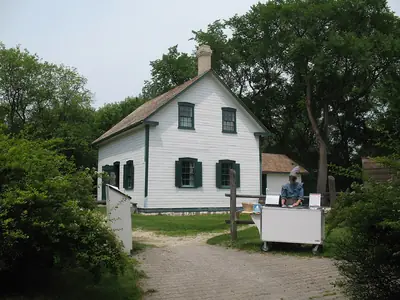
Located on the banks of the Red River, Riel House is a modest home built between 1880 and 1881 using Red River frame construction, a Métis technique that combined timber framing with horizontal log infill. The house is closely linked to Louis Riel; he stayed here during the summer of 1883 and again for a few days in December 1885, while his mother and brothers made it their family home. After his execution, Riel’s body lay in state in this house for two days before being taken to Saint‑Boniface for burial. The residence also housed the first post office of Saint‑Vital at the urging of one of Riel’s brothers.
Manitoba Museum
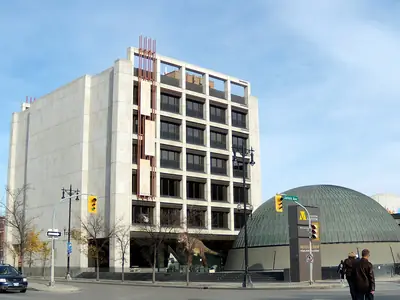
As the province’s largest centre for heritage and science education, the Manitoba Museum opened in 1965 near City Hall. Designed by Herbert Henry Gatenby Moody, it combines human and natural history collections, a Planetarium and a hands‑on Science Gallery. In 1994 the Hudson’s Bay Company donated its three‑century‑old historic collection, greatly expanding the museum’s holdings. The Planetarium became the first in Canada to install Digistar 5 All‑Dome digital projection in 2012, offering views of the night sky from any point in time or space.
Fort Gibraltar
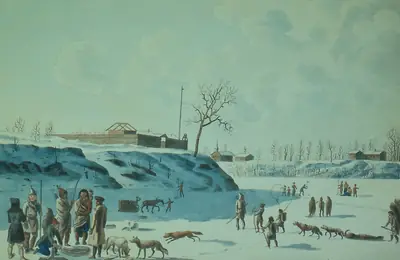
Founded in 1809 by Alexander Macdonell for the North West Company, Fort Gibraltar stood at the confluence of the Red and Assiniboine Rivers—today’s Forks. Its presence helped spark the settlement that would become Winnipeg. A rival Hudson’s Bay Company post, Fort Douglas, appeared nearby in 1813, leading to the Pemmican War. In 1816 Governor Robert Semple seized and demolished Fort Gibraltar, but British authorities later ruled the action unlawful and allowed the North West Company to rebuild in 1817. When the two companies merged in 1821, the fort was renamed Fort Garry.
Canadian Museum for Human Rights
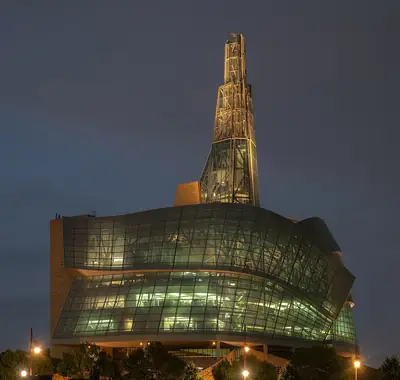
Opened on September 19, 2014, the Canadian Museum for Human Rights is the first national museum built outside Canada’s capital region and the first new one since 1967. Established through a 2008 amendment to the Museums Act, its striking architecture rises beside The Forks. Inside, visitors move through galleries linked by backlit alabaster ramps, encounter spaces such as the Hall of Hope and the Garden of Contemplation—an outdoor sanctuary with still‑water pools framed by Mongolian basalt, designed for quiet reflection.
Inuit Art Centre (Qaumajuq)
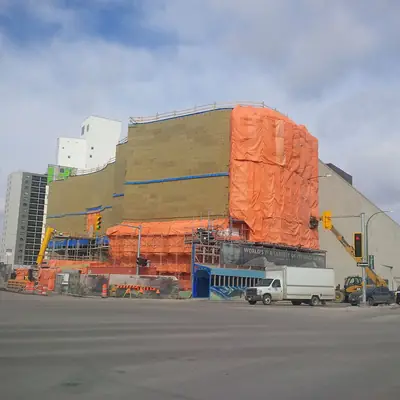
The Winnipeg Art Gallery, Canada’s oldest public art gallery, holds over twenty‑four thousand works and the world’s largest public collection of Inuit art. Originating in 1912 as the Winnipeg Museum of Fine Arts and adding a school of arts the following year, the gallery was incorporated by the Manitoba Legislative Assembly in 1963 and moved into its current purpose‑built building in 1971 (designed by Gustavo da Roza). In 2021 the Qaumajuq Inuit Art Centre opened—a 3 700‑square‑metre addition designed by Michael Maltzan that places Inuit voices at the forefront of the museum’s programming.
Manitoba Children’s Museum
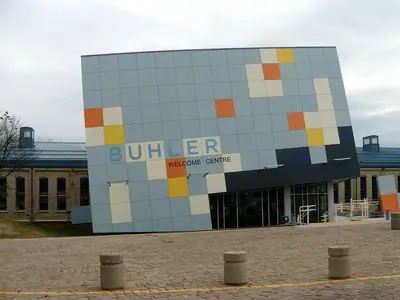
Situated at The Forks, the Manitoba Children’s Museum opened in 1986 as a non‑profit dedicated to hands‑on learning for kids. It occupies the city’s oldest surviving train repair facility, where visitors can climb aboard a 1952 diesel locomotive or explore a 1910 Pullman passenger coach. Twelve permanent galleries include the Tot Spot, Splash Lab, Illusion Tunnel and the Lasagna Lookout. Between mid‑November and early January the museum transforms with Eaton’s Fairytale Vignettes, a seasonal favourite for families.
Dalnavert (Macdonald House)
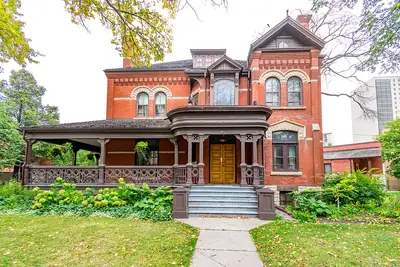
Built in 1895, Dalnavert is a beautifully preserved Victorian mansion exemplifying Queen Anne Revival architecture, with an asymmetrical façade, steep roof and ornate detailing. Restored to reflect the daily life of a late‑Victorian upper‑middle‑class family, the interior features authentic period furnishings and guided tours that illustrate everything from formal entertaining to kitchen routines. A heritage garden lies behind the house, and a modern Visitors’ Centre added in 2005 (designed by Wins Bridgman) hosts exhibitions and events year‑round, with a particularly magical atmosphere during the Christmas season.
Fire Fighters Museum
Housed in a 1904 fire hall on Maple Street—the longest‑serving fire hall in Western Canada—the Fire Fighters Museum preserves over eight decades of firefighting history. Designed by the Melville brothers, the building originally accommodated a stable for ten horses, a hayloft and a harness room; horses powered the department until motorized trucks arrived in the 1930s. Inside, visitors can see a fully operational 1927 American LaFrance pumper and a 1958 Mack truck, along with early rescue gear, medical equipment and photographs that chronicle more than a century of bravery and community service. The Winnipeg Fire Department traces its origins to 1882, following the arrival of the Canadian Pacific Railway.
Fort Garry Horse Museum & Archives
Located in the LCol Harcus Strachan Armoury (formerly the McGregor Armoury), this regimental museum tells the story of one of Canada’s historic cavalry regiments from its inception to the present day. Exhibits feature uniforms, weapons, photographs and archival documents, while military vehicles parked outside illustrate the equipment used over the years. The collection is carefully curated to keep the regiment’s heritage alive and to spark ongoing public interest.
Gallery 1C03
Situated on the first floor of Centennial Hall at the University of Winnipeg, Gallery 1C03 has been a campus art hub since opening in September 1986. It has welcomed over 125 000 visitors and presented more than 100 exhibitions, showcasing a wide range of media—including paintings, prints, drawings, photographs, sculptures, textiles, ceramics, furniture, installations, performances and video works. The gallery serves as a meeting point between the university and the wider community.
Historical Museum of St. James – Assiniboia
This site preserves one of Winnipeg’s oldest surviving homes, a two‑story post‑and‑plank house built in 1856. The construction method—vertical logs fitted into a timber frame—was brought by settlers from the Orkney Islands and adapted for the prairie climate. Inside, the main floor holds a kitchen and parlour, while upstairs bedrooms are arranged for a growing family. Original details such as hand‑hewn beams, period hardware and the way light falls through the windows remain visible. Adjacent to the house, the Municipal Hall Building erected in 1911 now hosts exhibits that tell the broader story of the St. James–Assiniboia area.
Maison Gabrielle‑Roy
The childhood home of celebrated author Gabrielle Roy, Maison Gabrielle‑Roy was built in 1905 as a Four Square house with a distinctive dormer window and a generous verandah. Roy lived here from her birth in 1909 until she was twenty‑eight, and the rooms have been restored to their 1918 appearance to offer a genuine glimpse into the environment that inspired her writing. Her renowned novel Street of Riches (original French Rue Deschambault) draws directly from this house and street. The property became a museum after a dedicated organization purchased it in 1997.
Manitoba Electrical Museum
Located inside a converted electrical substation, the Manitoba Electrical Museum traces the story of electricity in the province from its earliest days to the present. The building itself forms part of the exhibit, illustrating how infrastructure and technology have evolved alongside Manitoba’s growth.
Pavilion Gallery Museum
Set within the Assiniboine Park Pavilion—a long‑standing landmark of the museum—the Pavilion Gallery Museum operates both as a museum and an art gallery. The pavilion has served Assiniboine Park for generations, and the gallery, opened in 1998, provides exhibition space where the building’s heritage meets contemporary displays.
Explore Winnipeg with Neywo
Neywo’s free audio guide for Winnipeg includes 106 narrated places and a selection of self‑guided tours. You can choose from four walking tours:
- “Where Winnipeg Began: Rails, Rivers and Rights” – 2.39 km, about 75 minutes, 9 stops
- “Saint‑Boniface: Louis Riel’s French Quarter” – 4.57 km, about 101 minutes, 7 stops
- “Portage and Main and the Exchange District” – 2.22 km, about 84 minutes, 11 stops
- “Legislature, Gallery and Cathedrals: Winnipeg’s Civic Heart” – 3.43 km, about 97 minutes, 10 stops
There is also one bus route, “F7: Downtown to Saint‑Boniface by Rapid Transit” – 2.8 km, roughly 12 minutes, 5 stops, and one bike route, “The Forks by Bike” – 1.7 km, about 8 minutes, 6 stops.
Each story plays automatically as you reach the site, letting you explore at your own pace with no group and no schedule. Narration is available in 11 languages, so you can enjoy the guide in the language that suits you best. Download Neywo, press play, and let the city’s stories unfold step by step.
Places with an audio guide in Winnipeg
8 places in Winnipeg with a Neywo audio guide. Each one starts telling its story as you reach it.
Self-guided tours in Winnipeg
6 tours in Winnipeg, free in the Neywo app. Each stop tells its story as you reach it.
- Bike ride
The Forks by Bike
A flat ride along The Forks' riverside paths: the Esplanade Riel bridge, the Children's Museum, the Human Rights Museum, the confluence of the two rivers, the stone gate of old Fort Garry and the Naval Museum. Walk your bike on ramps and in crowded areas.
Esplanade Riel · Manitoba Children's Museum · Canadian Museum for Human Rights · The Forks · Fort Garry · Naval Museum of Manitoba
Open this tour: The Forks by Bike - Bus ride
F7: Downtown to Saint-Boniface by Rapid Transit
Winnipeg Transit's F7 runs from Broadway and Portage past the Hydro tower and Portage and Main, then crosses the Red River to Saint-Boniface beside the Esplanade Riel footbridge. A cheap way to link the downtown and the French quarter.
Manitoba Hydro Place · Birks Building · Portage and Main · Esplanade Riel · St. Boniface City Hall
Open this tour: F7: Downtown to Saint-Boniface by Rapid Transit - Walk
Where Winnipeg Began: Rails, Rivers and Rights
Winnipeg started where two rivers meet, and this walk follows its story from fur-trade gate to railway station to national museum. See the lone stone gate of Fort Garry, the Beaux-Arts station, the confluence at The Forks with its theatre and children's museum, the glass tower of the Human Rights Museum, and cross the river on the Esplanade Riel bridge.
Naval Museum of Manitoba · Fort Garry · Union Station · Manitoba Theatre for Young People · The Forks · Assiniboine River …
Open this tour: Where Winnipeg Began: Rails, Rivers and Rights - Walk
Saint-Boniface: Louis Riel's French Quarter
Cross the Red River on the Esplanade Riel into the French and Metis heart of Winnipeg. Visit a rebuilt fur-trade fort, the red-brick city hall and the heritage centre, the childhood home of novelist Gabrielle Roy, the cathedral and the oldest building in the city.
Esplanade Riel · Fort Gibraltar · St. Boniface City Hall · Centre du patrimoine · Maison Gabrielle-Roy · Saint Boniface Cathedral …
Open this tour: Saint-Boniface: Louis Riel's French Quarter - Walk
Portage and Main and the Exchange District
Walk Canada's windiest intersection and the theatre and museum quarter north of it. From a triangular terracotta apartment tower and the province's tallest skyscrapers to historic playhouses, the Manitoba Museum with its famous replica ship, and the Ukrainian cultural centre.
Birks Building · Burton Cummings Theatre · Lindsay Building · 201 Portage · Portage and Main · Artis Reit Residential Tower …
Open this tour: Portage and Main and the Exchange District - Walk
Legislature, Gallery and Cathedrals: Winnipeg's Civic Heart
From a preserved Victorian mansion to the golden figure atop the Legislative Building, this walk links Winnipeg's seats of power with its art gallery, a green-engineered office tower, the downtown arena, two historic churches and the public library.
Dalnavert · Louis Riel · Golden Boy (Manitoba) · Winnipeg Art Gallery · Prairie Theatre Exchange · Manitoba Hydro Place …
Open this tour: Legislature, Gallery and Cathedrals: Winnipeg's Civic Heart
Walk Winnipeg with Neywo
Neywo turns Winnipeg into a self-guided audio tour. Stories arrive as you reach the place they belong to, and the route reshapes when you wander off it.

